
🏠 Home > 🗺️ Recipes > 🍞 Breads > 🇦🇱 Albania Breads > 🍞 Kulac (The Iconic Yogurt Soda Bread) , Bukë Misri (Hearty Feta Cornbread) , Bukë Shtëpie (The Classic Homemade Village Loaf)
🍞 The Essential Guide to Albanian Bread: Baking a Taste of Tradition
Published by Supakorn | Updated: February 2026
Hey there, fellow home bakers! 👋 If you’re anything like me, the smell of fresh, warm bread is pure happiness. Bread (bukë in Albanian) is more than just a side dish in Albania; it is the cornerstone of every meal, a symbol of hospitality, and a direct link to a rich culinary past.
Albanian bread making is wonderfully diverse, spanning from slow-fermented, chewy loaves to quick, yeast-free comfort foods. With its location bridging the Mediterranean and the Balkans, Albanian cuisine has perfected a range of breads that are both rustic and deeply satisfying. Lately, these traditional recipes have gained popularity worldwide as home cooks look for authentic, comforting, and simple bakes that rely on simple pantry ingredients.
This article is your ultimate guide to mastering three of the most essential and beloved Albanian breads. Whether you want a quick fix, a gluten-free option, or a classic, chewy loaf, we’ve got you covered.
Here are the three iconic Albanian bread recipes we'll dive into:
1.Kulac (Traditional Yogurt Soda Bread): The quick, yeast-free staple.
2.Bukë Misri (Savory Feta Cornbread): The hearty, often gluten-free favorite.
3.Bukë Shtëpie (Homemade Village Bread): The classic, crusty, everyday loaf.
Ready to fill your kitchen with the smell of old-world comfort? Let's get our hands covered in flour! Ju bëftë mirë! (Enjoy your meal!)

🥛 Recipe 1: Kulac (The Iconic Yogurt Soda Bread)
Kulac (Koo-lach) is arguably the fastest and most practical bread in the Albanian repertoire. It is a dense, round, soda-leavened bread, meaning it uses baking soda or powder instead of yeast. This makes it a perfect choice for those who are short on time, don't want to deal with rising, or are just new to baking bread. Traditionally, it was the bread of necessity, made quickly when the family ran out of their daily leavened loaf.
✨ About this Recipe: Kulac
This bread is characterized by its simplicity and the use of yogurt (or buttermilk) and baking soda. The acidity of the yogurt reacts with the baking soda to create lift, resulting in a dense yet soft crumb and a firm, crisp crust. The flavor is rustic and slightly tangy from the yogurt, making it the perfect accompaniment to hearty stews like Fasule (bean soup) or soft feta cheese. While quick to bake, the bread holds a special place in Albanian culture, sometimes playing a role in wedding traditions to symbolize prosperity!
🧂 Ingredients & Measurements
This recipe yields one medium-sized round loaf (serves 6–8).
Dry Ingredients:
- 4 cups (500g) All-Purpose Flour or Bread Flour
- 1 teaspoon Salt
- 1 teaspoon Baking Soda (make sure it's fresh!)
- 1/2 teaspoon Sugar (optional, for flavor balance)
Wet Ingredients:
- 1 1/2 cups (360g) Plain Yogurt (preferably full-fat, or use Greek yogurt)
- 1/4 cup Warm Water
- 1 tablespoon Olive Oil (plus extra for brushing)
🧑🍳 Step-by-Step Instructions
1.Preheat & Prep: Preheat your oven to 400∘F ( 200∘C). Lightly grease a round baking pan or a cast iron skillet.
2.Combine Dry Ingredients: In a large mixing bowl, whisk together the flour, salt, baking soda, and sugar until well combined. Create a well in the center of the mixture.
3.Activate Soda: In a small bowl, whisk the 1/4 cup of warm water into the yogurt until it loosens slightly.
4.Form Dough: Pour the yogurt mixture and the 1 tablespoon of olive oil into the well of the dry ingredients. Use a wooden spoon or your hands to gently mix until a shaggy, slightly sticky dough forms. Be careful not to over-mix.
5.Knead Lightly: Turn the dough out onto a lightly floured surface. Knead for only 2–3 minutes—just long enough to bring the dough together into a smooth, round ball. It should feel soft and elastic but not overly sticky.
6.Shape and Score: Place the dough ball into the prepared pan. Flatten it slightly with your palm to create a round disc about 1 to 1.5 inches thick. Using a fork, prick the top of the Kulac all over, or use a knife to score a large "X" on the top. This prevents the bread from cracking in a large, uneven way.
7.Bake: Brush the top generously with olive oil. Bake for 40–50 minutes, or until the top is deeply golden brown and the bread sounds hollow when tapped on the bottom.
8.Cool: Transfer the bread to a wire rack. For a softer crust, cover it immediately with a clean kitchen towel while it cools slightly. Serve warm!
🚨 Tips & Mistakes to Avoid
- Mistake: Over-kneading. Because this is a soda bread, over-kneading will develop the gluten too much, resulting in a tough, brick-like loaf instead of a tender, dense one. Knead minimally.
- Tip: If you only have buttermilk, you can substitute it directly for the yogurt and water mixture.
- Mistake: Using old baking soda. Since baking soda is the only leavening agent, an old, inactive batch will result in a completely flat bread.
- Tip: Kulac is traditionally broken with the hands, not sliced, when warm. This is a nod to its rustic nature!
❓ FAQ
Q: Can I use this recipe to make rolls instead of a whole loaf?
A: Yes! Divide the dough into 8–10 equal pieces, shape them into small balls, and place them on a baking sheet. Reduce the baking time to about 20–25 minutes.
Q: How do I store leftover Kulac?
A: Store in an airtight container at room temperature for up to 3 days. It can be refreshed by wrapping it in foil and warming it in the oven.
✨ Summary
Kulac is the ultimate testament to simple, delicious baking. Its rustic flavor and speedy preparation make it a perfect, everyday bread that brings Albanian tradition right to your table.

🌽 Recipe 2: Bukë Misri (Hearty Feta Cornbread)
Next up is Bukë Misri (Boo-keh Mees-ree), or Albanian Cornbread. But don't confuse this with the sweet Southern U.S. version! Albanian Bukë Misri is a savory, moist, and incredibly hearty bread, often made with a mix of cornmeal and wheat flour, and frequently enriched with creamy yogurt and savory chunks of Feta or cottage cheese. It’s dense, slightly crumbly, and stands up beautifully to thick soups or a simple plate of olives and cured meats.
🧀 About this Recipe: Bukë Misri
This cornbread is a staple across much of the Balkans, a region where corn has been a reliable crop for centuries. The use of cornmeal (misri) gives the bread a distinctly coarse texture and a beautiful golden color. The addition of tangy yogurt or buttermilk, along with crumbled Feta cheese, transforms it from a simple cornbread into a filling, complex, and flavorful meal accessory. Some versions also include leeks or spinach, making it a complete savory bake.
🧂 Ingredients & Measurements
This recipe yields one 8x8 inch square cornbread (serves 8–10).
Dry Ingredients:
- 1 1/2 cups (200g) Fine Cornmeal (not coarse polenta)
- 1 cup (125g) All-Purpose Flour (or substitute with more cornmeal for a gluten-free option)
- 1 tablespoon Baking Powder
- 1 teaspoon Salt
Wet & Rich Ingredients:
- 1 cup (240ml) Plain Yogurt or Buttermilk
- 1/2 cup (120ml) Milk (any kind)
- 2 large Eggs, lightly beaten
- 1/4 cup (60ml) Olive Oil (plus extra for the pan)
- 1 cup (150g) Feta Cheese, crumbled or cubed
- Freshly ground Black Pepper to taste
🧑🍳 Step-by-Step Instructions
1.Preheat & Prep: Preheat your oven to 375°F or 190°C. Thoroughly grease an 8x8 inch baking dish with olive oil.
2.Mix Dry Ingredients: In a large bowl, combine the cornmeal, flour, baking powder, and salt. Whisk briefly to distribute the leavening agent evenly.
3.Combine Wet Ingredients: In a separate medium bowl, whisk together the yogurt, milk, eggs, and olive oil until smooth.
4.Combine & Fold: Pour the wet mixture into the dry ingredients. Stir just until combined. A few lumps are okay—do not over-mix!
5.Add Cheese: Gently fold in the crumbled Feta cheese and black pepper.
6.Bake: Pour the batter into the prepared baking dish, spreading it evenly. Bake for 30–35 minutes, or until the top is golden brown and a toothpick inserted into the center comes out clean (it may have melted cheese residue, but the bread portion should be cooked).
7.Serve: Let the Bukë Misri cool in the pan for 5–10 minutes before slicing into squares. Serve warm, perhaps with a drizzle of brine from the Feta (a common Albanian practice!) or alongside a glass of buttermilk.
🚨 Tips & Mistakes to Avoid
- Tip: For an authentic touch, look for very finely ground white or yellow cornmeal, often labeled as corn flour.
- Mistake: Substituting regular, mild cheese for Feta. The salty, tangy flavor of Feta is crucial for the savory, traditional taste of Bukë Misri.
- Tip: If you want to make it even heartier, sauté 1/2 cup of finely chopped leeks until soft and fold them into the batter along with the Feta.
- Mistake: Over-baking. Cornbread can dry out quickly. Test with a toothpick early!
❓ FAQ
Q: Can I make Bukë Misri completely gluten-free?
A: Yes. Substitute the all-purpose flour with a gluten-free blend or simply use 2.5 cups of cornmeal total. The bread will be more crumbly but still delicious.
Q: Is it supposed to be sweet?
A: No, traditional Bukë Misri is savory. Unlike many American cornbread recipes, it contains little to no sugar.
✨ Summary
Bukë Misri is a savory, cheese-filled comfort that perfectly showcases the unique, rustic flavors of Albanian baking—hearty, moist, and delightfully cheesy.
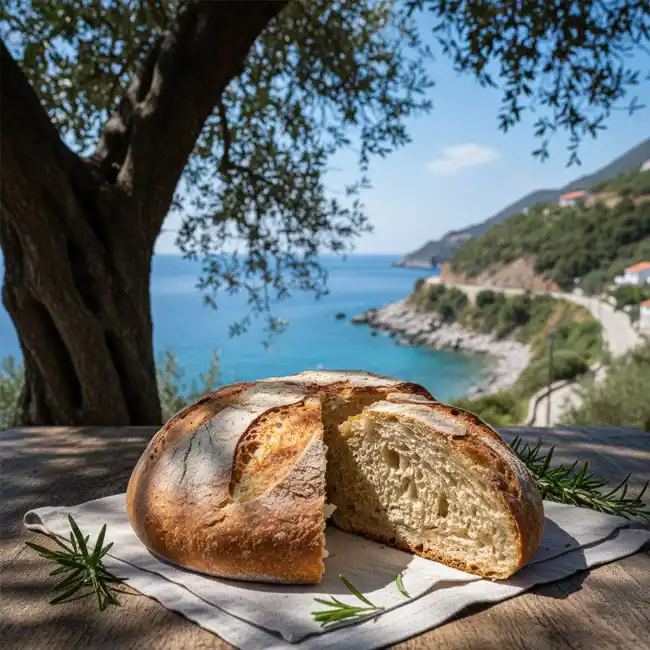
🥖 Recipe 3: Bukë Shtëpie (The Classic Homemade Village Loaf)
Finally, we arrive at Bukë Shtëpie (Boo-keh Shtep-ee-yeh), which literally translates to "Homemade Bread" or "Village Bread." This is the classic, large, everyday loaf that accompanies every meal in a traditional Albanian household. It’s a simple, yeasted dough that produces a magnificent, slightly dense, but chewy crumb and a thick, golden-brown crust.
💖 About this Recipe: Bukë Shtëpie
This bread is characterized by its round, slightly flattened shape and its robust flavor. It’s typically a lean dough—meaning no eggs or excess fat—relying on a simple mix of flour, water, yeast, and salt, often with a touch of olive oil for texture. The magic of Bukë Shtëpie comes from its slow fermentation (the "rising" time) and the hot oven environment, which together develop its distinctive aroma and satisfying crust. This recipe calls for a slightly higher hydration and an overnight rise, which results in maximum flavor and texture.
🧂 Ingredients & Measurements
This recipe yields one large round loaf (serves 10+).
The Basics:
- 5 cups (625g) Bread Flour (or strong All-Purpose Flour), plus more for dusting
- 2 teaspoons Instant Dry Yeast
- 2 teaspoons Salt
- 1 teaspoon Sugar
- 2 cups (480ml) Warm Water (about 105°F or 40°C)
- 3 tablespoons Extra Virgin Olive Oil
🧑🍳 Step-by-Step Instructions
1.Activate Yeast: In a large bowl, whisk the warm water, yeast, and sugar. Let it sit for 5–10 minutes until a foamy cap forms.
2.Mix Dough: Add the flour, salt, and olive oil to the yeast mixture. Stir with a wooden spoon or a stand mixer with a dough hook until the mixture forms a shaggy dough.
3.Knead: Turn the dough out onto a lightly floured surface. Knead for 8–10 minutes until the dough is smooth, elastic, and passes the "windowpane" test (you can stretch a small piece thin enough to see light through it without tearing).
4.First Rise (Bulk Fermentation): Place the dough in a lightly oiled bowl, turning to coat. Cover with plastic wrap or a damp towel and let it rise in a warm place for 1 to 1.5 hours, or until it has doubled in size.
5.Shape: Gently punch down the dough to release the air. Shape it into a tight, round ball (a boule). Place the shaped dough onto a baking sheet lined with parchment paper or into a traditional round pizza pan.
6.Second Rise (Proofing): Cover the dough and let it proof for another 30–45 minutes until it looks visibly puffy.
7.Preheat and Prepare: Preheat your oven to 425∘F / 220∘C. If desired, lightly score the top of the loaf with a sharp knife or razor blade.
8.Bake: Bake for 30–40 minutes, or until the crust is a deep, golden brown. To test for doneness, tap the bottom of the loaf—it should sound hollow.
9.Cool: Transfer the Bukë Shtëpie to a wire rack immediately to cool completely before slicing (if you can wait!). This prevents the bottom crust from becoming soggy.
🚨 Tips & Mistakes to Avoid
- Tip: To achieve an extra-crusty crust, place a shallow pan on the lowest rack of your oven and pour a cup of hot water into it just before putting the bread in. The steam will help the crust develop.
- Mistake: Water temperature. If the water is too hot, it will kill the yeast. If it's too cold, the yeast won't activate. Aim for lukewarm.
- Tip: Use high-quality flour. Bread flour has a higher protein content, which is key for developing the gluten structure and achieving a satisfying chewiness in the final loaf.
- Mistake: Slicing the bread while it is still hot. This releases steam and moisture, resulting in a dry, gummy texture. Wait until it has cooled!
❓ FAQ
Q: Can I use all-purpose flour instead of bread flour?
A: Yes, but reduce the water slightly, as all-purpose flour absorbs less liquid. The final texture might also be slightly less chewy.
Q: What is the best way to store a large loaf like this?
A: Store the cooled loaf cut-side down on a cutting board, or wrap it tightly in a clean linen bag or towel. Avoid plastic bags, as they can make the crust soft.
✨ Summary
Bukë Shtëpie is the timeless, homemade classic. It embodies the generous spirit of Albanian cuisine, with a perfect balance of a crackly crust and a hearty, satisfying chew.
🙏 Final Thoughts: The Joy of Albanian Baking
Wow! You've just journeyed through three incredible corners of Albanian baking. From the lightning-fast, rustic comfort of Kulac, to the savory, cheesy goodness of Bukë Misri, and finally, to the magnificent, everyday simplicity of Bukë Shtëpie, you have all the recipes you need to recreate the genuine flavors of the Balkans right in your home.
Making traditional bread might seem intimidating, but as you’ve seen, the ingredients are simple, and the methods rely on natural processes like fermentation and the magical chemistry of baking soda. The truth is, homemade bread isn't difficult, it just requires patience—and the reward is always worth it!
I encourage you to try the Kulac first, as it offers immediate gratification with no yeast required. Then, level up to the Bukë Misri to pair with your next savory stew, and finally, conquer the glorious Bukë Shtëpie.
Which loaf will you try first? Did you master the Feta crumble in your cornbread? Share your baking adventures, photos, and any tips you discovered in the comments below! Let's celebrate the warmth and tradition of Albanian cuisine together! T'boftë mirë!
| 🇦🇱 🍞 < Back |