
🏠 Home > 🗺️ Recipes > 🥘 Sauces > 🇦🇱 Albania Sauces
🇦🇱 🥘 Albania Sauces Recipes
Published by Supakorn | Updated: February 2026
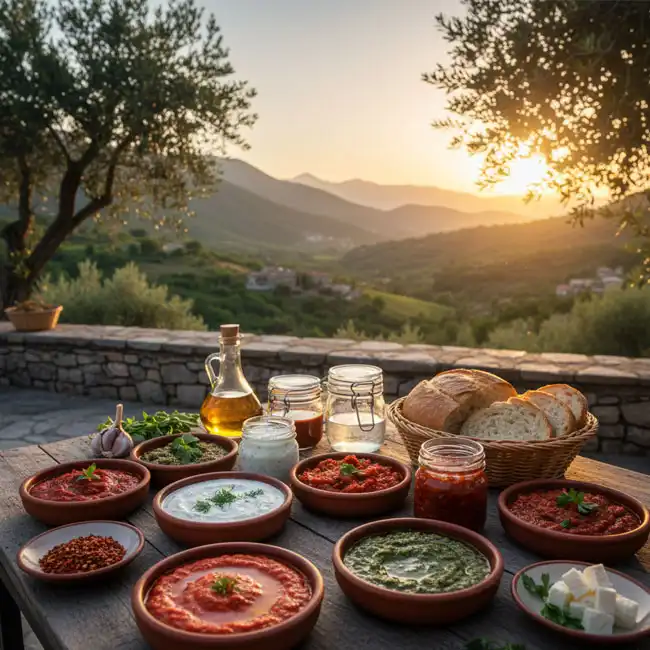
🥄 The Flavor Foundation: Where Albanian Dishes Get Their Soul
Hey there, fellow food explorers! Let’s talk about something truly essential to any great cuisine: the sauces, dips, and rich reductions that turn simple ingredients into unforgettable meals. If Albanian food is a house, then its sauces and condiments are the foundation, the walls, and the welcoming warmth.
In Albania, sauces aren't just an afterthought or a quick squirt from a bottle. They are often the dish itself—slow-cooked, rich, and designed to interact perfectly with the fresh, local staples like meat, bread, and grilled vegetables. Albanian culinary philosophy is all about using simple, high-quality, seasonal ingredients, but it's the meticulous preparation of the sauces that elevates them.
You’ll find a fascinating blend here: the light, fresh, garlicky tang of the Mediterranean thanks to copious amounts of olive oil and yogurt, mixed with the deeply savory, paprika-infused slow-cooking techniques inherited from Ottoman and Balkan traditions. Every region has its signature accompaniment, and to eat like a local, you absolutely must learn to appreciate—and use—these fundamental flavor boosters. Get ready to dip your bukë (bread)!
🍅 The Essential Sauces: Cooked, Rich, and Hearty
These are the sauces that form the base of many main dishes or stews, often cooked low and slow to develop incredible depth. They are designed to be scooped up with bread or poured generously over rice (pilaf).
🌶️ Fërgesë: The Summer Stew-Sauce Hybrid
Fërgesë is perhaps the most iconic Albanian dish in this category. It's often called a "summer stew," but its consistency is somewhere between a thick sauce and a dip, perfect for dipping or spreading.
- The Vibe: Rich, creamy, and vibrantly colored, Fërgesë captures the essence of Albanian summer produce. It's traditionally made in a clay pot (tavë) and served warm or at room temperature—Albanians sometimes prefer it cool after it's had time to thicken.
- The Flavor Profile: The base is a savory blend of roasted or cooked bell peppers (usually red or green), tomatoes, and a heavy dose of garlic and paprika. What makes it creamy and tangy is the addition of white cheese, either gjizë (a type of cottage cheese) or feta.
- How it's Used: It is almost always served with fresh, crusty bread. You scoop the Fërgesë directly onto the bread, turning it into the most delicious bruschetta you’ve ever had. A meat version, Fërgesë Tirane me Mëlçi, adds chicken liver for extra richness.
🍚 Salcë Domate: The Rustic Tomato Sauce
While simple tomato sauce exists everywhere, the Albanian version, Salcë Domate, is distinct in its rustic preparation and essential role in the national diet.
- The Vibe: This is a simple, home-style sauce. It's not the sweet, acidic Italian marinara, but a savoury, deeply-flavored base that acts as a binder for stews, rice, and filled vegetables.
- The Flavor Profile: The simplicity is key: cooked fresh tomatoes, plenty of sautéed onions and garlic, and a generous pour of local olive oil. It's typically seasoned with dried oregano, salt, and pepper.
- Key Role: This sauce forms the salcë (sauce/gravy) for many Gjellë (stews) like Green Bean Stew, or the base for dishes like stuffed peppers (Speca të Mbushura) and meatballs (Qofte).
🥛 The Dairy Dynamos: Yogurt-Based Dips and Dressings
Given the abundance of high-quality dairy in Albania—especially creamy, tangy yogurt made from cow, sheep, or goat milk—it’s no surprise that many of the most refreshing sauces are yogurt-based.
🍶 Salcë Kosi: The All-Purpose Yogurt Sauce
Salcë Kosi is Albania's answer to the ultimate all-purpose dressing and dip. The name simply means "yogurt sauce."
- The Vibe: Creamy, cool, and tangy. It's made from thick, often strained yogurt (kos) and is incredibly versatile.
- The Flavor Profile: It's usually flavored with fresh garlic (a lot of it!), a little salt, sometimes a touch of mint or dill, and a healthy drizzle of olive oil.
- How it's Used: This is the essential cooling counterpoint to nearly any rich, hot, or heavy Albanian meal. You'll serve it with Qofte (meatballs), next to grilled meats (Mish në Zgarë), spooned over hot Pilaf (rice), or used as a dip for Petulla (savory fried dough). It’s the ultimate balancer.
🥒 Tarator (Cold Soup/Dip): The Garlic Refresher
We talked about Tarator as a cold soup, but its thick consistency and punchy flavor often place it squarely in the dip category on the Albanian table.
- The Vibe: Ultra-refreshing, perfect for summer. It’s a thinner version of a garlicky yogurt sauce with the added crunch of cucumber.
- The Flavor Profile: Yogurt and water, mixed with grated or finely chopped cucumber, garlic, salt, and often fresh dill or mint.
- The Usage: Served ice-cold, it's perfect for dipping bread, cooling the palate between bites of spicy food, or accompanying the Byrek (savory pie).
🌿 The Uncooked Essentials: Oil, Vinegar, and Herbs
Sometimes, the simplest things are the most important. These are the condiments and finishing touches that showcase the sheer quality of Albanian ingredients.
🫒 Vaj Ulliri (Olive Oil): The Liquid Gold
The star of all Albanian 'sauces' is the olive oil, or Vaj Ulliri. Albania produces some truly excellent, high-quality olive oil, especially in the southern regions.
- The Vibe: Rich, often fruity, with a pronounced peppery finish—the mark of high-quality, cold-pressed virgin oil.
- The Flavor Profile: Pure, earthy, and essential.
- The Key Role: It's used everywhere: to sauté vegetables, as a rich base for stews, and, most importantly, as a generous finishing drizzle on almost every cooked dish, salad, and bread. In Albanian cuisine, olive oil is the dressing, the finisher, and a key flavor layer.
🍋 Salad Dressings: The Simple Tang
The dressing for the ubiquitous Albanian village salad (cucumbers, tomatoes, onion, and feta) is a study in minimalism.
- The Formula: High-quality Vaj Ulliri, a splash of Uthull (vinegar, often red wine vinegar), and sometimes a squeeze of Limon (lemon).
- The Philosophy: The dressing is designed not to mask, but to highlight the freshness of the seasonal vegetables. There’s no heavy cream or sweet balsamic glaze—just clean, bright flavor.
🌶️ The Heat and The Funk: Flavor Accents
While not generally known for extremely spicy food, Albanian cuisine uses specific fermented and pickled items to add a necessary punch and acidic balance to rich meals.
🧄 Açka (Garlic Sauce/Paste)
In some regions, particularly those with a stronger Ottoman legacy, a potent garlic paste or sauce is essential, especially with grilled meats.
- The Vibe: Extremely pungent and strong, designed to clear the sinuses!
- The Flavor Profile: Raw garlic, oil, sometimes chili, and a dash of vinegar.
- The Usage: Used sparingly to add an immediate, powerful kick of flavor to barbecued meats or fish.
🌶️ Turshi (Pickled Vegetables): The Crunchy Sidekick
While technically a side dish, Turshi (various pickled vegetables like peppers, cabbage, and cucumbers) acts as a crucial condiment.
- The Vibe: Crunchy, sour, and acidic.
- The Key Role: The sharp acidity of the pickles cuts through the fat of meat dishes and the density of bean stews (Fasule), providing the exact counter-balance needed for a perfectly rounded meal.
❓ Frequently Asked Questions (FAQ)
1. What is the biggest difference between Fërgesë and Salcë Domate?
Salcë Domate (Tomato Sauce) is a basic, thinner, tomato-based cooking base used as an ingredient for stews and baked dishes. Fërgesë is a complex, standalone dish with a rich, thick, dip-like consistency. Fërgesë always includes peppers and cottage cheese (gjizë), which give it its unique creamy texture and tangy flavour, making it a main dip or appetizer, not just a cooking base.
2. Is Salcë Kosi the same as Greek Tzatziki or Turkish Cacık?
They are all very close cousins, originating from the same wider region! Salcë Kosi is essentially the Albanian version. While they share the base ingredients (yogurt, garlic, salt, and often oil/herbs), Salcë Kosi is generally simpler, often just yogurt, garlic, and salt, and is used as an all-purpose sauce. Tzatziki and Cacık usually feature grated cucumber, making them more of a cooling soup or dip, whereas Salcë Kosi is often pure, thick yogurt sauce.
3. How important is olive oil in traditional Albanian sauces and cooking?
Olive oil (Vaj Ulliri) is extremely important—it is the primary cooking fat and the ultimate finishing condiment. In most traditional dishes, especially stews and sauces, olive oil is used generously to build flavor. For dips like Fërgesë or Salcë Kosi, a final drizzle of raw, high-quality oil is mandatory before serving, as it enhances the aroma and ties the fresh, tangy flavors together.
🥘 The Flavor Secrets of Albania: Mastering Essential Sauce Recipes
| 🌐 🥘 < Back | 🇦🇱 🍱 < Previous |