
🏠 Home > 🗺️ Recipes > 🍲 Soups > 🇦🇩 Andorra Soups > 🍲 Fricandó amb Bolets , Sopa de Pastor (Shepherd’s Soup) , Caldo de Nadal (Christmas Broth)
🍲 Warm Up Your Soul: Mastering Andorra’s Heartiest Soup Recipes
Published by Supakorn | Updated: February 2026
🍲 Mountain Warmth: Why Andorran Stews are the Ultimate Comfort Food
Hey food explorers! Ready to swap your usual weeknight soup for something truly substantial, comforting, and packed with history? Let's take a culinary journey to the stunning Pyrenees mountains and dive into the incredible soup and stew culture of Andorra.
When you live high up in a small, landlocked country nestled between giants like Spain and France, your food needs to be fuel. That's exactly what Andorran cuisine, and particularly its hearty bowls, delivers. These are not light, watery affairs; they are thick, rich, and incredibly satisfying dishes designed to warm you from the inside out after a long day in the cold mountain air.
Andorran cuisine is a beautiful reflection of Catalan heritage, emphasizing quality local ingredients: smoked meats, mountain vegetables, beans, and humble starches. These recipes have been passed down for generations, embodying the spirit of communal cooking and rustic living.
This article is your friendly guide to mastering three of Andorra's most iconic and deeply satisfying bowls:
1.Fricandó amb Bolets: A slow-cooked veal/beef stew with mountain mushrooms.
2.Sopa de Pastor (Shepherd’s Soup): A simple, aromatic herb and bread broth.
3.Caldo de Nadal (Christmas Broth): A clean, rich, slow-cooked stock perfect for cold days.
Grab your largest pot, and let’s start simmering some mountain magic!
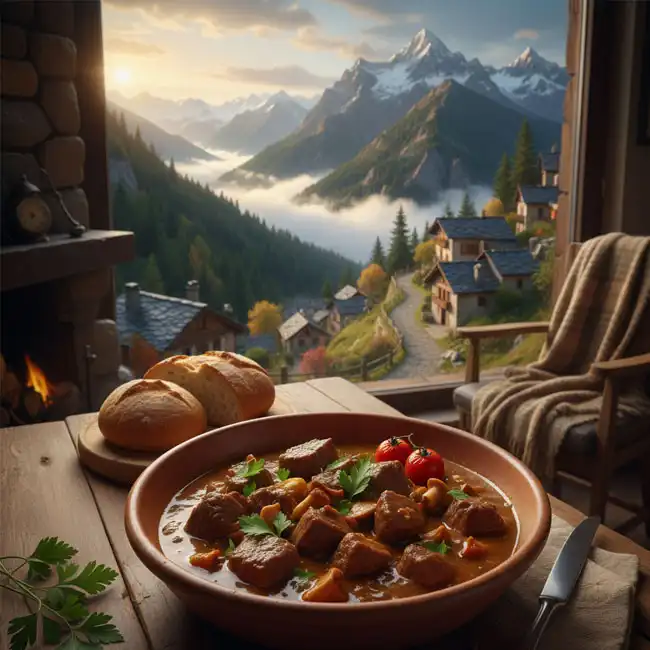
🥩 Recipe 1: Fricandó amb Bolets - Slow-Cooked Beef and Mushroom Stew
💬 About this Recipe (The Essence of Catalan Stew)
Fricandó is a classic Catalan dish that has found a deeply appreciated home in the high-altitude cuisine of Andorra. It is essentially a smooth, creamy stew made with thin slices of beef or veal, slowly cooked in a rich, savory sauce enhanced by dried mountain mushrooms (bolets). This dish epitomizes comfort food; it's the kind of meal that improves overnight, making the sauce smoother and the meat more tender.
The secret weapon in this stew is the Picada, a thick paste of nuts, garlic, and herbs (often with a crushed biscuit for texture) added at the end. The Picada thickens the sauce beautifully, adding an incredible depth of savory, nutty flavor that is characteristic of traditional Pyrenean stews.
🔪 Ingredients & Measurements
For the Meat:
- 1 kg (2.2 lbs) veal or beef shank/brisket, sliced thinly into cutlets
- 1/2 cup all-purpose flour, for dusting
- 4 tbsp olive oil
- Salt and black pepper to taste
For the Stew Base:
- 2 large onions, finely chopped
- 4 cloves garlic, minced
- 1 large ripe tomato, grated (or 1/4 cup tomato paste)
- 1 cup dry white wine
- 2 cups beef broth (preferably homemade Caldo!)
- 1 cup mixed wild mushrooms (chanterelles, porcini, or cremini/portobello), sliced
- 1 bay leaf
For the Picada (Thickener):
- 1/4 cup toasted almonds
- 2 cloves garlic
- 1 tbsp fresh parsley, chopped
- 1 dry Maria biscuit or a small piece of stale white bread
📝 Step-by-Step Instructions
1.Prepare the Meat: Season the veal/beef slices generously with salt and pepper. Lightly dust them with flour, shaking off any excess.
2.Sear the Meat: Heat the olive oil in a large Dutch oven or heavy-bottomed pot over medium-high heat. Sear the floured meat in batches until golden brown on both sides. Remove the meat and set it aside.
3.Sauté the Base: Lower the heat to medium. Add the chopped onions to the same pot and cook slowly for 15-20 minutes until they are deeply caramelized and soft. Add the minced garlic and cook for 1 minute until fragrant.
4.Build the Sauce: Stir in the grated tomato or tomato paste and cook for 5 minutes. Pour in the white wine, scraping up any browned bits from the bottom of the pot, and let it reduce by half.
5.Simmer the Stew: Return the seared meat to the pot. Add the beef broth and the bay leaf. Bring the stew to a gentle simmer, cover, and cook slowly for at least 1.5 to 2 hours, or until the meat is fork-tender.
6.Add Mushrooms: While the stew is simmering, quickly brown the sliced mushrooms in a separate pan with a little oil. Add the cooked mushrooms to the stew during the last 30 minutes of cooking.
7.Make the Picada: In a mortar and pestle (or a small food processor), combine the almonds, garlic, parsley, and biscuit/bread. Grind until it forms a smooth, thick paste.
8.Finish and Serve: Stir the Picada into the stew during the last 10 minutes. This will instantly thicken the sauce. Taste and adjust the seasoning. Serve the Fricandó hot, often with rice or simple boiled potatoes to soak up the luxurious sauce.
🛑 Tips & Mistakes to Avoid
- ✅ Tip: Fricandó is famous for tasting even better the next day! The flavors meld beautifully overnight, making it a perfect make-ahead meal.
- ❌ Mistake: Don't rush the onions! The long, slow caramelization of the onions is what gives the sauce its rich color and sweet, deep flavor—it’s worth the time!
- ✅ Tip: If you can’t find wild mushrooms, rehydrated dried porcini mushrooms will work wonderfully, adding an intense earthy flavor.
❓ FAQ: Fricandó amb Bolets
Q1.Is Fricandó a soup or a stew?
It is firmly a stew (guiso in Spanish, estofat in Catalan). It's very thick and hearty, meant to be eaten with a fork and knife, but its rich sauce is often considered a close cousin to soup broths.
Q2.Why the biscuit in the Picada?
The crushed biscuit or breadcrumb serves two purposes: it helps thicken the sauce and absorbs some of the oil and juices, making the Picada more integrated into the stew.
Q3.Can I use chicken instead of veal/beef?
Yes, you can. It will be delicious, but the cooking time will be significantly reduced (to about 45-60 minutes).
🌟 Summary
Fricandó amb Bolets is the definition of slow-food elegance. It’s rich, tender, and deeply savory—a mountain stew that brings sophisticated Catalan flavors right to your table.
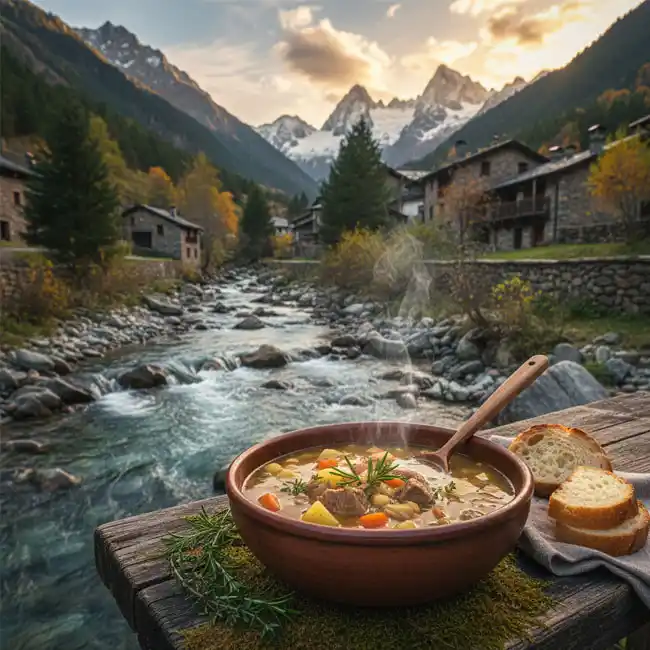
🌿 Recipe 2: Sopa de Pastor (Shepherd’s Soup) - Humble Herb Broth
💬 About this Recipe (Rustic Simplicity)
The Sopa de Pastor, or "Shepherd's Soup," is a testament to the resourcefulness and simplicity of mountain cooking. This is a very old, very humble recipe, designed to be made quickly and easily by shepherds tending their flocks, using whatever dry bread and aromatic herbs were on hand.
The core of this soup is a fragrant infusion—often using wild thyme, rosemary, or mint—poured over dried rye bread. It’s light yet satisfying, and incredibly restorative. It’s the perfect soup when you need a gentle, healthy, and aromatic bowl to reset.
🔪 Ingredients & Measurements
- 2 Litres (8 cups) water or light vegetable broth
- 500g (about 1 pound) stale, dry rye bread or rustic country loaf, thinly sliced or cubed
- 2 tbsp olive oil
- 2 cloves garlic, thinly sliced
- 2 sprigs fresh thyme
- 1 sprig fresh rosemary
- 1/2 tsp salt
- Optional: A pinch of smoked paprika for a smoky depth
📝 Step-by-Step Instructions
1.Toast the Bread: If your bread is not already very dry and hard, slice it thinly and toast it in a low oven until completely dehydrated and crispy (but not burnt). Set aside.
2.Infuse the Broth: In a medium pot, bring the water or vegetable broth to a boil. Reduce the heat to a simmer. Add the sprigs of thyme and rosemary and the salt. Let the broth simmer gently, covered, for 10-15 minutes to fully infuse the herbal flavors.
3.Prepare the Garlic: While the broth is infusing, heat the olive oil in a small pan over low heat. Add the sliced garlic and cook gently until it is fragrant and barely golden—do not let it burn! Add a pinch of smoked paprika if you're using it, and stir quickly. Remove from heat.
4.Assemble the Bowls: Place the dry, toasted bread slices or cubes into individual soup bowls.
5.Serve: Ladle the hot, herbal broth over the bread in each bowl. Drizzle a little of the fragrant garlic oil over the top of each serving.
6.Wait and Eat: Let the soup sit for 2–3 minutes. The dry bread should soften slightly, absorbing the broth while still maintaining a pleasant, rustic texture. Serve immediately!
🛑 Tips & Mistakes to Avoid
- ✅ Tip: Thyme is the most traditional herb. Use fresh herbs for the best, most intense aroma and flavor.
- ❌ Mistake: Do not overcook the garlic! Burnt garlic will turn the entire oil bitter, ruining the delicate flavor profile of this soup.
- ✅ Tip: This soup is best when the bread is added right before serving, ensuring it’s not completely dissolved into a mushy paste.
❓ FAQ: Sopa de Pastor
Q1.Can I use fresh bread?
No. The soup relies on dry, stale bread that can absorb the liquid without disintegrating immediately. If your bread is fresh, cut it and bake it until it's completely dry and crispy.
Q2.What kind of broth is best?
A light, clear vegetable broth or even just water works perfectly, as the herbs and garlic oil provide the main flavors.
Q3.Is this dish usually vegetarian?
Yes, traditionally, this is a meatless dish, relying on grains and herbs, making it great for plant-based diets!
🌟 Summary
Sopa de Pastor is rustic, aromatic, and incredibly soothing. It's an ancient recipe that remains a beautiful example of using simple ingredients to create profound flavor.
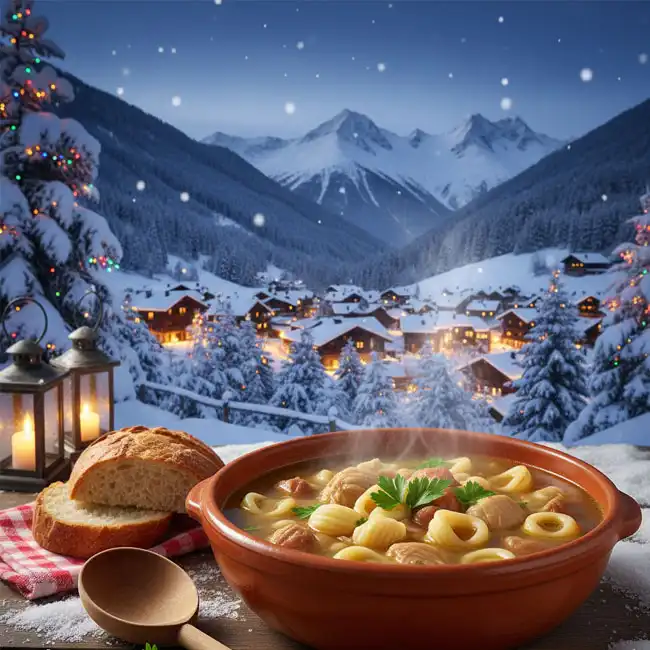
🥕 Recipe 3: Caldo de Nadal (Christmas Broth) - The Clean Elixir
💬 About this Recipe (Healing and Hearty Broth)
The pure Caldo (broth) is often celebrated as a standalone, restorative dish, especially during the holidays (Nadal means Christmas). This is the liquid gold that forms the base of many heavier Andorran dishes, and its value is immense—it’s pure, clean, and deeply nourishing.
The focus here is on slow extraction of flavor from the best bones and vegetables, creating a healing, clarifying broth. This recipe is fantastic for anyone wanting a simple, healthy, nutrient-dense soup without all the bulk—it's soup culture at its purest.
🔪 Ingredients & Measurements
- 1.5 kg (3 pounds) meaty bones (beef knuckles, marrow bones, ham bones, or chicken carcasses)
- 1 large onion, skin on (for color and flavor), quartered
- 2 large carrots, halved
- 1 celery stalk, halved
- 1 leek, cleaned and roughly chopped
- 4 sprigs fresh parsley
- 1 whole head of garlic, sliced in half horizontally (no need to peel)
- 4 liters (16 cups) cold water
- 1 tsp peppercorns
- Salt to taste
📝 Step-by-Step Instructions
1.Prep the Bones: Place all the bones in your largest pot. Cover with cold water and bring to a boil. Boil vigorously for 5 minutes, then drain the water and rinse the bones. This critical step removes impurities for a cleaner broth.
2.Begin the Simmer: Return the clean bones to the pot. Add the cold water, onion, carrots, celery, leek, parsley, garlic, and peppercorns.
3.Low and Slow: Bring the water back to a gentle simmer. Reduce the heat to the lowest possible setting. The broth should barely bubble—just the occasional tiny bubble breaking the surface.
4.Long Cook Time: Cover the pot loosely and simmer for at least 4 to 6 hours. The longer the cook time, the deeper the flavor and the more nutrients extracted.
5.Strain and Clarify: Turn off the heat. Carefully strain the broth through a fine-mesh sieve lined with cheesecloth (or a clean kitchen towel) into a large bowl. Discard the bones and vegetables.
6.Cool and Store: Let the broth cool completely. Once cool, you can refrigerate it. Any fat will solidify on top; you can skim this off for a very clean, low-fat broth.
7.Serve: Reheat the Caldo gently, adjusting the salt to taste. Serve plain in a mug or small bowl as a restorative, warm elixir.
🛑 Tips & Mistakes to Avoid
- ✅ Tip: Start with cold water! This allows the bones to release their collagen and flavor slowly, leading to a richer, cleaner broth.
- ❌ Mistake: Don't boil the broth! Boiling creates cloudy, greasy broth. Maintain a very low, gentle simmer for absolute clarity.
- ✅ Tip: For a final garnish, try stirring in a tablespoon of finely chopped parsley and chives just before serving.
❓ FAQ: Caldo de Nadal
Q1.Is this the same as bone broth?
Yes, essentially. It's a traditional, richly flavored bone broth, often used as the liquid for other soups and stews.
Q2.Can I freeze this broth?
Absolutely. It freezes beautifully and is great for saving in portioned containers or ice cube trays for easy use in cooking.
Q3.What if I don't have all the vegetables?
Don't worry! Use the classic mirepoix (onion, carrot, celery) as your minimum base. The bones and long simmer are the most important part.
🌟 Summary
Caldo de Nadal is the purest form of Andorran mountain sustenance. It's a healing, flavorful broth that is the foundation of their winter cuisine and a wonderful tonic on its own.
🏔️ Final Thoughts on Your Culinary Adventure
See? Bringing the hearty, soulful flavors of the Pyrenees to your kitchen is totally achievable!
We've explored the slow-cooked elegance of Fricandó amb Bolets, the fragrant simplicity of Sopa de Pastor, and the restorative purity of Caldo de Nadal. These recipes are not just about feeding you; they are about nourishing your spirit with the warmth of mountain tradition. They showcase the wonderful way humble ingredients can be transformed into deeply satisfying meals.
These three dishes give you a complete picture of Andorran comfort food—from the luxurious, celebratory stew to the light, fragrant restorative broth.
Now it's your turn! Which of these comforting mountain bowls will you try first? The rich, meaty Fricandó or the aromatic Sopa de Pastor? Share your cooking plans or your results in the comments below!
| 🇦🇩 🍲 < Back |