
🏠 Home > 🗺️ Recipes > 🥘 Sauces > 🇦🇹 Austria Sauces > 🥘 Rahmsauce (Classic Cream Gravy) , Zwiebelsauce (Rich Onion Gravy) , Kürbiskernöl Dressing (Styrian Pumpkin Seed Oil Vinaigrette)
🥘 The Secret Ingredient: Mastering 3 Iconic Austrian Sauces at Home
Published by Supakorn | Updated: February 2026
🍳 A Taste of the Alps: Why Austrian Sauces Rule the Kitchen
Ask any Austrian chef, and they’ll tell you: the magic of our cuisine lies in the sauce. While dishes like Wiener Schnitzel and Tafelspitz are globally famous, they are mere canvases for the rich, complex, and comforting sauces that accompany them. These sauces are what truly transform a simple piece of meat or a humble salad into a five-star dining experience.
Austrian sauces are typically heavy on flavor, often utilizing the cooking juices (the Bratensaft), rich stocks, and the famous crème fraîche or Rahm (cream) to build deep, velvety textures. They are not simply additions; they are the heart and soul of the dish.
In this guide, we’re going to unlock the secrets to three of the most beloved and essential Austrian sauces, ensuring you have all the knowledge—and the right recipes—to bring a piece of Vienna and Styria right into your own kitchen:
1.Rahmsauce (Cream Gravy): The velvety, savory staple often paired with Schnitzel or Spätzle.
2.Zwiebelsauce (Onion Sauce): The rich, caramelized brown gravy that elevates sausages and pork roasts.
3.Kürbiskernöl Dressing (Pumpkin Seed Oil Dressing): The nutty, tangy "Green Gold" dressing of Styria, perfect for fresh salads.
Ready to stir, simmer, and savor? Grab your whisk, and let's get saucy!
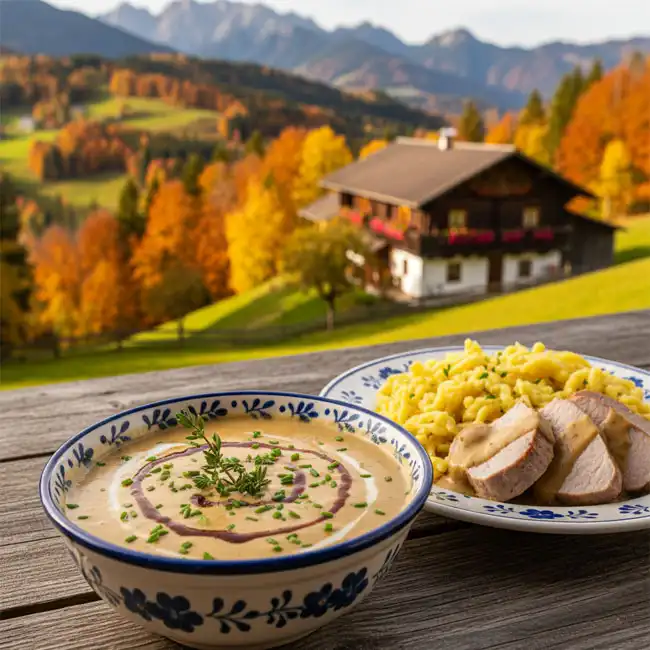
🍄 Recipe 1: Rahmsauce (Classic Cream Gravy)
🧐 About this Recipe: The Velvety Soul of Austrian Comfort Food
Rahmsauce is the Austrian answer to the perfect cream gravy. It is the sophisticated, yet deeply comforting, sauce often associated with Jägerschnitzel (Hunter's Schnitzel) when mushrooms are added (known as Jägersoße or Hunter's Sauce), or simply served plain over tender cuts of pork or chicken, and especially over Spätzle (Austrian egg noodles).
The core of this sauce is built upon a roux—a mixture of butter and flour—which gives it body and a beautiful, silky smooth texture. This is then enriched with high-quality stock and finished with a generous pour of heavy cream, creating a flavor that is both savory and slightly sweet. It is truly the taste of home comfort in Austria.
🔪 Ingredients & Measurements (Yields approx. 2 cups)
- 3 tablespoons Unsalted Butter
- 3 tablespoons All-Purpose Flour
- 1 1/2 cups Beef Stock (or good quality Vegetable Stock for a vegetarian option)
- 1/2 cup Heavy Cream (known as Rahm in German)
- 1 small Yellow Onion, finely chopped
- 1 cup Fresh Mushrooms (like Chanterelles or Cremini), sliced (Optional, for Jägersoße)
- 1 teaspoon Tomato Paste
- 1/2 teaspoon Sweet Paprika Powder
- Pinch Dried Thyme
- Salt and Freshly Ground Black Pepper to taste
👨🍳 Step-by-Step Instructions
1.Sauté Aromatics (Optional Step for Jägersoße): In a saucepan, melt 1 tablespoon of butter. If using, add the sliced mushrooms and sauté until they release their liquid and start to brown. Remove mushrooms and set aside.
2.Sauté Onion: Add the remaining 2 tablespoons of butter to the same pan. Add the chopped onion and cook over medium heat until it's soft and translucent, about 5 minutes.
3.Make the Roux: Stir in the flour. Whisk continuously for 2-3 minutes to cook out the raw flour taste and create a pale golden-brown paste (this is a light Roux).
4.Add Stock and Seasoning: Gradually pour in the beef stock while whisking constantly. This is the key step to prevent lumps! Bring the mixture to a simmer. Stir in the tomato paste, paprika, and thyme.
5.Simmer and Thicken: Reduce the heat to low and let the sauce simmer for 5–7 minutes, allowing it to thicken slightly and the flavors to meld. If you want a perfectly smooth sauce, you can strain it at this point (though most home cooks skip this step).
6.Finish with Cream: Stir in the heavy cream and return the sauce to a low simmer—do not boil it vigorously once the cream is added.
7.Final Seasoning: Add the sautéed mushrooms back into the sauce (if using). Season generously with salt and pepper. Serve immediately.
💡 Tips & Mistakes to Avoid
- Don't Rush the Roux: Cooking the butter and flour until it's slightly golden is essential. This step adds depth and removes that unpleasant raw flour taste.
- Cold Liquid, Hot Roux: Always add cool or room-temperature liquid (stock) to a hot roux while whisking vigorously. This thermal contrast helps create a smooth sauce without lumps.
- Taste and Adjust: The quality of your stock will determine the final flavor. If it tastes flat, add a tiny splash of white wine or a few drops of lemon juice right at the end to brighten it up.
🤔 FAQ (Frequently Asked Questions)
Q: What is the difference between Rahmsauce and Jägersoße?
A: Jägersoße (Hunter's Sauce) is a type of Rahmsauce that specifically includes sliced mushrooms (often wild varieties) and sometimes a splash of red wine or brandy for depth. Rahmsauce on its own is the basic, mushroom-free cream gravy.
Q: Can I make this sauce ahead of time?
A: Yes! It can be made 1-2 days in advance and stored in the refrigerator. Reheat gently over low heat, adding a splash of stock or cream if it has thickened too much.
Q: My sauce is lumpy! Help!
A: The quickest fix is to use an immersion blender right in the saucepan to blitz the lumps out. If you don't have one, pass the sauce through a fine-mesh sieve.
📝 Summary: Rahmsauce
Rahmsauce is the ultimate kitchen chameleon—easy to master and versatile enough to pair with almost any savory dish. It's the taste of cozy Austrian hospitality on a spoon!

🧅 Recipe 2: Zwiebelsauce (Rich Onion Gravy)
🧐 About this Recipe: The Deep Flavor of Caramelized Onions
Zwiebelsauce, or Onion Sauce, is a profoundly rich, savory brown gravy that gets its intense flavor and dark color from slowly caramelized onions and, typically, a deglazing with red wine. This sauce is a must-have for classic Austrian dishes like Schweinsbraten (Pork Roast) or grilled sausages (Bratwurst).
Unlike the creamy Rahmsauce, Zwiebelsauce is generally thinner, allowing it to soak into the accompanying meat and potatoes. The secret to its incredible depth lies in patience: you must let the onions cook down until they are truly golden-brown, extracting all their natural sweetness. The little bits left on the bottom of the pan—the fond—are pure flavor gold.
🔪 Ingredients & Measurements (Yields approx. 1 1/2 cups)
- 2 large Yellow Onions, thinly sliced into rings
- 2 tablespoons Vegetable Oil or Lard (traditional and adds flavor)
- 1 tablespoon Unsalted Butter
- 1 1/2 tablespoons All-Purpose Flour
- 1/2 cup Dry Red Wine (such as Zweigelt or Pinot Noir)
- 1 cup Rich Beef or Veal Stock
- 1 teaspoon Tomato Paste
- 1/2 teaspoon Sugar (optional, to aid caramelization)
- 1/4 teaspoon Dried Marjoram (a key Austrian herb)
- Salt and Freshly Ground Black Pepper to taste
👨🍳 Step-by-Step Instructions
1.Caramelize the Onions: In a large saucepan, heat the oil/lard and butter over medium heat. Add the sliced onions and the sugar (if using). Cook, stirring occasionally, for 15–20 minutes. You want them to be deeply golden brown and very soft—this is crucial for flavor. Do not rush this step!
2.Add Flour and Tomato Paste: Stir in the flour and tomato paste. Cook for 2 minutes, stirring constantly, letting the flour cook and the tomato paste caramelize slightly.
3.Deglaze with Wine: Pour in the red wine. Use a wooden spoon to scrape up all the delicious brown bits (fond) from the bottom of the pan. Let the wine bubble and reduce by half.
4.Add Stock and Simmer: Pour in the beef stock and stir well to combine. Add the marjoram, salt, and pepper.
5.Reduce and Thicken: Bring the sauce to a low simmer. Let it cook gently for 10–15 minutes, allowing it to reduce to your desired thickness. The sauce should be smooth and the onions should be meltingly tender.
6.Adjust and Serve: Check the seasoning and add more salt or pepper as needed. For a smoother sauce, you can briefly blend it with an immersion blender or strain it, but traditionally, the tender onion slices are left in.
💡 Tips & Mistakes to Avoid
- Marjoram is Key: Marjoram is the signature herb in many Austrian meat and onion dishes. A little goes a long way, but it truly provides an authentic flavor profile.
- High Heat vs. Low Heat: Start the onions on medium heat, but if they start browning too quickly without softening, reduce the heat to medium-low. Patience equals flavor.
- No Red Wine? If you prefer not to use wine, replace it with the same amount of beef stock and add a splash of balsamic or red wine vinegar at the very end for acidity and complexity.
🤔 FAQ (Frequently Asked Questions)
Q: Can I use different types of onions?
A: Yellow onions are traditional and yield the best results for a rich brown sauce. Sweet onions (like Vidalia) can be used but will make the sauce significantly sweeter.
Q: Why is my sauce bitter?
A: Bitterness usually occurs if the onions or the flour/tomato paste mixture was scorched (burned) during the initial sautéing stages. Keep the heat controlled and stir frequently.
Q: What is the best dish to serve Zwiebelsauce with?
A: It is incredible with roast pork (Schweinsbraten), pan-fried sausages, or classic meatloaf (Falscher Hase). It also works wonders over mashed potatoes.
📝 Summary: Zwiebelsauce
This onion gravy is a masterclass in building flavor through slow cooking. It’s the perfect, hearty sauce for Sunday dinners and comfort food cravings.
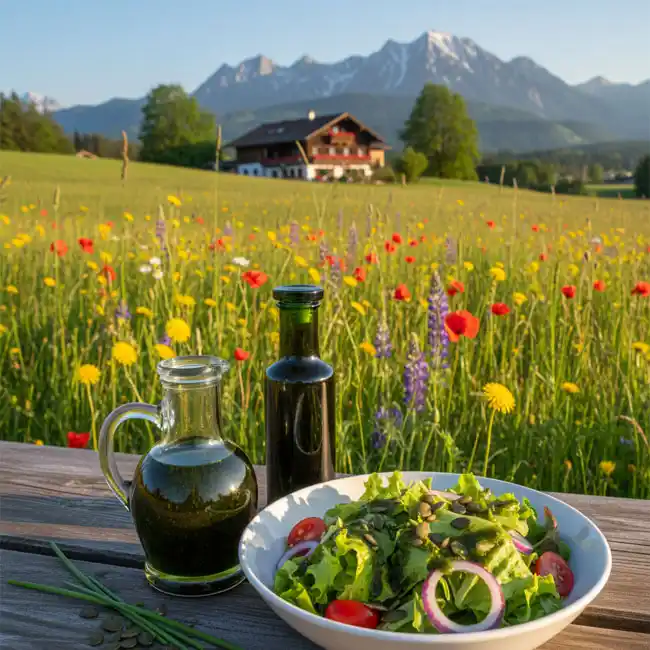
🥗 Recipe 3: Kürbiskernöl Dressing (Styrian Pumpkin Seed Oil Vinaigrette)
🧐 About this Recipe: Styria's "Green Gold" Salad Essential
The third sauce is actually a dressing, and it is a star in its own right: Kürbiskernöl Dressing. Kürbiskernöl (Pumpkin Seed Oil) is a delicacy from the region of Styria in Southern Austria, and its deep, dark green color has earned it the nickname "Green Gold." This oil has an intensely nutty, toasted flavor and is a Protected Geographical Indication (PGI) product.
In Styria, this oil is never used for frying, only as a finishing oil or in dressings. This vinaigrette is the simplest recipe in this list, but it highlights the unique, luxurious flavor of the oil. It’s the classic dressing for Vogerlsalat (Austrian Lamb's Lettuce) or Erdäpfelsalat (Austrian Potato Salad).
🔪 Ingredients & Measurements (Yields about 1/2 cup)
- 3 tablespoons Styrian Pumpkin Seed Oil (Kürbiskernöl)—essential for the authentic flavor
- 3 tablespoons Apple Cider Vinegar (or White Wine Vinegar)
- 1 teaspoon Dijon Mustard
- 1/2 teaspoon Sugar or Honey (to balance the acidity)
- 2 tablespoons Water or Vegetable Stock (to thin and emulsify)
- Salt and Freshly Ground Black Pepper to taste
👨🍳 Step-by-Step Instructions
1.Mix the Base: In a small bowl, whisk together the apple cider vinegar, Dijon mustard, sugar/honey, and water/stock until the sugar is dissolved and the mixture is uniform.
2.Add the Oil: Slowly drizzle in the Pumpkin Seed Oil while continuously whisking. Whisk vigorously until the dressing emulsifies slightly (becomes a bit thicker and uniform). The dressing will be a stunning, rich green color.
3.Season: Season generously with salt and freshly ground black pepper.
4.Marinate and Serve: If using for potato salad (Erdäpfelsalat), pour the dressing over the still-warm potatoes, allowing them to soak up the flavor for at least 30 minutes. If using for fresh greens, toss the salad just before serving.
💡 Tips & Mistakes to Avoid
- Use the Real Deal: If you can't find genuine Styrian PGI Kürbiskernöl, substitute with the best quality unrefined toasted pumpkin seed oil you can find. A poor substitute will lack the deep, nutty flavor.
- No Olive Oil: Never mix the Pumpkin Seed Oil with another strong oil like olive oil in this dressing, as it masks the delicate, nutty flavor of the Kürbiskernöl.
- Toss at the Last Minute: For fresh green salads (like Vogerlsalat), dress the salad right before serving, as the strong acidity of the vinegar can cause the delicate greens to wilt quickly.
🤔 FAQ (Frequently Asked Questions)
Q: Where can I buy Kürbiskernöl?
A: Look for it in specialty food stores, European delicatessens, or order online. Make sure it is labeled as "Styrian" or "Pumpkin Seed Oil from Styria" for the most authentic flavor.
Q: Can I use this dressing for something other than salad?
A: Absolutely! Drizzle it over vanilla ice cream for a bizarre but traditional Styrian dessert, use it as a finishing oil for pumpkin soup, or drizzle it over scrambled eggs.
Q: Why is my dressing separating?
A: Vinaigrettes naturally separate (it's oil and water!). The key is vigorous whisking and the addition of mustard and water/stock to help stabilize the emulsion. Just give it a good shake or whisk before serving.
📝 Summary: Kürbiskernöl Dressing
A vibrant, nutty, and tangy dressing that perfectly showcases Austria's "Green Gold." Simple ingredients, extraordinary flavor!
✨ Final Thoughts: The Savoring is the Best Part
We’ve now walked through three essential Austrian sauces: the comforting creaminess of Rahmsauce, the deep, savory richness of Zwiebelsauce, and the bright, nutty tang of Kürbiskernöl Dressing. These recipes prove that the key to great Austrian cooking often lies not in complex preparations, but in mastering the sauces that elevate every meal.
The next time you make a pork roast, a slice of schnitzel, or a simple side salad, try pairing it with one of these Austrian masterpieces. I encourage you to start with the simplest—the Pumpkin Seed Oil Dressing—and then move on to the classic gravies.
Please share your experience with me! Which sauce did you try first, and what dish did you pair it with?
| 🇦🇹 🥘 < Back |