
🏠 Home > 🗺️ Recipes > 🍝 Main Dishes > 🇧🇾 Belarus Main Dishes > 🍝 Machanka (The Ultimate Belarusian Pork Stew) , Kalduny (Stuffed Potato Meat Dumplings) , Kletski (Hearty Potato Dumplings)
🍝 The Heart of Belarus: Unforgettable, Comforting Main Dishes You Need to Cook
Published by Supakorn | Updated: February 2026
🥔 Introduction: The Understated Magic of Belarusian Cuisine
Hey there, food explorers! If you're looking for honest, hearty, and seriously comforting food, you need to turn your attention to the cuisine of Belarus. Forget those overly complicated, fussy dishes; Belarusian food is all about making the most of simple, quality ingredients, often built around the undisputed king of the kitchen: the potato. Seriously, they love their potatoes—it's often called "the second bread" there.
While neighboring cuisines might steal the spotlight, Belarusian cooking has a quiet strength. These are the recipes passed down through generations, fueling long winters and family gatherings. And guess what? They’ve started to catch on internationally. People are realizing the pure, unpretentious joy of a perfect stuffed potato dumpling or a rich, savory stew.
So, are you ready to skip the usual takeout and dive into something genuinely new? Fantastic. This comprehensive guide is your all-in-one resource for mastering three of the most popular and beloved Belarusian main dishes: Machanka (a rich pork stew), Kalduny (stuffed potato dumplings), and Kletski (simple potato dumplings). We’re going long-form and deep-dive on these because, honestly, they deserve it.
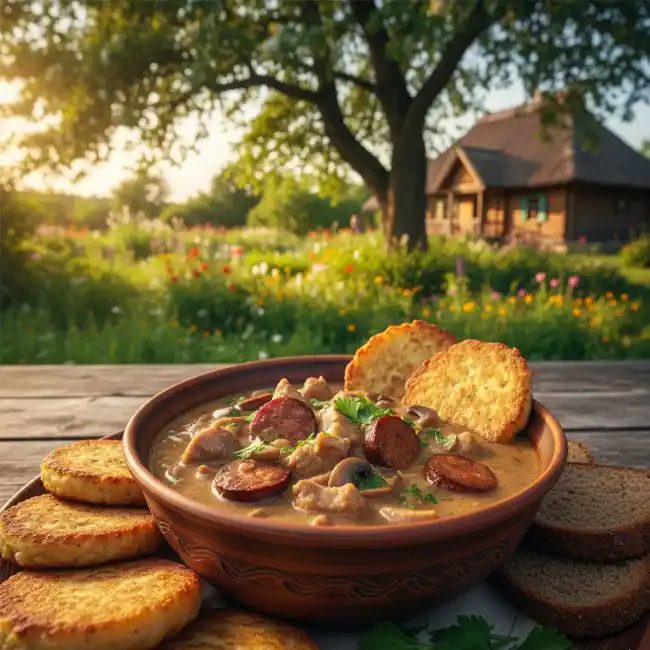
🥣 Recipe 1: Machanka (The Ultimate Belarusian Pork Stew)
Machanka is the kind of dish that warms you from your toes up. It's a thick, savory pork stew or gravy traditionally made with various cuts of pork (sometimes including sausage or smoked meats), simmered slowly in a creamy, flavorful sauce. It’s often served with potato pancakes or thick wheat crepes for dipping, making it a textural masterpiece.
🌟 About this Recipe: A Dip-Worthy Delight
Machanka is the quintessential comfort food in Belarus. Its flavor profile is intensely savory, with a lovely richness thanks to the sour cream and slow-cooked pork. The process is straightforward: brown the meat, sauté the aromatics, and then let everything simmer until the pork is fork-tender and the sauce has thickened beautifully. While some modern recipes use different meats, we’re sticking to a rich, traditional pork version. The magic is in the simmering time—it’s what develops that depth of flavor. Think of it as a hug in a bowl, best enjoyed with a big chunk of bread or, ideally, a piping hot Kalduny (recipe below!) for dipping.
📝 Ingredients & Measurements
Here is everything you’ll need to create this flavor-packed stew:
- Pork: 1.5 lbs (about 680g) stewing pork (shoulder or butt), cut into 1-inch cubes
- Fats: 2 tablespoons lard or vegetable oil for frying (lard is traditional and highly recommended)
- Aromatics: 1 large yellow onion, diced
- Thickener: 2 tablespoons all-purpose flour
- Liquid Base: 2 cups beef or pork stock
- Dairy: 1 cup full-fat sour cream
- Seasoning: 2 bay leaves
- Seasoning: 1 teaspoon salt, or to taste
- Seasoning: 1/2 teaspoon black pepper, or to taste
- Optional Flavor: 2-3 cloves garlic, minced (adds a nice depth)
- Garnish: Fresh dill or parsley, chopped, for serving
👩🍳 Step-by-Step Instructions
1.Prep the Pork: Pat the pork cubes dry with paper towels and season lightly with salt and pepper.
2.Brown the Meat: Heat the lard or oil in a large saucepan or Dutch oven over medium-high heat. Working in batches if necessary (don't crowd the pan!), sear the pork until it’s deeply browned on all sides. This step is crucial for flavor development. Remove the pork and set it aside.
3.Sauté the Onion: Reduce the heat to medium. Add the diced onion to the same pan and cook until it’s soft and translucent, about 5–7 minutes. If you are using garlic, add it in the last minute of cooking.
4.Make the Roux: Sprinkle the flour over the cooked onions. Stir constantly for about 1 minute—this cooks out the raw flour taste and creates the base for the thick sauce.
5.Build the Stew: Slowly pour in the beef or pork stock, whisking continuously to prevent lumps. The sauce will begin to thicken. Add the browned pork and the bay leaves back into the pot.
6.Simmer: Bring the stew to a gentle simmer, then reduce the heat to low, cover, and let it cook for at least 1.5 to 2 hours, or until the pork is incredibly tender. Check occasionally and add a splash of water or stock if it looks too dry.
7.Finish the Sauce: Once the pork is done, remove the bay leaves. Stir in the sour cream until it's fully incorporated. Simmer uncovered for another 10–15 minutes until the sauce is the perfect consistency—thick enough to coat the back of a spoon. Taste and adjust salt and pepper.
8.Serve: Ladle the Machanka into bowls, garnish with fresh dill or parsley, and serve immediately with fresh Kalduny (recipe below) or thick bread for soaking up all that incredible sauce.
🚨 Tips & Mistakes to Avoid
- Don't Skip the Browning: Browning the pork is your number one flavor booster. High heat and dry meat are the keys to a good crust.
- Batch Cook: If you have too much meat, brown it in two separate batches. Crowding the pan steams the meat instead of searing it.
- Lump-Free Sauce: When adding the stock to the flour, pour slowly and whisk vigorously. If you still get lumps, you can push the sauce through a sieve before adding the meat back in, but a good whisking usually does the trick!
- Use Quality Sour Cream: A high-fat, tangy sour cream (like a good European-style one) is best. Avoid low-fat versions, as they can curdle when heated.
❓ FAQ
Q: Can I use chicken or beef instead of pork?
A: While traditionally pork, yes, you can definitely use stewing beef or even chicken thighs. If you use chicken, reduce the simmering time to about 45–60 minutes. Beef will need a similar time to the pork, 1.5 to 2 hours.
Q: What is a traditional side dish?
A: The most traditional side for Machanka is potato pancakes (Draniki) or our stuffed potato champions, Kalduny.
✨ Summary
Machanka is a straightforward, stick-to-your-ribs stew that showcases the best of Belarusian heartiness. With tender pork swimming in a rich, velvety sauce, it’s a recipe that guarantees second helpings and proves that simple food can be utterly magnificent.
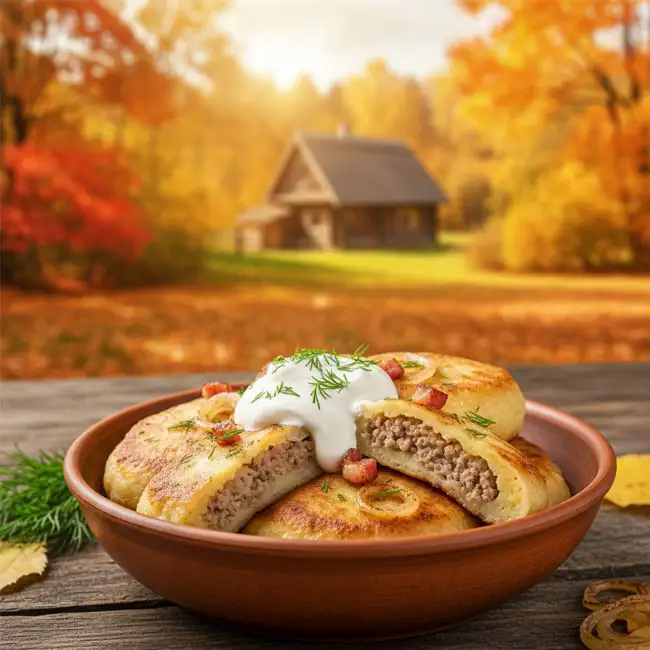
🥟 Recipe 2: Kalduny (Stuffed Potato Meat Dumplings)
Time to meet the true star of Belarusian dumplings! Kalduny (sometimes spelled Kolduny) are essentially potato dumplings (like Kletski) that are wrapped around a savory meat filling and then boiled. Think of them as giant, self-contained parcels of starch and deliciousness. They are historically significant, incredibly filling, and the perfect centerpiece for a cold-weather meal.
🌟 About this Recipe: The Meat-Filled Potato Parcel
Unlike the flour-based dumplings you might know, Kalduny use a grated potato dough, similar to what you'd use for Draniki. This makes them heavy, hearty, and uniquely Belarusian. The raw potato dough is wrapped around a seasoned ground meat filling, creating a complex and incredibly satisfying bite. They are usually served with sautéed onions, bacon, or a simple sour cream and dill topping.
📝 Ingredients & Measurements
Here is what you’ll need for a batch of these glorious stuffed dumplings:
For the Dough:
- Raw Potato: 2 lbs (about 900g) Russet or starchy potatoes, peeled
- Aromatics: 1 small onion, grated
- Binder: 2 tablespoons all-purpose flour
- Seasoning: 1 teaspoon salt, or to taste
- Seasoning: 1/2 teaspoon black pepper, or to taste
For the Filling (Meat):
- Meat: 1 lb (about 450g) ground pork, beef, or a mix
- Aromatics: 1/2 cup finely chopped onion (different from the one for the dough)
- Fat: 1 tablespoon melted butter
- Seasoning: 1 teaspoon salt
- Seasoning: 1/2 teaspoon black pepper
- Optional: A pinch of dried marjoram
For Serving:
- Sour cream
- Fresh dill, chopped
- Melted butter or crisp fried bacon bits (skvarki)
👩🍳 Step-by-Step Instructions
1.Prepare the Filling: In a bowl, combine the ground meat, finely chopped onion, melted butter, salt, pepper, and marjoram (if using). Mix well with your hands until it’s sticky and uniform. Set aside.
2.Grate and Squeeze the Dough Base: Grate the peeled potatoes and the small onion on the fine setting. This is crucial: Place the grated mix into a clean towel or cheesecloth and wring out as much liquid as possible. The drier the pulp, the better the dough will hold.
3.Make the Dough: Transfer the squeezed potato pulp to a bowl. Add the flour, salt, and pepper. Mix until just combined. The mixture should be firm enough to handle, but still slightly sticky. If it feels too wet, add a touch more flour.
4.Form and Stuff the Kalduny: Take a generous amount of potato dough (about 2–3 tablespoons) and flatten it into a small disc (about 3 inches wide) in the palm of your hand. Place about 1 teaspoon of the meat filling in the center of the disc.
5.Seal the Dumplings: Carefully fold the potato dough over the filling and pinch the edges together firmly to seal. Roll the dumpling into a smooth, oval or ball shape. Ensure the meat is completely covered by the potato dough. Place the finished Kalduny on a lightly floured tray.
6.Cook the Kalduny: Bring a large pot of salted water to a gentle boil. Carefully drop the Kalduny into the water. Do not crowd the pot—cook in batches if necessary.
7.Simmer: Once the Kalduny float to the surface (which might take a few minutes), reduce the heat and simmer gently for 15–20 minutes. The longer cooking time is necessary to ensure the raw meat filling is fully cooked.
8.Serve: Use a slotted spoon to transfer the cooked Kalduny to a warm serving dish. Drizzle generously with melted butter or a spoonful of bacon skvarki and onions. Serve immediately with a dollop of sour cream and fresh dill.
🚨 Tips & Mistakes to Avoid
- Squeeze, Squeeze, Squeeze: I'll say it again: a successful potato dough must be dry. Wring out the liquid until your arms hurt!
- Seal it Tight: Ensure the potato dough completely encases the meat filling. If there are any holes, the meat juices will escape into the water and the dumpling will disintegrate.
- Mind the Cooking Time: Because the filling is raw, you need to simmer them long enough (15-20 minutes) to cook the meat all the way through. A low, rolling boil is safer than a rapid boil.
- Raw Meat Only: Do not pre-cook the meat filling. The raw, seasoned meat releases juices that keep the dumpling moist as it cooks inside the potato shell.
❓ FAQ
Q: Can I use different fillings?
A: Absolutely! Traditional variations include mushrooms and smoked pork (Vilnius style), sautéed sauerkraut, or even farmer's cheese.
Q: Why did my Kalduny turn grey?
A: That's oxidation. Potato dough starts to grey immediately after grating. To slow this down, work quickly, and you can add a small squeeze of lemon juice to the potato pulp, though this is less traditional.
Q: Can I freeze Kalduny?
A: Yes! Freeze the raw, shaped Kalduny on a floured tray until solid. Then transfer them to a freezer bag. Boil them straight from frozen, increasing the cooking time by a few minutes (about 20–25 minutes total).
✨ Summary
Kalduny are the crown jewels of Belarusian dumpling-making—a perfect, satisfying pocket of seasoned meat wrapped in rustic potato dough. They require a little patience, but the result is a truly authentic taste of Eastern European tradition.
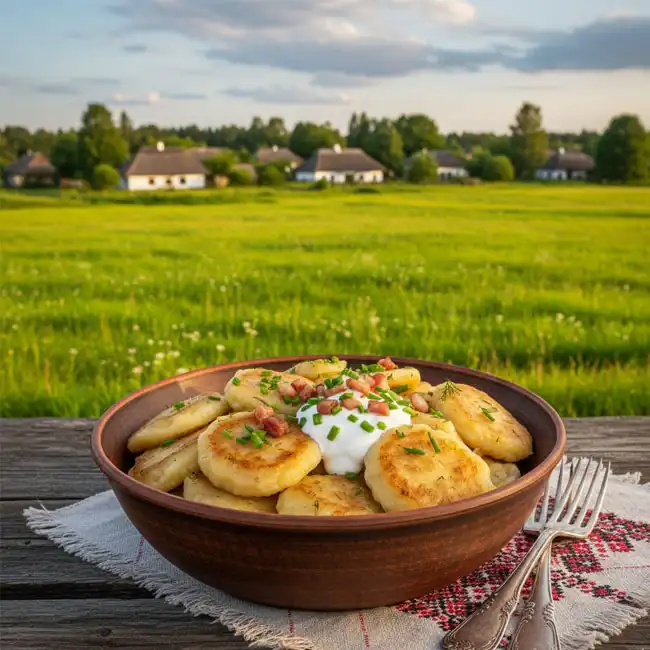
🥔 Recipe 3: Kletski (Hearty Potato Dumplings)
While our Kalduny are the stuffed champs, Kletski are the simpler, comforting cousins. These are hearty, doughy dumplings, often made from a combination of raw and cooked potatoes, which gives them a unique, satisfying texture. They are typically boiled and served with a simple, savory topping like melted butter, cracklings (small pieces of fried bacon/fat), or sautéed onions. They are the ultimate "fill you up" dish.
🌟 About this Recipe: A Little Bit of Potato Magic
Kletski are a classic example of making a substantial meal from basic ingredients. The mixture of cooked (mashed) and raw (grated) potato is the key to their texture—firm enough to hold their shape during boiling, but soft and tender when you bite into them. This recipe focuses on the plain potato dumpling, ready to soak up your favorite topping.
📝 Ingredients & Measurements
Here is the essential list for creating tender, plump Kletski:
- Cooked Potato: 1 lb (about 450g) Russet potatoes, peeled and boiled until tender
- Raw Potato: 1 lb (about 450g) Russet potatoes, peeled
- Binder: 1 large egg, lightly beaten
- Thickener: 2 tablespoons all-purpose flour (or a little more if needed)
- Seasoning: 1 teaspoon salt, or to taste
- Seasoning: 1/2 teaspoon black pepper, or to taste
- Topping: 4 oz (about 115g) smoked bacon or pork fat, diced (for cracklings/skvarki)
- Topping: 1 small onion, finely chopped
- Garnish: Sour cream, for serving (optional)
👩🍳 Step-by-Step Instructions
1.Prepare the Cooked Potato: Boil the first 1 lb of potatoes until they are very tender. Drain them well and mash them until they are completely smooth—no lumps allowed! Let the mashed potato cool completely.
2.Prepare the Raw Potato (Squeeze!): Grate the second 1 lb of raw potatoes on a fine grater. Place the grated potato in a clean kitchen towel and squeeze out all the liquid. Discard the liquid.
3.Make the Dough: In a large bowl, combine the cooled mashed potatoes, the squeezed raw grated potatoes, the egg, 2 tablespoons of flour, salt, and pepper. Mix until just combined. The dough should be firm enough to roll into a ball, but still slightly sticky. If it is too wet, add a little more flour, 1 tablespoon at a time.
4.Shape the Kletski: Flour your hands lightly. Take a small amount of dough (about 1 tablespoon) and roll it into a smooth, walnut-sized ball. Place the finished dumplings on a lightly floured tray.
5.Cook the Dumplings: Bring a large pot of salted water to a gentle boil. Carefully drop the Kletski into the boiling water (don't overcrowd the pot; cook in batches if necessary).
6.Simmer and Float: When the Kletski rise to the surface, reduce the heat to a simmer and cook for an additional 5–7 minutes.
7.Drain and Top: Use a slotted spoon to transfer the cooked Kletski to a warm serving dish.
8.Prepare the Topping (Skvarki): While the Kletski are boiling, gently fry the diced bacon or pork fat in a small skillet over medium heat until crispy (these are your skvarki, or cracklings). Remove the cracklings and set aside. Add the chopped onion to the remaining fat in the pan and cook until golden brown.
9.Serve: Pour the rendered fat and sautéed onion over the Kletski. Sprinkle the cracklings over the top, and serve hot, ideally with a dollop of sour cream.
🚨 Tips & Mistakes to Avoid
- Cool Mashed Potato: It must be fully cooled. Hot mashed potato will "cook" the egg, making the mixture too soft and sticky.
- The Right Ratio: The 50/50 raw-to-cooked potato ratio is key for the classic texture. Messing with this too much will give you either a rock-hard or a completely disintegrated dumpling.
- Mind the Flour: Use just enough flour to bind the mixture. Too much and the Kletski will be tough and heavy.
❓ FAQ
Q: Why is this recipe similar to the Kalduny dough?
A: Both Kletski and Kalduny use the classic Belarusian potato dough base! Kalduny are simply Kletski that have been wrapped around a raw meat filling, requiring a longer cook time.
Q: Can I use cheese in my Kletski?
A: Some variations add farmer's cheese or cottage cheese to the dough for a richer flavor. Go for it!
✨ Summary
Kletski are the ultimate "hidden gem" of Belarusian fare. They are satisfying, endlessly customizable with various toppings, and show the true versatility of the simple potato. If you love a good dumpling, you’ve found your next obsession.
🍽️ Final Thoughts: Your Belarusian Kitchen Journey
So there you have it! We’ve taken a proper deep dive into three of the most popular and genuinely delicious main dishes from the heart of Belarus: the rich, dippable Machanka; the satisfying, meat-stuffed Kalduny; and the tender, comforting Kletski.
You’ve got the full playbook now—no more excuses! The magic of these dishes lies in their simplicity and the incredible satisfaction they bring. These recipes prove that you don't need fancy, exotic ingredients to create world-class comfort food. You just need some potatoes, a little love, and a willingness to embrace the hearty spirit of Eastern European cooking.
I encourage you to give at least one of these a try this week! Start with the Kalduny to experience that awesome "meat inside a potato" moment, then try the simpler Kletski, and finish off with the hearty Machanka.
| 🇧🇾 🍝 < Back |