
🏠 Home > 🗺️ Recipes > 🍝 Main Dishes > 🇧🇷 Brazil Main Dishes > 🍝 1.Moqueca de Palmito (Heart of Palm Stew) , 2.Feijoada Vegetariana (Meatless Black Bean Stew) , 3.Abará (Steamed Black-Eyed Pea Cake)
🍝 Flavorful Vegetarian Brazilian Main Dishes You Can Make Today
Published by Supakorn | Updated: February 2026
🌿 Welcome to the Colorful World of Meatless Brazilian Cooking
Hey fellow food enthusiasts! When most people picture Brazilian food, they immediately think of giant skewers of grilled Picanha or the meaty, smoky richness of Feijoada. But here’s a delicious secret: Brazilian cuisine is naturally abundant in fresh produce, beans, and root vegetables, making it a goldmine for incredible, hearty vegetarian dishes!
Brazilian food is famous worldwide for its communal spirit and vibrant flavors, and luckily, that deliciousness is easily translated into plant-based meals. The rich spices, creamy textures from coconut milk, and filling staple foods like beans and cassava ensure you never feel like you're missing out on anything. These vegetarian recipes aren't pale imitations; they are authentic, delicious meals that have been enjoyed for generations, often stemming from Indigenous or African-influenced cooking traditions.
The international popularity of Brazilian food is soaring, and now, so is the interest in its naturally healthy and comforting vegetarian side. To guide you into this fantastic corner of global cuisine, we’ve pulled together three of the most popular and deeply flavorful meatless Brazilian main dishes that are perfect for home cooking:
🥇 1.Moqueca de Palmito (Heart of Palm Stew): The creamy, fragrant coastal favorite.
🥈 2.Feijoada Vegetariana (Meatless Black Bean Stew): A lighter but equally rich take on the national dish.
🥉 3.Abará (Mashed Black-Eyed Peas Steamed in Banana Leaves): A unique, savory cake from Bahia.
Get ready to chop, simmer, and savor the incredible soul of vegetarian Brazil!

🥥 Recipe 1: Moqueca de Palmito (Heart of Palm Stew)
🌴 About this Recipe
Moqueca (pronounced mo-KAY-ka) is the quintessential seafood stew from the Brazilian coast, known for its vibrant color and luxurious, creamy texture. This vegetarian version, Moqueca de Palmito, replaces the fish with tender, chunky heart of palm (palmito). It’s an absolute flavor explosion, using a rich base of coconut milk and the essential dendê oil (red palm oil), which gives the dish its signature beautiful orange hue and subtle, earthy flavor. If you want sunshine in a bowl, this is it! It’s traditionally served over white rice and accompanied by farofa (toasted manioc flour).
🥕 Ingredients & Measurements
You'll need these fresh ingredients and pantry staples:
• Heart of Palm: 2 large jars (about 28 ounces total), drained and sliced into thick rounds.
• Onion: 1 medium, thinly sliced.
• Bell Peppers: 1 red and 1 yellow, sliced into strips.
• Tomatoes: 3 medium, ripe, sliced.
• Coconut Milk: 1 can (13.5 ounces), full-fat for creaminess.
• Dendê Oil: 3 tablespoons (essential for flavor and color).
• Lime Juice: 1 tablespoon, fresh-squeezed.
• Cilantro and Parsley: 1/2 cup total, roughly chopped (a mix of both).
• Garlic: 3 cloves, minced.
• Olive Oil: 1 tablespoon (for sautéing).
• Salt and Pepper: To taste.
🔪 Step-by-Step Instructions
1.Prep the Base: In a large, wide-bottomed pot or Dutch oven, heat the olive oil over medium heat. Add the sliced onion and cook until softened, about 3-4 minutes. Add the minced garlic and cook for another minute until fragrant.
2.Layer the Vegetables: Begin creating layers in the pot (without stirring yet). Start with half of the sliced bell peppers and tomatoes. Follow with half of the sliced heart of palm. Sprinkle with half of the cilantro and parsley. Repeat the layers with the remaining peppers, tomatoes, and heart of palm.
3.Add Liquid: Pour the full can of coconut milk evenly over the layered vegetables. Add the salt and pepper. Gently shake the pot to settle the ingredients, but do not stir yet. The layering helps the flavors merge beautifully.
4.Simmer: Bring the mixture to a gentle boil, then immediately reduce the heat to low, cover the pot, and let it simmer for 15-20 minutes. The vegetables should be tender, and the sauce slightly thickened.
5.Finish and Season: Remove the lid. Stir in the 3 tablespoons of dendê oil and the fresh lime juice. Gently stir one last time to incorporate the oil. Taste and adjust salt if needed.
6.Serve: Ladle the hot Moqueca into bowls, making sure each serving gets plenty of the creamy sauce. Garnish with a sprinkle of fresh cilantro.
📝 Tips & Mistakes to Avoid
• Tip: When prepping, slice the heart of palm quite thickly (about an inch) so it holds its shape during the simmer.
• Mistake to Avoid: Don't stir the stew vigorously after layering the vegetables; this breaks down the delicate heart of palm and ruins the layered texture. A gentle shake or very light stir is all you need.
• Tip: If you cannot find dendê oil, you can omit it, but the dish will lack its signature flavor and color. Do not substitute it with regular vegetable oil.
• Mistake to Avoid: Do not use low-fat coconut milk! You need the full-fat variety for the essential rich, velvety texture of Moqueca.
❓ FAQ
Q1: Where can I buy Heart of Palm?
A: Heart of Palm is usually found canned or jarred in the international or canned vegetable aisle of most large grocery stores.
Q2: Can I prepare this dish ahead of time?
A: Yes! Moqueca actually tastes even better the next day once the flavors have had time to fully meld. Just reheat gently on the stovetop.
Q3: What should I serve with Moqueca?
A: Plain white rice and farofa (toasted manioc flour) are the classic accompaniments, with the rice being essential for soaking up the delicious sauce.
✨ Summary
Moqueca de Palmito delivers on its promise of tropical, creamy comfort. The combination of sweet bell peppers, tart tomatoes, and rich coconut milk, infused with the unique flavor of dendê oil, makes this a standout vegetarian main dish that tastes complex but is deceptively easy to make.
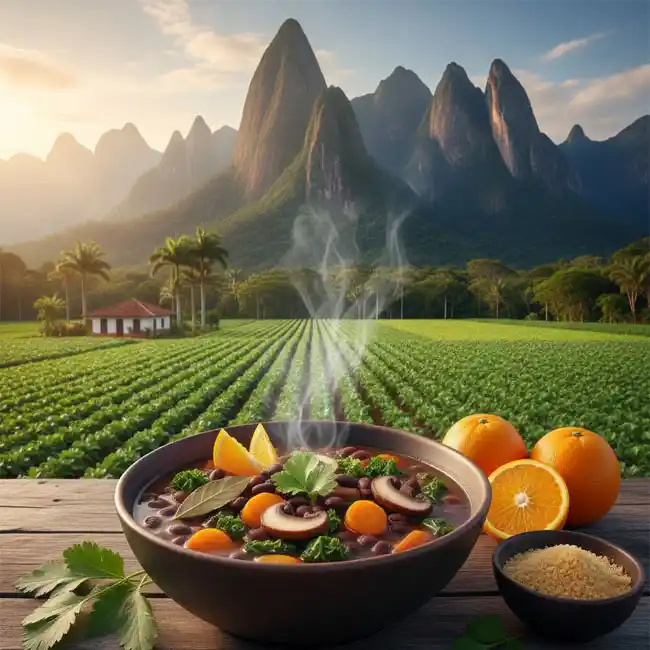
🎀 Recipe 2: Feijoada Vegetariana (Meatless Black Bean Stew)
🧡 About this Recipe
Feijoada (pronounced fay-zhwah-da) is Brazil's beloved national dish—a deep, smoky, and hearty black bean stew. While traditionally made with various cuts of pork and beef, this vegetarian version captures the depth of flavor and texture using smoked tofu, plant-based sausage, and key aromatics, making it just as satisfying and comforting as the classic. It's a fantastic, high-protein main dish, traditionally served on Wednesdays and Saturdays.
🍄 Ingredients & Measurements
Here’s what you need to build that classic smoky, savory flavor:
• Black Beans: 2 cups, dry (or 4 cans, rinsed and drained). If using dry, soak them overnight.
• Smoked Tofu: 8 ounces, cubed (provides the essential smoky flavor).
• Plant-Based Sausage: 4 ounces, sliced (use a hearty, savory flavor).
• Onion: 1 large, finely chopped.
• Garlic: 4 cloves, minced.
• Bay Leaves: 3 large.
• Vegetable Broth: 4 cups (or water, if you prefer).
• Orange: 1, cut into wedges (for serving).
• Olive Oil: 2 tablespoons.
• Salt and Pepper: To taste.
🍲 Step-by-Step Instructions
1.Cook the Beans: If using dry beans, drain the soaking water, place them in a large pot with fresh water or vegetable broth (enough to cover by 3 inches), and add the bay leaves. Bring to a boil, then reduce heat and simmer until the beans are tender but not mushy (about 1.5 - 2 hours).
2.Sauté Aromatics: In a separate large skillet, heat the olive oil. Add the chopped onion and cook until softened. Add the minced garlic and cook for 1 minute until fragrant.
3.Add "Meat": Add the cubed smoked tofu and sliced plant-based sausage to the skillet. Cook for about 5-7 minutes, allowing them to brown slightly and absorb the flavors of the onion and garlic.
4.Combine and Thicken: Once the black beans are tender, transfer the sautéed aromatic mixture (tofu/sausage) into the bean pot. Bring the mixture to a slow simmer. Mash a few spoonfuls of the beans against the side of the pot to naturally thicken the stew.
5.Simmer for Flavor: Continue to simmer the Feijoada for another 30 minutes, uncovered, stirring occasionally. This allows the smoky flavors from the tofu and sausage to infuse the beans. Add salt and pepper to taste. The stew should be thick and dark.
6.Serve: Serve hot with white rice, sautéed collard greens (couve à mineira), a sprinkle of farofa, and a wedge of fresh orange.
📝 Tips & Mistakes to Avoid
• Tip: The orange wedges are mandatory! They aren't just a garnish; the acidity is essential for cutting through the richness of the stew, aiding digestion and balancing the flavor.
• Mistake to Avoid: Do not rush the final simmer. The last 30 minutes, when the Feijoada is simmering uncovered, is crucial for thickening the stew and deepening the flavor.
• Tip: To enhance the smoke flavor, you can add a drop or two of liquid smoke to the stew, but be very cautious not to overdo it!
• Mistake to Avoid: If using canned beans, rinse them thoroughly before adding them to the pot to prevent the stew from becoming overly salty or foamy.
❓ FAQ
Q1: What can I use instead of smoked tofu?
A: Smoked tempeh is a great alternative! You can also use large mushrooms (like Portobello or Shiitake) to add an earthy, savory flavor, sautéing them well before adding them to the stew.
Q2: What is couve à mineira and is it necessary?
A: Couve à mineira is collard greens sautéed quickly with garlic and olive oil. It is highly recommended! The slight bitterness and freshness provide a perfect contrast to the heavy, savory Feijoada.
Q3: How long does Feijoada keep in the fridge?
A: Like most stews, Feijoada keeps exceptionally well—up to 5 days in the refrigerator. It also freezes beautifully!
✨ Summary
This Feijoada Vegetariana proves that you don't need meat to achieve deep, smoky, comforting flavor. It’s a hearty, nutritious, and deeply satisfying stew that truly embodies the spirit of Brazilian comfort food, perfect for a cozy weekend meal.
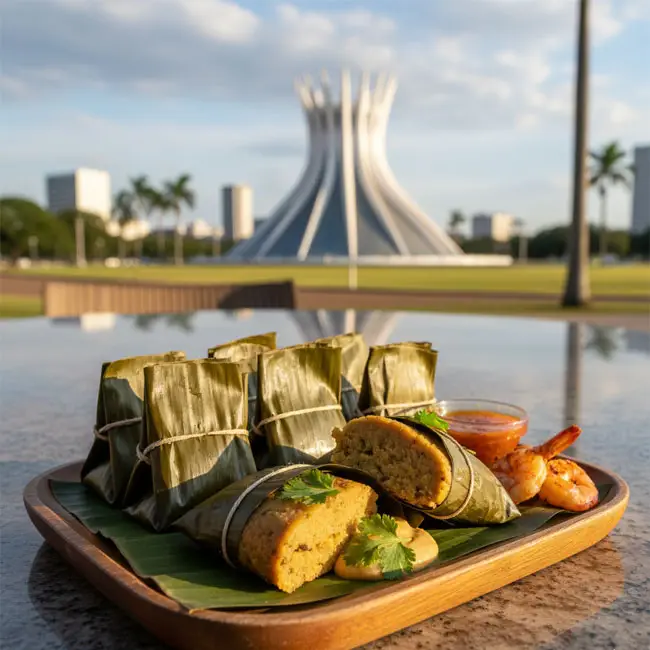
🌿 Recipe 3: Abará (Steamed Black-Eyed Pea Cake)
🥜 About this Recipe
Abará is a unique and wonderfully textural main dish from the state of Bahia, reflecting the strong West African influence in that region. It's a savory cake made from a paste of black-eyed peas, wrapped in banana leaves, and steamed. The steaming process gives it a dense, moist, and slightly gelatinous texture, and the banana leaf imparts a subtle, earthy aroma that is completely unique. It is often served with vatapá (a creamy paste) and caruru (okra stew), making it a complex and fascinating meal.
🍌 Ingredients & Measurements
The ingredients are simple, but the preparation requires time and patience!
• Black-Eyed Peas: 1 cup, dry (soaked overnight and then skinned/hulled).
• Onion: 1/2 medium, chopped.
• Dendê Oil: 3 tablespoons (red palm oil).
• Water: Just enough to blend the peas into a thick paste.
• Banana Leaves: 4 large sections, cleaned and cut into rectangles (about 10 - 12 inches).
• Salt: To taste.
🔪 Step-by-Step Instructions
1.Prepare the Peas: The most time-consuming step: Soak the black-eyed peas overnight. The next day, you must remove the skin (hull) from the peas. This is traditionally done by rubbing them together until the skins loosen, then rinsing them away.
2.Make the Paste: Place the hulled black-eyed peas, chopped onion, and a splash of water into a blender or food processor. Blend until you achieve a smooth, very thick paste (like a dense hummus). Add the salt.
3.Whip and Add Oil: Transfer the paste to a large bowl. Using a mixer or strong wooden spoon, whip the paste vigorously for about 10 minutes until it becomes lighter, slightly fluffy, and incorporates air. Slowly drizzle in 2 tablespoons of the dendê oil while continuing to whip.
4.Prepare the Wraps: Gently warm the banana leaf sections over a flame or in a large, dry skillet for a few seconds until they soften and become pliable (this prevents them from cracking when folding). Brush the inside of the leaves with the remaining 1 tablespoon of dendê oil.
5.Wrap and Steam: Spoon 1/4 of the pea paste onto the center of each banana leaf. Fold the sides of the leaf over the paste, then fold the ends, creating a neat, sealed packet. Place the packets in a steamer basket over boiling water.
6.Cook: Steam the Abará for 45-60 minutes, or until the paste is firm and cooked through.
7.Serve: Unwrap the hot Abará and serve immediately. Traditionally, it's served with a creamy side dish like vatapá or caruru for moisture and extra flavor.
📝 Tips & Mistakes to Avoid
• Tip: Use a food processor with an intermittent pulse function to help hull the peas without turning them immediately into a paste. You want them rough enough to separate the skins.
• Mistake to Avoid: Do not skip the whipping step! Whipping the paste is what incorporates air and gives the Abará its signature dense yet slightly airy, cooked texture.
• Tip: If you cannot find banana leaves, you can use parchment paper and aluminum foil, but you will miss the subtle, earthy flavor the banana leaf imparts.
• Mistake to Avoid: Do not add too much water to the pea paste during blending. The paste must be very thick, or the final cake will be watery and won't set properly during steaming.
❓ FAQ
Q1: Can I skip the hulling/skinning of the black-eyed peas?
A: It is strongly recommended not to skip this step. The hulling is essential for the smooth, creamy texture of the paste, and unhulled peas will result in a gritty final product.
Q2: What does Abará taste like?
A: It is savory and earthy, with the subtle aroma of the banana leaf. The dendê oil provides a rich flavor, and the texture is dense and moist, often compared to a savory, firm tamale or polenta.
Q3: Is Abará spicy?
A: The Abará itself is usually not spicy, just savory and seasoned with salt. However, it is almost always served with a spicy pepper sauce or a chili-infused vatapá or caruru on the side.
✨ Summary
Abará is a truly unique culinary adventure, offering a taste of authentic Afro-Brazilian Bahian cuisine. Its preparation is a labor of love, but the resulting steamed savory cake, rich with dendê oil and the scent of banana leaf, is a rewarding and incredibly delicious main dish unlike any other.
🌟 Final Thoughts
See? Diving into vegetarian Brazilian cuisine isn't hard at all—it's an exciting journey full of fresh vegetables, creamy textures, and comforting warmth. From the tropical smoothness of Moqueca de Palmito to the hearty, smoky depth of Feijoada Vegetariana, and the unique, earthy elegance of Abará, each dish offers a distinct piece of Brazil's culinary heritage.
These recipes prove that flavor knows no bounds and that the heart of Brazilian cooking—fresh ingredients, simple spices, and slow preparation—translates beautifully to plant-based eating.
Which of these three delicious vegetarian Brazilian main dishes are you going to try first? Tell us about your cooking adventure!
| 🇧🇷 🍝 < Back |