
🏠 Home > 🗺️ Recipes > 👑🍲 Royal Court Broths (Soups) > 🇧🇷 Brazil Royal Court Broths (Soups) Recipes
🇧🇷 👑🍲 Brazil Royal Court Broths (Soups) Recipes
Published by Supakorn | Updated: September 2026
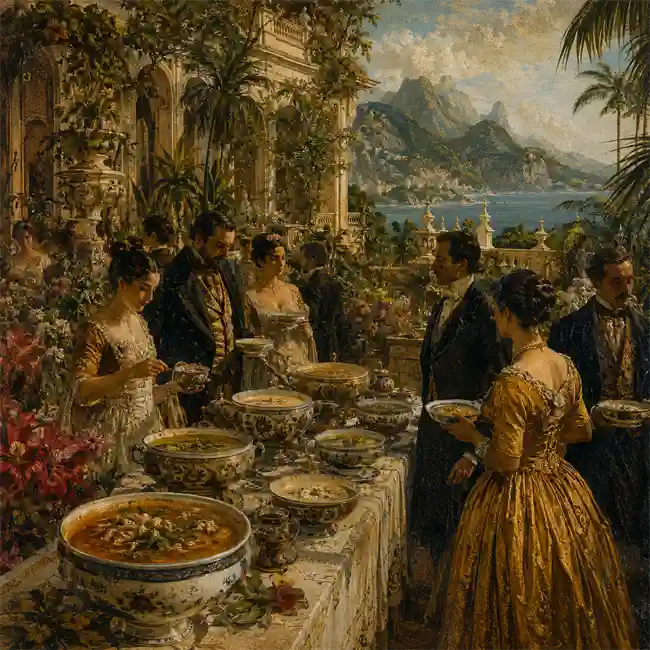
📜🤴 The Whispering Kitchens: 200 Years of Imperial Secrets Exposed
Ever wondered what kind of comfort food kept 19th-century emperors and high-society aristocrats warm during cool nights in Petrópolis? While standard history books love to obsess over royal court politics and grand territorial treaties, they completely miss out on the most intriguing part of daily elite life: the simmering, gold-rimmed soup tureen.
When the Portuguese Royal Court famously made their grand migration across the Atlantic to Rio de Janeiro in 1808, they didn't just pack up crown jewels and dusty legal archives. They brought along elite French-trained chefs, secret family ledger books, and a deep, decadent European obsession with rich, velvety broths. Over the next two centuries, those strictly guarded European techniques collided with the wild, magical bounties of the South American continent.
The lifestyle of Brazil’s old aristocracy wasn't just wealthy—it was spectacularly refined, heavily guarded, and quietly extravagant. Daily life inside the sprawling imperial estates revolved around strict dining protocols. The aristocracy viewed clear consommé and complex broths as the absolute pinnacle of aristocratic dining. To them, a clear broth wasn't just starter food; it was a showcase of pure patience, subtle wealth, and culinary mastery.
The story of Brazilian aristocratic broths unfolds across three distinct historical epochs:
• The Royal Arrival Era (1808–1822): The initial phase marked by heavy Portuguese court traditions blending directly with local tropical ingredients, adapting European clear bone broths with native roots and coastal harvests.
• The First & Second Empire Era (1822–1889): The height of imperial grandeur where French high-culinary techniques ruled court kitchens, turning native rainforest game and roots into silky, clarified elite broths fit for Emperor Dom Pedro II.
• The Post-Imperial Aristocratic Era (Late 1800s to early 1900s): The quiet era of private coffee baron estates and secluded noble mansions, where secret family broth recipes were strictly preserved in hand-bound leather journals, hidden away from the public eye.
🗺️ The Royal Culinary Tourism: Mapping Flavors to Historic Landscapes
Taking a trip to explore Brazil’s royal culinary past is like stepping right into a living history book. If you want to trace the steps of old nobility and taste the landscape that fed the empire, you have to look beyond the modern beach resorts and journey into the historic heartlands of the country.
• Rio de Janeiro’s Imperial Core: Walk through the narrow historic lanes of Centro and Santa Teresa, where court chefs used to source imported spices and fresh Atlantic catches. The coastal air here still carries the ghost of simmered seafood court-bouillons served to visiting European dignitaries.
• Petrópolis (The Imperial Mountain City): Nestled high in the misty Serra dos Órgãos mountains, this cool haven was where the court escaped summer heat. Here, rich root-vegetable broths, rich game extracts, and delicate herb infusion soups dominated cozy, fireside aristocratic banquets.
• The Historic Coffee Valley (Vale do Café): Sprawling coffee barons built luxurious plantations along the Paraíba River basin. Their grand estate dining halls hosted opulent multi-course banquets where slow-simmered, golden bone broths represented ultimate social prestige and elite hospitality.
🚣 Cradle of Royal Delicacies - Coastal & Basin Waters
The vast riverways and coastal bays of Brazil offered the imperial court an endless supply of pristine ingredients that were elevated into ultra-luxurious soups.
• Caldo de Mocotó Imperial: A ultra-rich, deeply gelatinous beef trotters broth that underwent a meticulous 48-hour clarifying process, transformed from peasant nourishment into an elite energy elixir for high-society banquets.
• Sopa Gold-Leaf Sururu da Baía: A silk-textured mussel velvet broth derived from coastal lagoons, enriched with heavy fresh cream and secret aromatic herbs, traditionally served in delicate silver tureens.
• Sopa Royale de Peixe e Urucum: A radiant, ruby-red clear fish broth infused with native annatto, sweet white river fish, and subtle ocean botanicals, crafted specifically to impress visiting foreign diplomats.
⛰️ Kingdom of Wild Aromatics & Heritage - Deep Highlands & Mountain Valleys
Up in the chilly mountain valleys and lush highland forests, aristocrats craved hearty, intensely aromatic soups made with rare, wild-foraged botanicals.
• Consommé de Taioba e Aves Nobres: A crystal-clear, triple-clarified wild pheasant broth layered with subtle, velvety velvet-leaf greens (taioba), historically reserved for late-night post-ball suppers.
• Canja da Imperatriz: A legendary, highly guarded imperial chicken soup variation simmered with slow-cooked heirloom birds, native mountain roots, and subtle wild herbs, famously favored for its restorative properties.
• Caldo de Inhame e Mandioca-Brava das Serras: A rich, buttery root broth rendered velvety smooth using complex labor-intensive steeping techniques to extract deep, earth-born sweetness from indigenous tubers.
👑 🤴 Royal FAQ: Unlocking Palace Kitchen Mysteries
Q1.Why were rich broths considered the ultimate luxury item among 19th-century Brazilian nobility?
High-end bone broths and crystal-clear consommés required immense physical labor, precision fire management, and endless hours of constant skimming. Having access to clear, highly concentrated broths proved a household possessed a massive, highly trained kitchen staff and unlimited culinary resources.
Q2.How did local indigenous ingredients make their way into strictly European-style court soups?
While head palace chefs were usually brought directly from France or Portugal, the day-to-day kitchen operations relied on talented local cooks. These domestic culinary masters subtly introduced native tubers, aromatic forest leaves, and unique coastal seafood into classic European broth bases, creating a totally unique aristocratic cuisine.
Q3.Are these historic royal broth recipes still served in everyday Brazilian restaurants today?
Not in their authentic, labor-intensive form. Most modern versions of Brazilian soups have been simplified over the decades into fast, rustic homestyle comfort dishes. The original, complex, multi-day clarifying and infusing techniques remain strictly preserved inside private family archives and historic estates.
🧠 Final Thoughts: The Timeless Allure of Aristocratic Gastronomy
There is something undeniably magical about sipping a broth crafted from a recipe that once warmed emperors, coffee barons, and high-society nobles centuries ago. These liquid masterworks represent an incredible bridge between centuries-old European culinary discipline and the wild, untamed natural riches of South America.
We are currently unlocking, translating, and testing these original, long-lost hand-bound imperial recipe ledgers to bring these exact aristocratic flavors into your home kitchen. Bookmark this page, keep your soup pots ready, and stay tuned—the step-by-step secret recipe breakdowns will be dropping very soon!
👑 Credit to the Keepers of the Culture (The Legacy)
We extend our deepest gratitude and respect to the historical archivism community, regional culinary historians, estate preservationists of the Vale do Café, and the dedicated keepers of Brazilian heritage. Your tireless commitment to preserving hand-written family manuscripts, estate ledgers, and oral traditions ensures that the extraordinary art of Brazilian aristocratic gastronomy continues to inspire food lovers across the globe.
👑🍲 Rediscovering 200 Years of Aristocratic Brazilian Broth Secrets
👉 Unlock Rare Brazilian Royal Court Broths
| 🌐 👑🍲 < Back | 🇧🇷 👑🍷 < Previous | Next > 🥗👑 🇧🇷 |