
🏠 Home > 🗺️ Recipes > 🍞 Breads > 🇰🇭 Cambodia Breads > 🍞 Num Pang (The Iconic, Crispy Khmer Baguette Sandwich) , Num Ansorm Chek (The Beloved, Aromatic Banana Sticky Rice Cake) , Nom Akor (The Soft, Traditional Steamed Rice Cake)
🍞 The Essential Guide to Khmer Comfort Food: 3 Classic Cambodian Breads & Pastry Recipes
Published by Supakorn | Updated: February 2026
Introduction
Hey there, fellow food adventurer! If your culinary bucket list is all about finding hidden gems and authentic flavors, then you’re in the absolute right place. Forget what you think you know about Southeast Asian food for a moment, because we’re diving deep into the heart of Khmer cuisine, focusing on the incredible, often-overlooked world of Cambodian bread, pastries, and rice cakes.
Cambodian food is an art form—a perfect balance of sweet, sour, salty, and a unique umami that you won't find anywhere else. While globally recognized dishes like Amok (fish curry) and Kuy Teav (noodle soup) get a lot of attention, it's the street snacks and comfort-food pastries, known collectively as Num (meaning 'cake' or 'pastry'), that truly tell the everyday, comforting story of the Khmer kitchen. Many of these recipes have been carefully passed down through generations, embodying a unique blend of local, tropical ingredients, a delicious legacy of French colonial influence, and the subtle, shared traditions of neighboring cultures.
There's a beautiful, understated history in every bite of a Num. The French influence, particularly in the ubiquity of the baguette, highlights a colonial past integrated into modern daily life, while the sticky rice cakes trace back to ancient traditions and agrarian roots. These aren't just recipes; they are edible pieces of Cambodian heritage.
And the best part? They’re totally doable right in your own kitchen! You don't need a special street-food wok or a massive steamer—just a little patience and a lot of heart.
In this ultimate, long-form guide (designed to be your definitive resource for a weekend project!), we’re going to walk you through three must-try classics. Get ready to bake, steam, and fry your way to an authentic Khmer experience with:
1.Num Pang (The Iconic, Crispy Khmer Baguette Sandwich)
2.Num Ansorm Chek (The Beloved, Aromatic Banana Sticky Rice Cake)
3.Nom Akor (The Soft, Traditional Steamed Rice Cake)
We’ll break down each recipe with friendly, step-by-step instructions, insider tips for achieving that perfect texture, and—crucially—how to avoid the common pitfalls that even seasoned cooks run into. By the time you’re done, you’ll feel like you’ve taken a culinary trip straight to the markets of Phnom Penh or Siem Reap. Let’s get our hands (and kitchens!) messy and start cooking!

🔹 Recipe 1: Num Pang (The Iconic Khmer Baguette Sandwich)
About this Recipe
Think of Num Pang as Cambodia's incredibly delicious and texturally satisfying answer to the sandwich world. It’s the king of street food, a quick, portable, and utterly satisfying meal you’ll find vendors assembling with practiced, lightning-fast hands on nearly every urban street corner. The name Num Pang itself is deceptively simple, translating directly to "bread" or "sandwich."
The dish is a direct culinary legacy from the French colonial era. While it uses a baguette (or more specifically, a demi-baguette which is shorter, lighter, and has a thinner, more shatteringly crisp crust than the traditional French version), the filling and flavor profile is 100% Khmer. The soul of a truly great Num Pang lies in the interplay between four essential elements: the shatteringly crispy bread, the rich, savory protein (often pork or pâté), the refreshing, crunchy quick pickle (ach cha), and the aromatic, fresh herbs. It’s a multi-sensory experience that keeps locals and travelers coming back for more.
We're going to focus on one of the most popular varieties: a savory grilled Pork Num Pang (Num Pang Sach Chrouk), emphasizing flavor development at every stage, from the marinade to the final assembly.
Ingredients & Measurements
For the Quick Pickled Vegetables (Ach Cha):
- 2 large Carrots, julienned (cut into thin matchsticks)
- 1 large Daikon Radish, julienned (highly recommended for authentic crunch and tang)
- 1 cup Water
- ½ cup White Vinegar
- ¼ cup Sugar
- 1 tsp Salt
For the Grilled Pork Filling:
- 1.5 lbs (680g) Pork Shoulder or Pork Loin, sliced thin (about ¼-inch thick)
- 3 Tbsp Hoisin Sauce
- 2 Tbsp Maggi Seasoning (or high-quality soy sauce)
- 1 Tbsp Palm Sugar or dark brown sugar
- 1 tsp Five-Spice Powder
- 1 tsp Sesame Oil
- 1 clove Garlic, minced
For Assembly:
- 4 small Demi-Baguettes (or short, light French rolls, 6–7 inches long)
- 4 Tbsp Mayonnaise (creamy, whole-egg type is best)
- 2 Tbsp Pork Pâté (optional, but adds a traditional rich flavor)
- Fresh Cilantro (coriander) sprigs
- Fresh Mint and Thai Basil leaves
- 1 small Cucumber, sliced thin, lengthwise
- Sliced Jalapeño or bird's eye chili (optional, for heat)
Step-by-Step Instructions
Step 1: Make the Pickles (Start this first!)
1.In a small saucepan, bring the water, vinegar, sugar, and salt to a boil. Stir constantly until the sugar and salt are completely dissolved. Remove from heat and let this pickling liquid cool completely. This is essential.
2.Place the julienned carrot and daikon in a clean jar or bowl. Pour the cooled liquid over them, ensuring the vegetables are submerged.
3.Cover and let the vegetables pickle for a minimum of 30 minutes, but ideally 2–3 hours in the fridge. This softens them slightly while giving them a crisp, tangy bite. Drain well before use—excess liquid is the enemy of a crisp sandwich!
Step 2: Marinate and Cook the Pork
1.In a medium bowl, combine the Hoisin sauce, Maggi seasoning, palm sugar, five-spice powder, sesame oil, and minced garlic. Stir until the sugar is dissolved.
2.Add the thinly sliced pork to the marinade, ensuring every piece is coated. Marinate for at least 1 hour, or ideally 4 hours up to overnight in the refrigerator.
3.Cook the Pork: You can grill, broil, or pan-fry the pork.
4.Grilling/Broiling: Place pork slices on a lined baking sheet or hot grill. Cook for about 3–5 minutes per side, until fully cooked, slightly charred, and beautifully caramelized.
5.Pan-Frying: Heat a thin layer of oil in a skillet over medium-high heat. Fry the slices in batches until golden brown.
6.Once cooked, slice the pork into thin, bite-sized strips. Keep warm.
Step 3: Prepare the Bread and Spreads
1.The Baguette: Preheat your oven to 350°F (175°C). Place the demi-baguettes directly on the rack for just 2–3 minutes. This revives the crust, making it incredibly crisp, while leaving the interior soft and warm. Do not overheat or they will become hard.
2.Slice the baguette lengthwise, but do not cut all the way through. It should open like a book.
3.The Spreads: Generously spread a layer of mayonnaise on both inside surfaces of the bread. If using pâté, spread a thin layer of that first on one side—it adds incredible depth and richness, a classic Khmer touch.
Step 4: Assemble the Num Pang
1.Layer the warm, sliced pork generously on the bottom half of the baguette.
2.Add a hearty handful of the drained pickled vegetables on top of the meat.
3.Place a layer of thin cucumber slices.
4.Finally, tuck in a generous amount of fresh cilantro, mint, and Thai basil sprigs—the herbs are crucial for that authentic, bright flavor.
5.If you want heat, add a few slices of chili.
6.Close the sandwich, press gently, and enjoy immediately, preferably while the bread is still slightly warm and crunchy!
Tips & Mistakes to Avoid
Pro Tip: The Bread Matters (Again!)
- Seek out a light, thin-crusted baguette. The ideal Khmer bread is airy inside and very crisp outside. Too dense a bread will make the sandwich too heavy and throw off the ratio.
Mistake to Avoid: Hot Pickling Liquid
- Ensure the pickling liquid is cold when you add the vegetables. If you pour hot liquid over them, they will cook and lose their essential crunch.
The Pâté Barrier
- The spread (mayo/pâté) is not just for flavor; it’s a crucial moisture barrier that stops the sauces, meat juices, and pickles from soaking into the bread and making it soggy. Spread it thick!
Flavour Boost: Maggi
- If you can find Maggi Seasoning, use it in the pork marinade and even a light drizzle in the sandwich. It provides a unique, savory, umami flavor profile widely used in Cambodian cuisine.
FAQ
Q: Can I use a different protein for my Num Pang?
A: Absolutely! Num Pang is incredibly versatile. Other classic Cambodian fillings include tinned sardines in tomato sauce (Num Pang Trey Khaw), grilled lemongrass beef skewers, or even fried eggs (often combined with pâté and mayo).
Q: What if I can’t find a demi-baguette?
A: Use a standard French baguette, but choose one with the lightest possible crust. Cut it down to a shorter length (6-7 inches) and make sure you warm it in the oven briefly to achieve that delightful crackle.
Q: How far in advance can I make the pickles?
A: The ach cha (pickles) can be prepared up to a week in advance and stored in the refrigerator. In fact, they taste better the next day!
Summary
The Num Pang is a true culinary masterpiece that perfectly encapsulates Cambodia’s unique historical and culinary blend in one crunchy, satisfying handful. It’s proof that simple, fresh ingredients, prepared with attention to texture, can result in world-class street food—and now you can make it at home!
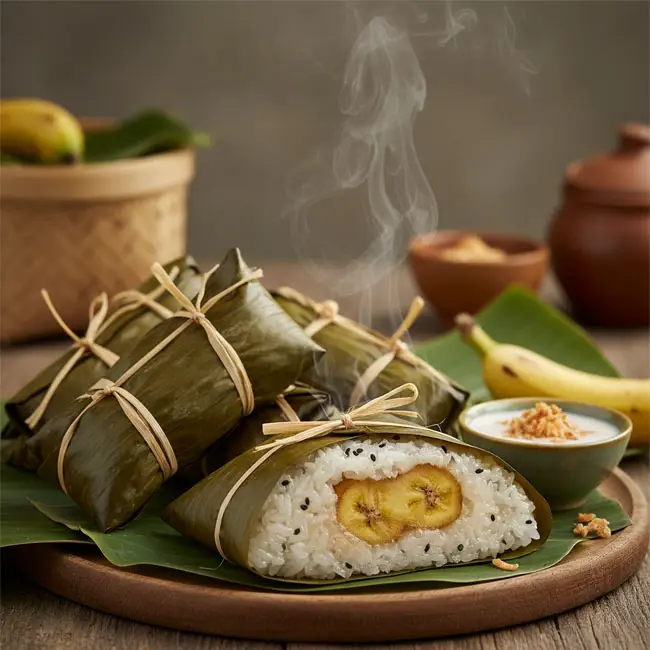
🔹 Recipe 2: Num Ansorm Chek (The Beloved Banana Sticky Rice Cake)
About this Recipe
Switching from savory street food to a traditional sweet delight, we find Num Ansorm Chek. This is much more than just a dessert; it’s a cultural icon, particularly cherished and prepared communally during important Khmer holidays like Pchum Ben (Ancestors' Day) and Khmer New Year.
Num Ansorm Chek translates literally to "Cake Wrapped Banana." It is a beautifully simple, naturally sweet, and incredibly comforting treat made from glutinous rice (sticky rice), enriched with coconut milk, and filled with a ripe, creamy whole banana. The whole assembly is tightly wrapped and steamed in banana leaves. The steaming process infuses the rice with the earthy, sweet aroma of the leaf, while the sticky rice cooks down to an incredibly tender, dense, and fragrant block, perfectly encasing the sweet, soft banana.
The cylindrical shape of the Num Ansorm is itself symbolic, representing the phallic deity Shiva in ancient tradition, while its counterpart, the pyramid-shaped Num Kom, represents his consort, Uma. Making and tying these cakes is a communal, joyful activity—a true taste of Khmer family tradition.
Ingredients & Measurements
For the Sticky Rice:
- 3 cups Glutinous Rice (sweet sticky rice), rinsed until water runs clear and soaked overnight
- 1.5 cups Coconut Milk (full-fat)
- ½ cup Sugar (use palm sugar for the most authentic flavor)
- 1 tsp Salt
- ½ cup Grated Fresh Coconut (optional, adds texture and aroma)
For the Filling & Wrapping:
- 8–10 Ripe Bananas (preferably small, firm-ripe varieties like Chek Nam Va or plantains, peeled)
- Banana Leaves, cut into large rectangles (approx. 15x18 inches for a good wrap)
- Twine or cooking string
Step-by-Step Instructions
Step 1: Prep the Rice and Bananas (The day before/morning of)
1.Soak and Drain: Rinse the glutinous rice thoroughly until the water is completely clear, then soak it in fresh water overnight (or a minimum of 6 hours). Drain the rice extremely well the next day, letting it sit in a sieve for 15-20 minutes.
2.Flavor the Rice: In a large bowl, combine the drained rice, coconut milk, sugar, salt, and grated coconut (if using). Stir well until everything is evenly combined.
3.Let the mixture sit for 30 minutes to allow the rice grains to begin absorbing the flavorful coconut liquid.
Step 2: Prepare the Banana Leaves
1.Wipe the banana leaves clean with a damp cloth.
2.Soften the Leaves: The leaves need to be pliable so they don't tear when folding. Quickly pass the leaves over a low, direct stove flame (or pour boiling water over them) until they turn a brighter, glossy green and feel soft. This makes them much easier to work with.
3.Cut the twine into 18-inch lengths, ready for tying.
Step 3: Assemble the Cakes
1.Lay a prepared banana leaf rectangle flat, with the shiny side down. Place a smaller, narrower piece of leaf in the middle for extra padding.
2.Spread about ½ cup of the sticky rice mixture in a thick, long strip down the center of the leaf, leaving space at the edges.
3.Place one whole, peeled banana (or two halves, depending on the banana size) on top of the rice strip.
4.Cover the banana completely with an additional ½ cup of the sticky rice mixture, patting it down gently to form an even, compact log. The banana should be fully encased in rice.
5.Fold and Wrap: Bring the two long sides of the banana leaf together over the rice log and fold the seam down neatly to seal.
6.Gently tuck the shorter ends inward to create a neat, compact cylindrical packet. Stand the cake on its end, gently press the rice to compact it, and fold the top closed.
7.Secure: Tightly wrap the cylinder with kitchen twine, tying it off at the center and both ends to keep the shape perfectly compact during steaming. Repeat until all the rice and bananas are used.
Step 4: Steam and Serve
1.Arrange the tightly wrapped cakes in a large steamer basket. The cakes can be stacked or placed upright.
2.Steam over rapidly boiling water for a minimum of 1 to 1.5 hours. This long steaming time is critical for the dense glutinous rice to cook fully, resulting in that tender, sticky texture.
3.Remove from the steamer and let them cool for at least 30 minutes. Num Ansorm Chek is delicious served slightly warm or at room temperature.
4.To serve, simply unwrap the string and banana leaf, and slice the cake into thick, circular pieces.
Tips & Mistakes to Avoid
Pro Tip: Banana Firmness
- Use firm-ripe bananas. If they are too soft or overripe, they will turn mushy and dissolve during the long steaming process. They need to hold their shape!
Mistake to Avoid: Rushing the Steam
- Do not reduce the steaming time! This is the biggest mistake. Undercooked sticky rice is chalky and grainy. The 1–1.5 hours ensures the starch is fully gelatinized and the cake becomes perfectly tender.
Tying Tightly
- Tie the packages as tightly as you can. A loose wrap allows water to seep in, and the rice won’t hold its perfect cylindrical shape.
Flavor Variation
- For the savory holiday version, Num Ansorm Chrouk, you can replace the banana with a center filling of savory seasoned pork belly and mung beans.
FAQ
Q: Can I use regular rice instead of glutinous rice?
A: No, you must use glutinous rice (or sweet sticky rice). Regular rice will not achieve the required dense, sticky, and cohesive texture of the final cake.
Q: How long can I store Num Ansorm Chek?
A: Due to the banana leaf wrap and the long steaming, these cakes keep very well. At room temperature, they can last 2–3 days. Refrigerated, they can last up to a week. They are often eaten over several days during festivals.
Q: What if I can’t find palm sugar?
A: You can substitute brown sugar, but reduce the amount slightly. Palm sugar adds a deeper, slightly caramel flavor that is traditional to the region.
Summary
Num Ansorm Chek is a glorious testament to the power of simple, natural ingredients. The transformation of the hard rice grains into a tender, fragrant, banana-filled delight is a magical process, resulting in a sweet that is deeply connected to Khmer culture and family traditions.

🔹 Recipe 3: Nom Akor (The Soft, Traditional Steamed Rice Cake)
About this Recipe
Rounding out our Khmer street food journey, we arrive at Nom Akor, a classic Cambodian Steamed Rice Cake. This simple dessert holds deep cultural significance and is recognized for its unique, fluffy, sponge-like texture and gentle sweetness.
The name Nom Akor is often associated with the rice cake made with palm sugar (tnout), which imparts a subtle caramel color and a uniquely aromatic flavor traditional to the region. The characteristic soft, bouncy texture comes from the use of both rice flour and a leavening agent (often yeast), which requires the batter to rest (ferment) before being steamed. The cake is typically steamed in small, round cups and served topped with a spoonful of rich, salty-sweet coconut cream and sometimes fresh shredded coconut. It is the texture—soft and slightly moist with an airy chew—that makes this comfort food so beloved across Cambodia.
Ingredients & Measurements
For the Rice Cake Batter:
- 2 cups Rice Flour (not glutinous)
- ½ cup Tapioca Starch or Corn Starch
- 1 cup Warm Water (around 100°F / 38°C)
- 1 tsp Instant Dry Yeast
- 1 cup Palm Sugar (or light brown sugar), chopped
- ½ cup Thick Coconut Milk
- ½ tsp Salt
- Optional: ½ cup Palm Fruit Pulp (Nom Akor Tnout) or 1 tsp Pandan Extract for flavor/color
For the Coconut Cream Topping (Ktis):
- 1 cup Thick Coconut Milk (or coconut cream)
- 1 Tbsp Rice Flour
- ½ tsp Salt
- 1 Tbsp Sugar
Equipment:
- Small, lightly oiled Steaming Cups/Ramekins (e.g., 1.5 inch diameter)
- Steamer Basket
Step-by-Step Instructions
Step 1: Activate Yeast and Dissolve Sugar
1.Activate: In a small bowl, dissolve the yeast and a pinch of sugar in the warm water. Let it sit for 5–10 minutes until a light foam forms on top.
2.Dissolve Sugar: In a saucepan, gently heat the palm sugar with the coconut milk and salt, stirring until the sugar is fully dissolved. Do not boil the mixture. Remove from heat and allow this sugar mixture to cool completely to room temperature.
Step 2: Prepare and Ferment the Batter
1.Combine Dry Ingredients: In a large mixing bowl, whisk together the rice flour and tapioca/corn starch.
2.Mix Batters: Pour the cooled sugar-coconut mixture and the activated yeast mixture into the dry ingredients. Whisk thoroughly until the batter is smooth. Add any optional flavors (like pandan extract) now.
3.Strain: Strain the batter through a fine-mesh sieve to ensure a silky, lump-free texture.
4.Ferment: Cover the bowl loosely with plastic wrap or a kitchen towel. Place the batter in a warm, draft-free spot for 2–4 hours (or until the batter has doubled in size and looks bubbly/spongy on top). This fermentation is key for the fluffy texture.
Step 3: Prepare the Topping and Steam the Cakes
1.Topping: While the batter rests, prepare the topping. Whisk together all the Coconut Cream Topping ingredients (Ktis) in a small saucepan. Heat gently, stirring constantly until the mixture thickens slightly to a custard-like consistency. Set aside.
2.Prep Steamer: Bring the water in your steamer to a strong, rolling boil. Lightly oil the inside of your small steaming cups/ramekins.
3.Steam Cakes: Gently stir down the fermented batter. Pour the batter into the prepared cups, filling them about ¾ full.
4.Steam: Place the cups in the steamer basket. Steam over high, rolling heat for 15–20 minutes. The cakes are done when they are fluffy, slightly risen, and a toothpick inserted into the center comes out clean.
Step 4: Serve
1.Cool: Carefully remove the Nom Akor cups from the steamer. Let them cool for 10 minutes to set.
2.Unmold and Top: Gently run a knife around the edges and unmold the cakes onto a serving plate.
3.Serve: Spoon a generous dollop of the cooled, thick Coconut Cream Topping (Ktis) onto each cake. Garnish with fresh shredded coconut if desired. Serve warm or at room temperature.
Tips & Mistakes to Avoid
Pro Tip: Warmth is Key
- The yeast needs warmth to activate and ferment the batter. Ensure the water is warm (not hot!) and the resting location is warm for a good rise.
Mistake to Avoid: Hot Sugar Mixture
- You must let the palm sugar/coconut milk mixture cool completely before mixing it with the yeast. Hot liquid will kill the yeast, and your cakes will not rise or become fluffy.
The Steam Test:
- Do not lift the steamer lid during the first 10 minutes of steaming, as the sudden drop in temperature can make the cakes collapse and become dense.
Serving Topping:
- The topping is typically salty-sweet and thick. Don't skip the salt—it perfectly balances the sweetness of the cake.
FAQ
Q: Can I skip the fermentation step?
A: No. The fermentation is essential for the soft, airy, and fluffy texture of Nom Akor. Without it, you will get a dense, hard rice cake.
Q: What if I can't find palm sugar?
A: You can substitute dark brown sugar, but reduce the amount slightly. However, the unique aroma of palm sugar is traditional and highly recommended.
Q: Why did my cake collapse when I opened the steamer?
A: This usually means the cake was either undercooked or you opened the lid too early (within the first 10 minutes). Ensure the steam is high and strong throughout the process.
Summary
Nom Akor is a gentle and traditional dessert, showcasing the comforting flavors of coconut and fermented rice. The rewarding process of preparing the batter and watching it transform into a fluffy, soft cake under steam is a beautiful culinary experience—a true, authentic taste of Khmer heritage.
Final Thoughts
We've covered some serious ground today, moving through three phenomenal dishes that form the backbone of Cambodia's comfort food scene. We've mastered the crunchy, savory Num Pang; embraced the traditional, sweet tenderness of Num Ansorm Chek; and perfected the comforting, fluffy sweetness of Nom Akor.
These recipes prove that you don't need a trip across the globe to bring authentic, complex, and beautiful flavors into your kitchen. These Num are all about balancing simple, accessible ingredients (rice, coconut, banana, chives) with traditional techniques (soaking, steaming, frying) passed down through families.
The real joy of Khmer cooking is in the discovery and the process. Don't worry if your first Num Ansorm Chek tie isn't perfect, or if your first batch of Num Kachay is slightly too sticky. Practice makes perfect, and every attempt is a delicious journey.
We encourage you to choose one of these recipes as your weekend project. Which Num are you going to tackle first, and what authentic Khmer flavor are you most excited to try? Dive in, and don't forget to share your culinary success!
| 🇰🇭 🍞 < Back |