
🏠 Home > 🗺️ Recipes > 🍝 Main Dishes > 🇰🇭 Cambodia Main Dishes
🇰🇭 🍝 Cambodia Main Dishes Recipes
Published by Supakorn | Updated: February 2026
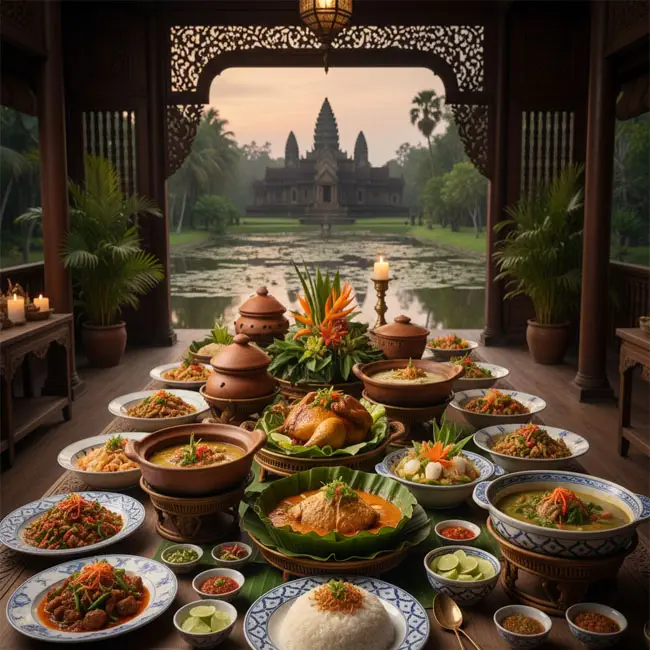
🍝🇰🇭 Introduction to Cambodian Main Dishes
Cambodian main dishes are hearty, comforting, and full of balanced flavors. Khmer cuisine emphasizes freshness and harmony, combining herbs, spices, and sauces that reflect centuries of tradition. These meals are not just food but part of the country’s cultural identity, often enjoyed with rice as the centerpiece of the table. Whether simmered in coconut milk, grilled over charcoal, or stir-fried with fragrant herbs, Cambodian main dishes bring people together with warmth and flavor.
🌾🇰🇭 A Deeper Look Into Cambodian Food Culture
🥥 The Heart of the Khmer Table – Rice and Fresh Ingredients
If there’s one thing that truly represents Cambodian everyday life, it’s rice. In Cambodia, rice isn’t just a side dish—it’s the soul of the meal. Most main dishes are designed with rice in mind, either to balance bold flavors or to soak up rich sauces.
Fresh herbs like lemongrass, Thai basil, and kaffir lime leaf are used generously. They’re not just for aroma; they define the identity of Khmer cuisine. Vegetables are often picked fresh from local markets, and fish is a daily staple thanks to the Tonlé Sap and the Mekong River.
Khmer cooking isn’t heavy or overwhelming. Instead, it’s about balance—light, aromatic, and comforting.
🍃 The Importance of Kroeung (Khmer Spice Paste)
Kroeung is the heart and backbone of many Cambodian dishes. It’s what gives curries, soups, and stir-fries their signature aroma. This unique paste blends lemongrass, galangal, turmeric, garlic, and kaffir lime zest. That’s why even simple dishes feel layered and complex.
Without kroeung, it’s almost impossible to describe the true soul of Khmer cooking.
🔥 Slow Cooking, Steaming, and Stir-Frying – Traditional Cambodian Methods
Cambodian cuisine uses gentle cooking techniques that preserve freshness and texture.
• Steaming keeps curries silky smooth (like the famous Fish Amok).
• Slow simmering extracts natural sweetness from herbs and vegetables.
• Stir-frying adds fragrance and allows ingredients to shine with minimal seasoning.
These traditional methods have been passed down for generations, creating dishes that feel warm, homey, and deeply connected to Khmer heritage.
🍛🇰🇭 Popular Cambodian Main Dishes You Should Know
Below are dishes that truly represent Cambodian culture and appear at family tables, small eateries, and traditional gatherings.
🐟 Fish Amok (Amok Trey)
Fish Amok is often referred to as the national dish of Cambodia. It’s creamy, fragrant, and beautifully balanced. The steamed curry, made with coconut milk and kroeung, has a soft custard-like texture. Traditionally served in banana leaf cups, the aroma is delicate—not too spicy, not too sweet, just perfectly Cambodian.
Fish Amok immediately shows how Khmer cuisine combines mild spices, fresh herbs, and gentle cooking in a harmonious way.
🥩 Lok Lak (Beef Stir-Fry)
Lok Lak is a comforting yet refreshing dish featuring stir-fried marinated beef. It’s usually served with lettuce leaves, tomatoes, cucumbers, and rice. The highlight, however, is the lime-pepper dipping sauce. It’s bright, sharp, and cuts through the richness of the meat beautifully.
Lok Lak is a perfect example of Cambodian fusion — influenced by French techniques but made uniquely Khmer.
🍲 Samlor Machu (Sour Soup)
Samlor Machu is a vibrant soup that hits every flavor note: sour, sweet, salty, and fresh. Made with tamarind, herbs, and seasonal vegetables, it often includes fish or pork. It’s refreshing, comforting, and widely loved across Cambodian households.
This soup showcases how Khmer cuisine masterfully blends simplicity with layered complexity.
🥘 Kari Sach Moan (Khmer Chicken Curry)
This dish is rich but mild, perfect for anyone who prefers gentle flavors. Khmer curry uses kroeung and coconut milk but avoids the intense heat found in other Southeast Asian curries.
Served with rice or sometimes baguette, it beautifully combines Cambodian tradition with French culinary influence.
🍖 Cha Kroeung (Stir-Fried Meat with Spice Paste)
Cha Kroeung is vibrant, aromatic, and packed with flavor. Using kroeung as the base, meat is stir-fried with lemongrass, chilies, and vegetables, creating a dish that smells as good as it tastes.
It’s a dish that instantly warms the home—simple, rustic, and deeply Cambodian.
🐠 Trey Cha Kdam (Stir-Fried Crab with Pepper)
Pepper from Kampot is famous worldwide, and this dish celebrates it perfectly. The fragrance of Kampot pepper mixed with crab makes Trey Cha Kdam unforgettable.
The flavor is lively without being too spicy, and the pepper adds a natural heat that enhances the sweetness of the crab.
🧭🍽️ What Makes Cambodian Main Dishes Truly Special?
🍯 The Balance of Sweet, Sour, Salty, and Bitter
One of the most distinctive features of Cambodian cuisine is balance. Instead of overwhelming heat or excessive sweetness, Khmer dishes blend flavors in harmony.
Palm sugar, tamarind, lime, fermented fish paste (prahok), and herbs all contribute to a layered, balanced experience.
🧂 The Role of Prahok in Traditional Dishes
Prahok is fermented fish paste, often called “the spirit of Khmer cuisine.” While it’s strong on its own, when used correctly it brings unbelievable umami depth.
Many main dishes rely on prahok to create savory complexity that you won’t find anywhere else.
🥬 Fresh Herbs as Flavor Enhancers
Khmer cooking uses herbs with intention.
• Lemongrass adds brightness
• Kaffir lime leaf adds citrus fragrance
• Thai basil adds sweetness
• Turmeric adds earthiness
This herbal identity is what sets Cambodian food apart from neighboring cuisines.
🏡🇰🇭 Cambodian Dining Traditions and Everyday Eating Culture
👨👩👧👦 Family Meals and Shared Plates
In Cambodia, eating is a communal experience. Dishes are shared, and rice is placed at the center of the table. Every meal becomes a moment of connection—families talk, share stories, and enjoy warm home-cooked food together.
🧺 Local Markets as the Source of Freshness
Morning markets are the heartbeat of Cambodian food culture. Fresh herbs, vegetables, fish, and spices arrive daily. Most Khmer dishes are cooked the same day ingredients are bought because freshness is everything.
🚫 Mild Flavors, Comfort, and Balance – The Khmer Preference
While other Southeast Asian cuisines may lean heavily into spiciness or sweetness, Cambodian food stays gentle and soothing. It’s flavorful but not overwhelming, perfect for daily meals and family-style dining.
🍽️🇰🇭 Why Cambodian Main Dishes Deserve the Spotlight
🌿 A Cuisine Rooted in Nature
Cambodian dishes rely on what the land provides—fresh vegetables, river fish, wild herbs, and natural spices. This makes Khmer food feel earthy and authentic.
📜 Centuries of History in Every Bite
Khmer cuisine has been shaped by ancient kingdoms, river-based communities, and influences from neighboring cultures. Every dish carries a story.
☀️ Comforting, Flavorful, and Perfect for Everyday Eating
Khmer dishes aren’t just delicious—they’re practical. Easy to enjoy daily, gentle on the palate, yet rich in natural flavor. That’s why they’re loved across generations.
❓ FAQ
Q1: What is the most famous Cambodian main dish?
Fish Amok (Amok Trey) is considered the national dish of Cambodia and is widely loved for its creamy, flavorful curry.
Q2: Are Cambodian main dishes healthy?
Yes. Many dishes use fresh vegetables, herbs, and lean proteins, making them both nutritious and well-balanced.
Q3: Do Cambodian main dishes always include rice?
Rice is a staple in Cambodia and often accompanies main dishes, but some meals, like noodle soups or stir-fries, can be enjoyed on their own.
🍝 A Culinary Voyage to the Kingdom of Wonder: 3 Traditional Cambodian Main Dishes You Need to Master
| 🌐 🍝 < Back | 🇰🇭 🥪 < Previous | Next > 🍨 🇰🇭 |