
🏠 Home > 🗺️ Recipes > 🥗 Salads > 🇰🇭 Cambodia Salads > 🥗 Plea Sach Ko (Cambodian Beef Salad) , Nhoam Svay Trei Cha'eur (Green Mango Salad with Smoked Fish) , Nhoam Trayong Chek (Banana Flower Salad with Chicken)
🥗 Authentic Cambodian Salads: Three Must-Try Recipes You Can Master at Home
Published by Supakorn | Updated: February 2026
Introduction
If you think a salad is just a bland bowl of lettuce, you haven't met the salads of Cambodia. Known as Nhoam or Plea (depending on the type), these are not your average light sides. They are vibrant, textural, and wildly flavorful. Think a perfectly balanced symphony of sweet, sour, salty, and spicy, often with a subtle, savory funk from fermented ingredients that anchors the flavor profile.
Cambodian cuisine is gaining popularity around the globe for its refined, aromatic, and less-intense spice profile compared to its immediate neighbors. It leans heavily on fresh herbs, lime, palm sugar, and fish sauce to create dishes that are addictive and unique. These salads, in particular, showcase the genius of Khmer cooking—taking simple, fresh ingredients and transforming them into something complex and utterly unforgettable.
In this deep dive, we're skipping the basic stuff and going straight for the gold. We've handpicked three of the most iconic and delicious Cambodian salads for you to master. Whether you're a seasoned chef or a home cook looking for a new adventure, these recipes will bring a serious wow factor to your kitchen:
1.Plea Sach Ko (Cambodian Beef Salad) - A tangy, herbaceous salad often prepared "ceviche-style" where the beef is lightly cooked by citrus.
2.Nhoam Svay Trei Cha'eur (Green Mango Salad with Smoked Fish) - A crunchy, tart, and savory explosion of flavor.
3.Nhoam Trayong Chek (Banana Flower Salad with Chicken) - A stunning salad centered around the unique texture of the banana blossom.
Ready to unleash these incredible flavors? Let’s get chopping!
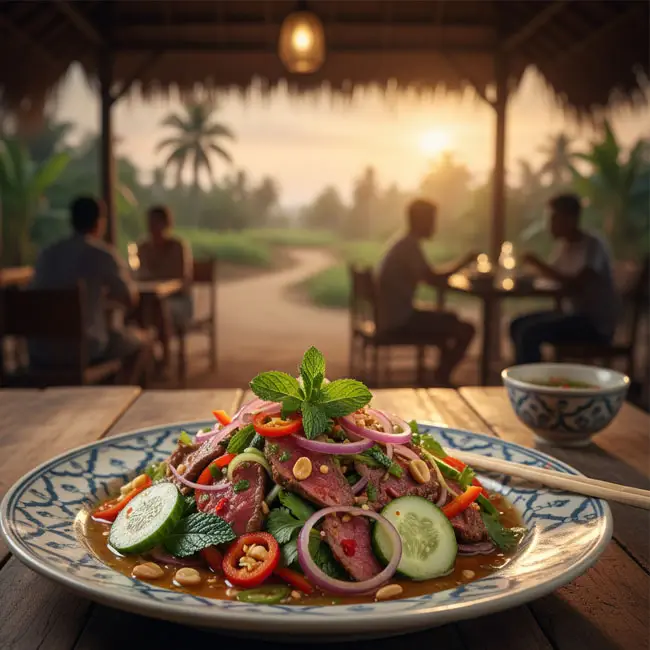
🔹 Recipe 1: Plea Sach Ko (Cambodian Beef Salad)
About this Recipe
Plea Sach Ko (ភ្លាសាច់គោ) literally translates to "sour meat salad," and it’s a powerhouse of a dish. It’s a Khmer staple that’s often compared to ceviche or even Thailand’s Yum Neua, but with its own distinct Cambodian twist. The magic here is the texture: paper-thin slices of beef that are lightly cooked by the acidity of the lime juice (a process called "citrus-curing" or "denaturation"). This leaves the beef tender and barely-cooked, soaking up the intensely aromatic marinade. Combined with a pile of fresh herbs and crunchy vegetables, it’s refreshing and satisfying all at once. For those nervous about raw beef, you can opt for a brief searing, but the traditional citrus-cured method is truly the way to go for the full experience.
Ingredients & Measurements
(Serves 4 as a side or 2 as a main)
For the Beef:
- 1 lb (450g) high-quality beef steak (tenderloin, sirloin, or eye of round), trimmed of fat. Must be very fresh and suitable for eating rare/raw.
- 1/2 cup fresh lime juice (about 4-5 limes)
- 2 Tbsp fish sauce
- 1 Tbsp palm sugar (or brown sugar), finely chopped/shaved
- 2 small Thai chilies (or more, to taste), thinly sliced
- 2 cloves garlic, minced
- 1/2 tsp salt
For the Salad Base:
- 1 medium cucumber, deseeded and thinly sliced
- 1/2 large red onion or 3-4 shallots, thinly sliced
- 1 cup fresh mint leaves
- 1/2 cup fresh cilantro leaves
- 1/4 cup culantro (sawtooth herb), chopped (if available, highly recommended)
- 1/4 cup roasted peanuts, coarsely chopped
- 1-2 Tbsp toasted rice powder (Khao Khua, optional but great for crunch)
Step-by-Step Instructions
1.Prepare the Beef: Partially freeze the steak for about 30 minutes. This makes it much easier to slice super thin. Slice the beef against the grain into pieces as thin as possible (aim for paper-thin). Place the slices in a medium bowl.
2.Make the Marinade/Dressing: In a separate small bowl, combine the lime juice, fish sauce, palm sugar, chilies, garlic, and salt. Whisk or stir until the sugar is fully dissolved. Taste it—it should be a powerful balance of sour, salty, sweet, and spicy.
3.Cure the Beef: Pour about 2/3 of the dressing over the sliced beef. Toss gently to coat every piece. Let the beef marinate at room temperature for 20–30 minutes. The acid in the lime juice will turn the edges of the beef from red to pinkish-gray, effectively "cooking" it. For a fully cooked version, you can quickly blanch the beef in boiling water for 10-15 seconds, drain, and then mix with the dressing.
4.Assemble the Salad: In a large mixing bowl, combine the sliced cucumber, onion/shallots, mint, cilantro, and culantro.
5.Combine & Finish: Drain the beef from any excess marinade (the liquid is still flavorful, but you don't want a soggy salad). Add the cured beef to the vegetable bowl. Drizzle the remaining 1/3 of the dressing over the salad. Toss gently but thoroughly.
6.Serve: Transfer the salad to a serving platter. Garnish generously with the chopped peanuts and the toasted rice powder. Serve immediately, ideally with sticky rice or plain white rice.
Tips & Mistakes to Avoid
- Beef Quality is Key: Since the beef is essentially raw, splurge on a high-quality, reputable cut. If you're unsure about the source, blanching the meat is the safer option.
- Slice it Thin: The thinner the beef, the faster and more evenly it "cooks" in the lime juice, and the better the texture.
- Don't Over-Marinate: Curing the beef for too long will make it tough and fully cooked. 30 minutes is the sweet spot for a rare/medium-rare texture.
- Toasted Rice Powder (Khao Khua): This is the secret weapon! It adds an incredible nutty, savory depth and a unique texture. You can buy it pre-made or make it by toasting raw sticky rice grains in a dry pan until golden, then grinding them coarsely in a spice grinder or mortar and pestle.
FAQ
Q: Can I use chicken or fish instead of beef?
A: Absolutely! The dish can be adapted. Use poached and shredded chicken breast (Plea Sach Moan) or thin slices of firm white fish (Plea Trei). Adjust the marinating time; chicken doesn't need to marinate in the acid, but fish can be ceviche-cured just like the beef.
Q: What is culantro/sawtooth herb?
A: It's a herb common in Southeast Asian and Latin American cooking, similar in flavor to cilantro but stronger and more pungent. If you can't find it, just increase the amount of cilantro and mint.
Summary
Plea Sach Ko is a dynamic starter or light meal that perfectly embodies the Cambodian love for fresh, tangy, and aromatic flavors. It’s a must-try for any adventurous cook!

🔹 Recipe 2: Nhoam Svay Trei Cha'eur (Green Mango Salad with Smoked Fish)
About this Recipe
Get ready for some serious crunch! Nhoam Svay (ញាំស្វាយ) is one of the most popular street food and market salads in Cambodia. It takes the naturally sour and firm texture of unripe green mango and mixes it with a potent dressing, aromatic herbs, and savory components—often dried or smoked fish (Trei Cha'eur). It’s bright, zesty, and highly addictive. The dressing is typically thick and pungent, made with lime juice, fish sauce, palm sugar, chili, and often Prahok (fermented fish paste) or dried shrimp for a massive umami punch. It’s perfect for a hot day!
Ingredients & Measurements
(Serves 4 as a side or 2 as a generous snack)
For the Salad:
- 2 medium green (unripe) mangoes, peeled and julienned (you can use a mandoline or a special julienne peeler)
- 1 small piece (about 100g) smoked, dried fish (like snakehead fish, or use fried white fish/tuna if you can't find smoked)
- 1/2 cup dried shrimp, soaked in warm water for 10 minutes and drained
- 1/2 large red onion or 3 shallots, thinly sliced
- 1/2 cup roasted peanuts, coarsely chopped
- 1/4 cup fresh mint leaves
- 1/4 cup fresh cilantro leaves
- Optional: 1/2 cup shredded carrot, 1/2 cup blanched green beans
For the Dressing (Toek Trei Bok):
- 4 Tbsp fresh lime juice
- 3 Tbsp fish sauce
- 2 Tbsp palm sugar (or granulated sugar), dissolved in a splash of warm water
- 1-3 Thai chilies (to taste), finely chopped
- 1 clove garlic, minced
- 1 tsp Prahok (fermented fish paste, optional, but authentic), dissolved in a tiny bit of hot water
- 1/2 tsp salt
Step-by-Step Instructions
1.Prep the Mango: Peel the green mangoes and julienne them into thin strips. If you don't have a special peeler, use a sharp knife. Place the mango in a large bowl.
2.Prep the Fish: If using smoked fish, debone and flake the meat into small pieces. If using dried shrimp, you can lightly sauté the soaked and drained shrimp in a dry pan until crunchy, then coarsely pound them in a mortar and pestle, or keep them whole.
3.Make the Dressing: In a medium bowl or a mortar, combine the dissolved palm sugar, lime juice, fish sauce, chilies, garlic, and the dissolved prahok (if using). Stir or gently pound until everything is well combined and the salt/sugar is dissolved. It should be intensely flavorful—a bold mix of sour, sweet, salty, and spicy.
4.Combine the Salad: Add the julienned mango, flaked fish, dried shrimp, sliced onion/shallots, and the optional vegetables to the large bowl.
5.Dress and Toss: Pour the dressing over the salad components. Toss gently but thoroughly with your hands (wear gloves!) or large tongs until everything is coated.
6.Finish and Serve: Transfer the salad to a serving plate. Garnish heavily with the mint, cilantro, and chopped peanuts. Serve immediately to maintain the mango's crunch.
Tips & Mistakes to Avoid
- Green Mango is a Must: Don't substitute with ripe mango! The tartness and firmness of the unripe fruit are what define this salad. It should be hard, pale green, and very sour.
- Use Your Hands: The most authentic way to mix this salad is with your hands—it helps to slightly bruise the mango and mix the dressing better. If you have any cuts, wear gloves, as the lime and chili will burn!
- Prahok Power: Prahok adds an unmistakable depth of flavor. If you’re a beginner or not a fan of fermented flavors, you can omit it, but you'll lose a layer of authenticity. Using dried shrimp is a milder way to add that umami.
- Balance the Flavors: Taste the dressing before adding it to the salad. It’s okay if it tastes too strong on its own; it needs to be bold to coat and flavor the neutral mango strips.
FAQ
Q: Can I make this salad ahead of time?
A: Not really. The lime juice will soften the mango and vegetables, making the salad soggy if left for more than 30 minutes. Prep the components (julienne, chop herbs, make dressing) and store them separately. Toss right before serving.
Q: Where can I find smoked fish or prahok?
A: Look for these ingredients at an Asian specialty or international market. For the smoked fish, any good quality, flaky, salty, and smoked white fish can be a decent substitute if the traditional one is unavailable.
Summary
With its incredible texture and vibrant, powerful flavor, Nhoam Svay is the ultimate Southeast Asian salad. It's truly a celebration of Cambodian market freshness!
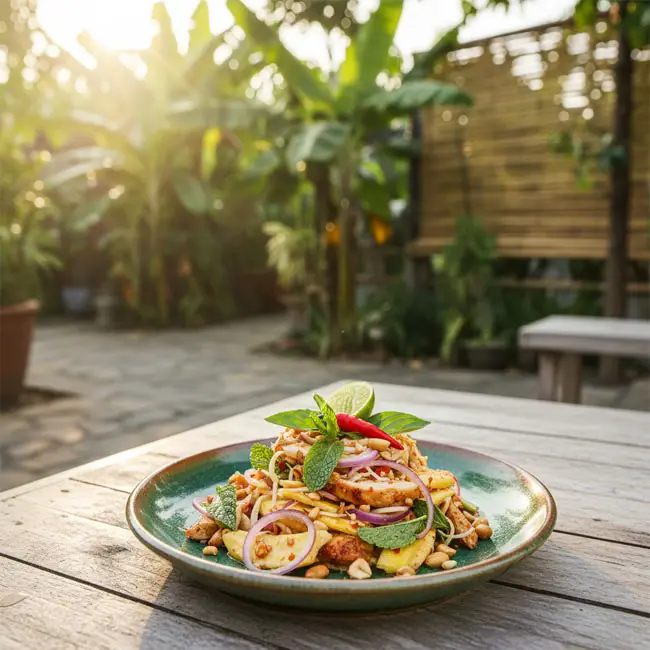
🔹 Recipe 3: Nhoam Trayong Chek (Banana Flower Salad with Chicken)
About this Recipe
Nhoam Trayong Chek (ញាំត្រយូងចេក) is a subtly fragrant, light, and wonderfully crunchy salad that uses one of the most unique ingredients in Southeast Asian cooking: the banana blossom (or banana heart). This recipe typically includes shredded poached chicken, fresh herbs, and a light, citrusy dressing that beautifully complements the delicate, slightly astringent flavor of the blossom. The texture of the thinly sliced blossom, often mixed with other crunchy vegetables, is what makes this salad so special. It's a testament to the Khmer ability to use every part of a plant.
Ingredients & Measurements
(Serves 4 as a side)
For the Salad:
- 1 medium banana blossom (or banana heart)
- 1 cup shredded cooked chicken breast (poached or grilled)
- 1 medium carrot, julienned
- 1 cup bean sprouts, lightly blanched (optional)
- 1/2 large shallot, thinly sliced
- 1/2 cup fresh mint leaves
- 1/2 cup fresh Thai basil leaves
- 1/4 cup roasted peanuts, coarsely chopped
- 2 Tbsp crispy fried shallots (for garnish)
For the Soaking Water:
- 4 cups cold water
- 2 Tbsp lime juice or white vinegar
For the Dressing:
- 3 Tbsp fresh lime juice
- 3 Tbsp fish sauce
- 2 Tbsp palm sugar (or granulated sugar), dissolved in a splash of warm water
- 1-2 Thai chilies, finely minced (optional)
- 1 clove garlic, minced
- 1/2 tsp salt
- 1 Tbsp chicken broth or stock (optional, but adds depth)
Step-by-Step Instructions
1.Prep the Banana Blossom (The Most Important Step!): In a large bowl, mix the cold water with the lime juice/vinegar (this is acidulated water and prevents browning). Remove the thick, dark red-purple outer leaves of the banana blossom and discard them. Slice the remaining creamy-white/pale yellow core as thinly as possible (a mandoline is great here). Immediately place the slices into the acidulated water. Let soak for 15-20 minutes. Drain well and pat dry before adding to the salad. Discard the tiny, black-tipped undeveloped bananas you find between the leaves.
2.Make the Dressing: In a small bowl, whisk together the lime juice, fish sauce, dissolved palm sugar, chilies, garlic, salt, and chicken stock (if using) until the sugar and salt are dissolved. Taste and adjust for a sweet, sour, salty balance.
3.Prepare the Chicken: If not pre-cooked, poach the chicken breast: bring water to a boil, drop the chicken in, turn off the heat, cover, and let it sit for about 15 minutes, or until cooked through (internal temp or ). Let it cool, then shred it by hand.
4.Assemble the Salad: In a large mixing bowl, combine the drained and dried banana blossom, shredded chicken, julienned carrot, blanched bean sprouts (if using), and sliced shallots.
5.Dress and Toss: Pour the dressing over the salad. Add the mint and basil leaves. Toss gently until all components are evenly coated.
6.Serve: Transfer to a serving platter. Garnish with coarsely chopped peanuts and crispy fried shallots. Serve immediately.
Tips & Mistakes to Avoid
- Prevent Browning: Working quickly and immediately submerging the sliced banana blossom in acidulated water (water with lime or vinegar) is crucial. Otherwise, it will turn black and be unappealing.
- Julienne Finely: The banana blossom should be sliced very thin to achieve the best, delicate crunch.
- Balance the Bitter Note: Banana blossom can have a slight bitter or astringent taste. The sweet-sour dressing and the fat from the peanuts are essential to balance this out.
- Herbs are Non-Negotiable: The fragrance of mint and basil is key to this salad's light, aromatic profile. Don't skip them!
FAQ
Q: Where can I buy a banana blossom?
A: You'll typically find them in the produce section of Asian grocery stores. Choose one that is firm, heavy for its size, and doesn't have too many blemishes on the outer leaves.
Q: How can I make this vegetarian?
A: Easy! Substitute the chicken with firm tofu that has been pressed, cubed, and pan-fried until golden and slightly crispy. You can also replace the fish sauce with a high-quality vegetarian mushroom or soy-based "fish sauce" alternative.
Summary
Nhoam Trayong Chek is an exotic and refreshing salad that introduces a unique vegetable texture to your repertoire. It’s a beautifully light and aromatic experience!
Final Thoughts
See? Making authentic Cambodian salads isn't about complexity; it’s about freshness, balance, and using a few key aromatic ingredients that pack a serious flavor punch. Each of these three recipes—from the savory tang of Plea Sach Ko to the crunchy tartness of Nhoam Svay and the delicate texture of Nhoam Trayong Chek—offers a unique window into the incredible depth of Khmer cuisine.
The best part? These salads are surprisingly easy to master once you understand the basic principles of balancing the sweet (palm sugar), sour (lime), salty/umami (fish sauce/prahok), and spicy (chili).
Don't be intimidated by the new ingredients! Head to your local Asian market, grab your fresh herbs, and start with the recipe that calls to you most. Try the mango salad first for a fast, powerful hit, or the beef salad for something more substantial.
Once you’ve made your first one, you’ll realize how easily these flavors can become a part of your regular rotation.
Now it's your turn! Which one of these vibrant Cambodian classics are you going to try first? Let me know!
| 🇰🇭 🥗 < Back |