
🏠 Home > 🗺️ Recipes > 🍱 Snacks > 🇰🇭 Cambodia Snacks > 🍱 Nom Banh Chok (Khmer Noodles) , Num Kong (Cambodian Donuts) , Krolan
🍱 Authentic Khmer Snacks: 3 Must-Try Cambodian Street Food Recipes You Can Master at Home
Published by Supakorn | Updated: February 2026
The Heart of Khmer Cooking: Dive into Cambodia's Best Street Food
If you’ve ever walked down a street in Phnom Penh or wandered through a market in Siem Reap, you know that the true soul of Cambodian cuisine lives on its sidewalks. It’s in the sizzling woks, the aroma of grilled meats, and the chatter around mobile food carts.
Cambodian food, or Khmer cuisine, is often characterized by its beautiful balance: a subtle approach to spice, a deep use of aromatic pastes called kroeung (made from lemongrass, galangal, and turmeric), and a powerful anchor of flavor from fermented fish paste, or prahok. While main courses like Fish Amok or Beef Lok Lak get most of the international spotlight, the real daily treasures—the soul-satisfying dishes that fuel an entire nation—are the street snacks.
These snacks aren't just appetizers; they are breakfasts, light lunches, late-night treats, and cultural staples, often combining savory, sweet, and unique textures in ways you won't find anywhere else. They’re built on ingredients that are locally abundant, simple to prepare, and unforgettable to eat.
Ready to unleash these incredible, authentic flavors in your own kitchen? We've handpicked three of the most essential and beloved Cambodian street food recipes for you to master. Whether you’re a seasoned Southeast Asian food fan or a home cook looking for a new adventure, these recipes will bring a serious wow factor to your kitchen:
1.Nom Banh Chok (Khmer Noodles): The quintessential Cambodian breakfast, featuring fresh rice noodles blanketed in a delicate, fragrant green fish curry.
2.Num Kong (Cambodian Donuts): A wildly popular sweet treat—chewy, glutinous rice flour donuts covered in a crisp, sweet palm sugar and sesame glaze.
3.Krolan (Sticky Rice in Bamboo): A unique, smoky dessert or snack of sweet sticky rice and beans cooked slowly inside a section of bamboo.
Let's get cooking!
🔹 Recipe 1: Nom Banh Chok (Khmer Noodles)
About this Recipe
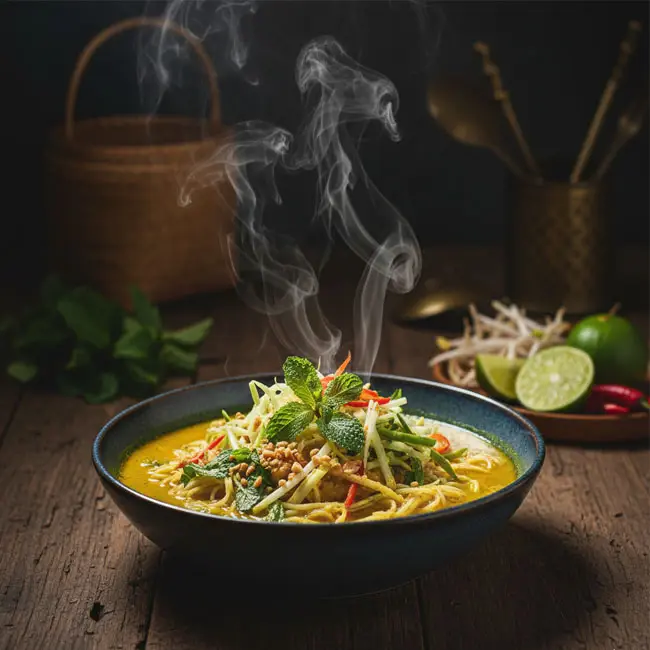
Nom Banh Chok (នំបញ្ចុក) is arguably the national breakfast dish of Cambodia, so much so that simply ordering "Nom Banh Chok" means you’re asking for the most classic version: the one topped with a yellow-green fish-based gravy.
This dish is a comforting masterpiece of texture and aroma. Fresh, room-temperature rice noodles are drowned in a creamy, coconut-rich curry that gets its vibrant color and incredible fragrance from a special yellow kroeung paste. The real magic, however, comes from the massive pile of fresh, raw herbs and vegetables—including banana blossom, cucumber, mint, and long beans—that you add yourself. It's herbaceous, tangy, creamy, and wonderfully light all at once.
This is not a quick dish, as it requires making the kroeung and preparing the fish, but the resulting flavor is a rewarding taste of authentic Khmer tradition that’s well worth the effort.
Ingredients & Measurements
(Serves 6–8)
For the Yellow Kroeung Paste (The Soul of the Dish):
- 2 stalks lemongrass, tender white part only, thinly sliced
- 2 inches galangal, thinly sliced
- 1 inch fresh turmeric (or 1 tsp turmeric powder)
- 4-6 kaffir lime leaves, center vein removed
- 4 cloves garlic, peeled
- 4 shallots, peeled
- 1 tsp salt
- 1 tbsp Prahok (fermented fish paste, optional but highly authentic)
For the Curry Gravy (Samlor Proher):
- 2 lbs (900g) firm white fish (snakehead, cod, or mackerel), whole or filleted
- 1 can (400ml) coconut milk
- 2 Tbsp fish sauce
- 1 Tbsp palm sugar (or granulated sugar)
- 6 cups water (for boiling fish)
For Serving (Essential Toppings):
- 2 lbs fresh rice noodles (thin vermicelli-style, available at Asian markets)
- 1 large cucumber, julienned
- 1 banana flower/blossom, thinly sliced and soaked (see salad tips in your original content)
- 1 cup bean sprouts
- 1 cup long beans, cut into 1-inch pieces
- 1 cup fresh mint leaves
- 1 cup fresh basil (Thai or Holy Basil)
- Lime wedges and chili sauce for serving
Step-by-Step Instructions
1.Make the Kroeung Paste: In a powerful blender or food processor, combine all kroeung ingredients with a splash of water or oil. Blend until a fine, smooth paste is formed. (Traditionally, this is done in a mortar and pestle for the best texture).
2.Poach the Fish: Bring 6 cups of water to a boil in a large pot. Add the whole/chunked fish and simmer until cooked through (about 10–15 minutes). Carefully remove the fish, set aside to cool, and reserve the cooking liquid (the fish stock).
3.Prepare the Fish Meat: Once cool enough to handle, remove the skin and bones from the fish. Flake the meat, then mash or coarsely pound it into a paste.
4.Start the Gravy: In a clean pot over medium heat, add a little oil and cook half of your Kroeung Paste for about 3 minutes until very fragrant. Pour in the coconut milk and stir until it begins to simmer and thickens slightly.
5.Build the Curry: Add the reserved fish stock to the pot. Stir in the mashed fish meat, the fish sauce, and the palm sugar. Bring it all to a simmer and cook for 10–15 minutes. The gravy should be thin enough to pour over noodles but thick enough to coat them. Taste and adjust seasoning: it should be subtly sweet, salty, and richly aromatic.
6.Prep Noodles and Toppings: Quickly boil or rinse your rice noodles according to package directions. Arrange the noodles in individual bowls. Arrange the fresh toppings (banana blossom, cucumber, herbs, etc.) on a separate platter—this allows diners to customize their bowl!
7.Serve: Ladle a generous amount of the warm curry gravy over the noodles in each bowl. Serve immediately with the platter of fresh vegetables and herbs, as well as lime wedges and chili for extra zest.
Tips & Mistakes to Avoid
- Go All-In on the Herbs: The incredible freshness of Nom Banh Chok is defined by the massive amount of raw, crisp vegetables and herbs. Don't be shy with the toppings!
- Use Fresh Noodles: While dried noodles will work, seek out fresh rice noodles at an Asian market for the perfect soft, slightly slippery texture that soaks up the gravy best.
- Don't Rush the Kroeung: The fragrance of the paste is key. If you can’t find all the fresh ingredients, look for a pre-made Khmer yellow kroeung to save time.
- Prahok is Optional: If you’re not a fan of the strong, fermented flavor of prahok, you can omit it or substitute with shrimp paste, but for an authentic experience, try to include just a little.
FAQ
Q: Where can I find banana blossom?
A: Banana blossoms (or banana hearts) are usually found in the produce section of well-stocked Asian grocery stores. Remember to soak the sliced pieces in acidulated water (water with lime or vinegar) to prevent browning.
Q: Can I make this vegetarian?
A: You can, but it will be a major departure from the traditional flavor. Replace the fish with tofu and the fish sauce/prahok with a vegetarian alternative like mushroom-based "fish sauce" or a high-quality miso paste for umami depth.
Summary
Nom Banh Chok is more than a meal; it's a sensory experience. The warmth of the savory, fragrant gravy contrasted with the cool, crunchy herbs perfectly captures the fresh, aromatic complexity of Khmer cuisine.

🔹 Recipe 2: Num Kong (Cambodian Donuts)
About this Recipe
Every cuisine has its simple, addictive sweet fried snack, and for Cambodia, that is Num Kong (នំគង់). These aren't your typical light and fluffy Western-style donuts. Num Kong is a delicious, chewy donut made almost entirely from glutinous rice flour and coconut milk, giving them a wonderfully soft-yet-resilient chewiness that's similar to a mochi donut.
The dough itself is only subtly sweet, with the main sweetness coming from a thick, crackly glaze made from caramelized palm sugar and fragrant toasted sesame seeds. You'll find vendors frying these up fresh at markets across the country, selling them by the handful as a perfect morning or afternoon pick-me-up.
Ingredients & Measurements
(Makes 15–20 donuts)
For the Dough:
- 14 oz (400g) glutinous rice flour (also called sweet rice flour)
- 3 oz (80g) rice flour (standard white rice flour)
- 1/4 tsp salt
- 3 Tbsp palm sugar (or granulated sugar), finely chopped/shaved
- 11/2 cups (360ml) coconut milk (canned, full-fat)
- Vegetable oil, for deep-frying
For the Palm Sugar Glaze (Toek Krolang):
- 1 cup (200g) palm sugar (or dark brown sugar)
- 1/4 cup (60ml) water
- 1/4 tsp salt
- 4 Tbsp white sesame seeds, toasted
Step-by-Step Instructions
1.Toast the Sesame Seeds: In a dry pan over medium heat, toast the sesame seeds until light golden and fragrant. Set aside.
2.Make the Dough: In a large bowl, whisk together the glutinous rice flour, rice flour, salt, and palm sugar.
3.Add Coconut Milk: Gradually pour the coconut milk into the flour mixture, mixing with your hands until a soft, pliable dough forms. It should feel like firm, soft playdough and not stick to the bowl. If it’s too dry, add a tiny bit more coconut milk; if too wet, add a tiny bit more glutinous rice flour.
4.Shape the Donuts: Pinch off golf-ball sized pieces of dough. Roll each piece into a rope about 5-6 inches long. Curl the rope into a ring and press the ends together firmly to seal the donut shape.
5.Fry the Donuts: Heat 3-4 cups of vegetable oil in a wok or deep pot to a medium-low temperature (325 ∘ F or 165 ∘ C). The oil should not be too hot, or the outside will burn before the inside cooks. Gently drop the donuts into the oil, being careful not to overcrowd the pan. Fry, turning occasionally, for 8–12 minutes until they are golden brown and have puffed up. Remove with a slotted spoon and place on a wire rack to drain.
6.Make the Glaze: In a small saucepan, combine the palm sugar, water, and salt. Cook over medium heat, stirring until the sugar is dissolved. Bring to a boil and cook without stirring (just swirling the pan) until the syrup thickens and reaches a luscious, thick caramel stage. This usually takes about 5–8 minutes. Remove from heat and stir in the toasted sesame seeds.
7.Glaze and Serve: Working quickly, dip the top side of each warm donut into the hot palm sugar glaze. Place the glazed donuts back on the wire rack to let the glaze cool and harden into a crisp shell. Serve warm or at room temperature.
Tips & Mistakes to Avoid
- Dough Consistency is Crucial: The dough must not be too soft/wet, as this causes the donuts to lose their shape or develop large, unsightly bubbles during frying. Aim for a firm but kneadable texture.
- Low and Slow Frying: Frying these donuts on a medium-low heat is non-negotiable. It gives the glutinous rice flour time to cook all the way through, which is how you get that wonderful chewiness.
- Watch the Glaze: The palm sugar glaze moves quickly! Watch for the caramel to turn a deep amber color; remove it from the heat immediately before it burns. Be careful—it is extremely hot.
FAQ
Q: Can I use regular flour instead of glutinous rice flour?
A: No! The recipe relies entirely on the starch in glutinous rice flour to give it that signature chewy, bouncy texture. Regular rice flour or wheat flour will produce a completely different result.
Q: What if my palm sugar hardens before I finish glazing?
A: Simply place the saucepan back on a very low heat for 10–20 seconds, stirring until it liquefies again.
Summary
Num Kong is a beautiful example of how simple ingredients can make an utterly delightful snack. The crisp, sweet glaze combined with the chewy interior is simply addictive and a must-try for any sweet-toothed cook!
🔹 Recipe 3: Krolan (Sticky Rice in Bamboo)
About this Recipe
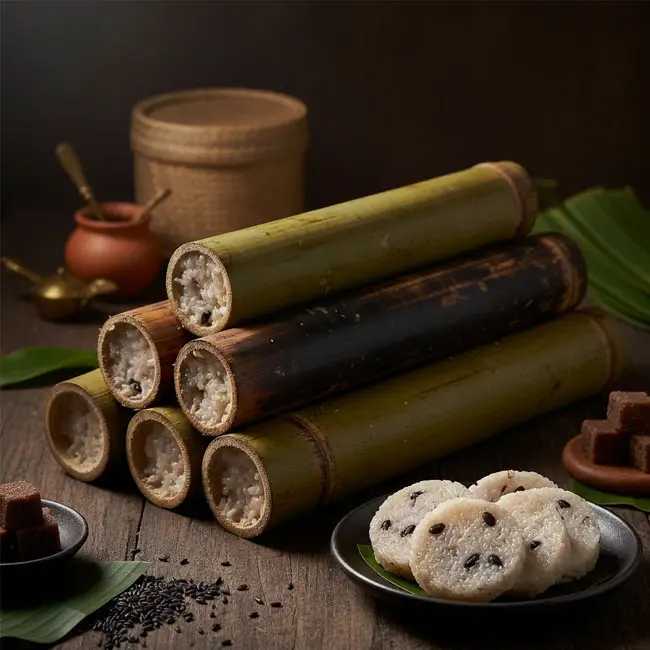
Krolan (ក្រឡាន) is perhaps the most unique snack on this list. It is a slow-roasted delicacy, a sweet, comforting blend of glutinous rice, black beans, coconut milk, and sugar, all packed tightly into a section of bamboo stalk and cooked over an open fire.
The bamboo acts as a natural pressure cooker and flavor vessel. As the rice steams and roasts, it absorbs the rich, smoky, and subtly sweet aroma from the scorched bamboo, creating a completely distinct flavor profile. While it's a popular street food (often found being sold by vendors near temples or along highways), it's also a favorite snack for family gatherings and celebrations, particularly in the Battambang province.
While you might not have an open fire or a whole bamboo stalk handy, this recipe adapts the traditional method to a more accessible home kitchen setting while retaining that incredible smoky flavor.
Ingredients & Measurements
(Makes 4–6 servings)
For the Sticky Rice:
- 2 cups glutinous rice (sticky rice), soaked overnight and drained
- 1 can (400ml) full-fat coconut milk
- 1/2 cup palm sugar (or brown sugar), finely chopped/shaved
- 1/2 tsp salt
- 1/4 cup black beans (or red beans), pre-cooked and drained
- Optional: 1/2 tsp vanilla extract for extra aroma
For the Bamboo/Wrapper (Home Adaptation):
- Aluminum Foil or Parchment Paper
- Optional: A few banana leaves (if available) for extra flavor and aroma
Step-by-Step Instructions
1.Prepare the Rice Mix: In a large bowl, combine the drained glutinous rice, pre-cooked black beans, palm sugar, and salt.
2.Cook the Coconut Milk: In a saucepan over medium heat, gently warm the coconut milk until the palm sugar is fully dissolved. Do not boil. Stir in the vanilla extract (if using).
3.Mix and Marinate: Pour the warm coconut milk mixture over the rice and bean mixture. Stir until everything is well combined. Let the rice absorb the liquid for at least 30 minutes, or up to 1 hour, to ensure it’s fully coated and softened.
4.Form the Krolan: Lay out a sheet of aluminum foil. If you have banana leaves, lay a piece of banana leaf on top of the foil. Spoon the rice mixture onto the center of the leaf/foil, forming a cylinder shape about 6-8 inches long. The rice should be tightly packed.
5.Wrap Tightly: Roll the foil (and leaf) tightly around the rice, twisting the ends like a candy wrapper to seal the cylinder. This mimics the tight pressure of the bamboo.
6.Roast (Oven Method): Preheat your oven to 375 ∘ F (190 ∘ C). Place the wrapped Krolan directly on the oven rack. Bake for 1.5 to 2 hours. The rice is done when it is firm to the touch and the smell of toasted coconut is strong in your kitchen.
7.Serve: Carefully unwrap the Krolan. The rice should hold its cylindrical shape and be perfectly cooked and sticky. Slice it into thick rounds and serve warm or cooled.
Tips & Mistakes to Avoid
- Soak the Rice: Soaking the sticky rice overnight is necessary for proper cooking and to achieve the right texture. Don't skip this step!
- The Black Beans: The pre-cooked black beans add a lovely texture contrast and a subtle savoriness. Make sure they are fully cooked before adding them to the rice mixture.
- Tightly Packed: The Krolan needs to be tightly packed into the cylinder shape to ensure the rice cooks evenly and holds its form. This is why the bamboo is so effective traditionally—it creates pressure.
- For a Smoky Finish: If you have a kitchen torch, you can briefly torch the aluminum foil before opening it to simulate the char of the traditional bamboo.
FAQ
Q: Can I use regular rice?
A: No. Krolan requires glutinous rice (sticky rice) as its high starch content is what allows the rice to fuse together into a single, cohesive, chewy cake when cooked.
Q: Where can I find banana leaves?
A: Look for them in the frozen section of most Asian or international grocery stores. They are not essential for cooking, but they impart a wonderful, subtle floral aroma.
Summary
Krolan is a sweet, hearty, and aromatic treat that tells a story of Cambodian ingenuity. It's a comforting snack perfect for sharing and a wonderful introduction to Khmer desserts.
Final Thoughts
See? Diving into the world of authentic Cambodian street food isn't just about trying something new; it's about connecting with a rich, flavorful culture that prioritizes freshness, balance, and simple, honest ingredients.
Each of these three recipes—from the savory, herbaceous depth of Nom Banh Chok to the crisp-chewy texture of Num Kong, and the smoky, comforting sweetness of Krolan—offers a unique window into the daily life of Cambodia. They prove that the most memorable dishes are often the ones you grab from a street vendor.
The best part is that these are surprisingly approachable to master once you source a few key ingredients like glutinous rice, palm sugar, and perhaps a kroeung paste.
Don't be intimidated by the new names! Head to your local Asian market, grab what you need, and start with the recipe that calls to you most. You might want to start with the easy, addictive sweet Num Kong first, or dive right into the full, complex experience of the Nom Banh Chok noodles.
Once you’ve made your first one, you’ll realize how easily these incredible Cambodian flavors can become a treasured part of your regular cooking rotation.
Now it’s your turn! Which one of these vibrant Cambodian classics are you going to try first? Let me know!
| 🇰🇭 🍱 < Back |