
🏠 Home > 🗺️ Recipes > 🥗 Salads > 🇨🇳 China Salads Recipes
🇨🇳 🥗 Authentic China Salads: Liangcai Starters & Night Market Favorites
Published by Supakorn | Updated: November 2026
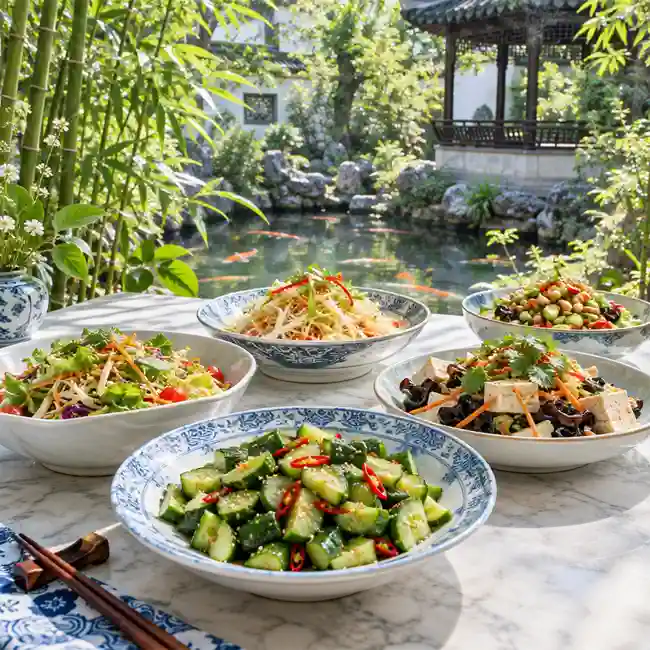
🐉🏮 Introduction: The Cultural Heritage of China Salads
Let's get one thing straight before we dive in. When you hear the word "salad," you might picture a bowl of lettuce with a creamy dressing on the side. In China, that's not really how it works. China salads are a different and much more exciting thing.
In Mandarin, the closest word is liangcai (凉菜), which simply means "cold dishes." It covers a huge family of chilled or room-temperature plates. Some are crisp vegetables, some are silky tofu, and some are slow-poached meats dressed in fiery chili oil. The cooking style behind most of them is called liangban (凉拌), which roughly means "cold tossed." You chop or shred something, mix it with a punchy sauce, and serve it right away or after a short rest.
Here's the fun part. Traditional Chinese thinking was historically a bit wary of raw, cold food, and many people still prefer warm meals for balance and digestion. So instead of piles of raw leaves, Chinese cooks came up with clever tricks: quick blanching, salting, smashing, and marinating. These steps make vegetables safer, tastier, and better at soaking up flavor. The result is a cold-dish tradition that has been going for centuries and is one of the most underrated parts of Chinese food culture.
If you've only ever ordered sweet and sour pork and fried rice, trust me, authentic Chinese salads are going to change how you look at Chinese cuisine.
🥢 The Art of China Dining Culture & Social Eating
To really get China salads, you have to understand how people eat in China. Meals are rarely about one person and one plate. They're about the table.
Picture a big round table with a lazy Susan spinning in the middle, covered with shared dishes. Everyone grabs a bite of this and a bite of that with their chopsticks. Cold dishes play a special role in this setup:
• They come out first. At family dinners, restaurant meals, and big banquets, liangcai usually hit the table before anything else. They wake up your appetite while the kitchen is still working the woks.
• They set the mood. A spread of colorful cold plates tells guests they're welcome and the host has made an effort. At wedding banquets you'll often see an elaborate cold platter, sometimes carved into a phoenix or dragon, as the opening act.
• They make conversation easy. Since cold dishes don't need to be eaten piping hot, people can chat, toast with tea, and pick at them slowly. They're perfect for long, lively meals.
• They balance the meal. Chinese home cooks love contrast. A crunchy, tangy cucumber salad cuts through a rich braised pork belly, and a cooling tofu dish calms things down after a spicy hotpot.
• They're everyday comfort food. It's not all banquets. Plenty of families toss together a quick cold dish for a weeknight dinner, and students grab a bowl of cold noodles for lunch on a hot summer day.
There's also a big seasonal side. In the sticky heat of a Chinese summer, cold dishes become the main event. Street stalls sell more of them, home cooks make them every day, and nobody wants to stand over a blazing wok when it's 38°C outside.
🗺️ Where Culture Meets Flavor: Iconic Food Tourism Spots
One of the best things about traveling in China is that every region has its own cold dish personality. Planning a food trip? Here are some places where China salads really shine:
✦ Chengdu, Sichuan: This is the capital of spicy, numbing cold dishes. Walk through old lanes like Kuanzhai Xiangzi (Wide and Narrow Alleys) or the busy Jinli Ancient Street and you'll see glass counters full of chili-oil-drenched chicken, beef, and tofu. Chengdu is a UNESCO City of Gastronomy, and its liangcai culture has a lot to do with that.
✦ Chongqing: Sichuan's fiery neighbor takes the heat even further. Cold noodles and spicy cold dishes are everywhere, especially in the evening when the city's hillside streets come alive.
✦ Xi'an, Shaanxi: Head to the famous Muslim Quarter (Huimin Jie) near the Drum Tower and you'll find liangpi, the city's legendary cold skin noodles. Eating a bowl after visiting the Terracotta Warriors is basically a rite of passage.
✦ Harbin and Northeast China: The Dongbei region is known for hearty, generous food, and its cold dishes are bright, fresh, and loaded with herbs. This is where you'll find the famous "tiger salad."
✦ Kunming and Xishuangbanna, Yunnan: Yunnan sits close to Southeast Asia, and its salads show it. Expect lime, fresh herbs, chili, and a lighter, zingy style, especially in Dai minority cuisine around Jinghong.
✦ Guiyang, Guizhou: Guizhou's night markets are full of sour-and-spicy cold dishes, and this is the place to try the very unusual (and very polarizing) fish mint root salad.
✦ Beijing and Shanghai: In the big cities you can find cold dishes from every province under one roof. Shanghai is especially good for sweet, gently seasoned cold plates, while Beijing's old hutong eateries serve simple, homey classics.
A quick tip for travelers: if a restaurant menu has a section labeled 凉菜, that's the cold dishes section. Order two or three to start, and you'll eat like a local.
⭐ Top Iconic China Salads Specialties
Here's the fun part: the must-try China salads you should know about. Some are humble home-style dishes and some are restaurant legends, but every one of them is worth trying at least once.
🥒 Pai Huang Gua (Smashed Cucumber Salad)
If there's one Chinese salad that has taken over the world, it's this one. Pai huang gua (拍黄瓜) literally means "patted cucumber." Instead of slicing, you whack the cucumber with the flat side of a cleaver until it cracks into rough, jagged pieces.
◦ Why it's special: The uneven, broken surfaces grab the dressing far better than neat slices ever could.
◦ Typical flavors: Garlic, black vinegar, a little sugar, sesame oil, and sometimes chili oil.
◦ Where you'll find it: Pretty much everywhere in China, from street stalls to fancy restaurants.
◦ Vibe: Cool, crunchy, garlicky, and super refreshing. It's the perfect sidekick to anything spicy.
🐔 Kou Shui Ji (Mouthwatering Chicken)
Kou shui ji (口水鸡) translates to "saliva chicken" or, more politely, "mouthwatering chicken." The name says it all: just thinking about it is supposed to make your mouth water.
◦ What it is: Tender poached chicken, chilled and served in a pool of red chili oil.
◦ Typical flavors: Sichuan peppercorn, chili oil, garlic, sesame, black vinegar, and crushed peanuts.
◦ Origin: A Sichuan classic, and a staple of Chengdu restaurants.
◦ Vibe: Silky, spicy, numbing, nutty, and seriously addictive.
🥩 Fu Qi Fei Pian (Husband and Wife Lung Slices)
Don't let the name scare you off. Fu qi fei pian (夫妻肺片) is one of the most famous Sichuan cold dishes, and the story behind it is charming.
◦ The story: As the popular tale goes, a married couple in 1930s Chengdu sold this dish from a street cart. It was so good that people named it after them.
◦ What it is: Thinly sliced beef and beef offal (like tripe and tongue), poached in spiced broth and dressed in chili oil.
◦ Fun fact: Despite the name, modern versions often don't include lung at all.
◦ Vibe: Rich, tender, spicy, and full of texture. It's a bucket-list dish for adventurous eaters.
🍜 Liangpi (Xi'an Cold Skin Noodles)
Liangpi (凉皮) is Xi'an's pride and joy, and honestly one of the best street foods in all of China.
◦ What it is: Wide, chewy, slippery noodles made from wheat or rice starch, served cold.
◦ Typical toppings: Bean sprouts, cucumber shreds, spongy gluten cubes, chili oil, vinegar, and garlic water.
◦ Where to try it: The Muslim Quarter in Xi'an, or any Shaanxi-style noodle shop.
◦ Vibe: Tangy, spicy, chewy, and filling enough to be lunch on its own.
🐯 Lao Hu Cai (Tiger Salad)
From the cold northeast comes lao hu cai (老虎菜), or "tiger salad." It earned the name because it's bold, fierce, and packs a bite.
◦ What it is: A fresh tangle of green chilies, cilantro, scallions, and sometimes cucumber.
◦ Typical flavors: Simple seasoning of salt, vinegar, a bit of sugar, and sesame oil.
◦ Origin: Northeast China (Dongbei), where it's a favorite next to heavy meat dishes.
◦ Vibe: Herby, sharp, and spicy, like a green salsa with attitude.
🥚 Pidan Doufu (Century Egg with Silken Tofu)
This one looks dramatic and tastes amazing. Pidan doufu (皮蛋豆腐) pairs soft silken tofu with preserved "century eggs."
◦ What it is: Chilled tofu topped with chopped century egg, scallions, and a savory sauce.
◦ Typical flavors: Soy sauce, sesame oil, and sometimes chili oil or pork floss.
◦ Vibe: Creamy, savory, and earthy. It's a great introduction to century eggs if you're curious but a little nervous.
🍄 Liangban Mu'er (Wood Ear Mushroom Salad)
Liangban mu'er (凉拌木耳) is a gorgeous, glossy black salad made with wood ear mushrooms.
◦ What it is: Blanched wood ear fungus tossed with garlic, vinegar, chili, and cilantro.
◦ Texture: Crunchy and slightly bouncy, which people in China love.
◦ Health angle: It's often seen as a nourishing, everyday food in Chinese home cooking.
◦ Vibe: Light, tangy, and wonderfully crunchy.
🥔 Liangban Tudou Si (Shredded Potato Salad)
Yes, potatoes can be a salad, and the Chinese version is nothing like the mayo-heavy one you know.
◦ What it is: Super-thin potato shreds, quickly blanched so they stay crisp, then tossed with vinegar and chili.
◦ Texture: Crunchy, almost like eating a vegetable rather than a starch.
◦ Vibe: Tangy, a little spicy, and surprisingly refreshing.
🌿 More Regional Gems Worth Hunting Down
• Liangban Haidai (Seaweed Salad): Kelp strips with garlic, vinegar, and chili. It's salty, crunchy, and very popular in coastal areas.
• Sichuan Liangfen (Cold Jelly Noodles): Thick, wobbly mung bean jelly strips in a spicy, tangy sauce. A Chengdu street snack legend.
• Bang Bang Ji (Bang Bang Chicken): Shredded chicken in a sesame paste and chili sauce. The name comes from the stick used to tenderize the meat.
• Celery and Peanut Salad: A crunchy, simple home-style plate you'll see at many family dinners.
• Lotus Root Salad: Crisp, lacy slices of lotus root in a light, tangy dressing. Pretty enough to photograph.
• Zhe'ergen Salad (Fish Mint Root): A Guizhou and Yunnan specialty with a strong, earthy, almost fishy flavor. Locals love it, and first-timers either love it or run.
• Dai-Style Salads from Yunnan: Lime, fresh herbs, and chili tossed with vegetables or meat. Light and bright.
🌶️ Flavor Profile: What Makes China Salads Unique?
What makes authentic Chinese salads so different from Western ones? It comes down to a few big ideas.
• Balance of flavors: Chinese cooking is all about harmony. A good cold dish usually mixes sour, sweet, salty, spicy, and savory in one bite.
• The famous "mala" kick: In Sichuan, cold dishes often have ma (numbing, from Sichuan peppercorn) and la (spicy, from chili). This tingly, buzzy feeling is unlike anything else.
• Texture is king: Chinese diners care about texture as much as taste. Crunchy, chewy, silky, bouncy: a great cold dish nails at least one of these.
• Dressings stay light: Instead of thick creamy dressings, Chinese salads use vinegar, soy sauce, sesame oil, chili oil, and garlic. The flavor is bold, but the dish still feels light.
• Regional personality: Sichuan is fiery, Shanghai leans sweet, the northeast is herby and fresh, Yunnan is zesty and herbal, and Guizhou is sour and spicy. China is huge, and its salads show it.
• Aroma matters: That sizzle when hot oil hits garlic, chili, and scallions? It's called "awakening" the aromatics, and it gives many cold dishes their rich, toasty smell.
🧄 Essential Ingredients & Traditional Cooking Techniques
Now let's peek behind the scenes. You don't need a recipe to see why these dishes work. Once you know the core ingredients and methods, the whole world of liangcai starts to make sense.
📚 Signature Spices & Local Ingredients
These are the building blocks you'll taste again and again in China salads:
• Black vinegar (Zhenjiang vinegar): A dark, malty, slightly sweet vinegar from Jiangsu province. It gives many cold dishes their deep tang.
• Chili oil (hongyou): Not just spicy oil. Good chili oil is infused with spices and has a toasty, fragrant flavor. Many families and restaurants guard their own version closely.
• Sichuan peppercorns: The source of that famous numbing tingle. They're lemony, floral, and unforgettable.
• Garlic: Smashed, minced, or turned into "garlic water." Garlic is the backbone of countless cold dishes.
• Light soy sauce: Adds saltiness and savory depth without darkening the dish too much.
• Toasted sesame oil and sesame paste: Nutty, rich, and aromatic. Sesame paste is the star in dishes like bang bang chicken.
• Fresh cilantro and scallions: Bright green, fresh, and used generously, especially in northern salads.
• Peanuts: Roasted or fried for crunch, often scattered on top of spicy chicken and noodle dishes.
• Seasonal vegetables: Cucumber, wood ear mushrooms, lotus root, celery, potatoes, kelp, bean sprouts, and leafy greens all play their part.
• Tofu in many forms: Silken tofu, firm pressed tofu, and dried tofu shreds (gansi) show up all over cold dish menus.
🔪 Time-Honored Cooking Methods
Even though they're served cold, many Chinese salads take real skill. Here are the classic techniques:
• Liangban (cold tossing): The core method. Prepare the ingredient, then toss it with a dressing right before serving.
• Smashing (pai): Hitting vegetables like cucumber with a cleaver to create rough edges that absorb more sauce.
• Quick blanching: A short dip in boiling water, then into cold water. This cooks the food just enough while keeping it crunchy and bright.
• Salting to draw out water: Cucumbers and some vegetables are lightly salted first, so they stay crisp and don't water down the dressing.
• Poaching and chilling: Meats like chicken are gently poached and then cooled quickly. That keeps the meat silky and tender.
• Lu (master stock braising): Meats, offal, eggs, and tofu are simmered in a spiced, soy-based stock, then sliced cold. Some shops have kept their master stock going for years.
• Hot oil pouring: Sizzling oil is poured over garlic, chili, and spices to release their aroma. It's one of the most important moves in Chinese cooking.
• Knife skills: Chinese chefs are famous for their knife work. Paper-thin slices and hair-fine shreds aren't just for looks. They change how the dish tastes and feels in your mouth.
🥢❓ Frequently Asked Questions (FAQ)
Q1: What is a Chinese salad called in Chinese?
Chinese salads are usually called liangcai (凉菜), which means "cold dishes." The cooking method for many of them is liangban (凉拌), or "cold tossed." On restaurant menus in China, you'll usually find these dishes in their own section near the start.
Q2: What is the most popular Chinese salad?
The most popular Chinese salad is probably smashed cucumber salad (pai huang gua). It's cheap, quick, refreshing, and served all over China. Other big favorites are mouthwatering chicken (kou shui ji), Xi'an liangpi noodles, and wood ear mushroom salad.
Q3: Are Chinese salads always spicy?
Not at all! Sichuan and Chongqing cold dishes are famous for their heat, but many China salads are mild. Shanghai-style cold dishes tend to be sweet and gentle, northern salads are fresh and herby, and plenty of dishes, like tofu salads, are simply savory. If you're unsure, just ask for a non-spicy option.
Q4: When are Chinese cold dishes eaten during a meal?
Chinese cold dishes are usually served at the start of a meal as appetizers, before the hot dishes arrive. They're also popular as light summer meals, quick lunches, late-night street snacks, and side dishes that balance heavier mains.
🙏 Culinary Heritage & Credit to China Traditions
Every bowl of smashed cucumber, every plate of chili-oil chicken, and every slurp of liangpi carries generations of knowledge. China salads weren't created in a test kitchen. They grew slowly over centuries out of real life: hot summers, the need to keep food safe and fresh, a deep respect for balance, and the simple joy of sharing a meal.
A lot of credit goes to the people who kept these traditions going:
• Home cooks across China, especially grandmothers and parents, who passed down their dressings and techniques by taste and feel instead of written recipes.
• Street vendors and small family shops, like the couple behind husband and wife lung slices, who turned simple ingredients into dishes famous across the country.
• Regional and ethnic communities, including the Hui Muslim community of Xi'an, the Dai people of Yunnan, and the many cultures of Guizhou and the northeast, each adding their own flavors and ideas.
• Professional chefs, whose knife skills, master stocks, and chili oil blends have pushed Chinese cold dishes to an art form.
• Traditional food philosophy, which teaches harmony between flavors, textures, and seasons, and still shapes how Chinese people cook today.
When we enjoy authentic Chinese salads, it's worth remembering that we're tasting more than a recipe. We're tasting regional pride, family memories, and a living food culture that's still growing. Each region has its own voice, and no single dish can speak for all of China.
So next time you sit down at a Chinese restaurant, or better yet, at a busy street stall in Chengdu or Xi'an, skip straight to the cold dishes section. Order something new, share it with friends, and give a quiet nod of thanks to the people who made it possible. 🥢
🥗 Crunchy, Garlicky & Energizing: The Fresh Chinese Salad You'll Crave All Week
👉 Enjoy Must-Try Chinese Salads
| 🌐 🥗 < Back | 🇨🇳 🍲 < Previous | Next > 🍞 🇨🇳 |