
🏠 Home > 🗺️ Recipes > 🥘 Sauces > 🇨🇳 China Sauces Recipes
🇨🇳 🥘 Authentic China Sauces: Wok Hei Kitchens & Night Market Dipping Traditions
Published by Supakorn | Updated: November 2026
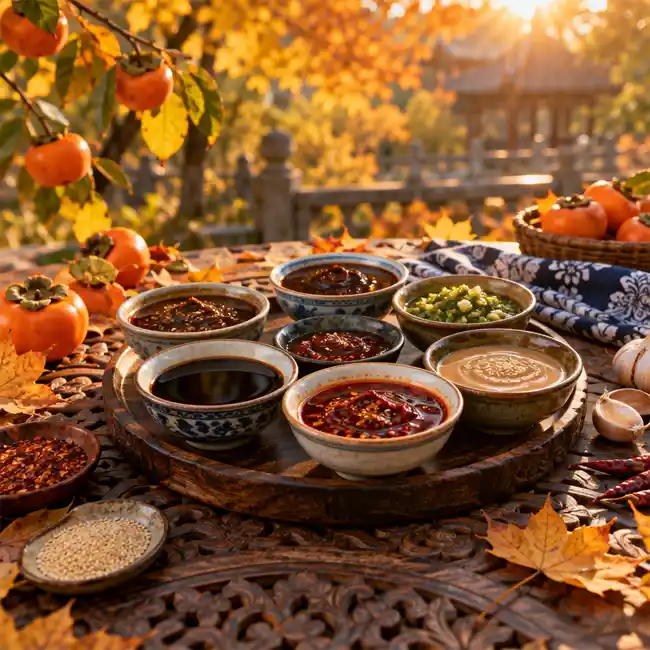
🧨🏮 Introduction: The Cultural Heritage of China Sauces
Okay, let's be real for a second. When most people think about Chinese food, they picture the dumplings, the noodles, the crispy duck, the sizzling stir-fries. Fair enough. But here's the secret nobody tells you: the real magic usually comes from the sauce.
Chinese sauces are the quiet engine of one of the oldest food cultures on the planet. Chinese cooks have fermented soybeans, aged vinegar, and blended chili pastes for over two thousand years. Ancient texts even talk about jiang, the fermented pastes that came before modern soy sauce, as something no proper kitchen could do without. Confucius himself supposedly refused to eat a dish if it wasn't served with the right sauce. Talk about high standards!
Today, "China sauces" covers a huge, delicious family of flavors. There's the glossy sweetness of Cantonese hoisin, the fiery red depth of Sichuan chili bean paste, the dark, mellow sourness of Zhenjiang black vinegar, and the smoky crunch of chili crisp everyone keeps on their kitchen counter now. Every bottle and jar has a hometown, a backstory, and a way of eating that goes with it.
So grab your chopsticks (or a spoon, no judgment), and let's take a flavor-packed trip through the world of authentic Chinese sauces. We'll look at where they come from, how people actually use them day to day, and why they matter so much to Chinese food culture.
🍜 The Art of China Dining Culture & Social Eating
If you've ever sat at a round table in a Chinese restaurant, you already know the vibe. Food in China is rarely a solo affair. It's shared, passed around, and talked about. Sauces fit right into that.
Here's how sauces show up in everyday Chinese eating:
• The shared table: Dishes go in the middle, often on a lazy Susan, and everyone helps themselves. Little dipping dishes of soy sauce, vinegar, or chili oil sit by each person so you can season every bite your way.
• The hot pot sauce bar: This is honestly one of the best parts of Chinese social dining. At hot pot restaurants, you walk up to a sauce station and build your own dip from sesame paste, garlic, cilantro, scallions, chili oil, sesame oil, fermented bean curd, and more. Everyone's got a "signature mix," and people will absolutely argue about whose is best.
• Breakfast rituals: In many northern cities, mornings mean steamed buns, soy milk, and dumplings dipped in a quick mix of black vinegar and chili. In the south, rice porridge (congee) gets a drizzle of soy sauce and a few pickles.
• Family recipes: Lots of households make their own chili oil or keep a homemade pickle jar going. Grandma's chili oil is a serious thing. Recipes get passed down and tweaked, and nobody writes them down properly.
• Festival feasting: Around Chinese New Year, family meals go big. Braised dishes made with dark soy sauce and rock sugar (the classic "red-cooked" style) show up a lot, because the deep reddish-brown color stands for good luck and prosperity.
What's really lovely is how sauces turn a meal into a conversation. "Pass the vinegar." "Try it with a little chili." "No, no, you have to dip it in this one." Sauces are basically how Chinese families say "I want you to enjoy this."
🗺️ Where Culture Meets Flavor: Iconic Food Tourism Spots
One of the coolest things about traveling in China is that a lot of the most famous sauces still come from specific towns. Some of these places have built museums, factories, and whole food tourism scenes around their signature condiment.
✦ Pixian (Pidu District), Chengdu, Sichuan: This is the home of Pixian doubanjiang, the fermented chili bean paste often called "the soul of Sichuan cuisine." You'll find huge courtyards packed with giant clay jars of paste sunning and fermenting outside. Chengdu also has a Sichuan cuisine museum where you can learn about this deep chili culture.
✦ Zhenjiang, Jiangsu Province: Famous for Zhenjiang (Chinkiang) black vinegar, a dark, rich, slightly sweet vinegar made from glutinous rice. Dip a soup dumpling in it with fine strips of ginger and you'll get the hype right away.
✦ Taiyuan & Qingxu, Shanxi Province: Shanxi aged vinegar is a big deal here. Locals joke that people from Shanxi can't eat a meal without vinegar, and honestly, after a bowl of knife-cut noodles there, you'll see why.
✦ Guangzhou & the Pearl River Delta, Guangdong: The heartland of Cantonese cooking and home of hoisin, oyster sauce, and char siu glaze. Dim sum teahouses here are a must for any food lover.
✦ Nanshui, Zhuhai, Guangdong: The small fishing town where oyster sauce was supposedly invented by accident in 1888. A great little story for food history fans.
✦ Beijing's hutong eateries: Head here for zhajiangmian (noodles with fried sweet bean sauce) and, of course, Peking duck wrapped in thin pancakes with sweet bean sauce and scallion.
✦ Chaoshan region (Shantou & Chaozhou), Guangdong: Home of shacha sauce, a savory, slightly gritty paste made with dried seafood, garlic, and spices. It's the star of the region's famous beef hot pot.
✦ Night markets in Xi'an's Muslim Quarter: This area is a sensory overload in the best way, full of skewers, cold noodles (liangpi) soaked in chili oil and vinegar, and stalls with secret spice blends.
If you're planning a foodie trip to China, building a route around these "sauce capitals" is a super fun way to taste the country region by region.
🌶️ Top Iconic China Sauces Specialties
Alright, here's the fun part. Let's meet the stars of the show. These are the must-try Chinese sauces that every food lover should know, along with the classic dishes they make famous.
⭐ Light Soy Sauce (Sheng Chou): The everyday workhorse. Thin, salty, and full of savory umami. It's used for seasoning, dipping, and stir-frying, and you'll find it in almost every Chinese kitchen. Think steamed fish, fried rice, and dumpling dips.
⭐ Dark Soy Sauce (Lao Chou): Thicker, a bit sweeter, and much darker. It's mostly there for color. It gives red-braised pork (hong shao rou) and soy sauce chow mein that gorgeous mahogany shine.
⭐ Oyster Sauce (Hao You): A thick, glossy, savory-sweet Cantonese sauce made from oyster extract. Try it on gai lan (Chinese broccoli) with garlic, or in a beef and vegetable stir-fry.
⭐ Hoisin Sauce (Hai Xian Jiang): Sweet, salty, and a little tangy, made from fermented soybeans, sugar, garlic, and spices. Fun fact: the name means "seafood sauce," but there's no seafood in it. It's often brushed on roast meats and served with Cantonese-style roast duck.
⭐ Sweet Bean Sauce (Tian Mian Jiang): A northern favorite made from fermented wheat flour. It's the classic partner for Peking duck and the base of Beijing's beloved zhajiangmian.
⭐ Pixian Doubanjiang (Chili Bean Paste): Fermented broad beans and chilies, aged for months or even years. It's the backbone of mapo tofu, twice-cooked pork, and Sichuan boiled fish.
⭐ Chinese Chili Oil & Chili Crisp (La You): Infused oil packed with toasted chili flakes, Sichuan pepper, garlic, and sometimes crunchy fried bits. Spoon it over dumplings, noodles, eggs, or honestly anything. It's become a global favorite.
⭐ Zhenjiang Black Vinegar (Xiang Cu): Malty, mellow, and a little sweet. It's the go-to dip for xiaolongbao (soup dumplings) and potstickers.
⭐ Shanxi Aged Vinegar (Lao Chen Cu): Stronger and more intense than Zhenjiang vinegar. It's perfect with noodles and dumplings from northern China.
⭐ Chinese Sesame Paste (Zhi Ma Jiang): Rich, nutty, and made from toasted sesame seeds. It's the base of Beijing hot pot dips and Sichuan dan dan noodles.
⭐ Black Bean Sauce (Dou Chi Jiang): Made from salted, fermented black soybeans. It's deeply savory and a bit funky, and you'll know it from steamed spare ribs at dim sum and from clams in black bean sauce.
⭐ Shacha Sauce (Sha Cha Jiang): A Chaoshan and Fujian specialty made with dried shrimp, flatfish, garlic, and chili. It's the essential dip for Chaoshan beef hot pot.
⭐ Char Siu Sauce: Sweet, sticky, and reddish, used to glaze Cantonese barbecued pork. Char siu bao (BBQ pork buns), anyone?
⭐ Plum Sauce (Suan Mei Jiang): Fruity, sweet, and tangy, made from Chinese plums. It's a lovely match for roast goose and crispy spring rolls.
⭐ Sweet and Sour Sauce (Tang Cu): The famous combo of sugar and vinegar. In China, it shows up in dishes like Wuxi spare ribs and squirrel-shaped mandarin fish, which are a lot more refined than the takeout versions many people know.
👅 Flavor Profile: What Makes China Sauces Unique?
So what makes Chinese sauces so special compared with sauces from other cuisines? It really comes down to balance, fermentation, and regional personality.
• Umami everywhere: Many Chinese sauces are built on fermented soybeans or wheat. Long fermentation creates deep, savory umami that makes everything taste fuller and more satisfying.
• The five flavors in harmony: Traditional Chinese cooking is all about balancing sweet, sour, salty, bitter, and spicy. A great sauce often hits several of these at once. Think of the sweet-salty hoisin or the sour-sweet black vinegar.
• Ma La, the Sichuan signature: "Ma" is the tingly, numbing buzz from Sichuan peppercorns, and "La" is the chili heat. Together they create an addictive sensation you just won't find in other cuisines.
• Regional personalities: There's a classic saying that sums up Chinese regional tastes as "sweet south, salty north, spicy east, sour west." It's a generalization, of course, but it gives you a fun idea of how sauces change across the country:
◦ Cantonese (South): Delicate, fresh, a bit sweet, with oyster sauce and hoisin
◦ Sichuan & Hunan (Southwest & Central): Bold, fiery, and complex, with chili bean paste and chili oil
◦ Jiangsu & Shanghai (East): Sweet, glossy, and rich, with dark soy sauce and black vinegar
◦ Northern China: Hearty and savory, with sweet bean sauce, sesame paste, and aged vinegar
• Aroma first: Chinese cooks care a lot about xiang, or fragrance. Sauces are often "bloomed" in hot oil with garlic, ginger, and scallions to release that mouthwatering smell before anything else goes in the wok.
• Color matters: Sauces aren't only about taste. Dark soy, chili oil, and caramelized sugar give dishes their rich red, brown, and glossy looks. In Chinese food culture, presentation is part of the flavor.
🧂 Essential Ingredients & Traditional Cooking Techniques
Now let's peek behind the kitchen curtain. Knowing the core ingredients and old-school techniques behind Chinese sauces helps you appreciate why they taste the way they do.
🍯 Signature Spices & Local Ingredients
These are the building blocks you'll find again and again in authentic Chinese sauces:
• Soybeans: The MVP of Chinese condiments. Soybeans are fermented into soy sauce, black beans, bean pastes, and more.
• Wheat flour: Used in sweet bean sauce and many soy sauce brews. It adds natural sweetness and body.
• Broad beans (fava beans): The key to Pixian doubanjiang.
• Sichuan peppercorns (Hua Jiao): Not actually pepper, but the dried husk of a prickly ash berry. They bring the famous citrusy, tingly numbness.
• Dried chilies: Varieties like Erjingtiao from Sichuan and "facing heaven" chilies give heat, color, and smoky aroma.
• Glutinous rice and sorghum: The grains behind Chinese black and aged vinegars.
• Sesame seeds: Toasted and ground into paste or pressed into fragrant sesame oil.
• Garlic, ginger, and scallions: The holy trinity of Chinese aromatics. Most sauces start or finish with them.
• Star anise, cinnamon bark, and fennel: Key players in five-spice powder and braising sauces.
• Rock sugar: Gives a cleaner, more rounded sweetness than regular sugar. It's essential for red-braised dishes.
• Dried seafood: Dried shrimp, scallops, and fish add deep ocean umami to sauces like shacha.
• Oysters: Slowly simmered and reduced for authentic oyster sauce.
🔥 Time-Honored Cooking Methods
Chinese sauces aren't only about what goes in. A lot comes down to how they're made, and how they're used in cooking.
• Natural sun fermentation: Traditional soy sauce and bean pastes are fermented in big clay jars outdoors. The sun warms them by day and the cool night air slows things down. Some premium batches age for a year or more, getting darker and deeper as they go.
• Daily stirring (Fan Shai): In Pixian, workers still stir and turn the chili bean paste by hand in open-air courtyards. It's slow, hard work that's been passed down for generations.
• Slow vinegar aging: Shanxi aged vinegar is often left outside through hot summers and freezing winters. When the ice forms on top, it gets removed, which concentrates the flavor over time.
• Oil infusion: To make chili oil, hot oil is poured over chili flakes and spices in stages, at slightly different temperatures, to pull out aroma, color, and heat. Get it right and it sizzles beautifully. Get it wrong and it burns. It's an art!
• Wok Hei, the "breath of the wok": Sauces hitting a scorching hot wok caramelize almost instantly. That gives Cantonese stir-fries a smoky, charred flavor that's hard to copy at home.
• Red braising (Hong Shao): Meat or fish is slowly simmered in dark soy sauce, rock sugar, and aromatics until the sauce turns into a sticky, glossy glaze.
• Master stock (Lu Shui): Some restaurants keep a braising liquid of soy sauce, spices, and aromatics going for years, even decades, topping it up as they use it. Every batch carries a little history.
• Thickening & glazing: A splash of starch slurry at the end turns a thin sauce into a silky coating that clings to every piece of food.
🎑❓ Frequently Asked Questions (FAQ)
Q1: What is the most popular sauce in Chinese cooking?
Soy sauce is easily the most widely used sauce in Chinese cooking. Light soy sauce goes into everyday seasoning and dipping, while dark soy sauce adds color to braised dishes. After that, oyster sauce, chili oil, and black vinegar are some of the most common condiments in Chinese homes and restaurants.
Q2: What's the difference between hoisin sauce and oyster sauce?
Hoisin sauce is made from fermented soybeans, sugar, garlic, and spices, so it tastes sweet, salty, and slightly tangy. It's often used as a glaze or dip. Oyster sauce is made from oyster extract and tastes savory and rich, with only a hint of sweetness. It's mostly used in stir-fries and on vegetables. Both are Cantonese favorites, but they play very different roles.
Q3: Which Chinese sauce is the spiciest?
Sichuan chili bean paste (doubanjiang) and Chinese chili oil are among the spiciest classics. For the full ma la experience, look for sauces and dishes that combine chilies with Sichuan peppercorns, like mapo tofu or Chongqing-style hot pot.
Q4: What are the essential Chinese sauces for beginners to try?
A great starter lineup is light soy sauce, dark soy sauce, oyster sauce, hoisin sauce, Chinese black vinegar, and chili oil. With these six, you can explore a huge range of classic Chinese flavors, from dumpling dips to stir-fries and braises.
🙏 Culinary Heritage & Credit to China Traditions
Before we wrap up, it's worth taking a moment to respect the people behind all these flavors. Every jar of chili bean paste, every bottle of aged vinegar, and every spoonful of soy sauce carries centuries of knowledge from Chinese farmers, artisans, home cooks, and master chefs.
Many of these traditions are still kept alive by family-run workshops and local producers. Some have been making the same sauce in the same town for generations. Several traditional techniques, like the methods behind Pixian doubanjiang and Shanxi aged vinegar, are recognized in China as intangible cultural heritage. That's a big deal, and it shows how deeply sauces are woven into the country's identity.
Here's what we owe to Chinese culinary traditions:
• The art of fermentation: Chinese cooks were among the first to master soybean fermentation, which shaped sauces across East and Southeast Asia.
• Regional diversity: From the delicate Cantonese kitchens to fiery Sichuan, each region has added its own flavor personality to the global table.
• The philosophy of balance: The idea of harmony between flavors, colors, and textures comes from long-standing Chinese food philosophy and traditional ideas about nourishing the body.
• Craftsmanship and patience: Many authentic sauces take months or years to make, which is a lovely reminder that great flavor can't be rushed.
• Community and sharing: Sauces bring people together around the table, at the hot pot station, and in the night market crowd.
So next time you dip a dumpling in black vinegar or drizzle chili oil over your noodles, take a second to think about the long journey that flavor took to reach you. Chinese sauces are a living heritage, rich with history, regional pride, and a lot of love.
And honestly? Once you start exploring authentic China sauces, your kitchen (and your taste buds) will never be the same. Happy tasting, friend! 🥢✨
🥘 The Ultimate Homemade Chinese Garlic Soy Dipping Sauce for Every Meal
👉 Master Delicious Chinese Sauces
| 🌐 🥘 < Back | 🇨🇳 🍱 < Previous |