
🏠 Home > 🗺️ Recipes > 🥗 Salads > 🇨🇬 Congo Salads
🇨🇬 🥗 Congo Salads Recipes
Published by Supakorn | Updated: February 2026
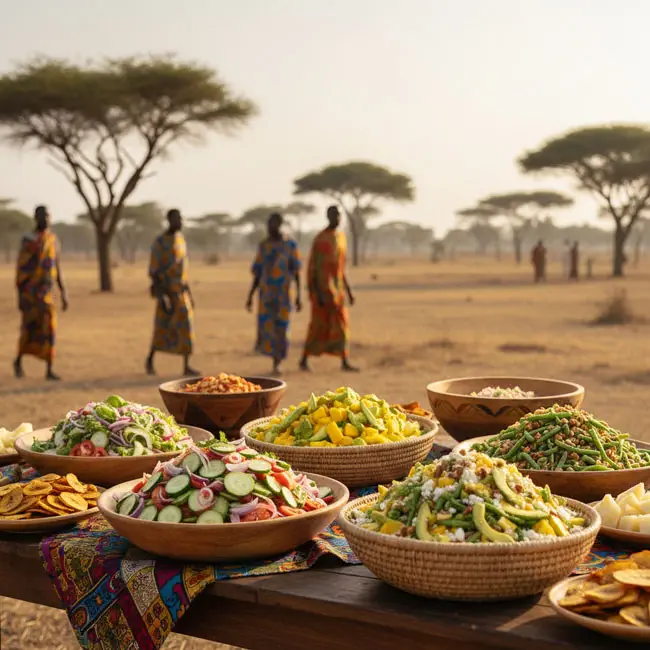
🥡🥢 The Fresh Side of the Congo Table
When people think about Congolese food, rich stews, smoky grills, and slow-cooked dishes often steal the spotlight. But behind those bold flavors lies something just as important — salads that refresh, balance, and bring everything together.
Congo salads are not an afterthought. They are vibrant, intentional, and deeply connected to everyday life. Built from fresh vegetables, tropical fruits, herbs, and earthy ingredients, these salads add brightness to the table and keep meals feeling light, even in the warm Central African climate.
From bustling markets in Kinshasa to quiet villages near the Congo River, salads appear in many forms — sometimes simple, sometimes hearty, but always full of character.
🌿 A Culture Built on Freshness
🥬 Markets That Shape the Salad Bowl
Freshness in Congo starts at the market. Early in the morning, vendors arrange piles of cabbage, carrots, tomatoes, onions, avocados, and mangoes — all harvested nearby.
Salads are shaped by what’s available that day. There’s no rigid recipe. If mangoes are ripe, they go in. If peanuts are plentiful, they become the dressing. This flexible approach keeps Congolese salads seasonal, sustainable, and deeply local.
🌞 Eating Light in a Tropical Climate
With year-round warmth, Congolese meals often aim for balance. Salads cool the palate, refresh the body, and complement heavier dishes.
They’re eaten:
• As side dishes with grilled fish or chicken
• As refreshing midday meals
• As shared plates during family gatherings
In many homes, a meal feels incomplete without something fresh and crisp on the table.
🧠 The Philosophy Behind Congolese Salads
⚖️ Balance Over Complexity
Congolese salads focus on harmony rather than complexity. Each bowl balances:
• Crunchy and soft textures
• Sweet and tangy flavors
• Fresh and earthy elements
Nothing overpowers the other. The goal is to let ingredients speak for themselves.
🤲 Food Meant to Be Shared
Salads are rarely served individually. Instead, they’re placed in large bowls at the center of the table, inviting everyone to take part.
This shared style reflects Congolese values — food is about connection, conversation, and togetherness.
🥕 Core Ingredients in Congo Salads
🥑 Fresh Vegetables & Greens
Some of the most common vegetables used include:
• Cabbage — finely shredded for crunch
• Carrots — sweet and colorful
• Tomatoes — juicy and bright
• Onions — sharp, often softened with citrus
These vegetables form the backbone of many everyday salads.
🥭 Tropical Fruits in Savory Roles
Unlike many Western salads, Congolese salads often include fruit as a key element:
• Mangoes add sweetness
• Pineapple brings acidity
• Papaya offers softness
Fruit is not a garnish — it’s an essential part of the flavor profile.
🥜 Peanuts & Local Staples
Peanuts are one of the most important ingredients in Congolese cuisine, including salads. Ground peanuts add:
• Creaminess
• Earthy depth
• Natural richness
Other staples like beans, cassava, and corn help turn salads into satisfying dishes.
🥗 Popular Types of Congo Salads
🥬 Classic Cabbage & Carrot Slaw
This is the most iconic Congolese salad. Simple, crunchy, and endlessly adaptable, it appears at homes, street stalls, and celebrations.
Finely sliced cabbage and carrots are mixed with onion, citrus, and spice. Sometimes palm oil or peanut dressing is added for richness.
It’s light, refreshing, and universally loved.
🥭 Tropical Mango & Avocado Salad
This salad highlights Congo’s fruit abundance. Ripe mango meets creamy avocado, balanced with lime juice and a touch of salt.
Sometimes peanuts are added for crunch, turning it into a salad that feels both fresh and filling.
It’s especially popular during hot afternoons when heavy food feels like too much.
🌽 Bean & Corn Village Salad
In rural areas, salads often rely on what’s grown locally. Beans and corn become the base, mixed with tomatoes, onions, and palm oil.
This salad is:
• Nutritious
• Protein-rich
• Perfect as a light main dish
It reflects resourcefulness and respect for the land.
🐟 Smoked Fish & Peanut Salad
Along rivers and lakes, smoked fish sometimes finds its way into salads.
Flaked fish is combined with fresh vegetables and peanut dressing, creating a bold contrast of smoky, creamy, and fresh flavors.
This type of salad shows how Congolese cuisine effortlessly blends land and river ingredients.
🌱 Cassava Leaf Salad Variations
Cassava leaves are central to Congolese cooking. While often cooked into stews, they can also be cooled and dressed as salads.
Mixed with tomatoes, onions, and citrus, cassava leaf salads offer a deep, green flavor that feels grounding and traditional.
🧂 Dressing the Congolese Way
🥜 Peanut-Based Dressings
Peanut dressings are thick, aromatic, and satisfying. They coat vegetables gently, adding richness without heaviness.
These dressings are especially common in village-style salads.
🍋 Citrus & Palm Oil Simplicity
Another classic approach is combining palm oil with lime or lemon juice. The result is:
• Bright
• Slightly rich
• Deeply traditional
It’s a dressing that connects modern meals with ancestral flavors.
💚 Health & Nutrition in Every Bowl
Congolese salads are naturally healthy, thanks to their whole-food ingredients.
They offer:
• Fiber from vegetables and beans
• Vitamins from fresh fruits
• Healthy fats from peanuts and avocado
Without processed ingredients, these salads nourish both body and mind.
👨👩👧 Salads in Daily Congolese Life
🏡 Home Cooking & Family Meals
At home, salads are prepared quickly but thoughtfully. They’re adjusted by taste, not by measurement.
Children often help shred vegetables or squeeze citrus, learning food traditions through participation.
🛍️ Street Food & Local Eateries
In cities, salads appear alongside grilled meats, fried plantains, or rice. They add freshness and contrast, making meals feel complete.
Even small salad portions play a big role.
🌍 Modern Congo Salads Today
🧑🍳 Creative Urban Interpretations
Modern cooks are experimenting with presentation and texture:
• Mango-peanut slaws
• Cassava & avocado bowls
• Fruit-forward savory salads
These updates keep Congolese salads relevant while honoring tradition.
🍃 Tradition Meets Global Wellness
With the global rise of plant-based eating, Congo salads feel perfectly timed — fresh, colorful, and naturally balanced.
🏠 Bringing Congo Salads to Your Kitchen
To capture the Congolese salad spirit:
1.Use fresh, seasonal ingredients
2.Balance sweet, sour, and spicy
3.Keep it simple
4.Trust your taste
5.Share the dish
Congolese salads are flexible — they invite creativity.
❤️ Why Congo Salads Leave a Lasting Impression
Congo salads are fresh, bold, and deeply human. They’re not about perfection — they’re about feeling.
Each bowl reflects the land, the climate, and the people who prepare it. Crisp vegetables, tropical sweetness, earthy peanuts, and zesty citrus come together to create something unforgettable.
If you’re looking for salads that feel alive, meaningful, and full of culture — Congo’s table is waiting.
🇨🇬 ❓ FAQ: Congo Salads
❓ Q1.Are Congo salads spicy?
Some include mild heat, but flavors are usually balanced and approachable.
❓ Q2.What dressing is most traditional?
Palm oil with citrus or peanut-based dressings are the most common.
❓ Q3.Can Congo salads be eaten as a main dish?
Yes. Many include beans, cassava, or avocado, making them filling and nutritious.
🥗 Easy Congo Salads Recipes for Beginners
| 🌐 🥗 < Back | 🇨🇬 🍲 < Previous | Next > 🍞 🇨🇬 |