
🏠 Home > 🗺️ Recipes > 🍱 Snacks > 🇨🇬 Congo Snacks
🇨🇬 🍱 Congo Snacks Recipes
Published by Supakorn | Updated: February 2026
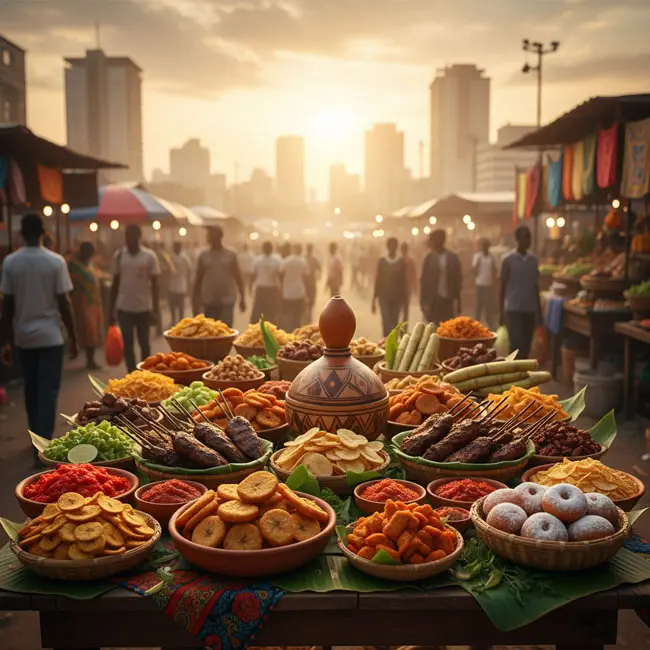
💥 A Street Food Adventure from Kinshasa to Brazzaville
When it comes to Congolese food, many people think first of rich stews, cassava-based staples, and slow-cooked dishes meant for long family meals. But to truly understand everyday life in Congo, you have to step outside — right onto the street.
Congo snacks are where the rhythm of daily life really shows itself. They are quick, affordable, bold in flavor, and deeply social. From early morning until late at night, street vendors across Kinshasa, Brazzaville, and countless smaller towns serve up snacks that fuel workers, students, travelers, and families alike.
These snacks are not “fast food” in the modern sense. They are handmade, deeply rooted in tradition, and shaped by local ingredients, climate, and culture. Every bite tells a story of movement, community, and creativity.
🚶🏾♂️ Step Off the Pavement: The Culture of Congolese Street Food
🛣️ Streets as Living Kitchens
In Congo, the street is an extension of the kitchen. Small charcoal grills, bubbling pots of oil, and baskets of freshly prepared snacks line the sidewalks.
Street food is:
• Immediate and satisfying
• Made to be eaten by hand
• Designed for sharing
People stop to chat, laugh, and catch up while waiting for their snacks. Food becomes a moment of connection, not just consumption.
🤲 Snacks for Everyone
Congo snacks are democratic. Whether you’re a student with a few coins or a worker grabbing food after a long day, there’s always something affordable and filling available.
That accessibility is what makes street food such an essential part of Congolese culture.
🍩 The Deep-Fried Delights: Sweet Snacks Full of Nostalgia
☁️ Mikate: The Fluffy Icon of Congo
Mikate are perhaps the most famous Congolese snack — soft, golden dough balls that are crispy on the outside and airy on the inside.
They are eaten:
• For breakfast
• As an afternoon snack
• During celebrations and gatherings
Mikate are lightly sweet, never overwhelming, which makes them incredibly versatile. People eat them plain, dusted with sugar, or paired with savory foods for contrast.
Their irregular shape is part of their charm — each one is slightly different, just like the streets they’re cooked on.
🍌 Beignets: Fried Dough with Local Creativity
The word beignet is used broadly in Congo for fried dough snacks, and creativity shines here.
Popular variations include:
• Banana or plantain beignets, adding natural sweetness
• Cassava-based fritters with a savory edge
• Lightly spiced doughs flavored with nutmeg or vanilla
Beignets show how Congolese cooks adapt simple techniques to local ingredients, creating endless variety from the same basic idea.
🍌 Savory Staples: Plantains, Cassava, and Everyday Comfort
👑 Makemba: Fried Plantain Perfection
Plantains are a cornerstone of Congolese cuisine, and Makemba — fried ripe plantain — is one of the most beloved snacks.
Sliced and fried until golden, Makemba is:
• Soft inside
• Slightly caramelized outside
• Balanced between sweet and savory
You’ll often see vendors frying huge batches at once, serving them hot in paper or banana leaves. It’s comfort food at its finest.
🌶️ Spicy Plantain Variations
Some vendors take plantains further, coating them in spices like ginger, garlic, and pili pili before frying.
These spicy plantains deliver:
• Heat
• Sweetness
• A lingering kick
They’re especially popular with people who love bold flavors and street food with personality.
🍢 Kamundele: Grilled Skewers on Every Corner
🔥 Meat as a Snack
When Congolese people want something hearty, they turn to Kamundele — grilled meat skewers cooked over charcoal.
You’ll find:
• Beef
• Goat
• Chicken
The meat is marinated simply, allowing the smoky flavor of the grill to shine. Kamundele is commonly eaten in the evening, especially near busy streets and gathering spots.
🌶️ Pili Pili on the Side
No Kamundele experience is complete without pili pili — a fiery chili sauce that adds intensity and excitement. Heat levels vary, but the option is always there.
🔍 Long-Tail Favorites: Unique Congo Street Snacks
🧂 Dabo Kolo: Crunchy and Addictive
Dabo Kolo is a savory snack designed for crunch lovers.
These small dough bites are:
• Crisp
• Lightly spiced
• Perfect for sharing
Often seasoned with garlic, chili, or peanuts, Dabo Kolo is popular for long journeys or social gatherings. It’s the kind of snack you keep reaching for without realizing how much you’ve eaten.
🐟 Makayabu: Salted Fish with Bold Flavor
Makayabu is salted and dried fish that has deep roots in Congolese food culture.
When prepared as a snack, it’s:
• Rehydrated
• Lightly seasoned
• Fried until crispy
The result is intensely savory and satisfying, often enjoyed in small portions because of its bold flavor.
🐠 Ndakala: Small Fish, Big Impact
Ndakala refers to tiny dried fish that are fried until crunchy enough to eat whole.
They’re:
• Protein-rich
• Salty and crisp
• Common in both cities and villages
Ndakala shows how nothing is wasted in Congolese cuisine — every ingredient has value.
🥜 Sweet Groundnuts and Simple Treats
🍬 Candied Peanuts
Peanuts are everywhere in Congolese cooking, and snacks are no exception.
Candied peanuts are made by coating groundnuts in caramelized sugar, creating:
• A crunchy shell
• A sweet-salty balance
They’re sold in small bags and loved by both kids and adults as an energy-boosting treat.
🧠 The Philosophy Behind Congo Snacks
💼 Street Vendors as Entrepreneurs
Most street food vendors are small-scale entrepreneurs, often women, supporting families through their cooking skills.
Buying snacks means:
• Supporting local livelihoods
• Preserving food traditions
• Keeping communities connected
🌶️ Pili Pili: The Flavor Signature
Pili pili isn’t optional — it’s a statement. It represents boldness, confidence, and love for intense flavor.
Almost every savory snack offers the choice to add heat, letting each person customize their experience.
💰 Affordable and Essential
Congo snacks are designed to be:
• Cheap
• Filling
• Available everywhere
They keep cities moving and people energized.
🌆 Street Food as a Daily Experience
As evening falls in Kinshasa or Brazzaville, the streets come alive.
You’ll hear:
• Oil sizzling
• Meat grilling
• Vendors calling out
People gather, snack, talk, and relax. Street food becomes entertainment, nourishment, and social glue all at once.
🏠 Bringing Congolese Snack Culture Home
You don’t need to recreate everything — just capture the spirit.
To think like a Congolese street cook:
1.Keep flavors bold
2.Use simple ingredients
3.Focus on texture
4.Don’t overthink presentation
5.Share generously
Snacks are about joy, not perfection.
❤️ Why Congo Snacks Leave a Lasting Impression
Congo snacks are honest food. They’re shaped by daily life, cooked with care, and eaten with joy.
From fluffy Mikate to crispy Ndakala, every snack reflects:
• The land
• The people
• The rhythm of the street
They remind us that some of the best food in the world isn’t found in restaurants — it’s found on sidewalks, shared between strangers, and eaten while life keeps moving.
🇨🇬 ❓ FAQ: Congo Snacks
❓ Q1.What makes Congo street food unique?
It’s handmade, affordable, bold in flavor, and deeply social.
❓ Q2.Are Congo snacks mostly sweet or savory?
Both — sweet fried doughs and savory plantain, fish, and meat snacks coexist everywhere.
❓ Q3.How are Congo snacks usually eaten?
By hand, on the go, often shared, and always fresh.
🍱 Easy Homemade Congo Snacks Recipes Step-by-Step
| 🌐 🍱 < Back | 🇨🇬 🍞 < Previous | Next > 🥘 🇨🇬 |