
🏠 Home > 🗺️ Recipes > 🍲 Soups > 🇨🇮 Côte d’Ivoire Soups
🇨🇮 🍲 Côte d’Ivoire Soups Recipes
Published by Supakorn | Updated: March 2026
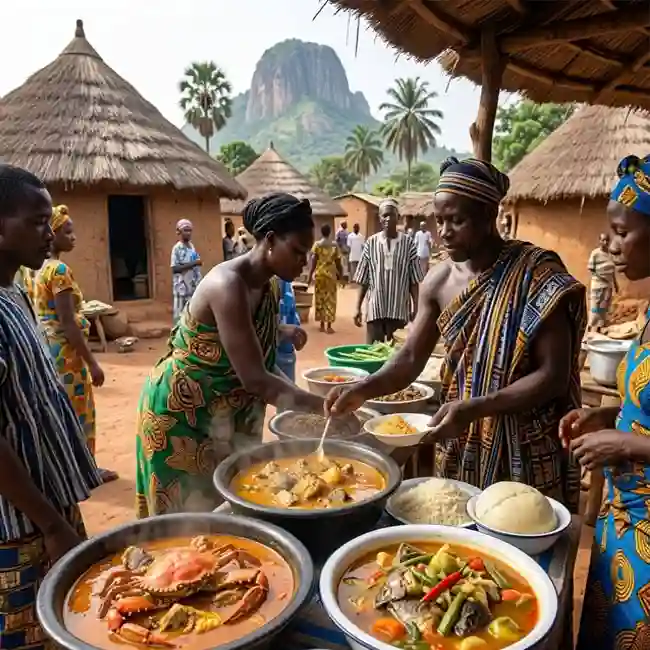
🍲🥣 Welcome to the Steaming Soul of West Africa: Côte d’Ivoire Soups 🇨🇮 🌐📚
Hey there, fellow food travelers! If you’ve been following my kitchen adventures, you know I’m obsessed with flavors that tell a story. Today, we’re heading straight to West Africa—specifically to the beautiful, vibrant Côte d’Ivoire (Ivory Coast).
When you think of Ivorian food, your mind might jump to grilled fish or Attiéké (that amazing fermented cassava couscous), but let me tell you: the real magic is bubbling away in the soup pots. In Côte d’Ivoire, "soup" isn’t just a light starter. It is the main event. It’s thick, it’s spicy, it’s rich with soul, and it’s usually called a "Sauce." Whether you're in the bustling streets of Abidjan or a quiet village in the mountains, a bowl of hot soup is how people show love, celebrate life, and keep their energy up.
In this deep dive, we’re going to look at the incredible culture behind Côte d’Ivoire soups—the bold ingredients, the unique ways people eat, and the must-know names that make Ivorian cuisine a world-class contender. Grab a seat, because this is going to be a delicious ride!
🥗 The Culture of the Bowl: How Côte d’Ivoire Eats
In Côte d’Ivoire, eating is a communal act. You rarely see someone tucked away in a corner with a lonely bowl. Instead, the soup pot is placed in the center, surrounded by family and friends.
🥣 More Than Just Liquid
One thing you’ll notice quickly is that Ivorian soups are incredibly hearty. They often use a base of palm nuts, peanuts, or garden eggs (African eggplants) to create a texture that clings to your spoon—or more traditionally, to your "foufou." The consistency is somewhere between a broth and a stew, designed perfectly to be soaked up by starchy sides.
🍚 The Perfect Partners
You can’t talk about Ivorian soup without talking about what goes with it. Depending on the region, you’ll find:
• Foutou: Pounded plantains or yams—dense, starchy, and perfect for dipping.
• Attiéké: The famous grated cassava that adds a zesty, fermented kick to every bite.
• Placali: Fermented cassava dough with a smooth, stretchy texture that Ivorian soup lovers swear by.
🥘 The "Big Three" Soups You Must Know
If you’re looking to sound like a local, you need to know these three heavy hitters. They represent the diversity of the land—from the oily palm groves to the sandy peanut farms.
🥜 1. Sauce Arachide (The Peanut Powerhouse)
This is probably the most famous export of West African soups. In Côte d’Ivoire, Sauce Arachide is a silky, nutty masterpiece. It uses roasted groundnut paste as a base, mixed with tomatoes and a secret blend of local spices. It’s savory, slightly sweet, and has a deep orange hue that just screams "comfort." It’s the kind of meal that makes you want to take a nap right after—in the best way possible!
🌴 2. Sauce Graine (The Palm Nut King)
If you want to taste the true flavor of the tropical coast, Sauce Graine is it. Made from the pulp of red palm nuts, this soup is thick, earthy, and incredibly rich. It has a unique, slightly smoky flavor profile that you won't find anywhere else in the world. It’s often cooked with smoked fish or assorted meats, making it an "umami bomb" of the highest order.
🍗 3. Kedjenou (The Slow-Cooked Legend)
Technically a light soup or a "braised" stew, Kedjenou is pure Ivorian genius. Traditionally cooked in a sealed clay pot called a Canari, it relies on the steam from the chicken and vegetables to create its own broth. There is no added water! The result? A concentrated, spicy, and clear soup that tastes like the very essence of the ingredients. It’s the ultimate "healing" soup for a rainy day.
🌶️ Secret Ingredients: What Makes It Taste Like Côte d’Ivoire?
What gives these soups that "extra something"? It’s all about the local pantry. Ivorians are masters of balancing heat, earthiness, and acidity.
🍄 The Earthy Funk
Many soups use fermented locust beans (Adjovan) or dried shrimp powder. To a newcomer, the smell might be strong, but once it hits the boiling broth, it transforms into a deep, savory background note that makes the soup taste "expensive" and complex.
🌶️ The "Petit Piment"
Ivorians love their spice! The small, fiery habanero or scotch bonnet peppers are often dropped into the soup whole. If you’re brave, you crush them into your bowl; if not, you let them infuse the broth with a gentle, floral heat.
🍆 Garden Eggs and Okra
Vegetables aren't just for side dishes here. Okra is often used to give soups a "slippery" texture (which is highly prized as it helps the swallow-food go down easily), while garden eggs add a subtle bitterness that cuts through the richness of the palm oil.
🏘️ Regional Flavors: From the Coast to the Savanna
Côte d’Ivoire is a big country with over 60 ethnic groups, and each one brings something different to the soup pot.
• The Coastal South: Here, fresh seafood is king. You’ll find soups brimming with crabs, prawns, and fresh ocean fish, often lightened with tomatoes and ginger.
• The North: Closer to the Sahel, peanuts and dried grains become more prominent. The soups here tend to be thicker and focus more on beef or lamb.
• The West (Mountain Regions): This is where you find the wilder herbs and the famous forest-foraged ingredients that give the soups a rustic, woody character.
🍽️ The Etiquette: Eating Like a Local
If you find yourself invited to an Ivorian home for a bowl of soup, here are a few "pro tips" to keep in mind:
1.Wash Your Hands: Most traditional soups are eaten with your hands (specifically the right hand) using Foutou or Placali as your utensil.
2.The "Dip and Scoop": Take a small piece of your starchy side, make a little indentation with your thumb, and use it to scoop up the thickest part of the soup and meat.
3.Respect the Bone: In Côte d’Ivoire, the most flavorful parts are often the ones on the bone. Don't be shy—getting every last bit of flavor is a sign that you truly enjoy the cooking!
✨ Why You Should Bring Ivorian Soups to Your Table
In a world of fast food and instant noodles, Côte d’Ivoire soups remind us to slow down. They take time to simmer, time to develop, and time to eat. They are healthy, packed with natural fats and proteins, and completely gluten-free (since they rely on tubers and nuts rather than wheat).
Beyond the health benefits, it’s about the adventure. Trying a Sauce Graine or a Kedjenou for the first time is like opening a door to a new world. It’s bold, it’s brave, and it’s undeniably delicious.
❓ FAQ: Everything You Wanted to Know
Q1: Are Ivorian soups very spicy?
A1: They certainly can be! However, the heat is usually adjustable. In many homes, the peppers are kept whole in the pot so individuals can decide how much spice they want in their own bowl. If you like it mild, just don't pop the pepper!
Q2: Can I make these soups if I don't live in Africa?
A2: Absolutely! While fresh palm nuts might be hard to find, many international grocery stores carry high-quality palm nut pulp in cans and natural peanut butter (the 100% nut kind) which works perfectly for Sauce Arachide.
Q3: Is "Sauce" the same thing as "Soup" in Côte d’Ivoire?
A3: Generally, yes! When an Ivorian menu says "Sauce," they are referring to the rich, liquid-based dish served with a starch. It has all the qualities of what we call soup, just much heartier and more flavor-dense!
📝 Summary
Côte d’Ivoire soups are more than just recipes; they are a vibrant celebration of West African land and life. From the creamy, comforting Sauce Arachide to the exotic, deep Sauce Graine, these dishes offer a taste profile that is unique, healthy, and deeply satisfying. By focusing on fresh, natural ingredients and slow-cooking techniques, Ivorian cuisine has created a "soup culture" that is now capturing the hearts of foodies worldwide.
Whether you're looking for something spicy to kickstart your palate or a rich, earthy bowl to warm your soul, Côte d’Ivoire has a soup for you. It’s a world of flavor waiting to be explored—one scoop of foutou at a time!
🍲 Fuel Your Gains with High-Protein West African Flavors: The 20-Minute Guide
👉 Cook 3 Muscle-Building Ivoirian Soups
| 🌐 🍲 < Back | 🇨🇮 🍷 < Previous | Next > 🥗 🇨🇮 |