
🏠 Home > 🗺️ Recipes > 🍨 Desserts > 🇩🇰 Denmark Desserts Recipes
🇩🇰 🍨 Authentic Denmark Desserts: Hygge & Konditori Style
Published by Supakorn | Updated: November 2026
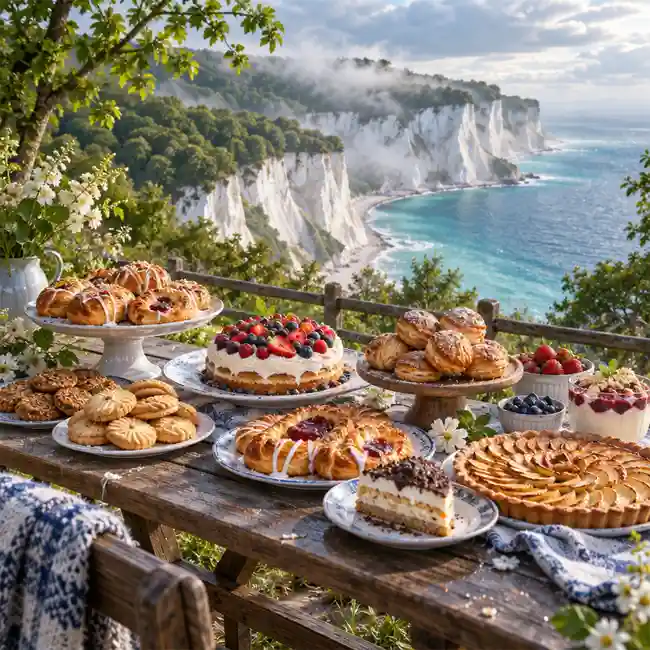
🦢🇩🇰 Introduction: The Cultural Heritage of Denmark Desserts
Denmark desserts are not just something sweet at the end of a meal, they are a whole way of life.
If you have ever heard the word hygge, you already understand half of Danish dessert culture before you even take a bite.
Hygge means cozy, warm, together, and unhurried, and in Denmark, dessert is one of the easiest ways to create that feeling.
A cold afternoon in Copenhagen becomes instantly better with a warm pastry, a cup of coffee, and a friend sitting across the table.
A family Sunday becomes a memory when grandmother brings out a homemade cake and everyone stays for one more slice.
Danish desserts tell the story of a small country with long winters, strong farming traditions, and a deep love for simple pleasures done really, really well.
This is not about over-the-top sugar bombs or giant portions.
This is about butter, cream, berries, apples, almonds, cinnamon, cardamom, and chocolate, balanced with care.
Danish bakers are famous around the world for a reason, and once you taste the real thing in Denmark, you will understand why.
In this guide, we are going to walk through the culture, the iconic specialties, the flavors, the ingredients, and the places that make Denmark desserts so special.
No recipes, no complicated steps, just pure food culture, stories, and inspiration for your next sweet adventure.
Whether you are planning a trip to Denmark, dreaming about Danish baking, or just curious about what Danes actually eat for dessert, you are in the right place.
Get ready, because Denmark is about to steal your sweet tooth.
☕ The Art of Denmark Dining Culture & Social Eating
In Denmark, eating is social, and dessert is the most social part of all.
Danes do not rush dessert, they linger over it.
The Danish concept of kaffebord, or coffee table, is a perfect example.
Imagine a long table covered with seven, ten, or even fourteen different cakes, cookies, and pastries, all homemade, all waiting for guests.
This tradition comes from Southern Jutland, and it is still alive today at birthdays, confirmations, weddings, and family gatherings.
The rule is simple, you try a little bit of everything, you have another cup of coffee, and you stay and chat.
No one is counting calories, no one is in a hurry, everyone is together.
Another beloved ritual is fredagshygge, or Friday cozy time.
After a long week, many Danish families slow down, light candles, and share something sweet while watching a movie or playing board games.
It could be a simple cake from the local bakery, a bowl of berries with cream, or homemade buns still warm from the oven.
The dessert is not the star, the togetherness is, but the dessert makes the togetherness even sweeter.
Danish bakeries, called konditori or bageri, are also social hubs.
In the morning, locals stop by for a wienerbrød, the famous Danish pastry, and a coffee to go.
In the afternoon, friends meet for kage and cake, not to show off, but to catch up.
Even at work, there is a culture of kagemand, or cake man, where someone brings cake to celebrate a birthday or a new job.
The cake is cut, shared, and enjoyed together, and suddenly the office feels like family.
Seasons also shape how Danes eat dessert.
In summer, desserts are light, fresh, and berry-filled, with strawberries, raspberries, gooseberries, and currants from local gardens.
In autumn, apples, plums, and pears take over, often baked into warm crumbles and pies.
In winter, desserts become richer, warmer, and spicier, with cinnamon, cloves, almonds, and marzipan.
Christmas in Denmark, or jul, is a whole dessert season on its own, with special cookies, rice pudding, and festive cakes that only appear once a year.
What makes Danish dining culture so special is this balance between simplicity and celebration.
Everyday desserts are humble, a bun, a cookie, a slice of cake.
Celebration desserts are generous, beautiful, and made with love, but never overdone.
It is this everyday magic that makes Denmark desserts feel so authentic and so inviting.
🗺️ Where Culture Meets Flavor: Iconic Food Tourism Spots
If you want to truly understand Denmark desserts, you have to taste them where they were born.
Copenhagen is the obvious starting point, and it is a dessert lover's dream.
Walk down Strøget, the famous pedestrian shopping street, and you will pass historic bakeries that have been making pastries the same way for over a hundred years.
Stop in Nørrebro for trendy, modern bakeries that play with cardamom, sea buckthorn, and rye flour in exciting new ways.
Head to Vesterbro for cozy cafes where locals spend hours over cake and coffee, watching the world go by.
Do not miss Nyhavn, the colorful harbor, where you can enjoy a pastry with a view of the old wooden ships and bright facades.
It is touristy, yes, but it is also undeniably charming, and the perfect place for your first Danish pastry in Denmark.
Outside Copenhagen, Aarhus, Denmark's second city, has a vibrant food scene with young bakers, street food markets, and cozy konditoris.
Odense, the hometown of Hans Christian Andersen, feels like a fairy tale, and its bakeries feel the same way, with classic cakes, marzipan treats, and old-fashioned cookies.
In Southern Jutland, especially around Sønderborg and Tønder, you can still experience the legendary sønderjysk kaffebord, the Southern Jutland coffee table.
Some cafes and local museums offer this experience, and if you ever get the chance, say yes immediately.
It is not just dessert, it is a cultural performance, a table full of history.
If you love street food, visit Reffen in Copenhagen or Aarhus Street Food.
While these places are famous for savory food, you will also find Danish dessert stalls selling warm æbleskiver, pancake balls, waffles, soft ice cream, and fresh pastries.
Danish Christmas markets, especially in Copenhagen's Tivoli Gardens and in Aarhus, are another must-visit.
Tivoli in December is pure magic, with lights, music, and stalls selling roasted almonds, gløgg spices without alcohol in many family-friendly versions, gingerbread, and warm apple treats.
For a more local experience, visit a Danish farmers market or a torvehallerne, a food hall.
In Copenhagen's Torvehallerne, you can taste artisanal cakes, Danish licorice, marzipan, and fresh berries all in one place.
And do not forget the Danish islands, like Bornholm and Funen.
Bornholm is famous for its smoked foods, but also for its sweet treats made with local berries and honey.
Funen, known as Denmark's garden island, is full of apple orchards and small farm shops selling homemade jams, pies, and cakes.
Every region in Denmark has its own sweet twist, and part of the fun is discovering it bite by bite.
🏆 Top Iconic Denmark Desserts Specialties
Let us talk about the stars of the show, the desserts that make Denmark famous.
These are the treats Danes grow up with, crave when they are abroad, and proudly share with visitors.
✦ Wienerbrød, The World-Famous Danish Pastry: This is the one everyone knows, but the real Danish version is lighter, flakier, and less sweet than many copies abroad. It comes in many shapes, like spandauer with custard and jam, kanelsnegl or cinnamon snail, tebirkes with poppy seeds and marzipan, and frøsnapper with poppy seeds and a crispy twist. In Denmark, wienerbrød is an everyday luxury, not just a tourist treat.
✦ Kanelstang, Cinnamon Stick: A long, soft, buttery pastry swirled with cinnamon sugar, often shared and torn apart at the table. It is warm, gooey, and perfect for hygge mornings.
✦ Fastelavnsboller, Carnival Buns: Soft, round buns filled with cream, jam, or marzipan, topped with icing. Danes eat them in February for Fastelavn, a carnival tradition, but many bakeries sell them all winter because people love them too much to wait.
✦ Æbleskiver, Danish Pancake Balls: Small, round, fluffy balls cooked in a special pan, served warm with powdered sugar and jam. They are a Christmas classic, but also a beloved street food treat. Crispy outside, soft inside, and impossible to eat just one.
✦ Risalamande, Danish Christmas Rice Pudding: A creamy rice pudding mixed with chopped almonds and whipped cream, served cold with warm cherry sauce. It is the official dessert of Danish Christmas Eve. There is a fun game too, whoever finds the whole almond in their portion wins a small prize.
✦ Lagkage, Danish Layer Cake: The ultimate celebration cake. Layers of light sponge, custard, whipped cream, fresh berries, and sometimes marzipan. It appears at birthdays, confirmations, and graduations, decorated beautifully and cut with pride.
✦ Kransekage, Marzipan Wreath Cake: A tower of marzipan rings stacked into a cone, decorated with icing and small flags. This is the cake for New Year's Eve, weddings, and big celebrations. You break off a ring and share it, it is crunchy, chewy, and wonderfully almondy.
✦ Drømmekage, Dream Cake: A simple sponge cake with a caramelized coconut and brown sugar topping that becomes slightly crunchy as it cools. It is called dream cake for a reason, it is humble, comforting, and absolutely addictive. Every Danish family has a version of this cake.
✦ Småkager, Danish Butter Cookies: The famous Danish butter cookies in the blue tin, but in Denmark they are even better fresh. Varieties include vanilla rings (vaniljekranse), jam drops (hindbærsnitter), cinnamon cookies, and pebernødder, small spiced Christmas cookies. These are the cookies Danes bake by the dozens in December.
✦ Rødgrød med Fløde, Red Berry Pudding with Cream: A thick, sweet-tart pudding made from strawberries, raspberries, currants, and rhubarb, served with cold cream. It is the taste of Danish summer in a bowl, fresh, bright, and a little bit tangy.
✦ Æblekage, Danish Apple Trifle: Layers of stewed apples, breadcrumbs toasted in butter and sugar, and whipped cream. Simple ingredients, incredible flavor. It is rustic, cozy, and deeply Danish.
✦ Hindbærsnitter, Raspberry Slices: Two layers of shortcrust pastry with raspberry jam in the middle, topped with white icing and sprinkles. A bakery classic that Danes buy for afternoon coffee, school parties, and cozy weekends.
✦ Flødeboller, Chocolate-Covered Marshmallow Treats: A thin marzipan or biscuit base topped with fluffy marshmallow cream and coated in chocolate. Modern Danish chocolatiers have turned this childhood favorite into a gourmet treat with flavors like licorice, passion fruit, and salted caramel.
✦ Brunsviger, Funen's Famous Sugar Cake: From the island of Funen, this is a soft yeast cake covered with a rich brown sugar and butter topping. It is sticky, sweet, and beloved for breakfast and coffee breaks.
✦ Gammeldags Æblekage and Rabarberkage: Old-fashioned apple cake and rhubarb cake, the kind grandmothers make. They are not fancy, but they taste like home, like summer, like Denmark.
Each of these desserts has its own story, its own season, and its own place in Danish life.
Together, they show why Denmark desserts are so loved, they are not about showing off, they are about sharing joy.
👅 Flavor Profile: What Makes Denmark Desserts Unique?
So what makes Denmark desserts taste different from desserts anywhere else in the world?
First, it is the butter.
Danish butter is rich, creamy, and high-quality, and Danish bakers use a lot of it.
That is why Danish pastries are so flaky, so tender, and so satisfying.
You can taste the butter in every layer, and that is exactly the point.
Second, it is the balance between sweet and tart.
Danes love berries, rhubarb, apples, and currants, which bring natural tartness.
Instead of making desserts super sweet, they let the fruit shine, then add just enough sugar and cream to balance it.
The result is fresh, not heavy, and you always want one more bite.
Third, it is the warm spices.
Cinnamon is king in Denmark, followed closely by cardamom, vanilla, cloves, and ginger.
These spices are not overpowering, they are gentle, warm, and cozy, perfect for long winters.
A Danish cinnamon bun does not punch you with spice, it hugs you with it.
Fourth, it is the almonds and marzipan.
Denmark has a deep love affair with almonds.
Marzipan appears in pastries, cakes, Christmas treats, and even candy.
Almonds add a nutty, slightly sweet, slightly bitter depth that makes Danish desserts feel sophisticated without being complicated.
Fifth, it is the texture.
Danish desserts play with contrast, crispy pastry with soft custard, crunchy marzipan with creamy chocolate, crumbly cookie with smooth jam.
Every bite has layers, not just of flavor, but of feeling.
Sixth, it is the freshness and seasonality.
Danes prefer local, seasonal ingredients.
Summer desserts taste like summer because they use summer berries.
Winter desserts taste like winter because they use apples, nuts, and spices.
This seasonality keeps Danish desserts honest and exciting all year round.
Finally, it is the simplicity.
Danish desserts are not decorated to impress Instagram, they are made to taste good and to be shared.
A simple cake, well made, with good ingredients, is more Danish than a towering, overly decorated creation.
That simplicity is the secret, and once you taste it, you will never forget it.
🧈 Essential Ingredients & Traditional Cooking Techniques
Behind every great Denmark dessert is a small set of essential ingredients and time-honored techniques.
Danish baking is not about exotic ingredients, it is about using everyday ingredients exceptionally well.
Understanding these basics will help you appreciate why Danish desserts taste the way they do, even if you never bake them yourself.
🌿 Signature Spices & Local Ingredients
• Danish Butter: The foundation of almost everything. Rich, creamy, and essential for flaky pastry, tender cakes, and buttery cookies.
• Fresh Cream and Milk: Used for custards, whipped cream, rice pudding, and cake fillings. Danish dairy is known for its quality and freshness.
• Wheat Flour and Rye Flour: Wheat for light pastries and cakes, rye for heartier, more rustic bakes. Many modern Danish bakers mix the two for depth.
• Eggs: Free-range eggs are prized for rich custards, sponge cakes, and pastry doughs.
• Sugar and Brown Sugar: White sugar for delicate cakes, brown sugar for caramelized toppings like in drømmekage and brunsviger.
• Cinnamon and Cardamom: The two most iconic Danish baking spices. Cinnamon for buns and cakes, cardamom for buns, cookies, and festive bakes.
• Vanilla: Real vanilla, often from vanilla pods, for custards, cookies, and cream fillings.
• Almonds and Marzipan: Ground almonds, sliced almonds, and marzipan for cakes, pastries, and Christmas treats.
• Fresh Berries: Strawberries, raspberries, blackcurrants, redcurrants, gooseberries, and blueberries, often picked in summer and used fresh or made into jams and sauces.
• Apples, Pears, Plums, and Rhubarb: The backbone of Danish fruit desserts, from pies and trifles to crumbles and cakes.
• Jam and Fruit Preserves: Raspberry jam, strawberry jam, and apple compote are staples, used as fillings, toppings, and layers.
• Yeast: For soft buns, cinnamon sticks, and festive breads. Danish yeast doughs are soft, buttery, and slightly sweet.
• Chocolate: Dark chocolate for flødeboller, milk chocolate for cakes, and cocoa for cookies and buns.
• Licorice: Denmark loves licorice, sweet, salty, and everything in between. It appears in candy, chocolate, and even modern desserts.
• Honey: Local Danish honey, used in cakes, cookies, and glazes, especially on Bornholm and in rural areas.
👩🍳 Time-Honored Cooking Techniques
• Laminating Dough: The secret behind flaky wienerbrød. Bakers fold butter into dough over and over again, creating hundreds of thin layers that puff up in the oven. It takes time, patience, and skill.
• Slow Proofing: Danish yeast doughs are often left to rise slowly, which develops deeper flavor and a softer texture.
• Whipping Cream to Perfection: Danish cream fillings are light, airy, and not too sweet. The technique is all about timing, cold cream, gentle whipping, and stopping at just the right moment.
• Making Custard from Scratch: Real Danish custard, or kagecreme, is made with milk, eggs, sugar, and vanilla, cooked slowly until thick and silky. It is the heart of many layer cakes and pastries.
• Toasting Breadcrumbs in Butter: For æblekage, breadcrumbs are toasted in butter and sugar until golden and crunchy. This simple technique creates an unforgettable contrast with soft apples and cream.
• Baking in Batches for Sharing: Danish home bakers rarely bake just one small cake. They bake big batches of cookies, large cakes, and trays of buns, because baking is for sharing.
• Decorating with Simplicity: Danish cakes are decorated with fresh berries, powdered sugar, simple icing, and small flags, not with heavy fondant or complicated designs. Beauty comes from freshness and care.
• Preserving Summer Flavors: Danes make jams, compotes, and berry sauces in summer to enjoy all winter. This tradition connects the seasons and keeps dessert flavors alive year-round.
• Using Special Pans and Molds: Æbleskiver pans, kransekage ring molds, and fluted cake pans are part of Danish baking heritage. These tools shape not just the dessert, but the tradition itself.
• Baking Together: Perhaps the most important technique of all, baking together. In Denmark, children learn to bake with parents and grandparents, passing down recipes, stories, and techniques. This is how Danish dessert culture stays alive.
❓ Frequently Asked Questions (FAQ)
Q1. What is the most famous dessert in Denmark?
The most famous dessert in Denmark is wienerbrød, known around the world as the Danish pastry.
In Denmark, it is not just one pastry, it is a whole family of flaky, buttery pastries with different fillings like custard, jam, marzipan, and cinnamon.
If you try only one Danish dessert, make it a fresh wienerbrød from a local bakery in Copenhagen.
Q2. What do Danes eat for dessert at Christmas?
At Christmas, Danes enjoy risalamande, a creamy rice pudding with almonds and cherry sauce, served on Christmas Eve.
They also love æbleskiver, småkager, pebernødder, and kransekage for New Year's Eve.
Christmas in Denmark is a full season of baking, sharing, and cozying up with sweet treats.
Q3. Are Denmark desserts very sweet?
Not usually.
Denmark desserts are known for balance, not extreme sweetness.
They often combine sweet cream, butter, and sugar with tart berries, apples, or rhubarb, so the flavor stays fresh and light.
Even rich cakes like drømmekage and brunsviger have a caramel depth that feels comforting rather than overwhelming.
Q4. Where can I try authentic Denmark desserts as a tourist?
Start in Copenhagen at historic bakeries, Torvehallerne food halls, and cozy konditoris in Nørrebro and Vesterbro.
Visit Tivoli Gardens for festive treats, Aarhus for modern bakeries, and Southern Jutland for the traditional kaffebord experience.
For street food, try Reffen in Copenhagen, and for Christmas markets, visit Copenhagen and Aarhus in December.
🙏 Culinary Heritage & Credit to Denmark Traditions
Denmark desserts belong to the people of Denmark, to the bakers, farmers, grandmothers, and families who have kept these traditions alive for generations.
This guide is written with deep respect for that heritage.
Danish baking is not a trend, it is a living culture, passed down through hands, kitchens, and stories.
From the humble drømmekage made on a Sunday afternoon to the grand kransekage at a wedding, every dessert carries a piece of Danish history.
We want to thank the Danish konditoris that have preserved old recipes, the home bakers who still bake for their families, and the new generation of Danish chefs and bakers who are reimagining these classics with fresh, local ingredients.
The beauty of Denmark desserts is that they are both timeless and evolving.
They honor the past while welcoming the future, and they invite everyone to the table.
If this guide has made you hungry, curious, or inspired, then it has done its job.
The best way to honor Denmark's dessert heritage is to taste it with respect, share it with people you love, and remember that behind every slice of cake is a story of hygge, home, and heart.
Denmark may be a small country, but its sweet traditions are huge, warm, and unforgettable.
So next time you see a Danish pastry, a slice of lagkage, or a bowl of rødgrød med fløde, take a moment, slow down, and enjoy it the Danish way.
Sit down, share it, and savor the sweetness of Denmark, one bite at a time.
🍨 Simple Sugar-Free Danish Desserts You Can Make at Home for a Healthier Life
👉 Indulge in Effortless Danish Desserts
| 🌐 🍨 < Back | 🇩🇰 🍝 < Previous | Next > 🍷 🇩🇰 |