
🏠 Home > 🗺️ Recipes > 🥪 Appetizers > 🇫🇯 Fiji Appetizers > 🥪 1.Crispy Fijian Vegetable Bhajia , 2.Authentic Fijian Kokoda (Coconut Lime Ceviche) , 3.Cassava Wedges with Garlic Salt
🥪 Taste the Islands: Authentic Fijian Street Food Starters You Can Make at Home
Published by Supakorn | Updated: February 2026
🇫🇯 🏝️ Bringing the Spirit of Fiji to Your Kitchen
If you’ve ever walked through the bustling markets of Suva or relaxed on the sun-drenched beaches of Nadi, you know that Fiji isn’t just about the scenery—it’s about the soul-warming food. Fijian cuisine is a beautiful, aromatic blend of indigenous traditions and heavy Indian influences, resulting in a "street food" culture that is bold, spicy, and incredibly comforting.
In this guide, I’m going to walk you through three of the most iconic appetizers found on the streets of Fiji. Whether you’re looking for something crunchy, something fresh, or something savory, these recipes have you covered. We’ll be diving into:
🥇 • Recipe 1; Crispy Fijian Vegetable Bhajia — The ultimate crispy snack
🥈 • Recipe 2; Authentic Fijian Kokoda (Coconut Lime Ceviche) — The refreshing "ceviche" of the Pacific
🥉 • Recipe 3; Cassava Wedges with Garlic Salt — The tropical answer to fries
Get ready, because your kitchen is about to smell like a tropical paradise!
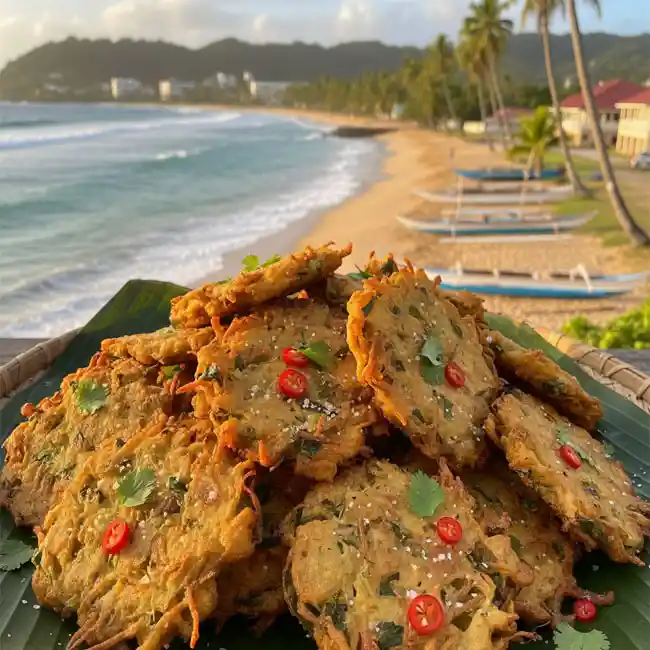
🥟 Recipe 1: Crispy Fijian Vegetable Bhajia — The ultimate crispy snack
🥣 About this Recipe
If there is one smell that defines a Fijian street market, it’s the scent of fresh Bhajia frying in a large iron pot. While originally an Indian dish, the "Fiji-style" Bhajia has its own unique flair. It’s a fritter made from a chickpea flour batter packed with fresh vegetables and warm spices. It’s crunchy on the outside, soft on the inside, and completely addictive.
🧂 Ingredients & Measurements
• 2 cups of Besan (Chickpea flour)
• 1/2 cup of All-purpose flour
• 1 large Onion, finely sliced
• 2 cups of Fresh Spinach or Chopped Cabbage, shredded
• 1 teaspoon of Turmeric powder
• 1 teaspoon of Cumin seeds
• 1 tablespoon of Ginger-Garlic paste
• 2 small Green Chilies, finely chopped (adjust to your heat preference)
• 1 teaspoon of Baking powder
• 1/2 cup of Water (added gradually)
• 1 teaspoon of Salt
• Vegetable oil for deep frying
👨🍳 Step-by-Step Instructions
1.Mix the Dry Goods: In a large mixing bowl, whisk together the chickpea flour, all-purpose flour, baking powder, turmeric, cumin seeds, and salt.
2.Add the Aromatics: Toss in your sliced onions, shredded spinach (or cabbage), ginger-garlic paste, and chilies. Use your hands to mix them so the flour coats the vegetables.
3.Create the Batter: Slowly add water, a little at a time. You want a thick, sticky batter that holds the vegetables together. It shouldn't be runny like pancake batter!
4.Heat the Oil: Fill a deep pan with oil and heat it over medium-high heat. To check if it’s ready, drop a tiny bit of batter in; if it sizzles and rises to the top, you’re good to go.
5.Fry in Batches: Use a spoon or your fingers to drop small, golf-ball-sized clumps of batter into the oil. Don’t overcrowd the pan!
6.Golden Perfection: Fry for about 3–4 minutes, turning them occasionally until they are a deep golden brown.
7.Drain: Place the fried bhajias on paper towels to soak up any excess oil.
💡 Tips & Mistakes to Avoid
• The Water Trap: Adding too much water at once is the biggest mistake. If the batter is too thin, the bhajias will absorb too much oil and become greasy.
• Keep it Consistent: Try to keep the fritters roughly the same size so they cook at the same rate.
• Hot Oil is Key: If the oil isn't hot enough, they will be soggy. If it’s too hot, the outside will burn before the inside is cooked.
• Fresh Veggies: Squeeze the excess moisture out of your spinach before adding it to the mix to keep the batter thick.
❓ FAQ
Q1.Can I make these gluten-free?
Absolutely! Just replace the half-cup of all-purpose flour with more chickpea flour or rice flour for extra crunch.
Q2.What sauce goes best with Bhajia?
In Fiji, these are almost always served with a spicy tamarind chutney or a simple tomato sauce (ketchup) with a bit of chili mixed in.
📝 Summary
Bhajia is the king of Fijian appetizers. It’s cheap to make, yields a huge batch, and provides that satisfying crunch that everyone loves at a party.
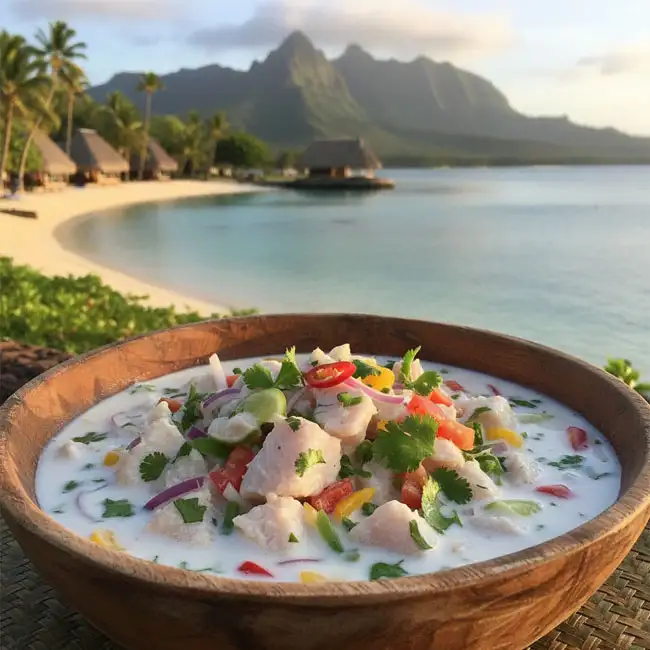
🐟 Recipe 2: Authentic Fijian Kokoda (Coconut Lime Ceviche) — The refreshing "ceviche" of the Pacific
🥣 About this Recipe
Kokoda (pronounced ko-kon-da) is arguably the most famous dish in Fiji. It is a refreshing raw fish salad cured in citrus juice and finished with rich, thick coconut cream. While it sounds fancy, it’s actually a staple "street" or "market" food often served in coconut shells. It’s creamy, tangy, and incredibly fresh.
🧂 Ingredients & Measurements
• 500 grams of Fresh White Fish Fillet (Mahi-mahi, Snapper, or Sea Bass), cut into 1cm cubes
• 1 cup of Fresh Lime or Lemon juice (enough to submerge the fish)
• 1 cup of Thick Coconut Cream (fresh is best, but canned works)
• 1 small Red Onion, finely diced
• 1 small Cucumber, seeds removed and finely diced
• 1 medium Tomato, seeds removed and diced
• 1-2 Bird’s Eye Chilies, finely minced
• 1/4 cup of Finely chopped Fresh Cilantro (Coriander)
• 1/2 teaspoon of Salt (or to taste)
• A pinch of Black Pepper
👨🍳 Step-by-Step Instructions
1.The "Cook": Place your cubed fish in a glass bowl and pour the lime/lemon juice over it. Ensure all the fish is covered. Cover the bowl and let it marinate in the fridge for 2 to 4 hours. The acid in the juice will "cook" the fish until it turns opaque and firm.
2.Rinse (Optional but Recommended): Once the fish is "cooked," some people prefer to drain the excess lime juice and give the fish a quick rinse with cold water to keep the flavor from being too sour.
3.The Creamy Base: In a separate large bowl, combine the coconut cream, diced onion, cucumber, tomato, and chilies.
4.Combine: Add the marinated fish into the coconut mixture. Stir gently to combine.
5.Season: Add salt, pepper, and fresh cilantro. Give it one last gentle stir.
6.Chill: Let it sit in the fridge for another 30 minutes to allow the flavors to meld together.
7.Serve: Serve chilled in small bowls or, for the full island experience, inside a cleaned-out coconut shell.
💡 Tips & Mistakes to Avoid
• Freshness First: Since the fish isn't cooked with heat, you must use the freshest, sushi-grade white fish available.
• Don't Over-Marinate: If you leave the fish in the lime juice overnight, it can become "rubbery." 2 to 4 hours is the sweet spot.
• Seed Your Veggies: Make sure to remove the seeds from the cucumber and tomato, otherwise, your Kokoda will become too watery.
• Coconut Quality: Use full-fat coconut cream. "Lite" coconut milk will be too thin and won't give you that signature silky texture.
❓ FAQ
Q1.Can I use frozen fish?
You can, but make sure it is completely thawed and patted dry before marinating. However, fresh fish is significantly better for texture.
Q2.Is it spicy?
Fijian Kokoda usually has a bit of a "kick" from the chilies, but you can leave them out entirely if you prefer a mild, creamy flavor.
📝 Summary
Kokoda is the perfect appetizer for a summer day. It’s light, healthy, and provides a sophisticated tropical vibe that will impress any guest.

🍠 Recipe 3: Cassava Wedges with Garlic Salt — The tropical answer to fries
🥣 About this Recipe
In Fiji, Cassava (Tavioka) is a way of life. It’s the primary starch found on every dinner table. While boiled cassava is common, street vendors take it to the next level by frying it into thick, starchy wedges. Think of these as "Fries 2.0"—they are denser, crunchier, and far more satisfying than regular potato chips.
🧂 Ingredients & Measurements
• 2 large Cassava roots (approx. 1 kg), peeled
• 4 cups of Water (for boiling)
• 1 tablespoon of Salt (for boiling water)
• Vegetable oil for frying
• 2 tablespoons of Garlic powder
• 1 teaspoon of Sea salt (for seasoning)
• 1/2 teaspoon of Smoked paprika (optional)
👨🍳 Step-by-Step Instructions
1.Prepare the Cassava: Peel the tough brown skin off the cassava using a vegetable peeler or knife. Cut the root into 3-inch long chunks.
2.The Par-boil: Place the chunks in a pot of salted water. Bring to a boil and cook for about 15–20 minutes. You want them tender enough to pierce with a fork, but not falling apart.
3.Cool and Core: Drain the cassava and let it cool. Once cool, cut each chunk into wedges. Make sure to remove the woody "string" or core found in the center of the root.
4.Dry Them Out: Pat the wedges dry with a paper towel. The drier they are, the crunchier they will be!
5.Fry Time: Heat your oil to medium-high. Fry the wedges in batches until they develop a beautiful golden-brown crust (usually 5–7 minutes).
6.Season Immediately: While the wedges are still hot and oily, toss them in a bowl with garlic powder, sea salt, and paprika.
7.Serve: These are best served piping hot with a side of sweet chili sauce or garlic aioli.
💡 Tips & Mistakes to Avoid
• Removing the Core: Never forget to remove the fibrous vein in the middle of the cassava; it’s tough and unpleasant to eat.
• Don't Overcook: If you boil the cassava until it's mushy, it will fall apart in the frying pan and soak up too much oil.
• Uniform Slices: Cut the wedges into similar sizes so they all get crispy at the same time.
• The Double-Fry: If you want them extra crunchy, you can fry them once at a lower temperature, let them cool, and flash-fry them again at a high temperature right before serving.
❓ FAQ
Q1.Where can I find Cassava?
Most Asian or Latin American grocery stores carry cassava (it may be labeled as "Yuca"). You can often find it in the frozen section already peeled!
Q2.Are these healthier than potato fries?
Cassava is a great source of Vitamin C and resistant starch, but since we are deep-frying them, they are definitely an "indulgence" snack!
📝 Summary
Cassava wedges are the ultimate comfort food. They are hearty, salty, and have a unique texture that potato fries just can't match.
✨ Final Thoughts
There you have it—three incredible, authentic street-style appetizers straight from the heart of Fiji!
What I love most about these recipes is how they represent the diversity of the islands. You have the spicy, crunchy Indian-inspired Bhajia, the fresh and tropical Kokoda, and the earthy, satisfying Cassava Wedges. None of these dishes require fancy equipment or expensive ingredients, yet they bring a world of flavor to your table.
If you’re new to Pacific island flavors, I recommend starting with the Cassava Wedges—they are a guaranteed crowd-pleaser. Once you’re feeling adventurous, give the Kokoda a try; it’s a total game-changer for seafood lovers!
Have you tried making any of these? Or maybe you’ve visited Fiji and have a favorite street food memory?
| 🇫🇯 🥪 < Back |