
🏠 Home > 🗺️ Recipes > 🥪 Appetizers > 🇬🇦 Gabon Appetizers > 🥪 Beignets Sucrés (Gabonese Sweet Doughnuts) , Plai (Gabonese Grilled Plantain) , Mikate Salés (Spicy Savory Fritters)
🥪 From Libreville to Your Kitchen: 3 Easy Gabon Appetizer Recipes for Beginner Home Cooks
Published by Supakorn | Updated: February 2026
Your Gateway to Central African Flavors
Hey there, and welcome to your new favorite kitchen adventure!
You’ve heard the buzz, right? African cuisine is finally getting the global recognition it deserves, moving from the regional specialty aisle to the center stage of gourmet home cooking. And let me tell you, the flavors of Gabon, right in the heart of Central Africa, are some of the most exciting and approachable to start with.
Gabonese food is a beautiful blend of rich indigenous ingredients—think cassava, plantain, and palm oil—tempered by a friendly French touch. The result is food that is deeply comforting, incredibly flavorful, and, best of all, perfectly suited for sharing.
If the thought of cooking a full, complex African stew is daunting, don't worry! We're starting where all the real magic happens: the appetizers and street snacks. In Gabon, these aren't tiny bites; they are substantial, delicious, and the perfect entry point for any beginner cook who wants to impress friends or just spice up their weeknight menu.
In this comprehensive guide, we're skipping the intimidating stuff and giving you three rock-solid, incredibly popular Gabonese recipes that you can master today.
Here are the three superstar recipes we're diving into:
1.Beignets Sucrés: The universally loved, fluffy, sweet doughnut (The perfect starter!).
2.Plai: Simple, golden, grilled or pan-fried plantain slices.
3.Mikate Salés: Savory, spiced fritters (a slightly more complex, but worth-it bite).
Ready to cook? Grab your apron, put on some good music, and let's bring the vibrant streets of Gabon right into your kitchen!
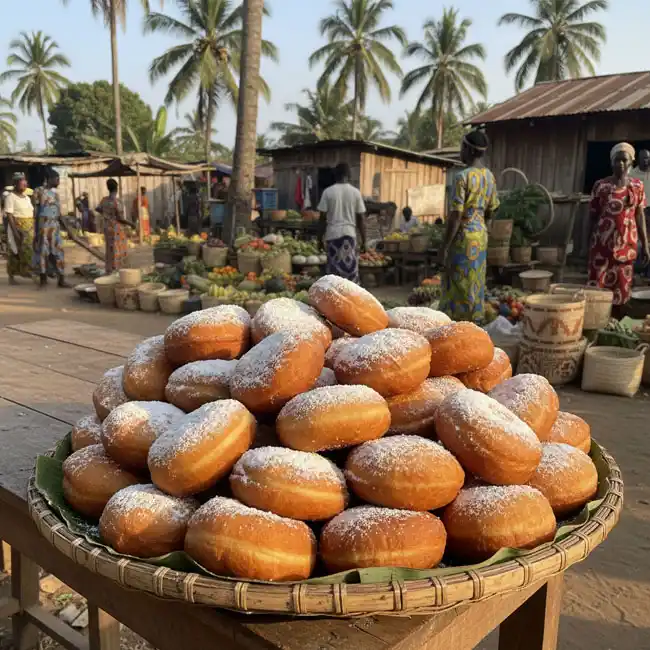
🔹 Recipe 1: Beignets Sucrés (Gabonese Sweet Doughnuts)
About this Recipe (Menu Introduction)
If you're looking for the ultimate feel-good Gabonese snack, this is it. Beignets Sucrés are the sweet version of the ubiquitous African street-food fritter, and they are wildly popular from breakfast to late afternoon. They are essentially light, fluffy, yeast-risen doughnuts—often with a distinct spherical or slightly rustic shape—and coated in a generous layer of sugar. They are simple, addictive, and a fantastic recipe for any beginner looking to work with yeast for the first time. They pair perfectly with coffee, tea, or a glass of tart homemade hibiscus juice (Bissap).
Ingredients & Measurements
Ingredient - Quantity - Notes
- All-Purpose Flour 3 cups Standard white flour.
- Warm Milk 1 1/4 cups Must be warm (around 105–115°F / 40–46°C).
- Granulated Sugar 1/2 cup + extra for coating Use for the dough.
- Active Dry Yeast 2 1/4 tsp (1 packet) Ensure it’s fresh!
- Salt 1/2 tsp Essential for flavor balance.
- Vanilla Extract 1 tsp Optional, but adds great aroma.
- Egg 1 large Room temperature is best.
- Oil Sufficient for deep-frying Use neutral oil (canola, vegetable, or peanut).
Step-by-Step Instructions
1.Activate the Yeast: In a small bowl, combine the warm milk, the packet of yeast, and 1 teaspoon of the sugar. Give it a gentle stir and let it sit for 5–10 minutes. It should become frothy and puffy—that means your yeast is alive and ready to party!
2.Mix the Dry Ingredients: In a very large mixing bowl, whisk together the flour, the remaining granulated sugar, and the salt. Create a small well in the center of the dry mix.
3.Combine and Knead: Pour the yeast mixture, the egg, and the vanilla extract into the well. Mix with a wooden spoon or spatula until a shaggy, wet dough forms. Turn the dough out onto a lightly floured surface and knead it gently for about 5–8 minutes until it becomes smooth, soft, and slightly elastic. It should be sticky, but not sticking to your hands.
4.First Rise (The Magic): Place the dough in a lightly oiled bowl, turning it once to coat. Cover the bowl tightly with plastic wrap or a clean kitchen towel. Place it in a warm, draft-free spot (like a slightly warm oven that’s turned off) for 1 to 1.5 hours, or until the dough has doubled beautifully in size.
5.Prep for Frying: Gently punch the risen dough down to release the air. Heat about 2 inches of oil in a deep, heavy pot to a temperature of 350°F (175°C). This temperature is crucial!
6.Shape and Fry: Using a tablespoon or by simply tearing off small, rustic walnut-sized pieces of dough, gently drop the dough into the hot oil. Fry in batches, turning them occasionally, until they are deep golden brown all over (about 3–4 minutes total).
7.The Sweet Finish: Remove the Beignets with a slotted spoon and place them on a wire rack lined with paper towels to drain excess oil. Immediately toss them in a bowl filled with granulated or powdered sugar while they are still piping hot. Serve warm!
Tips & Mistakes to Avoid
- Tip: Always use a thermometer to check your oil. If the oil is too cool, the Beignets will absorb too much oil and be greasy. Too hot, and they will burn on the outside before cooking through.
- Mistake to Avoid: Don't skip the first rise! This leavening time is what gives them their light, airy structure. If you rush it, they will be heavy and dense.
- Tip: If you prefer a more rustic look (common in street food), simply pinch off pieces of dough instead of trying to roll them into perfect balls.
FAQ (Beignets Sucrés)
Question Answer
1.My Beignets are flat and dense. What went wrong?
Most likely, your yeast was old or the milk you used was too hot, which killed the yeast. Always check for frothiness in step 1. If it doesn't foam, discard and start with fresh yeast.
2.Can I make this dough ahead of time?
Yes, you can do the first rise in the refrigerator overnight. Punch it down in the morning and let it sit at room temperature for 30–45 minutes before frying.
3.Can I bake these instead of frying?
While you can bake them, the result won't be a true Beignet. They will resemble sweet rolls. For the authentic light, crispy-on-the-outside texture, frying is essential.
Summary (Beignets Sucrés)
Beignets Sucrés are the perfect blend of French technique and African comfort. They are light, deeply satisfying, and serve as an ideal entry point into Gabonese baking. Master the yeast, control your oil temperature, and you'll be turning out golden, fluffy perfection every time.
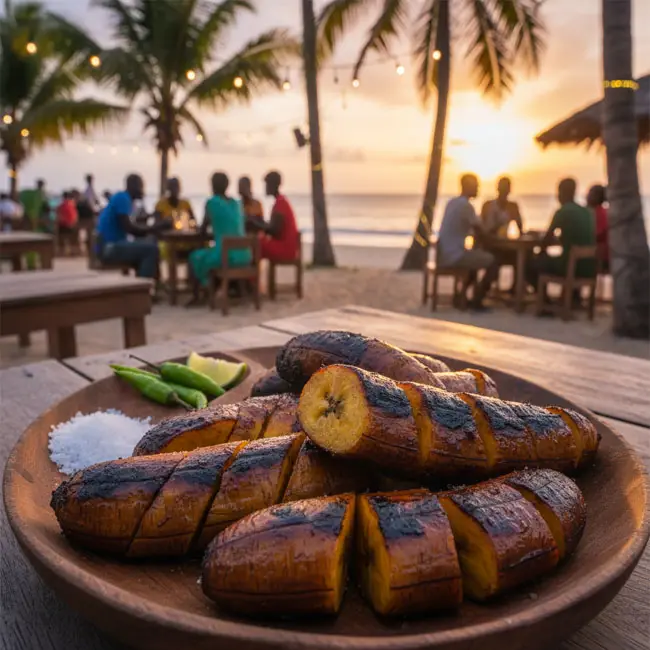
🔹 Recipe 2: Plai (Gabonese Grilled Plantain)
About this Recipe (Menu Introduction)
If the Beignets were your introduction to Gabonese baking, Plai is your masterclass in simplicity and indigenous flavor. Plai is simply the term for grilled or pan-fried plantain, and it is arguably the most universal and beloved side dish and snack in the country. It accompanies everything! It’s naturally gluten-free, requires almost zero prep, and takes mere minutes to cook. This recipe is your secret weapon for pairing with any savory dish.
Ingredients & Measurements
Ingredient - Quantity - Notes
- Ripe Plantains 2 large Yellow skin with many black spots (essential for sweetness).
- Neutral Oil 1 tbsp For pan-frying, or light brushing for grilling.
- Sea Salt To taste Essential for balancing the sweetness.
Step-by-Step Instructions
1.Select Your Plantain: This is the most crucial step! Choose plantains that have yellow skin with plenty of black spots or streaks. If they are completely green, they will be starchy like a potato; if they are completely black, they will be too soft. You want that sweet-starchy balance.
2.Peel and Slice: Cut off the ends of the plantain. Using a knife, score the skin lengthwise from end to end (only cutting through the skin). Peel the skin away. Slice the plantain lengthwise into thick strips (about 1/2 inch thick). Alternatively, you can slice them into 1-inch thick diagonal rounds.
3.Heat the Surface: Heat a grill, a heavy cast-iron skillet, or a non-stick pan over medium-high heat. If using a pan, add the tablespoon of neutral oil. If grilling, lightly brush the plantain slices with oil.
4.Cook to Gold: Place the plantain slices on the hot surface. Cook for approximately 4–5 minutes per side. You are looking for a beautiful, deep golden-brown color with visible caramelization and charring. The interior should be soft and tender.
5.Season and Serve: Remove the Plai from the heat immediately. Sprinkle generously with sea salt while still hot. Serve immediately as a side to a savory stew (Nyembwe is traditional!) or on its own as a quick, healthy snack.
Tips & Mistakes to Avoid
- Tip: If you are unsure about ripeness, always err on the side of more black spots. The sweeter the plantain, the better the final texture and flavor will be for standalone Plai.
- Mistake to Avoid: Don't slice them too thinly! Thin slices will quickly become crispy chips rather than the soft, substantial snack texture you are aiming for. Aim for that 1/2-inch thickness.
- Tip: For a truly smoky flavor, use an outdoor grill. If you’re inside, a cast-iron skillet gives the best heat retention and crust.
FAQ (Plai)
Question Answer
1.Can I use regular bananas instead of plantains?
No, please don't! Plantains are starchier and less sweet. Regular bananas would turn to mush and burn quickly due to their high sugar and moisture content.
2.My Plai is mushy inside. Why?
You likely used an overly ripe (completely black) plantain, or the heat was too low. Low heat allows the plantain to steam rather than caramelize, leading to a mushy result.
3.Is it common to eat Plai with anything besides savory food?
While most often paired with savory food, ripe Plai is sometimes served as a sweet snack with cinnamon, honey, or grated coconut, essentially turning it into a light dessert.
Summary (Plai)
Plai is the definition of Gabonese essential eating. It's a testament to the power of a single, perfectly cooked ingredient. By mastering the selection of the right plantain and the correct cooking heat, you will unlock a delicious, versatile, and instantly recognizable Central African staple.

🔹 Recipe 3: Mikate Salés (Spicy Savory Fritters)
About this Recipe (Menu Introduction)
After mastering the sweet Beignet and the simple Plai, you’re ready for a slightly more complex, but infinitely more rewarding, Gabonese snack: the savory fritter, or Mikate Salés (often confused with Beignets Salés, but the principle is the same). This snack is a staple of midday markets. It’s a dense, satisfying, and flavor-packed patty, showcasing the Gabonese love for rich aromatics like onion, pepper, and sometimes a hint of dried fish or ground shrimp. We're going with a vegetarian savory version here, which is super popular!
Ingredients & Measurements
Ingredient - Quantity - Notes
- All-Purpose Flour 2 cups Standard white flour.
- Baking Powder 1 tsp The leavener for this non-yeast batter.
- Salt & Black Pepper 1/2 tsp each To taste.
- Finely Chopped Onion 1/2 cup Yellow or red onion, finely diced.
- Finely Chopped Chives/Parsley 1/4 cup Fresh herbs are essential for flavor.
- Warm Water 1 1/2 cups Adjust quantity to achieve the perfect batter thickness.
- Cayenne Pepper/Chili Powder 1/2 tsp Adjust to your preferred heat level.
- Oil Sufficient for deep-frying Use neutral oil (canola, vegetable, or peanut).
Step-by-Step Instructions
1.Dry Mix Foundation: In a large bowl, whisk together the flour, baking powder, salt, pepper, and cayenne/chili powder. The baking powder will give these fritters their necessary lift since we aren't using yeast.
2.Add Aromatics: Stir in the finely chopped onion and chives/parsley. It is crucial that the onion is diced as small as possible so it doesn't interrupt the frying process or make the fritters fall apart.
3.Form the Batter: Gradually add the warm water, stirring constantly. Start with 1 cup and add the rest slowly. You are aiming for a very thick, sticky batter—thicker than pancake batter, but it should still reluctantly drop from your spoon. If it is too runny, the fritters will spread; if it is too thick, they will be too heavy.
4.The Rest: Let the batter rest for 15–20 minutes at room temperature. This allows the flour to fully hydrate and the baking powder to start working. This brief rest is the key to a better texture.
5.Heat the Oil: Heat about 2 inches of oil in a deep, heavy pot to a precise temperature of 360°F (182°C). This is slightly hotter than the sweet Beignets because these are denser and you want a quicker crisp.
6.The Drop and Fry: Using two spoons (one to scoop, one to push), drop tablespoon-sized portions of the batter into the hot oil. Do not crowd the pot! Fry in batches, turning occasionally, until they are deep golden brown and appear cooked through (about 4–5 minutes per batch).
7.Serve Savory: Remove the Mikate with a slotted spoon and drain thoroughly on a wire rack lined with paper towels. Serve them hot, usually alongside a cool, fresh tomato-and-onion relish, or a small bowl of chili sauce (piment) for dipping.
Tips & Mistakes to Avoid
- Tip: If your batter seems too runny, add a tablespoon of flour at a time until you reach that thick, sticky consistency. This is the #1 factor for success.
- Mistake to Avoid: Don't skip the step of finely dicing the onion. Large chunks of onion will prevent the fritters from achieving a smooth, even texture and can cause them to break apart while frying.
- Tip: You can make these spicier by increasing the cayenne or adding a tablespoon of minced Scotch Bonnet or habanero pepper (be careful!).
FAQ (Mikate Salés)
Question Answer
1.Can I add meat or fish to this savory Mikate?
Absolutely! You can fold in about 1/4 cup of pre-cooked, finely minced smoked fish (like cod) or tiny dried shrimp after adding the aromatics (step 2). This adds an authentic, savory depth.
2.What kind of dipping sauce is best?
A simple tomato and onion relish, or piment (chili sauce made from oil, vinegar, and hot peppers). The cool, fresh relish is a fantastic counterpoint to the hot, savory fried dough.
3.Can I use self-rising flour?
Yes, if you use self-rising flour, omit the baking powder and reduce the salt by half, but you may still need a tiny extra pinch of baking powder to ensure a good lift.
Summary (Mikate Salés)
Mikate Salés are the perfect savory comfort food and a fantastic representation of Gabon’s flavor-forward street eats. They are substantial, easy to customize with your favorite aromatics, and provide a deep, earthy flavor that makes them an ideal accompaniment to simple rice or a refreshing salad.
Final Thoughts: Your Gabonese Culinary Journey Has Begun!
Congratulations, chef! You’ve successfully navigated the first three major stops on your Gabonese culinary tour.
We started with the beautiful simplicity of the Beignet Sucré, mastering the yeast-risen dough that delights crowds across Central Africa. Then, we perfected the essential Plai, learning the crucial art of selecting and cooking the right plantain to achieve that golden, tender perfection. Finally, you took on the savory challenge of Mikate Salés, creating a hearty, spiced fritter that is deeply satisfying.
See? It wasn't so hard!
Gabonese food is about warmth, sharing, and using fresh, simple ingredients to create complex flavors. These three recipes are the ideal foundation. They demonstrate the country’s use of common flour, the indigenous superstar plantain, and the regional love for deep-fried, flavor-packed snacks.
My challenge to you: Don't stop here! Try making one of these appetizers this week. Then, next week, try pairing your freshly made Plai or Mikate with one of Gabon’s famous stews (perhaps the rich Poulet Nyembwe from our earlier discussion?).
Share your experiences, your successes (and even your hilarious mistakes!) with friends. Food is about connection, and by making these recipes, you're not just cooking—you're opening a delicious window to the world.
Happy cooking, and enjoy the taste of Libreville!
| 🇬🇦 🥪 < Back |