
🏠 Home > 🗺️ Recipes > 🍞 Breads > 🇬🇦 Gabon Breads
🇬🇦 🍞 Gabon Breads Recipes
Published by Supakorn | Updated: February 2026
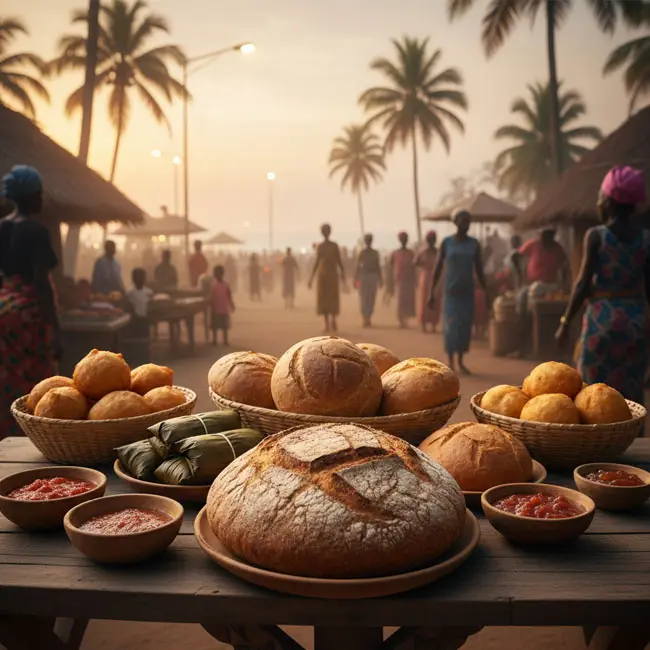
🥖 Unpacking the World of Cassava, Fufu, and Beignets
Hey there, fellow food explorers! I know what you’re thinking when you hear "Gabon breads." You picture a fresh-baked baguette, right? Well, you wouldn’t be entirely wrong—French influence is huge in this Central African gem. But if you really want to talk about the heart of Gabonese starch, we have to look past the wheat loaf and deep into the world of Manioc (cassava). 🌿
In Gabon, what we call "bread" is often a dense, starchy staple used to scoop up those incredible soups and sauces we talked about. It's the sturdy foundation of almost every meal. It's an entire culinary category that is earthy, filling, and requires a fascinating process of fermentation and wrapping.
We're going to dive into the two foundational starch staples—Baton de Manioc and Fufu—and then treat ourselves to the country's most beloved wheat-based treat: Beignets. Get ready for a lesson in traditional African fermentation, pounding, and patience. Let’s break bread (or cassava stick) together! 🇬🇦✨
🎋 The King of Staples: Baton de Manioc (Cassava Sticks)
If Gabon had a national "bread," it would be the Baton de Manioc (literally, "Manioc Stick"). Known across the region by names like Chikwangue or Bobolo, this is a non-negotiable accompaniment to rich stews like Poulet Nyembwe or Dongo-Dongo.
🥖 What Exactly is Baton de Manioc?
Baton de Manioc is a long, firm cylinder of fermented cassava paste, wrapped tightly in banana or similar leaves and then steamed for hours. It’s dense, chewy, slightly sour, and an absolutely perfect foil for rich, oily, and savory sauces. Think of it as the ultimate savory utensil—you tear off a piece, pinch it, and use it to scoop your soup.
• The Vibe: Dense, slightly cheesy/sour, with a subtle herbal aroma from the banana leaf wrapper. It’s satisfyingly heavy and very filling.
• The Role: It's the "swallow" or starchy binder for the meal. It's the part that keeps you full and balances the intense flavors of the meat or vegetable sauces.
🧪 The Incredible Process: Fermentation is Key
Making truly authentic Baton de Manioc is a labor of love that involves a specific traditional process, primarily to remove naturally occurring toxins from the raw cassava root, but also to develop its complex, tangy flavor.
1.Peeling and Soaking: Fresh cassava tubers are peeled and then soaked in water—often a large tub or a nearby stream—for several days (sometimes up to a week!). This fermentation process is where the magic happens. It softens the root and removes toxins, while friendly bacteria start creating the distinctive sour taste.
2.Pounding and Pressing: The softened cassava is then drained, rinsed, and pounded into a very smooth, sticky paste. This paste is often pressed to remove excess water.
3.Wrapping (The "Baton"): This smooth paste is measured and carefully wrapped and tied in large, clean banana leaves. This wrapper acts as a natural pressure cooker, imparts a lovely aroma, and gives the Baton its final stick shape. 🍃
4.Steaming: The wrapped batons are then steamed or boiled for a long time—often 4 to 8 hours! This final, intense cooking makes the cassava paste solidify into a firm, dough-like consistency.
Hook: Trying to find a guide on how to make Baton de Manioc (Chikwangue)? Master the art of Gabonese fermented cassava bread with this essential guide to Central African staples!
🥣 The Runner-Up: Fufu (The Quick Staple)
While Baton de Manioc requires days of preparation, Fufu is the quicker, more common staple found across Gabon. It’s also made from cassava, but without the lengthy fermentation and leaf-wrapping process.
🆚 The Difference Between Fufu and Baton
The key difference lies in the process and the final texture. Let's look at this comparison:
Feature—Baton de Manioc (Chikwangue)—Fufu (Gabonese Style)
• Main Ingredient—Fermented Cassava paste—Cassava flour (or pounded fresh cassava/plantain)
• Preparation—Days of soaking & long steaming—Quick boiling and vigorous pounding/mixing
• Flavor—Distinctly sour, tangy, and earthy—Mild, neutral, or slightly sweet
• Texture—Very dense, firm, and clay-like—Soft, elastic, and springy dough
🥣 How Fufu is Served in a Gabonese Home
In Gabon, fufu is most often prepared from dried cassava flour or pounded plantain. The cooked starch is mixed vigorously with a wooden spoon until it forms a smooth, elastic ball. Like the Baton, pieces are torn off and used to scoop up the sauce. Because of its soft, springy texture, it absorbs the flavor of the accompanying stew incredibly well. It’s the ultimate "comfort starch"!
Hook: What is Fufu? Learn the difference between Fufu and Baton de Manioc and how to perfectly mix cassava flour for this essential African swallow.
🥯 The Sweet Treat: French-Inspired Gabonese Beignets
Now, let's talk about the delicious, sweet, wheat-based item that is a true "bread" in the Western sense: Beignets. 🥯
Thanks to the French colonial past, street food culture in Gabon is vibrant, and no street food is more popular than a bag of freshly fried Beignets. These aren’t quite the same as the powdered sugar squares you find in New Orleans; the Gabonese version is often a fluffy, soft, slightly yeasty dough ball, fried until golden brown.
✨ Characteristics of Gabonese Beignets
• Ingredients: Simple—wheat flour, yeast, sugar, a little bit of milk or water, and sometimes a hint of nutmeg or vanilla.
• The Vibe: Airy, chewy interior with a delicate, crisp golden exterior. They are meant to be sweet, but not overly so, allowing the flavor of the fried dough to shine.
• How They're Eaten: They are the breakfast of champions! Sold piping hot from street vendors, dusted simply with granulated sugar or enjoyed plain with a cup of strong coffee. They also make a fantastic mid-day snack.
☁️ The Fluff Factor: Nailing the Perfect Beignet
The key to a light, airy Gabonese Beignet is the yeast and the oil temperature:
• The Rise: You need a strong rise time (at least an hour) to get that lovely, fluffy texture. The dough should double in size before frying.
• The Fry: The oil must be hot enough to instantly puff the dough without burning the outside, yet cool enough to cook the center all the way through. The result is a cloud-like texture inside a thin, crunchy shell. ☁️
Hook: Skip the donut—make African Beignets! Get the best authentic Gabonese fried dough secrets for a fluffy, perfect street food treat.
🥖 A Note on Pain (Wheat Bread)
While the traditional starch staples are cassava-based, it would be a mistake to ignore the omnipresent influence of French bread (Pain). 🥖
• The French Connection: In urban centers like Libreville, the baguette and various small rolls are readily available. They serve as a quick breakfast or lunch base, often used to scoop up leftover sauce from the night before or to be spread with Atanga (African pear paste).
• The Rise of Composite Flour: To support local farmers, there is a growing movement in Gabon to incorporate local flours—like cassava or corn—into wheat bread. This creates a more robust, nutritious, and locally sustainable loaf. So, the concept of "Gabon bread" is constantly evolving!
🖐️ Your Gabonese "Bread" Survival Guide
Mastering the staples is crucial to appreciating Gabonese cuisine. Here are some quick tips for your cooking or dining adventure:
• Respect the Hand: All these staples (Baton, Fufu) are traditionally eaten with the right hand. They are designed to be pinched, rolled, and dipped. Using a fork for Baton de Manioc is like using a straw to eat soup—it’s just not the way it’s done! 🖐️
• Prep Time vs. Cook Time: Baton de Manioc takes days of prep; Fufu takes 10-20 minutes. Choose your starch based on your patience!
• The Sour Factor: Don’t be alarmed by the tangy, slightly sour smell of Baton de Manioc. This is the sign of a successful fermentation and is what balances the fatty, savory palm oil stews.
• Storage: Baton de Manioc is incredibly shelf-stable because it’s fermented and wrapped. It was traditionally the perfect food for travelers in the rainforest.
🏆 Conclusion: More Than Just a Side Dish
The Baton de Manioc and its cousins are not just side dishes; they are the anchors of the Gabonese meal. They represent ingenuity, tradition, and the deep connection the people have to the versatile cassava plant.
From the rich, slow-fermented depth of the Baton de Manioc to the light, sweet puff of a breakfast Beignet, the "breads" of Gabon offer a fascinating glimpse into a complex and delicious culinary heritage. It’s time to move beyond simple wheat bread and explore the starch staples that truly define Central African cooking. Happy eating! 🇬🇦🍽️
❓ FAQ: Your Gabonese "Breads" Questions Answered
1. What is the main purpose of fermenting cassava for Baton de Manioc? Is it safe? 🧪
The purpose is twofold: Safety and Flavor. Raw cassava contains toxins that must be removed. Soaking and fermentation effectively break down these toxins, making the cassava safe to eat. Plus, it creates that tangy flavor that Gabonese people love! When prepared traditionally, it is completely safe.
2. Can I use regular wheat flour to make Fufu or Baton de Manioc? 🌾
No, you cannot. These staples rely on the high starch content and unique gelatinous texture of cassava (manioc). Wheat flour will result in a heavy, regular bread, not the elastic "swallow" meant for dipping. You must use cassava flour or fresh cassava root.
3. Why are Beignets so popular in Gabon, and how do they differ from American donuts? 🥯
Beignets are a popular street food due to the French influence. They differ from American donuts by typically being less sweet and having a denser, more yeasty texture. They aren't usually glazed or filled, making them a perfect companion for coffee.
4. How do you eat Baton de Manioc? 🥢
You unwrap the leaf, slice or tear off a piece of the firm cassava stick, and use it as a tool to scoop up your stew. The texture is firm enough to hold the sauce without falling apart.
5. Is Fufu the same thing as Baton de Manioc? 🧐
Not quite! While both use cassava, Fufu is soft, springy, and made quickly from flour, while Baton de Manioc is fermented, dense, firm, and wrapped in leaves for long-term storage and a tangy flavor.
🍞 Beyond the Baguette: 3 Essential & Easy Gabonese 'Breads' and Staples
👉 Experience 3 Authentic Breads
| 🌐 🍞 < Back | 🇬🇦 🥗 < Previous | Next > 🍱 🇬🇦 |