
🏠 Home > 🗺️ Recipes > 👑🍲 Royal Court Broths (Soups) > 🇬🇦 Gabon Royal Court Broths (Soups) Recipes > 👑🍲 1.The Sacred Ogooué Chieftain Broth (Ancestral Nyembwe & Wild Nut Elixir)
👑🍲 Unveiling the 500-Year Gabonese Secret: Ancestral Broths of the Rainforest Chiefs
Published by Supakorn | Updated: July 2026
🇬🇦 🏛️ The Forgotten Aristocratic Legacy of Gabon: Pre-Colonial Rainforest Chieftaincies
📜 The Storyteller’s Intro
Step back with me to the early 16th century—long before modern maps carved borders across Central Africa. Deep within the lush, ancient rainforests of the Ogooué River Basin, the night air is thick with humidity, woodsmoke, and an aroma so rich and comforting that it seems to arrest time itself. Inside the grand timber council houses of the clan elders and paramount chiefs (Nkomi, Orungu, and Mpongwe chieftaincies), a sacred culinary ritual is taking place. Copper cauldrons, brought through early maritime trade and seasoned over generations, simmer lazily over hardwood embers. Inside these vessels, wild forest herbs, crushed oily seeds, and slow-roasted land crabs fuse into a rich, aromatic broth. This was not food for mere sustenance. This was the legendary Nswa-d'Ogooué—a masterwork of ancestral gastronomy created exclusively to nourish tribal leaders, honor distinguished alliance emissaries, and celebrate sacred seasonal rites.
🌍 The Global Value
For centuries, the deepest secrets of Gabon’s aristocratic culinary arts were closely guarded by master clan cooks. These recipes were never transcribed on paper; they existed only in the living memory of elder women who served the high council houses. As colonial disruption and rapid urbanization reshaped West-Central Africa in the 19th and 20th centuries, many of these delicate, labor-intensive culinary techniques vanished from public awareness. What remained in popular culture were simplified, everyday home versions. The true, complex, slow-simmered ancestral broths—rich with wild-harvested indigenous thickeners and multi-layered aromatic extractions—were nearly lost to history. Unlocking these heritage methods today restores a vital chapter of Central Africa’s noble foodways and brings a magnificent, centuries-old flavor balance to modern global dining tables.
✨ The Collection
In this exclusive culinary deep-dive, we are reviving a legendary, 500-year-old Gabonese chieftain broth. We have meticulously researched the heritage flavor profile, honoring traditional rainforest botanicals while adapting measurements so you can easily recreate this majestic dish in your own kitchen. Prepare yourself for an extraordinary journey into the heart of West-Central Africa's noble kitchens, where forest lore, pristine ingredients, and patient craftsmanship produce a dining experience unlike anything else on Earth.
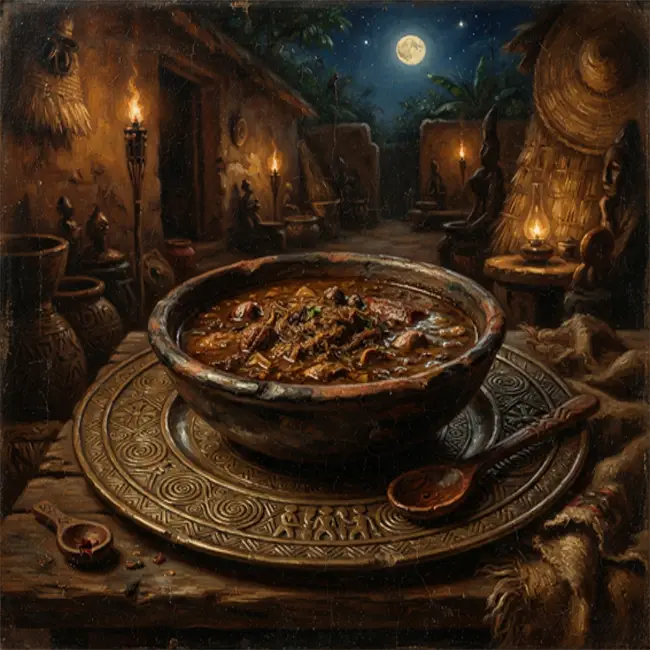
🍲 Recipe: The Sacred Ogooué Chieftain Broth (Ancestral Nyembwe & Wild Nut Elixir)
👑 About this Aristocratic Secret
This exquisite broth was historic Gabon in a bowl. Reserved for paramount chiefs and council elders during treaty negotiations and ancestral honor ceremonies, this dish combined the prized richness of palm fruit extract with wild forest seasonings. Legend says that the chief’s personal master cook would simmer the base continuously for hours, balancing the earthy fats of the oil palm with sharp, wild rainforest herbs to ensure the leader maintained pristine physical vitality and clarity of mind. To present this bowl to a guest was the highest possible honor in rainforest diplomacy, symbolizing enduring peace, abundance, and shared prosperity.
🌿 Ingredients & The Aristocratic Touch
• The Royal Pantry:
The essence of this aristocratic broth lies in the exceptional purity and richness of its components. Historically, the palm pulp was freshly pounded by hand from wild rainforest palms, yielding a heavy, velvet-smooth golden emulsion. The protein base features tender smoked fish and sweet river shellfish, paired with native forest aromatics like wild garlic bark (Scorodophloeus zenkeri) and indigenous African nutmeg (Monodora myristica). These ingredients were selected not only for their intense depth of flavor, but for their revitalizing, comforting qualities fit for noble rulers.
• Modern Substitutes:
While traditional African kitchen markets offer the authentic raw materials, you can easily replicate these aristocratic flavors in any modern grocery store. Instead of raw pounded palm fruit pulp, high-quality unrefined red palm fruit oil mixed with a rich vegetable or fish bone stock creates the exact creamy, velvety body. In place of rare wild garlic bark, a combination of crushed fresh garlic, shallots, and a pinch of toasted smoked paprika delivers the signature aromatic warmth. Fresh sea bass, smoked trout, or king prawns perfectly substitute for local river shellfish and native smoked fish.
• The Measurements:
◦ 750 ml high-quality homemade fish or rich vegetable stock
◦ 120 ml pure unrefined red palm oil (or unsweetened palm fruit concentrate)
◦ 450 grams fresh white fish fillets (such as sea bass, snapper, or cod), cut into thick chunks
◦ 250 grams jumbo prawns or river shrimp, peeled and deveined
◦ 150 grams smoked trout or smoked mackerel, flaked into bite-sized pieces
◦ 1 large yellow onion, finely diced
◦ 3 cloves fresh garlic, minced
◦ 2 finely chopped shallots
◦ 1 tablespoon fresh ginger, peeled and grated
◦ 1 teaspoon ground African nutmeg (or standard ground nutmeg)
◦ 1 whole Scotch bonnet or habanero chili (left whole for subtle aroma without overwhelming heat)
◦ 2 fresh bay leaves
◦ 1 tablespoon fresh lemon juice
◦ 1.5 teaspoons sea salt (adjust to personal taste)
◦ 0.5 teaspoon freshly ground black pepper
◦ 2 tablespoons fresh parsley or wild basil, finely chopped for garnish
🔥 The Chef’s Ritual
1.Awakening the Aromatics: In a heavy-bottomed Dutch oven or deep ceramic pot, heat two tablespoons of the unrefined red palm oil over low-medium heat. Add the diced onion, minced garlic, shallots, and grated ginger. Gently sweat them for about 6 to 8 minutes until soft, translucent, and deeply fragrant, being careful not to brown them.
2.Building the Golden Emulsion: Pour in the remaining red palm oil along with the ground nutmeg. Stir continuously for 2 minutes to toast the spices in the warm oil. Slowly pour in the fish or vegetable stock while whisking constantly. This creates a smooth, glistening emulsion that serves as the luxurious base of your broth.
3.The Gentle Infusion: Add the whole Scotch bonnet pepper and bay leaves to the pot. Bring the mixture to a gentle boil, then immediately turn the heat down to the lowest setting. Cover the pot loosely with a lid and allow the broth to simmer undisturbed for 25 to 30 minutes, allowing the aromatic oils to fully harmonize.
4.Introducing the Noble Proteins: Carefully fold in the flaked smoked fish, allowing its natural woodsmoke aroma to permeate the liquid for 5 minutes. Next, add the fresh white fish chunks and jumbo prawns. Gently submerge them into the simmering liquid.
5.The Slow Poach: Keep the heat on low and let the seafood poach gently for 8 to 10 minutes until the white fish turns tender and opaque and the prawns are pink and cooked through. Avoid boiling vigorously at this stage to keep the fish delicate and intact.
6.Final Nuance & Presentation: Remove the pot from the heat source. Carefully discard the whole chili pepper and bay leaves. Stir in the fresh lemon juice, sea salt, and black pepper. Taste and adjust salt if needed. Ladle the hot, golden broth into warm wide-rimmed serving bowls, sprinkle with fresh chopped herbs, and serve immediately alongside steamed plantains or fragrant rice.
💡 Secrets of the Palace Kitchen (Tips & Mistakes)
◦ Never Boil the Emulsion: Keep the temperature at a gentle, rolling simmer. Rapid boiling breaks the delicate emulsion between the palm oil and broth, causing the oil to separate to the top rather than staying silky throughout.
◦ Respect the Whole Chili Ritual: Keep the Scotch bonnet pepper completely intact with its stem on while simmering. This releases incredible floral, fruity aromas into the broth without rupturing and making the dish intolerably spicy.
◦ Layering the Smoked Depth: The secret of noble Gabonese chefs was balancing fresh seafood with smoked fish. The smoked element acts as an authentic umami anchor, giving the broth its signature 500-year history depth.
◦ Patience with the Simmer: Do not rush the preliminary 30-minute simmering stage before adding seafood. This step is essential for reducing harsh raw oil notes into a round, sweet, nutty liquid base.
👸 Royal FAQ
Q1: Can I make this ancestral broth ahead of time?
A: Absolutely! In fact, the broth base (steps 1 through 3) tastes even better when prepared a day in advance as the aromatic spices deepen. Simply reheat the base gently the next day and poach your fresh seafood right before serving.
Q2: Is red palm oil healthy and essential for this recipe?
A: Unrefined red palm oil gives this dish its traditional deep golden color, rich texture, and authentic antioxidant profile (loaded with natural beta-carotene). Look for sustainably sourced unrefined red palm oil for the most authentic flavor.
Q3: What traditional side dishes pair best with this chieftain broth?
A: In Gabon, this elite broth is traditionally served alongside boiled green plantains, pounded cassava (fufu), or steamed jasmine rice to soak up the luxurious golden liquid.
👑 The Taste of History
Spoonful by spoonful, this ancient broth delivers a dining sensation that transcends ordinary meals. The initial note is comforting and velvety—a rich, buttery warmth from the palm emulsion—followed quickly by the complex smoke of the fish and the uplifting floral undertones of wild nutmeg and ginger. It is rich without feeling heavy, intensely fragrant, and deeply soothing. Eating this broth today offers a direct sensory connection to the regal rainforest banquets of 16th-century Gabon.
🏡 Final Thoughts: Bringing History to Your Table
While these ancestral recipes were once guarded behind the walls of rainforest council houses and served only to high chiefs, their timeless culinary wisdom belongs to the world today. Crafting this 500-year-old Gabonese broth in your own home is more than just cooking a meal—it is an act of culinary preservation. With readily available ingredients and a little patience, you can effortlessly transform your dining table into an elite banqueting hall fit for royalty.
✨ The Call to Action
If you are passionate about unlocking lost culinary history and experiencing authentic flavors from around the globe, join us on this delicious journey. Subscribe to our newsletter, share this ancient recipe with fellow food lovers, and help keep the world's rich gastronomic heritage alive in modern kitchens!
📜 Credit to the Keepers of the Culture (The Legacy)
"This recipe is inspired by the ancient culinary archives and oral traditions of the Ogooué River Chieftaincies of Gabon (16th Century). We have carefully adapted the measurements and cooking techniques for modern kitchens while preserving its noble soul and historic integrity."