
🏠 Home > 🗺️ Recipes > 🍲 Soups > 🇬🇦 Gabon Soups
🇬🇦 🍲 Gabon Soups Recipes
Published by Supakorn | Updated: February 2026
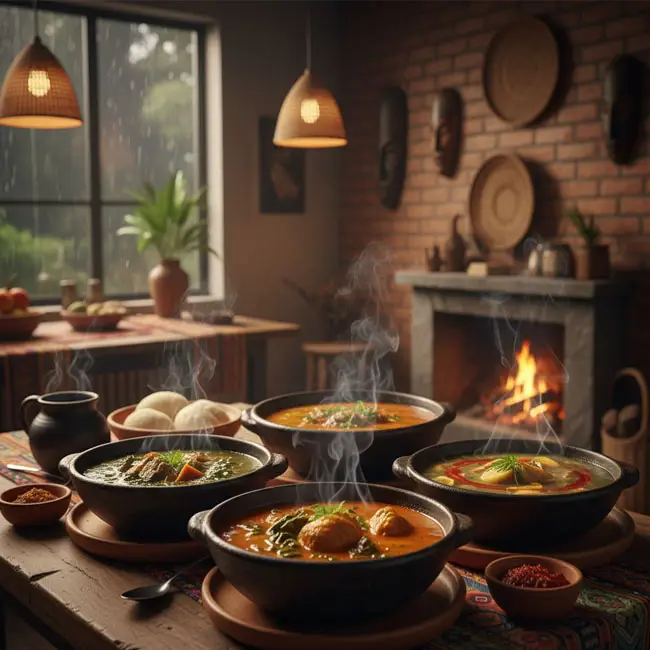
🥣 A Deep Dive into Central Africa’s Rich, Earthy Flavors
What’s up, food lovers? You know me—I’m all about those deep, soulful flavors that tell a story. And let me tell you, when it comes to storytelling through food, the soups and stews of Gabon are the epic novel you need to read (and taste!).
Forget your typical thin, clear broths. In Gabon, a "soup" or "sauce" (sauce in French is often used interchangeably with a thick stew) is a hearty, robust, and often velvety-rich main course. These dishes are the backbone of the Gabonese diet, served with a starchy staple like fufu, rice, or Baton de Manioc (fermented cassava sticks).
Gabon sits right on the Equator, blessed with dense rainforests and a bustling coastline. This means the cuisine is a beautiful marriage of jungle produce, abundant seafood, and strong, aromatic flavors like palm oil, peanut, and tropical greens. Influences from France and neighboring Central African countries add layers of complexity, resulting in dishes that are truly unique.
Ready to explore how to create these incredible, soul-warming Gabonese soups at home? Get ready for a culinary journey that’s earthy, savory, and surprisingly easy to master. 🇬🇦✨
🏗️ The Essential Building Blocks of Gabonese Soup Culture
To cook like a Gabonese local, you need to understand the three core components that define their stews: the thickening agents, the flavor base, and the star protein.
🥜 1. The Power Thickeners: Okra, Peanuts, and Palm Nut
Unlike Western soups thickened with flour or roux, Gabonese stews use natural ingredients to achieve their signature body and texture.
• Okra (Dongo-Dongo): Okra is a powerhouse of viscosity. When cooked, it releases a mucilage (the 'slime') that creates a thick, almost syrupy sauce. This is highly prized and forms the base of the famous Dongo-Dongo soup.
• Palm Nut Sauce (Nyembwe): The quintessential Gabonese flavor. The pulp of the palm nut is boiled and pounded to extract a thick, rich, reddish-orange sauce. This sauce is savory, creamy, and gives dishes like Poulet Nyembwe its iconic color and depth.
• Groundnut Paste (Peanut Butter): In some stews, especially those with leafy greens, ground peanuts are used to add a creamy, nutty richness and to thicken the sauce into a smooth, satisfying consistency.
🌿 2. The Flavor Trinity: Oil, Aromatics, and the 'Magic Cube'
Every great Gabonese soup starts with an intense sauté and a specific set of aromatics.
• Red Palm Oil: The defining fat in many Gabonese stews. It provides an earthy, slightly smoky flavor and a beautiful deep red-orange hue. While you can substitute vegetable oil, using palm oil (sustainably sourced, of course) is key to the authentic taste.
• The Aromatics: A powerful mix of onions, garlic, ginger, and hot peppers (like Scotch Bonnet or Habanero). These are often sautéed first to build an aromatic foundation.
• Bouillon Cubes (Maggi or Jumbo): Known affectionately across West and Central Africa as the "magic cube," bouillon powder or cubes are a standard seasoning agent, adding a deep savory umami note.
🥘 The Three Gabonese Soup Legends You Must Try
These three dishes represent the diverse landscape of Gabonese soup—from the coastal fish-based dish to the deep, earthy forest greens stew.
1. 🍢 Dongo-Dongo (Okra and Smoked Fish Soup/Sauce)
Dongo-Dongo is perhaps the most famous of the Gabonese soups. It’s a bold, flavorful, and deeply satisfying dish that perfectly showcases the use of okra as a thickening agent.
• The Vibe: Earthy, savory, slightly spicy, and wonderfully ‘slimy’ (in the best way possible!). It's often compared to a cousin of Louisiana Creole Gumbo.
• The Key Ingredients: * Okra: The star, sliced finely to release its thickening properties.
•• Dried/Smoked Fish (Makayabu): This provides an intense, smoky, salty, and wonderfully chewy protein element.
•• Nutmeg: A surprisingly common addition, providing a warm, subtle spice note that complements the fish and heat.
• How to Eat It: Because it's so thick, Dongo-Dongo is meant to be scooped up with chunks of fufu or rice, rather than sipped from a bowl.
Hook:Searching for an authentic African Okra Soup recipe? Try Gabonese Dongo-Dongo, the savory smoked fish and nutmeg stew perfect with fufu!
2. 🍃 Saka-Saka (Manioc/Cassava Leaf Stew)
If Dongo-Dongo is the star of the coast, Saka-Saka is the champion of the rainforest. This dish, also known as Pondu in Central African cuisine, is a rich, earthy stew made from the leaves of the cassava plant.
• The Vibe: Deeply earthy, vegetable-rich, slightly nutty, and incredibly comforting. The texture is similar to cooked spinach or collard greens, but much more substantial.
• The Key Ingredients:
•• Manioc/Cassava Leaves: These must be properly prepared (boiled to remove toxins) and pounded until fine.
•• Groundnut Paste (Peanut Butter): This adds creaminess and balances the bitterness of the greens.
•• Slow Cooking: This is a slow food dish. The leaves need to simmer for a long time—sometimes up to 90 minutes—to become tender.
Hook: The secret to making authentic Saka-Saka (Cassava Leaf Stew) from Gabon! Get our recipe for this hearty, nutritious peanut and green vegetable soup.
3. 🍗 Poulet Nyembwe (Chicken in Palm Nut Sauce)
While technically more of a stew, Poulet Nyembwe is arguably the national dish and belongs in every conversation about Gabonese "soups."
• The Vibe: Rich, savory, intensely flavorful, and the color of a setting sun—deep, beautiful red-orange.
• The Key Ingredients:
•• Chicken (Poulet): Usually bone-in pieces, browned first to develop flavor.
•• Palm Nut Sauce (Nyembwe): The star made from the actual palm nut pulp.
•• Velvety Finish: The result is fork-tender chicken swimming in a thick, velvety sauce that is intensely nutty and satisfying.
Hook: Master the Gabonese National Dish! Learn how to make Poulet Nyembwe (Chicken in Palm Nut Sauce), a rich Central African stew recipe.
🦀 Beyond the Basics: Other Broths and Coastal Specialties
Gabon's Atlantic coastline means seafood is a daily feature, leading to lighter, yet equally flavorful, broth-based dishes.
🌊 Gabonese Crab Soup (Soupe de Crabe)
In coastal areas like Libreville and Port-Gentil, fresh seafood soups are a delicacy. Gabonese Crab Soup is a beautiful fusion of French technique and local ingredients.
• The Difference: This is a thinner, more traditional soup compared to the stews. It relies on a rich, aromatic seafood stock.
• The Flavor: Built on a base of sautéed aromatics, rich crab stock, and the delicate flavor of fresh crab. It’s light, refined, and a true taste of the coast.
🍃 Simple Fish Broths (Liboke Technique)
While not always a soup, the cooking technique called Liboke—cooking food sealed in banana leaves—creates its own incredible, concentrated broth.
• The Technique: Fish, seasoned with garlic, onions, ginger, and red palm oil, is tightly wrapped in a banana leaf packet and steamed or grilled.
• The "Soup": When you open the Liboke packet, the fish is sitting in a pool of its own intensely flavorful natural juices. This juice is pure essence of Gabon!
🥣 The Gabonese Culinary Companion: What to Eat With Your Soup
A Gabonese soup is never eaten alone! It is always served with a starchy base, or "swallow," which acts as the 'spoon' to scoop up the rich sauce.
• Fufu (The Staple): A thick, dough-like ball made from pounded cassava or plantains.
• Baton de Manioc (Chikwangue): Fermented cassava paste, wrapped and steamed in banana leaves. It has a slightly sour, tangy flavor that cuts through the richness of palm oil.
• Rice (Riz): A simple, versatile accompaniment, perfect for soaking up generous amounts of sauce.
💡 Tips for Making Your Gabonese Soup Authentic
Want to move from a generic stew to a genuinely Gabonese masterpiece? Here are the insider tips:
1.Don't Skimp on the Swallow: Eating the stew without fufu or rice is like eating pasta sauce without the pasta—you miss half the experience!
2.Sauté Hard and Slow: The secret to the deep flavor is the slow, intense sautéing of the aromatics in palm oil at the beginning. Don't rush this foundation!
3.Source the Smoked Fish: For Dongo-Dongo, dried or smoked fish (Makayabu) is non-negotiable for true authenticity. 🐟
4.Embrace the "Slime": If you're cooking Dongo-Dongo, resist the urge to add acid to "de-slime" the okra. That viscosity is the authentic characteristic that makes it perfect for scooping!
🏁 Conclusion: A Taste of the Gabonese Heart
Gabonese soups and stews are more than just meals; they are expressions of a culture deeply connected to its land and its flavors. They are rich, complex, satisfying, and a true culinary adventure.
From the smoky comfort of Dongo-Dongo to the elegant simplicity of a coastal Crab Soup, these recipes offer a window into the heart of Central African home cooking. So, get your palm oil, prepare your greens, and start simmering a pot of Gabonese goodness. Your kitchen is about to smell incredible! 🥣✨
❓ FAQ: Your Deep Dive into Gabonese Soups Answered
1. Is palm oil necessary for Gabonese soups, or can I use a substitute? 🛢️
While you can technically use a substitute like peanut oil, red palm oil is crucial for achieving the authentic flavor, color, and richness. It imparts a distinctive earthy and slightly smoky note that cannot be replicated.
2. Where can I find Manioc/Cassava leaves for the Saka-Saka stew? 🍃
Cassava leaves are rarely available fresh outside of Africa, but you can find them readily available frozen in most African, Caribbean, or Asian food markets. Look for labels like "Pondu" or "Saka-Saka."
3. Why are Gabonese soups and stews so thick, and what is fufu for? 🥣
They use natural thickeners like okra and groundnut paste. Fufu serves as the traditional "swallow"—you use your hands to tear off a piece of the starch and scoop the thick soup, consuming the starch and sauce together.
4. Can I make these soups vegetarian? 🥦
Yes! While meat and fish are traditional, you can make a delicious vegetarian Saka-Saka by omitting the protein and focusing on the richness of the peanut paste and palm oil.
5. How spicy are Gabonese soups? 🌶️
It varies! Most traditional cooks add whole chili peppers to the pot for aroma, only breaking them open if they want intense heat. You can easily control the spice level to suit your taste.
🍲 Your Passport to Flavor: 3 Must-Try Beginner-Friendly Gabonese Soups
| 🌐 🍲 < Back | 🇬🇦 🍷 < Previous | Next > 🥗 🇬🇦 |