
🏠 Home > 🗺️ Recipes > 🥘 Sauces > 🇬🇭 Ghana Sauces
🇬🇭 🥘 Ghana Sauces Recipes
Published by Supakorn | Updated: February 2026
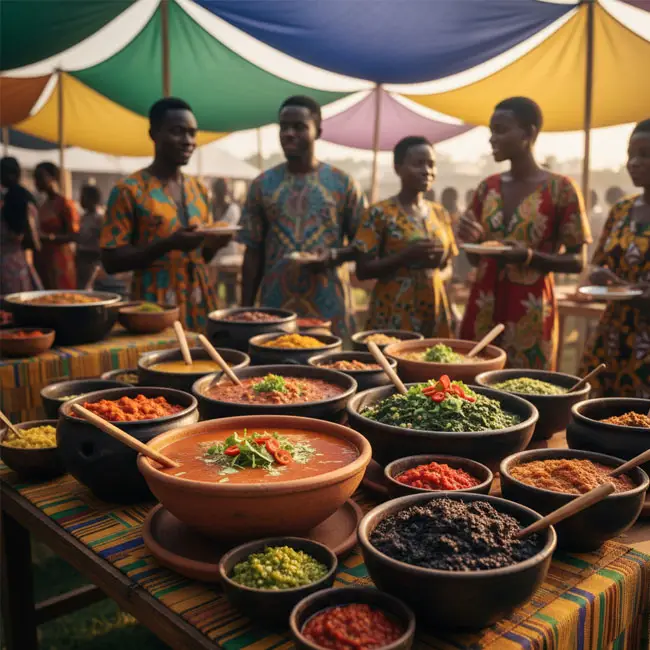
🇬🇭 The Flavorful Heart of Ghanaian Cuisine
If you’ve ever tasted Ghanaian food, you’ll know one thing—the sauce is everything. In our kitchens, the sauce isn't just a side thought or a garnish; it is the absolute soul of the plate. Ghanaian cuisine doesn’t shy away from bold flavors. Whether it’s a fiery pepper mix that makes your brow sweat or a deep, comforting tomato stew that feels like a hug, these sauces form the foundation of our culinary identity.
In Ghana, sauces are what bring together our famous staples like rice, yams, plantains, kenkey, and banku. Without a proper sauce, a meal is considered incomplete. Each sauce carries its own story, built on layers of local spices, smoked fish, and rich oils. It’s an art form passed down from grandmothers to grandchildren—a slow-cooked masterpiece that turns simple ingredients into something unforgettable.
🥣 Understanding Ghanaian Sauce Culture: Patience and Passion
Before we talk about the specific stars of the show, let’s chat about how we actually view "sauce culture" in Ghana. It’s not something you just drizzle out of a bottle. A Ghanaian sauce is "built." We start with the basics and layer them until the flavor is so deep it resonates.
🍅 The Aromatic Backbone
A typical Ghanaian kitchen is always stocked with what I call the "Holy Trinity": tomatoes, onions, and peppers. These are the aromatic backbone of almost every stew. We don't just chop them; we blend them or grind them in an asanka (a traditional earthenware bowl) to get the perfect texture.
🐟 The Umami Secret
One thing that surprises newcomers is our use of smoked and dried fish. Whether it’s powdered shrimp or whole smoked herring, these ingredients provide a deep, savory "umami" that you just can't get from salt alone. It gives our sauces a characteristic earthiness that is uniquely West African.
⏳ The "Low and Slow" Philosophy
Cooking sauce in Ghana is a lesson in patience. You’ll often hear a cook say, "Wait for the oil to rise." This is the golden rule! We simmer our sauces until the water evaporates and the oil separates and sits on top. This ensures every bit of raw vegetable taste is gone, leaving behind a concentrated, rich flavor that can last for days.
🌶️ Popular Types of Ghanaian Sauces: From Black Gold to Green Fire
🖤 1. Shito – The Legendary Spicy Black Pepper Sauce
If there’s one sauce that defines Ghana, it’s Shito. We call it "Black Gold" for a reason. It’s deep, smoky, spicy, and wildly addictive. Made from oil, ginger, dried fish, shrimp powder, and loads of pepper, it’s cooked until it turns a dark, majestic mahogany brown.
Shito is the ultimate "survival" sauce. Students take jars of it to boarding school, and travelers pack it in their suitcases. It goes with everything—fried yam, waakye (rice and beans), or even just spread on a piece of bread. It’s the umami-bomb of the West African world.
🍅 2. Tomato Stew (The Versatile Ghana Base)
This is the "mother sauce" of Ghana. Known simply as "stew," this tomato-based delight is the foundation for our Jollof rice and our Sunday lunches. It’s rich, vibrant, and incredibly versatile.
Depending on what you have in the fridge, this base can become a beef stew, a chicken stew, or a fish stew. The key is the slow-frying of the onions and the perfect balance of ginger and garlic. It’s comfort food at its finest, usually served with a mountain of white rice or boiled yams.
🍆 3. Garden Egg Stew: The Earthy Delight
Garden eggs (our local African eggplants) are smaller and yellow or white, and they make one of the most unique stews you’ll ever try. The garden eggs are boiled, mashed, and simmered with palm oil and smoked fish.
This stew has a slightly bitter, earthy edge that is perfectly balanced by the richness of red palm oil. It’s the traditional partner for boiled green plantains or yams. It’s wholesome, hearty, and deeply connected to our agricultural roots.
🥜 4. Groundnut (Peanut) Sauce: Creamy Comfort
Peanuts (groundnuts) are a staple in Ghana, and when they are turned into a sauce, magic happens. This isn't a sweet peanut butter; it’s a savory, spicy, nutty masterpiece.
Usually served with Omotuo (rice balls) or fufu, this sauce is smooth and velvety. It represents the best of home cooking—full-bodied and made with enough love to feed an entire neighborhood.
💚 5. Kpakpo Shito: The Fresh Green Pepper Kick
For the true spice lovers, we have the green pepper sauce made from Kpakpo Shito (a small, round, fragrant green chili). Unlike the dark Shito, this is often served fresh or lightly sautéed.
It’s fiery, citrusy, and incredibly aromatic. You’ll see this served mostly with grilled fish or Banku at local seaside joints. It provides a sharp, bright heat that cuts through the richness of fried foods perfectly.
🍲 6. Light Soup (The Liquid Sauce)
Wait, isn't it a soup? Well, in Ghana, the line is thin! Light Soup is often used exactly like a sauce, poured generously over fufu or rice. It’s a thin, spicy broth made with tomatoes and peppers, usually featuring goat meat or fresh fish. It’s light on the stomach but heavy on the flavor.
🌿 Signature Ingredients in Ghanaian Sauces
To get that authentic taste, you need to know your ingredients. It’s about more than just what’s on the list; it’s about the quality and the type of produce.
• Red Palm Oil: This isn't just oil; it’s a flavoring agent. It adds a beautiful orange-red hue and a distinct, nutty aroma to stews like Garden Egg or Kontomire.
• Scotch Bonnet Peppers: These provide the "heat" that Ghana is famous for. They aren't just hot; they are fruity and floral.
• Ginger and Garlic: We use these fresh and in abundance. They are the "bright" notes that balance out the heavy, smoky flavors of the fish.
• Smoked Fish/Shrimp Powder: The secret ingredient! It adds a depth of flavor that a standard bouillon cube just can't reach.
• Fermented Locust Beans (Dawadawa): Mostly used in Northern Ghana, this adds a pungent, cheese-like savory depth to sauces.
🍳 Cooking Techniques: The Art of Building Layers
As a friend, let me tell you—you can't rush a Ghanaian sauce. If you try to cook it in 15 minutes, it’s just "tomato water." Here is how we build that signature flavor:
1.Sautéing the Aromatics: We start with plenty of onions in oil. This creates a sweet, savory base.
2.The "Slow Fry": When the tomatoes and peppers go in, we cook them until they lose their acidity. You’ll see the color change from bright red to a deeper, darker crimson.
3.Protein Infusion: This is when we add our meats or smoked fish. We let them simmer in the sauce so the sauce tastes like the meat, and the meat tastes like the sauce.
4.The Oil Separation: This is the most important part. We wait until the oil separates from the sauce and floats on top. This tells us the sauce is "done" and the flavors are fully concentrated.
👨👩👧👦 How Sauces Shape Ghanaian Social Life
In Ghana, sauces aren't just about nutrition; they are about community. Imagine a large family gathered on a veranda on a Saturday afternoon. There’s a big pot of tomato stew in the middle, a bowl of fried plantains, and a tray of rice. Everyone digs in.
Sauces are also a way we show hospitality. If a guest drops by unexpectedly, a good Ghanaian host will always have a jar of Shito or a small bowl of stew ready to transform a simple plate of crackers or bread into a welcoming meal. It’s our way of saying, "You are welcome here."
🏥 Food as Medicine
Many of our sauces are built with ingredients believed to have healing properties. The heavy use of ginger, garlic, and peppers in our Light Soup is our go-to "cure" for the common cold or a long day. It’s soul food that actually looks after your soul!
🚀 Modern Twists on Classic Ghanaian Sauces
While we love our traditions, the new generation of Ghanaian chefs is getting creative! We’re seeing a rise in "Fusion Sauces" that take the best of Ghana and mix it with global trends.
• Vegan Shito: Replacing dried fish with mushrooms or fermented soy to keep that umami kick without the animal products.
• Lighter Stews: Using olive oil or air-fried veggies to reduce the oil content while keeping the bold spices intact.
• Shito Mayo: Yes, you read that right! Mixing the spicy black pepper sauce with mayonnaise to create the ultimate sandwich spread.
These innovations show that Ghanaian sauce culture is alive, well, and ready for the global stage.
🏠 Bringing the Spirit of Ghana to Your Kitchen
You don't need a special kitchen to enjoy these flavors. Most of the ingredients—onions, tomatoes, ginger, garlic, and peanut butter—are already in your pantry! The magic is in the technique.
My advice? Start with a simple Tomato Stew. Let it simmer longer than you think you should. Watch for that oil to rise. When you smell that fragrant, spicy aroma filling your home, you'll know you’ve captured a little piece of Ghana.
Invite some friends over, put on some Afrobeats, and serve your sauce with some simple boiled rice or fried plantains. You’ll find that food really is the shortest distance between two cultures.
❓ FAQ: Your Ghana Sauce Questions Answered
Q1: What is the most popular sauce in Ghana?
A: Without a doubt, it’s Shito. It’s the national condiment. Whether you’re at a high-end restaurant or a roadside stand, Shito is likely on the table.
Q2: I don't like too much spice. Can I still eat Ghanaian sauces?
A: Absolutely! While we love our peppers, you can easily control the heat by removing the seeds from the peppers or simply using fewer of them. The tomato stew and groundnut sauce are still delicious even when they are mild.
Q3: How long can I store these sauces?
A: Shito can last for months in a cool, dry place because of its oil and low water content. Tomato stews and Garden egg stews keep well in the fridge for about a week, or you can freeze them for up to 3 months.
Q4: Is palm oil healthy?
A: Traditional red palm oil is rich in antioxidants like Vitamin E and beta-carotene (which gives it that red color). Like any oil, it should be enjoyed in moderation, but it provides a unique nutritional profile you won't find in vegetable oil.
🥘 Authentic Ghana Sauces You Can Make at Home
| 🌐 🥘 < Back | 🇬🇭 🍱 < Previous |