
🏠 Home > 🗺️ Recipes > 🍞 Breads > 🇬🇹 Guatemala Breads > 🍞 1.Pan de Yemas (Rich Yolk Bread) , 2.Champurradas (Giant Dipping Cookies) , 3.Shucos Rolls (Simple Savory Sandwich Rolls)
🍞 Baking Bliss: Traditional Guatemalan Breads for Your Daily Table
Published by Supakorn | Updated: February 2026
🍞 Welcome to the Cozy World of Pan
Hey there, fellow bakers and bread lovers! When you think of Central American cuisine, your mind probably jumps straight to the ancient, humble corn tortilla—and rightly so! But if you dig a little deeper, you’ll discover a rich, warm, and wonderfully diverse tradition of wheat-based baking, known simply as pan (bread). This tradition is a delicious inheritance from Spanish colonial times, adapted beautifully to local ingredients and, crucially, to the beloved Guatemalan ritual of la hora del café (coffee time).
In Guatemala, the panadería (bakery) is the heart of the afternoon break. It's a place where you pick up a variety of pan dulce (sweet bread) designed specifically to be dipped into a steaming cup of strong, local coffee. These breads are meant to be simple, accessible, and baked frequently for everyday enjoyment, not just for holidays. They are the perfect addition to your daily routine, whether served for breakfast, alongside a simple soup, or as the comforting centerpiece of an afternoon snack.
Ready to fill your kitchen with the aroma of cinnamon, yeast, and rich egg yolks? We’ve put together three essential recipes that define Guatemalan everyday baking—from a versatile sweet roll to the perfect dipping companion and a foundational savory loaf.
We’ll be mastering these everyday classics today:
🔥 1.Pan de Yemas: The rich, soft, everyday sweet roll (Yolk Bread).
🔥 2.Champurradas: The famous large, crunchy cookie-bread for dipping.
🔥 3.Shucos Rolls: The simple, soft savory roll for lunch and dinner.
Let’s fire up those ovens!
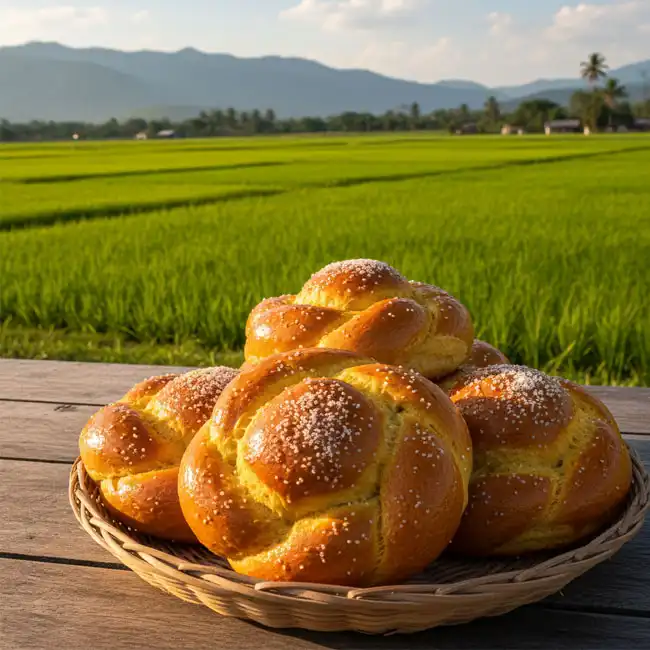
🥚 Recipe 1: Pan de Yemas (Rich Yolk Bread)
💛 About this Recipe
Pan de Yemas literally translates to "Yolk Bread," and that tells you everything you need to know about its quality. This bread is a staple in every Guatemalan panadería and home. It’s a slightly sweet, rich, and incredibly tender dough that gets its beautiful yellow color, velvety texture, and distinctive flavor from the incorporation of extra egg yolks. Unlike heavy brioche, Pan de Yemas is light and airy, baked into small, round loaves or individual rolls. It’s perfect for slicing and serving alongside butter and jam, or simply dunking lightly into coffee. This is truly the versatile, everyday pan dulce that every baker should know.
🛒 Ingredients & Measurements
This recipe yields one medium loaf or about 10–12 individual rolls. Using fresh, high-quality ingredients is key for achieving the beautiful yellow crumb:
• Four cups of bread flour (or all-purpose flour): Bread flour gives the best texture, but all-purpose works well too.
• Two teaspoons of active dry yeast: The rising agent for the dough.
• One cup of warm whole milk: Warmed to around 105-115∘F (40-46∘C) to activate the yeast.
• Half a cup of granulated sugar: For sweetness and to feed the yeast.
• Six large egg yolks, plus one whole egg for the egg wash: The yolks provide the color and richness.
• Half a teaspoon of salt: Essential for flavor and controlling the yeast.
• Half a cup (one stick) of unsalted butter: Softened to room temperature.
👩🍳 Step-by-Step Instructions
1.Activate the Yeast: In a small bowl, dissolve the two teaspoons of yeast and one teaspoon of the sugar into the warm milk. Let it stand for 5–10 minutes until frothy.
2.Mix Dry Ingredients: In a large mixing bowl, whisk together the flour, remaining sugar, and salt.
3.Form the Dough Base: Pour the yeast mixture and the six egg yolks into the dry ingredients. Mix on low speed (or by hand) until a shaggy dough forms.
4.Knead and Enrich: Turn the dough onto a lightly floured surface. Knead for about 5 minutes until the dough becomes smoother. Now, start incorporating the softened butter, adding a small piece at a time. The dough will feel sticky—keep kneading for another 10–15 minutes until it is smooth, elastic, and passes the "windowpane test" (you can stretch a small piece thin enough to see light through it).
5.First Rise: Place the dough in a lightly oiled bowl, turn to coat, cover with plastic wrap, and let it rise in a warm spot for 1.5 to 2 hours, or until doubled in size.
6.Shape and Second Rise: Gently punch down the risen dough to deflate it. Divide the dough into 10–12 equal pieces and shape them into round rolls or form a single loaf. Place them on a baking sheet lined with parchment paper. Cover and let them rise again for 45–60 minutes.
7.Bake: Preheat your oven to 350∘F ( 175∘C). Brush the tops of the rolls/loaf with an egg wash (the whole egg beaten with a splash of water). Bake the rolls for 15–20 minutes, or the loaf for 30–35 minutes, until golden brown and smelling fragrant. Cool on a rack before serving.
💡 Tips & Mistakes to Avoid
• Don't Rush the Kneading: The richness of this dough means it needs extra time to develop gluten (the kneading with butter). If you stop too early, the bread will be dense and crumbly, not light and fluffy.
• Handle the Yolks Gently: Ensure the milk isn't too hot, as excessive heat can "cook" the yolks before they are incorporated, affecting the final texture.
• Check the Internal Temperature: For perfect doneness, the internal temperature of the bread should reach 200-210°F (93-99°C). This prevents it from being doughy inside.
• Use the Right Flour: While all-purpose works, bread flour has a higher protein content, which is better able to support the weight of the yolks and butter, leading to a higher, softer final product.
❓ FAQ
Q: Is the yellow color of Pan de Yemas artificial?
A: Not traditionally! The beautiful deep yellow color of Pan de Yemas comes naturally from the high concentration of egg yolks used in the dough. Using free-range or organic eggs with richer-colored yolks will enhance this traditional characteristic.
⭐ Summary
Pan de Yemas is the definition of everyday Guatemalan pan dulce. It is a rich, tender, and versatile sweet roll, perfect for serving at any meal, highlighting the simple yet profound pleasure of good baking.

🍪 Recipe 2: Champurradas (Giant Dipping Cookies)
☕ About this Recipe
Champurradas are one of the most unique and beloved items in any Guatemalan panadería. They look like giant, flat, thin, slightly cracked cookies, but they function as a crisp, slightly sweet bread substitute designed for one specific purpose: dipping. They are the perfect companion for a thick hot chocolate (chocolate caliente) or, more commonly, a cup of afternoon coffee. They are baked until very dry and crisp, which allows them to soak up the hot beverage without dissolving into mush immediately, giving you a wonderful, softened, sweet bite. They are simple to make and keep well, making them an excellent everyday baking project.
🛒 Ingredients & Measurements
This recipe yields about 12–15 large champurradas. The key is achieving a dry, crisp texture:
• Three cups of all-purpose flour: The structure for the cookie-like bread.
• One cup of granulated sugar: For sweetness and crispness.
• Half a cup of vegetable shortening (or butter): Traditionally shortening (manteca) is used for the perfect crumbly texture.
• Two large eggs: Used as a binder.
• One teaspoon of baking soda: The leavening agent.
• Half a cup of water or milk (as needed): Used to bind the dough into a workable paste.
• One tablespoon of ground cinnamon: Essential for that warming, classic pan dulce flavor.
• One teaspoon of whole anise seeds (optional): A traditional aromatic addition.
👩🍳 Step-by-Step Instructions
1.Cream Fat and Sugar: In a large bowl, cream together the sugar and vegetable shortening (or butter) until light and fluffy. Beat in the eggs one at a time until fully incorporated.
2.Combine Dry Ingredients: In a separate bowl, whisk together the flour, baking soda, and cinnamon (and anise seeds, if using).
3.Form the Dough: Gradually add the dry ingredients to the creamed mixture. Mix until a shaggy dough begins to form. Add the water or milk slowly, only enough to bring the dough together into a stiff, slightly sticky ball. Do not over-mix!
4.Shape and Roll Thin: Divide the dough into two pieces. Working on a lightly floured surface, roll one piece out very thinly—aim for about 1/8 inch thick. The thinner they are, the crispier they will be.
5.Cut and Place: Use a large round cookie cutter (about 4–5 inches) or the rim of a large mug to cut out the champurradas. Place the cut discs onto baking sheets lined with parchment paper, leaving a small gap between them.
6.Bake: Preheat your oven to 350°F ( 175°C). Bake for 12–15 minutes, or until the edges are light golden brown and the centers look dry and slightly cracked.
7.Cool for Crispness: Remove the sheets from the oven and let the champurradas cool completely on the baking sheet. They will crisp up dramatically as they cool. Store in an airtight container once fully cooled.
💡 Tips & Mistakes to Avoid
• Roll Them Thin: The texture is key! If you roll them too thick, they will be soft like a cookie, not hard and crisp like a dipping bread. Aim for the thickness of a thick cracker.
• Minimize Water/Milk: Only add enough liquid to bring the dough together. Too much liquid results in a soft texture, defeating the purpose of a dipping bread.
• Cool Completely: Do not try to move them while warm. They are very fragile and soft when hot, but they harden into their signature crispness upon cooling.
• Anise Seed Authenticity: The whole anise seeds are optional but highly traditional, adding a subtle, refreshing aroma that pairs perfectly with the cinnamon and coffee.
❓ FAQ
Q: Why did my Champurradas come out soft like a regular cookie?
A: This usually happens if you rolled the dough too thick or if you added too much liquid (milk or water) during the mixing stage. Champurradas are supposed to be low-moisture, thin, and baked until completely dry. Try rolling them thinner and baking them for a few extra minutes at a slightly lower temperature to fully dry them out.
⭐ Summary
Champurradas are the ultimate coffee companion—a simple, crunchy, giant cookie-bread that is essential for the daily ritual of dipping and enjoying a quiet moment of sweet pleasure.
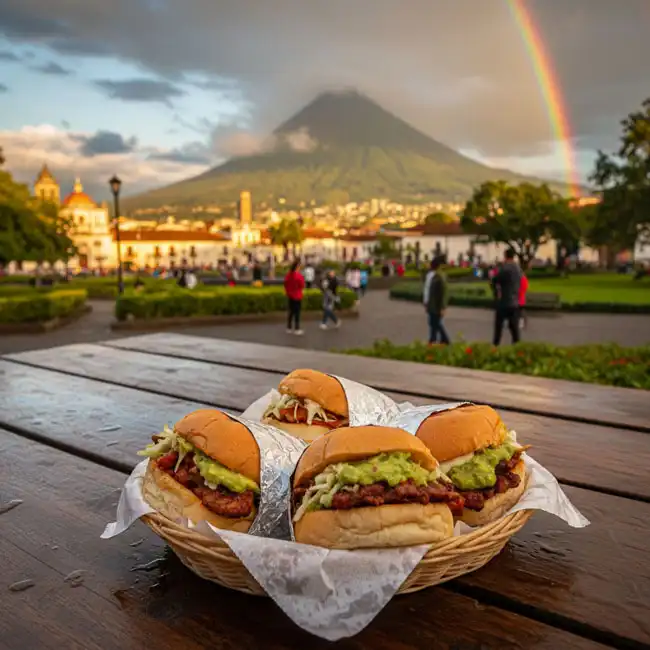
🥖 Recipe 3: Shucos Rolls (Simple Savory Sandwich Rolls)
🌭 About this Recipe
While pan dulce gets the international attention, the most practical everyday pan is the savory roll, used as a carrier for lunches and, most famously, the street food phenomenon known as shucos. Shucos are messy, loaded hot dogs or filled sandwiches (tortas), and the roll is crucial: it needs to be soft inside to soak up sauces but sturdy enough to hold the copious fillings. These are simple, slightly chewy, slightly crusty torpedo-shaped rolls—the workhorse of the Guatemalan savory table. Mastering this basic recipe means you have the perfect base for sandwiches, burgers, or simply sopping up the last bits of a savory caldo.
🛒 Ingredients & Measurements
This recipe yields 10–12 medium savory rolls. No fancy ingredients, just a focus on structure:
• Four cups of bread flour (or high-protein all-purpose flour): Essential for a good chew and crust.
• Two teaspoons of instant dry yeast: Quick-acting and reliable.
• Two teaspoons of salt: Provides necessary savory flavor and structure.
• One tablespoon of granulated sugar: Feeds the yeast only; keeps the final flavor savory.
• One and a half cups of warm water: Use just enough to bring the dough together.
• Two tablespoons of olive oil or vegetable oil: For richness and softness.
• Optional: A pan of hot water placed on the bottom rack of the oven for a slight crust.
👩🍳 Step-by-Step Instructions
1.Mix Dough: In a large bowl, whisk together the flour, yeast, sugar, and salt. Add the oil and gradually pour in the warm water, mixing until a shaggy dough forms.
2.Knead for Structure: Turn the dough onto a lightly floured surface. Knead vigorously for 8–10 minutes until the dough is smooth, elastic, and no longer sticky. The gluten needs to be well-developed to support the roll's shape.
3.First Rise: Place the dough in a lightly oiled bowl, turn to coat, cover, and let it rise in a warm spot for 1 to 1.5 hours, or until doubled in size.
4.Shape the Rolls: Gently punch down the risen dough and divide it into 10–12 equal pieces. Roll each piece into the traditional cylindrical or torpedo shape (similar to a small submarine roll).
5.Second Rise: Place the shaped rolls onto a baking sheet lined with parchment paper. Cover lightly and let them rise again for 30–45 minutes, or until visibly puffy.
6.Bake with Steam (Optional): Preheat your oven to 400°F / 200°C. If using steam, place a metal pan on the bottom rack and pour boiling water into it just before placing the rolls in the oven. Bake for 15–20 minutes, or until deeply golden brown.
7.Cool: Transfer the Shucos Rolls to a wire rack immediately after baking. This prevents the bottoms from steaming and becoming soggy. Cool completely before slicing and filling.
💡 Tips & Mistakes to Avoid
• Kneading is Key: For savory rolls, good kneading is essential to build the strong gluten network needed for a good chew and crust. Don't stop until the dough is silky smooth.
• Use Warm Water: Ensure your water is warm (105-115∘F or 40-46∘C), especially since there is very little sugar to help activate the yeast quickly.
• Don't Over-Rise: If the second rise goes too long, the rolls may collapse in the oven. They should be puffy but still hold their shape firmly.
• Immediate Cooling: Transfer the hot rolls directly to a wire rack. Leaving them on the hot sheet pan will trap steam underneath, making the bottoms tough and soggy.
❓ FAQ
Q: Why are these rolls named after the shuco sandwich, which means 'dirty' or 'messy'?
A: The name Shucos Rolls is a direct nod to their most popular street-food application: the shucos sandwich. Shuco literally means "dirty" or "messy" in Guatemalan Spanish, referring to the wonderfully overloaded, saucy, and messy nature of the street food (hot dogs or sausages topped with guacamole, cabbage, mustard, and sauces). The roll itself is simply the perfect practical vessel for this iconic, messy meal.
⭐ Summary
Shucos Rolls are the savory foundation of everyday Guatemalan meals. They are simple, soft, and sturdy—the perfect everyday roll for everything from hearty street sandwiches to soaking up the last delicious drops of a homemade caldo.
✨ Final Thoughts: Bringing Guatemalan Baking to Your Table
Congratulations! You’ve successfully added three cornerstones of Guatemalan baking to your repertoire: the rich, sweet Pan de Yemas; the crunchy, dippable Champurradas; and the practical, savory Shucos Rolls.
The beauty of these recipes lies in their accessibility and their role in the daily life of Guatemala. They prove that exceptional, culturally rich bread doesn't require complex machinery or exotic ingredients—just patience, precision, and an appreciation for the simple rituals of daily life, like the afternoon coffee break.
We encourage you to try all three! Start with the simple dough of the Shucos Rolls, move on to the delicate balance of the Pan de Yemas, and finish with the easy crispness of the Champurradas. When you serve them, don't forget the Guatemalan spirit: share generously, dip fearlessly, and enjoy the moment. We’d love to hear how these delicious breads have changed your everyday cooking! Happy baking!
| 🇬🇹 🍞 < Back |