
🏠 Home > 🗺️ Recipes > 🥘 Sauces > 🇬🇹 Guatemala Sauces > 🥘 1.Chirmol de Tomate Asado (Smoky Roasted Tomato Salsa) , 2.Recado Negro (Charred Black Sauce Base) , 3.Salsa de Chile Cobanero (Potent Smoky Hot Sauce)
🥘 Flavor Foundations: Essential Guatemalan Sauces and Recados to Share
Published by Supakorn | Updated: February 2026
🌶️ Welcome to the Heart of Guatemalan Flavor
Hey there, food explorers and makers of delicious meals! If you've enjoyed any Central American dish—a tamale, a stew, or a simple plate of eggs—you know that the real magic often isn't the main ingredient, but the sauce that goes with it. In Guatemala, the sauces, or salsas and recados, are the essential language of the cuisine, acting as everything from fresh, bright condiments to complex, historical foundation gravies.
Guatemalan sauces are defined by two key techniques: roasting and grinding. Ingredients are often charred on a comal (griddle) before being pulverized, imparting a depth and smokiness you just can't get from simple boiling or chopping. This makes them incredibly unique and perfect for sharing, as they elevate everyday food into a special event. Making these sauces from scratch is a sign of true culinary care and the ultimate way to share the complex flavors of Guatemala with your family and friends.
Ready to unlock three distinct layers of Guatemalan flavor? We've compiled a guide to three essential sauces—from the freshest daily condiment to a unique, intense cooking base, and finally, a powerful regional hot sauce.
We’ll be mastering these essential sauces today:
🔥 1.Chirmol de Tomate Asado: The smoky, fresh, everyday tomato salsa.
🔥 2.Recado Negro: The unique, charred, and intensely flavored black sauce base.
🔥 3.Salsa de Chile Cobanero: The intense, smoky regional hot sauce.
Let’s get those comales heated!
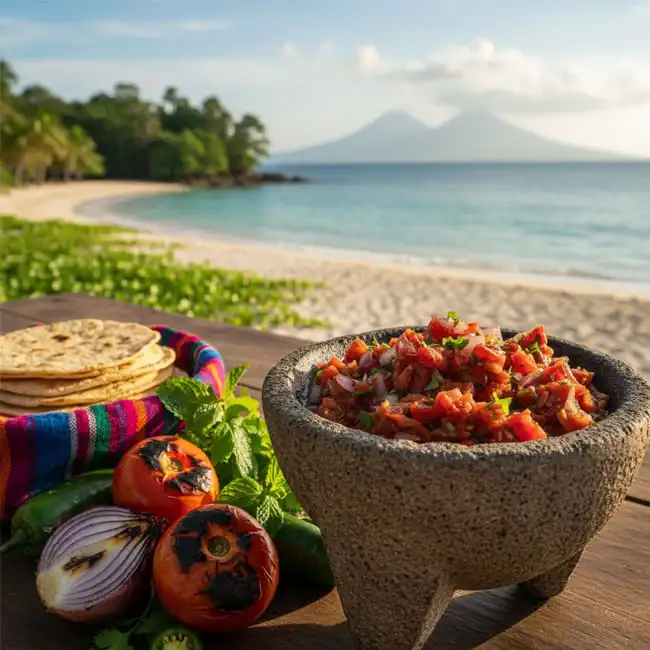
🍅 • Recipe 1: Chirmol de Tomate Asado (Smoky Roasted Tomato Salsa)
🌿 About this Recipe
Chirmol is the most ubiquitous and essential fresh salsa in Guatemala. If you sit down at any table, whether at a street food stall or a family home, you will find chirmol. Its name suggests simplicity, but its flavor is profound, defined not by complexity of ingredients, but by the cooking method: roasting. The tomatoes and onions are charred over fire or on a dry griddle until their skins blister and blacken, imparting a deep, smoky undertone that distinguishes it from any other fresh salsa. Chirmol is chunky, bright, and slightly smoky, making it the perfect universal condiment for everything from carne asada to eggs or simple corn chips.
🛒 Ingredients & Measurements
This recipe makes about 1.5 cups of fresh, smoky chirmol:
• Four large, ripe red tomatoes: Essential for sweetness and body.
• Half of a small white onion: Roughly cut into two large pieces.
• Two large garlic cloves (optional): Unpeeled.
• Half a cup of fresh cilantro: Finely chopped.
• The juice of one fresh lime: Provides necessary acidity and brightness.
• Half a teaspoon of salt: To taste.
• A pinch of black pepper: To taste.
👩🍳 Step-by-Step Instructions
1.Roast the Vegetables (Asar): Place the tomatoes, onion pieces, and unpeeled garlic cloves directly onto a hot comal (dry skillet or griddle) or under a hot broiler. Roast them, turning occasionally, until their skins are completely blackened, blistered, and the vegetables are soft. This should take 10–15 minutes, depending on the heat source. The char is key!
2.Prep the Aromatics: Once cooled enough to handle, peel the charred skin off the tomatoes (some char bits can remain for smoke). Peel the garlic. The onion can be used with its charred bits.
3.Coarsely Chop: Traditionally, chirmol is made using a piedra de moler (grinding stone) for a rustic texture. In the modern kitchen, simply place the roasted tomatoes, onion, and garlic on a cutting board and use a large knife to coarsely chop them. Do not use a blender, as this will result in a thin puree.
4.Mix and Season: Transfer the chunky mix to a bowl. Stir in the fresh, chopped cilantro, the lime juice, salt, and pepper.
5.Adjust and Serve: Taste the chirmol and adjust the salt and lime to achieve a bright, smoky, and satisfying balance. Chirmol is best served at room temperature or slightly chilled, and is wonderful made fresh an hour or two before serving.
💡 Tips & Mistakes to Avoid
• Go for Maximum Char: Don't be timid about the roasting. The best chirmol has dark, almost black spots on the tomatoes and onions, as this is where the essential smoky flavor comes from.
• Embrace the Chunk: Chirmol is defined by its chunky, rustic texture. Using a blender or food processor results in a thin, watery salsa that loses its traditional charm and ability to sit on top of food.
• Use Fresh Lime: Bottled lime juice will not provide the same bright, acidic lift that fresh lime juice does, which is essential for balancing the smoky char of the vegetables.
• Skip the Oil: Chirmol is traditionally oil-free. The moisture comes entirely from the tomato juices and the lime, keeping it very fresh and light.
❓ FAQ
Q: How long does Chirmol last if kept in the refrigerator?
A: Because Chirmol is a fresh salsa made from raw, roasted ingredients, it is best enjoyed within 3 to 4 days of making it. The fresh lime and cilantro will start to fade after this time, and the texture may become slightly watery. For the freshest flavor, always try to make it the day you plan to serve it!
⭐ Summary
Chirmol de Tomate Asado is the ultimate smoky, fresh, and chunky salsa. It’s a simple recipe that delivers profound depth of flavor, making it the perfect accompaniment to share with any family meal.
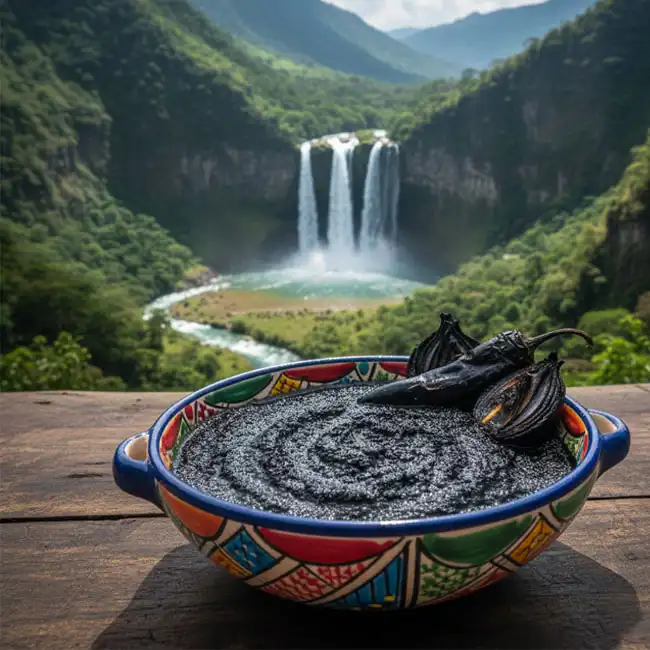
⚫ • Recipe 2: Recado Negro (Charred Black Sauce Base)
⚫ About this Recipe
Recado Negro (Black Sauce) is perhaps the most unique and visually striking recado in Central America, deeply rooted in the Mayan culinary traditions of the Yucatan Peninsula and common in neighboring Guatemalan cuisine, particularly in the Petén region. This sauce is distinguished by its dramatic, almost black color and its intensely savory, earthy, and smoky flavor profile. The black color is achieved by thoroughly charring the dried chiles and other aromatics to the point of turning black, before grinding them with warm spices like allspice, cloves, and cumin. It is a complex, labor-intensive sauce base, traditionally used for turkey or chicken dishes, reserved for very special occasions and guaranteed to impress your friends and family with its unique intensity.
🛒 Ingredients & Measurements
This recipe creates an intense, concentrated black recado paste (enough for a large dish serving 8-10 people):
• Four ounces of dark dried chiles (Chile Pasilla or Chile Negro): Stems and seeds removed. These are crucial for the black color.
• Three ounces of lighter dried chiles (Chile Ancho or Chile Guajillo): Stems and seeds removed. These balance the intensity.
• One large ripe tomato: Roasted.
• Half of a large white onion: Roasted.
• Four cloves of garlic: Roasted.
• Two corn tortillas or one slice of stale white bread: Toasted until thoroughly blackened (but not ash) to enhance the black color and thickness.
• One teaspoon of whole black peppercorns, half a teaspoon of whole cloves, one teaspoon of allspice berries, half a teaspoon of dried oregano, half a teaspoon of cumin seeds: Essential whole spices.
• Half a cup of raw pepitas (shelled pumpkin seeds): Toasted, for thickening.
• Two tablespoons of cooking oil or lard: For cooking the final recado paste.
• Two cups of chicken broth or water: For blending and thinning.
👩🍳 Step-by-Step Instructions
1.Char the Chiles (CRITICAL STEP): In a very well-ventilated area, place the dried chiles in a dry skillet over medium-low heat. Toast them, turning constantly, until they are completely blackened and brittle. They should smoke, but they must not catch fire and turn into ash, as this makes them bitter. Remove and soak them in hot water for 20 minutes to rehydrate.
2.Char/Toast Aromatics: Place the corn tortillas (or bread) in the pan and toast until they are also completely black and brittle. Set aside. Roast the tomato, onion, and garlic until soft and charred.
3.Toast Spices and Seeds: Toast the pepitas, whole peppercorns, cloves, allspice, cumin, and oregano in the dry pan until fragrant (about 5 minutes).
4.Blend the Recado: Drain the chiles. Combine the chiles, all charred vegetables and tortillas, all toasted spices, and pepitas in a high-powered blender. Add one cup of chicken broth. Blend until you have an extremely smooth, thick, and black paste. Add more liquid only if needed for blending.
5.Cook the Recado Paste: Heat the oil or lard in a large pot. Carefully pour in the blended black recado paste. Bring it to a simmer and cook for 10–15 minutes, stirring frequently. This essential step deepens the color, cooks out the raw flavor, and makes the sauce velvety.
6.Use or Store: The Recado Negro Base is ready to be used as the foundation for a stew (by adding more broth and simmering meat/vegetables) or stored frozen for later use.
💡 Tips & Mistakes to Avoid
• The Black Must Not Be Bitter: The fine line between charred black (good flavor) and burned ash (bad flavor) is crucial. If the chiles taste acrid before soaking, discard them and start over. Always ensure good ventilation when charring.
• Balance the Acids: Because the charring process reduces sweetness, this recado often benefits from a small amount of dark vinegar or a tablespoon of burnt sugar added during the cooking step to balance the strong, smoky flavor.
• Do Not Skimp on the Spices: The whole spices (allspice, clove, etc.) are what give the Recado Negro its complex, earthy background that cuts through the intense smokiness of the chiles.
• Cook the Paste Separately: Cooking the finished paste in hot oil/lard for 10–15 minutes is vital to release the full potential of the spices and the chiles.
❓ FAQ
Q: Why did my Recado Negro come out grayish-brown instead of intense black?
A: This usually happens if the chiles were not charred thoroughly enough. For true Recado Negro, the chiles and the corn tortillas must be taken to the point of being entirely black and brittle. If the paste still looks too light, you can try adding one more small, deeply charred corn tortilla to the blender and blending again.
⭐ Summary
Recado Negro is a historical masterpiece—an intensely savory, earthy, and uniquely black sauce base. It showcases a rare and special Mayan cooking technique, perfect for creating a memorable, shared meal with unmatched depth of flavor.
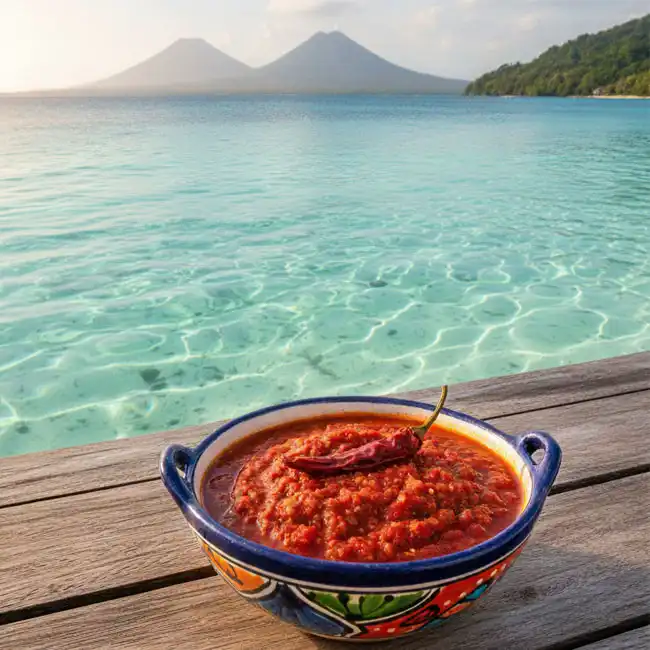
🔥 • Recipe 3: Salsa de Chile Cobanero (Potent Smoky Hot Sauce)
🌶️ About this Recipe
Every cuisine has its signature chile, and for Guatemala, it is the Chile Cobanero. Hailing from the Alta Verapaz region (Cobán), this small, intensely red chile is known for two things: its powerful heat and its distinct, deep, dry smokiness. This sauce is simple—often just the dried, toasted chile blended with water and salt—but its impact is enormous. It is the perfect special condiment to serve on the side, allowing friends and family to customize their spice level with true Guatemalan fire.
🛒 Ingredients & Measurements
This recipe makes a small, potent batch of hot sauce. Handle with care!
• Ten to fifteen whole dried Chile Cobanero: Stems removed. Use a smaller amount if you prefer less heat. (Substitute with a dried Habanero or Scotch Bonnet if Cobanero is unavailable, but the smoky flavor will be different.)
• One cup of water: Used for blending.
• One teaspoon of salt: For seasoning.
• Half a teaspoon of apple cider vinegar (optional): For preservation and brightness.
• One small clove of garlic (optional): Lightly toasted for depth.
👩🍳 Step-by-Step Instructions
1.Toast the Chiles (Wear Gloves and Ventilate!): Heat a dry skillet or comal over medium-low heat. Place the dried Cobanero chiles in the pan and toast them briefly (about 1 minute), turning constantly. They should smell intensely smoky, but must not burn. Burning releases very acrid smoke and ruins the flavor.
2.Soak: Place the toasted chiles in a bowl and cover them with hot water for 15 minutes to rehydrate and soften. Drain the water.
3.Blend: Transfer the rehydrated chiles, one cup of fresh water, salt, and vinegar (if using) to a small blender. Blend until completely smooth.
4.Simmer (Optional but Recommended): Pour the sauce into a small saucepan and bring it to a gentle simmer for 5–10 minutes. This step melds the flavors and helps cook out any raw edge.
5.Serve or Store: Cool the sauce completely before pouring it into a bottle or small serving dish. Label clearly—this sauce packs a punch! Serve sparingly on the side of tacos, caldos, or grilled meats.
💡 Tips & Mistakes to Avoid
• Ventilation and Protection: Cobanero chiles are extremely hot. When toasting and blending, ensure your kitchen is well-ventilated and consider wearing gloves to prevent chili burn on your hands.
• Use Dry Heat Only: Do not soak the chiles before toasting! The toasting step is essential for developing the smoky flavor unique to this chile.
• Start Small: When serving, advise everyone to start with just a few drops. This sauce is designed to be potent and intense, not dumped over the whole meal.
• Keep it Simple: The traditional Salsa de Chile Cobanero is very simple, highlighting the flavor of the chile itself. Avoid adding too many other ingredients that might mask its unique smoky character.
❓ FAQ
Q: How long can I safely store the Cobanero Chile Sauce?
A: If made with vinegar and kept refrigerated in a clean, airtight container, Salsa de Chile Cobanero can safely be stored for up to two to three weeks. If made without vinegar, aim to consume it within one week for the best freshness and quality.
⭐ Summary
Salsa de Chile Cobanero is pure, intense, smoky Guatemalan fire. It is a straightforward recipe that delivers a complex, regional heat, making it the perfect special condiment to share with friends and family who crave that extra spice.
✨ Share the Flavor, Share the Love
And there you have it! You’ve mastered three foundational Guatemalan flavor profiles: the fresh, smoky Chirmol de Tomate Asado; the intense, unique Recado Negro; and the potent, fiery Salsa de Chile Cobanero.
These sauces and recados are the keys to unlocking the true soul of Guatemalan cuisine. They demonstrate that simple techniques—like the ancient art of roasting and grinding—can transform everyday meals into shared feasts. The recados are about building history into your meal, and the salsas are about customizing the perfect bite.
We encourage you to make all three and host a shared dinner! Serve the smoky Chirmol for everyone, offer the historical Recado Negro as a stew base, and let the adventurous test the limits of the fiery Cobanero. These are more than just recipes; they are tools for sharing the vibrant flavor of Central America with the people you love. We'd be delighted to hear how these amazing sauces spiced up your next gathering! Happy cooking!
| 🇬🇹 🥘 < Back |