
🏠 Home > 🗺️ Recipes > 🍨 Desserts > 🇰🇪 Kenya Desserts > 🍨 1.Golden Swahili Mahamri (Coconut Cardamom Bites) , 2.Sweet & Crunchy Kaimati (Syrup-Coated Dumplings) , 3.Muhogo wa Nazi (Cassava in Sweet Coconut Cream)
🍨 Sweeten Your Winter Nights with Authentic Kenyan Comfort Bowls
Published by Supakorn | Updated: March 2026
Hey there, food lover! As the chilly winds of winter start to rattle the windows, there’s nothing quite like the magic of a warm kitchen and the scent of sweet spices wafting through the air. While Kenya is famous for its breathtaking safaris and sun-drenched savannahs, it also holds a "secret vault" of incredible comfort desserts that are perfect for those cozy evenings when you just want to wrap yourself in a blanket and enjoy something soulful.
In this guide, we aren't just looking at snacks; we are diving into the heart of East African hospitality. These recipes have been gaining massive popularity in international food circles lately because they offer something unique—a perfect balance of tropical coconut, aromatic cardamom, and earthy grains. I’ve picked out the Top 3 Kenyan Favorites that are guaranteed to turn your winter blues into a golden, honey-glazed dream. Whether you’re a seasoned baker or a total kitchen newbie, these are simple, fun, and incredibly rewarding. Let’s get cooking!
🇰🇪 🍯Introduction: Why Kenyan Sweets are the Ultimate Winter Companions🍧🍬
You might be wondering, "Why Kenyan desserts for winter?" Well, even though Kenya is a tropical country, many of its traditional sweets were designed to be eaten warm, right off the stove or out of the fryer. They use "warming" spices—ginger, cardamom, and cinnamon—which are the same ingredients we crave during the colder months in the West.
Across Europe and North America, these recipes are popping up in boutique cafes and food blogs because they hit all the modern trends: they are often naturally vegetarian, many use dairy alternatives like coconut milk, and they focus on "slow food" traditions. In this article, I’m going to walk you through:
💤 • Recipe 1: Mahamri: The fluffy, coconut-infused cloud of a bread.
💤 • Recipe 2: Kaimati: The crunchy, syrup-drenched dumplings that dance on your tongue.
💤 • Recipe 3: Muhogo wa Nazi: A warm, creamy Cassava pudding that feels like a hug from the inside out.
It’s time to stop just reading and start creating. Trust me, once you smell that cardamom hitting the pan, your cozy evening is officially upgraded!

🍩 Recipe 1: Golden Swahili Mahamri (Coconut Cardamom Bites)
🇰🇪 🥨 About this Recipe
If you ask any Kenyan living abroad what they miss most about home, Mahamri is usually in the top three. Unlike the standard "Mandazi," Mahamri is the more refined, fragrant cousin from the Swahili coast. It’s characterized by its beautiful golden-brown crust and a hollow, airy center. It’s traditionally served with pigeon peas in coconut milk (Mbaazi), but for a cozy winter dessert, it stands perfectly on its own or dipped into a hot cup of tea. It’s the ultimate comfort bread.
📝 Ingredients & Measurements
• 3 cups of All-Purpose Flour
• 1 cup of Heavy Coconut Milk (The thick part from the top of the can is best!)
• 1/2 cup of Granulated Sugar
• 1 tablespoon of Active Dry Yeast
• 1 teaspoon of Ground Cardamom (Freshly ground is a game-changer)
• 1/4 cup of Warm Water (To activate the yeast)
• Vegetable Oil for deep frying (About 1 liter)
• A pinch of Salt to balance the sweetness
👩🍳 Step-by-Step Instructions
1.Activate the Yeast: In a small bowl, mix the warm water, a teaspoon of sugar, and the yeast. Let it sit for about 5–10 minutes until it becomes frothy and bubbly.
2.Mix the Dry Ingredients: In a large mixing bowl, sift the flour, the remaining sugar, salt, and that aromatic ground cardamom. Stir it all together so the spice is evenly distributed.
3.Form the Dough: Pour the frothy yeast mixture and the thick coconut milk into the flour. Mix with your hands or a wooden spoon until a soft dough forms.
4.Knead with Love: Move the dough to a floured surface. Knead it for about 10 minutes until it’s smooth, elastic, and no longer sticking to your fingers.
5.The First Rise: Place the dough in a lightly oiled bowl, cover it with a warm damp cloth, and let it rise in a warm spot for about 1–2 hours. You want it to double in size.
6.Shape the Mahamri: Punch the dough down to release the air. Divide it into 6 or 8 equal balls. Roll each ball into a circle about half an inch thick, then cut each circle into 4 triangles (like mini pizzas).
7.The Second Rise: Lay the triangles on a tray, cover them, and let them rest for another 15 minutes. This makes them extra fluffy!
8.Fry to Perfection: Heat your oil in a deep pan. Drop the triangles in (don't crowd the pan!). They should puff up almost immediately. Flip them once they turn a rich golden brown.
9.Drain and Serve: Place them on paper towels to soak up excess oil. Serve them while they are still warm and pillowy.
💡 Tips & Mistakes to Avoid
• The Yeast Temperature: If your water is too hot, you’ll kill the yeast. If it’s too cold, it won't wake up. Aim for "baby bath" warm.
• Oil Temperature is Key: If the oil is too cold, the Mahamri will soak up oil and become heavy. If it’s too hot, the outside will burn before the inside is cooked. Test with a small piece of dough first!
• Don't Skip the Cardamom: The scent is what makes this "Mahamri" and not just plain fried dough. Use the best quality you can find.
• Keep it Covered: While rolling out the dough, keep the pieces you aren't working on covered so they don't develop a dry "skin."
❓ FAQ
Q1.Can I make the dough the night before?
Yes! You can let it rise slowly in the fridge overnight. Just bring it back to room temperature before frying.
Q2.Is there a dairy-free version?
Good news—this recipe is naturally dairy-free because it uses coconut milk!
Q3.How do I store leftovers?
Keep them in an airtight container. They stay soft for about 2 days, but they are always best fresh.
🍱 Summary
Mahamri is more than a recipe; it’s a piece of Swahili history. It’s light, fragrant, and provides that perfect "crunch-to-soft" ratio that makes winter evenings so much better.

🥟 Recipe 2: Sweet & Crunchy Kaimati (Syrup-Coated Dumplings)
🇰🇪 🍯 About this Recipe
Kaimati are the "little gems" of Kenyan desserts. Imagine small, golden dumplings that have a crispy, glass-like sugar coating on the outside and a soft, spongy interior. These are incredibly popular during festive seasons and are the perfect "pick-me-up" sweet. The contrast between the crunchy exterior and the soft inside is what makes them so addictive. They are a staple of coastal Kenyan street food, and bringing them into your kitchen adds an instant touch of exotic flair.
📝 Ingredients & Measurements
For the Batter:
• 2 cups of All-Purpose Flour
• 1 cup of Warm Water (Adjust as needed for a thick, droppable consistency)
• 1 tablespoon of Plain Greek Yogurt (This adds a secret tang and softness)
• 2 teaspoons of Active Dry Yeast
• 1 tablespoon of Vegetable Oil
For the Sugar Syrup (Shira):
• 1 cup of Granulated Sugar
• 1/2 cup of Water
• 1/2 teaspoon of Ground Cardamom or a few threads of Saffron
• 1 teaspoon of Vanilla Extract
• Oil for deep frying
👩🍳 Step-by-Step Instructions
1.Make the Batter: In a bowl, whisk together the flour and yeast. Add the yogurt, oil, and gradually add warm water.
2.Beat the Batter: This is the fun part! You want to "beat" the batter with your hand or a heavy spoon for about 5 minutes until it’s smooth and stretchy. It should be thicker than pancake batter—it should hold its shape when you drop a spoonful.
3.Ferment: Cover the bowl and let it sit in a warm place for about 45 minutes to an hour until it’s bubbly and has increased in volume.
4.Prepare the Syrup: While the batter rises, combine sugar, water, and cardamom in a small saucepan. Bring to a boil, then simmer until it thickens into a sticky syrup (about the consistency of maple syrup). Set it aside to cool completely.
5.Fry the Dumplings: Heat your oil. Use your hand (or two spoons) to drop small, round balls of batter into the hot oil.
6.The Constant Stir: Once the balls float, use a slotted spoon to keep stirring and "pushing" them around in the oil. This ensures they get an even golden color on all sides.
7.The Sugar Toss: Once golden and very crispy, remove the dumplings from the oil and drop them straight into the cooled syrup.
8.The Shake: Gently shake or toss the dumplings in the syrup until they are well coated. As the syrup cools and dries, it will form that iconic crunchy white coating.
💡 Tips & Mistakes to Avoid
• The "Cool Syrup" Rule: Never put hot dumplings into hot syrup, or they will turn soggy. The syrup must be at room temperature or cool.
• Batter Consistency: If your batter is too thin, the dumplings won't be round; they’ll look like little octopuses! Add a bit more flour if needed.
• Continuous Stirring: If you don't stir them while frying, one side will be brown and the other will stay pale. They need constant movement for that "gold" look.
• Don't Overcrowd: Give the dumplings room to breathe and float so they cook evenly.
❓ FAQ
Q1.Why are my Kaimatis soft and not crunchy?
Usually, this happens if the oil wasn't hot enough or if the syrup was too thin.
Q2.Can I use honey instead of sugar syrup?
You can, but you won't get that classic "white" crunchy shell. It will be more of a sticky glaze.
Q3.What's the best way to eat them?
With a toothpick! It’s the traditional street-food way to enjoy these sweet bites.
🍱 Summary
Kaimati are the ultimate "party in your mouth." They are sweet, spicy from the cardamom, and provide a satisfying crunch that makes them the perfect snack for a movie night or a cozy gathering.
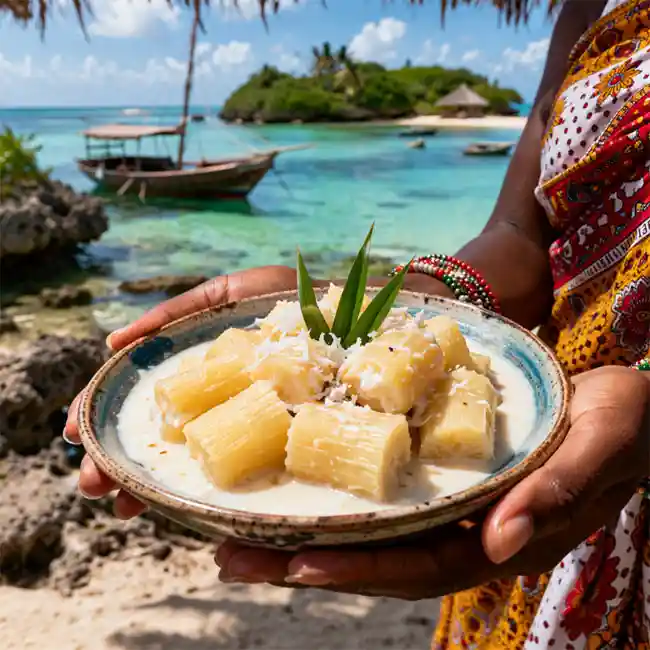
🥥 Recipe 3: Muhogo wa Nazi (Cassava in Sweet Coconut Cream)
🇰🇪 🥣 About this Recipe
While the first two recipes were fried delights, Muhogo wa Nazi is the king of "warm bowl" desserts. Cassava (Muhogo) is a root vegetable that is a massive part of the Kenyan diet. When simmered in heavy coconut milk and sugar, it transforms from a humble root into a starchy, creamy, and decadent pudding. This is the recipe you want when the snow is falling outside and you need something that feels like a warm hug. It’s thick, rich, and naturally filling.
📝 Ingredients & Measurements
• 2 lbs of Fresh or Frozen Cassava (Peeled and cut into bite-sized chunks)
• 2 cups of Thin Coconut Milk (For boiling)
• 1 cup of Thick Coconut Cream (For the final thickening)
• 3/4 cup of Granulated Sugar (Adjust to your sweetness preference)
• 1/2 teaspoon of Ground Cardamom
• 1/4 teaspoon of Salt
• Optional: A handful of raisins or desiccated coconut for garnish
👩🍳 Step-by-Step Instructions
1.Prep the Cassava: If you're using fresh cassava, make sure you peel the thick brown skin and remove the woody core in the center. Cut them into 1-inch cubes.
2.Boil to Soften: Place the cassava chunks in a large pot. Add the thin coconut milk and a pinch of salt. Bring to a boil, then reduce heat and simmer until the cassava is tender and can be easily pierced with a fork.
3.Sweeten the Pot: Once the cassava is soft and most of the thin milk has been absorbed, stir in the sugar and the ground cardamom.
4.The Creamy Finish: Pour in the thick coconut cream. Stir gently so you don't mash the cassava chunks too much. Let it simmer on low heat for another 5–10 minutes until the sauce thickens into a rich, custard-like consistency.
5.Let it Rest: Take the pot off the heat. Let it sit for 5 minutes. The cassava will continue to soak up that sweet cream, making it even more flavorful.
6.Serve Warm: Ladle the creamy cassava into bowls. Garnish with a bit of extra cardamom or toasted coconut if you’re feeling fancy!
💡 Tips & Mistakes to Avoid
• The Woody Core: Always remember to remove the stringy, woody vein from the middle of the cassava; otherwise, it will ruin the smooth texture of your dessert.
• Don't Over-Boil: You want the cassava to be soft, but not "mush." It should hold its shape in the bowl.
• Use Quality Coconut Milk: Since coconut is the main flavor here, using a high-quality, full-fat canned coconut milk (or fresh if you can get it!) makes a world of difference.
• Low Heat: Once you add the thick coconut cream, keep the heat low. High heat can cause the coconut milk to "split" or separate.
❓ FAQ
Q1.Can I use Sweet Potatoes instead of Cassava?
Yes! The flavor will be different, but sweet potatoes work beautifully with this coconut cream method.
Q2.Is this dessert gluten-free?
Absolutely. Cassava is naturally gluten-free, making this a perfect option for guests with dietary restrictions.
Q3.Can I eat it cold?
You can, but the coconut cream thickens significantly in the fridge. It’s best enjoyed warm or at room temperature.
🍱 Summary
Muhogo wa Nazi is the definition of "Kenyan Soul Food." It’s a rustic, beautiful dish that proves that simple ingredients like a root vegetable and a coconut can create something truly world-class.
🌟 Final Thoughts: Your Kitchen, Your Adventure
And there you have it—three incredible ways to bring the warmth of Kenya into your home this winter! What I love most about these recipes is that they aren't just about the food; they are about the experience. Rolling the dough for Mahamri, watching the Kaimati puff up in the oil, or stirring a creamy pot of Cassava is a great way to disconnect from the digital world and reconnect with the joy of cooking.
You don't need a plane ticket to Mombasa to experience these flavors. All you need is a few simple ingredients and a bit of curiosity. I’d love for you to try these one by one. Maybe start with the Mahamri this weekend, and then move on to the Kaimati when you’re feeling a bit more adventurous!
Cooking is always better when shared, so if you make these, don't forget to share your experience with friends—or better yet, invite them over for a "Kenyan Sweet Night." Trust me, once they taste that coconut cream and cardamom, they’ll be asking for your secret recipes!
| 🇰🇪 🍨 < Back |