
🏠 Home > 🗺️ Recipes > 🏛️🍲 Clay-Pot Broths & Stews > 🏝️ Kingdom of Kerma: Clay-Pot Broths & Stews Recipes > 🏛️🍲 1.The 5000-Year Kerma Kingdom Clay Pot Millet Stew
🏛️🍲 The Forgotten Clay Pot That Fed a 5000-Year-Old Kingdom
Published by Supakorn | Updated: October 2026
🦂🌍 Ancient Civilization Origins: Kingdom of Kerma, Ancient Nubia
📜 The Storyteller’s Intro: 5,000 Years of Ancestral Flavors
Close your eyes for a second. It is 2500 BCE. The sun is brutal over the Nile, just south of what we now call the Third Cataract in northern Sudan. The city of Kerma is not a dusty ruin. It is alive. It is the capital of the most powerful kingdom in Africa, a kingdom so rich the Egyptians called it Kush and wrote about it with a mix of fear and awe.
There is no clatter of modern pans. The sound you hear is the soft crackle of acacia wood under a massive, hand-coiled, black-topped red clay pot. Inside that pot, something thick and fragrant is bubbling for hours. It is not a royal feast for a king. It is something more sacred. It is the daily bread of the people, the food that built pyramids before Egypt, the food that fueled potters, archers, and queens. For a hundred years, archaeologists found these pots and thought they were just for burial. They were wrong. They were kitchens.
Today, we are going to scrape the carbonized history off the inside of that pot and cook it again.
🏛️ The Global Value of Antique Heritage
Why should you, in your modern kitchen with your induction stove, care about a millet stew from a kingdom most textbooks forgot?
Because the Kingdom of Kerma was the first great sub-Saharan civilization. Lasting from around 3500 to 1500 BCE, it was a contemporary of Old Kingdom Egypt but completely distinct. While Egypt built in stone, Kerma built in earth and became masters of pottery and cattle. The UNESCO World Heritage site at Kerma still holds the Western Deffufa, a massive mud-brick temple that is one of the oldest structures in Africa.
The Kerma people were the original agricultural innovators of the Sahel. They domesticated pearl millet when much of the world was still figuring out wheat. That millet is drought-resistant, gluten-free, nutrient-dense, and can grow where nothing else can. The world is now desperately looking for sustainable ancient grains. Kerma had the answer 5000 years ago. Preserving this recipe is not just about food. It is about preserving a piece of human resilience, a global heritage that belongs to all of us, especially now.
🔥 The Culinary Resurrection
This is not a museum recipe you look at. This is a resurrection. When Swiss archaeologist Charles Bonnet excavated Kerma in the 1970s-2000s, his team found thousands of tulip-shaped clay cooking vessels with thick, carbonized residue inside. Chemical analysis in recent years showed traces of pearl millet, wild sorghum, charred legumes, and smoked meat fats, along with desert herbs like wild thyme and baobab pulp.
The genius of the Kerma method was the clay pot itself. Called a Dokar in some modern Nubian dialects, the unglazed pot sweats. It breathes, it circulates steam, and it infuses the grain with a deep, smoky, earthy flavor that a metal pot can never replicate. We will recreate that ritual. No fancy equipment. Just patience, earth, and fire.
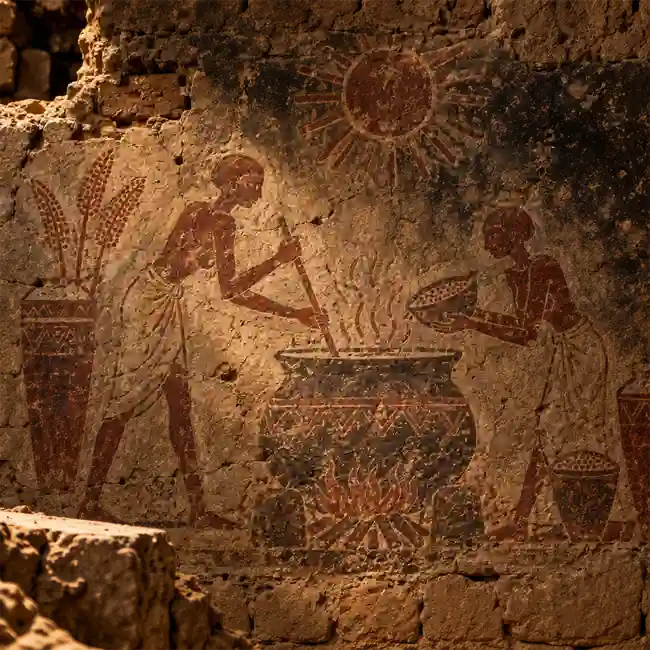
🍲 Recipe: The 5000-Year Kerma Kingdom Clay Pot Millet Stew
👑 Legends Behind This Excavated Secret
The elders of Kerma believed millet had a soul. According to fragments of oral traditions that survived through Nubian storytellers, the stew was called Asida-Tari, meaning The Mother Stew. It was never cooked quickly. It was started at sunrise by the matriarch of the family. The pot was sealed with a flat stone, and it was left to whisper over low embers until sunset.
Legend says that a Kerma queen, who the Egyptians called Candace, would not send her warriors to battle unless they had eaten this stew for three days. It was believed to make the skin as tough as the clay pot and the spirit as enduring as millet that grows without rain. When archaeologists opened the great tombs of Kerma, they found these clay pots placed next to the dead, not as offerings, but as lunch for the journey to the afterlife. That is how much they loved it. They wanted to take it with them into eternity.
🥘 Ingredients & The Noble Pantry
✨ The Ancestral Staples
Our ancestors did not have supermarkets. They had what the Nile and the savanna gave them. The base was always pearl millet, the queen of grains. It was paired with smoked dried meat from the desert hunt, wild legumes for strength, and the tart pulp of the baobab tree, the Tree of Life, which acted as both seasoning and preserver. The smokiness came not from spices, but from the wood itself, acacia and doum palm.
🔄 Modern Substitutes
You can absolutely recreate this with reverence in a modern kitchen. Here is how to honor the ancient while shopping today.
◦ Pearl Millet: The star. Find it in African or health food stores. If you cannot find pearl millet, use foxtail millet or even cracked farro, but pearl millet is closest to the original texture.
◦ Smoked Meat: The ancients used sun-dried, smoked oryx or gazelle. We will use high-quality smoked beef jerky or smoked turkey leg meat, shredded. For a vegetarian sacred version, use smoked dried mushrooms like porcini or chipotle.
◦ Baobab Pulp: This gives the authentic tangy, citrusy note. You can find baobab powder online. If unavailable, use tamarind paste mixed with a squeeze of lemon as a respectful substitute.
◦ Clay Pot: A Moroccan tagine, an Indian matki, or a Mexican olla de barro works beautifully. If you have none, a heavy Dutch oven with a tight lid will do, but add a pinch of smoked salt at the end to mimic the clay.
◦ Desert Herbs: Wild thyme and dried doum palm leaves. Use fresh thyme and a bay leaf instead.
◦ Fat: They used rendered animal fat or shea butter. Use ghee or cold-pressed shea butter if you want to be truly authentic.
⚖️ Ancient Proportions
This recipe serves 4 hungry souls, just like a Kerma family pot.
◦ Pearl millet, unwashed and sun-dried style, 1 and 1 half cups
◦ Water, preferably spring water, 5 cups, plus extra for soaking
◦ Smoked shredded beef or turkey, 200 grams, or smoked dried mushrooms, 150 grams for vegetarian
◦ Red lentils or black-eyed peas, dried, half cup
◦ Baobab powder, 2 tablespoons, or tamarind paste, 1 tablespoon
◦ Onion, red, finely chopped, 1 large
◦ Garlic, crushed, 4 cloves
◦ Ghee or shea butter, 3 tablespoons
◦ Wild thyme or regular thyme, dried, 1 teaspoon
◦ Bay leaf, 1 leaf
◦ Smoked salt or sea salt, 1 teaspoon, adjust to taste
◦ Black pepper, freshly cracked, half teaspoon
◦ Ground toasted cumin, half teaspoon
👩🍳 The Chef’s Ancient Ritual
This is slow food in its purest form. Do not rush it. The Kerma way is patience.
Step 1: The Awakening of the Grain
The night before, place your pearl millet in a large bowl with water to cover by two inches. Add a spoonful of yogurt or a squeeze of lemon. This was how they softened the husk and awakened the nutrients. Let it sit for 8 to 12 hours. Drain.
Step 2: The Anointing of the Pot
Place your clay pot or Dutch oven over medium-low heat. Add the ghee. When it melts and smells nutty, add the chopped red onion. Do not fry it fast. Sweat it slowly for 7 to 8 minutes until it becomes translucent and sweet, just like the desert onions would over embers.
Step 3: The Smoke Offering
Add the shredded smoked meat or smoked mushrooms. Stir for 2 minutes until the fat releases and the kitchen smells like an ancient campfire. Add the garlic, thyme, bay leaf, cumin, and black pepper. Stir for 30 seconds.
Step 4: The Sacred Union
Add the drained millet and the red lentils. Stir them into the fragrant fat, toasting them lightly for 2 minutes. This step is crucial. It coats each grain.
Step 5: The Long Whisper
Pour in the 5 cups of water. Add the baobab powder or tamarind paste and the smoked salt. Bring it to a very gentle boil, then immediately reduce the heat to the lowest possible flame. If using a clay pot, place a heat diffuser underneath. Cover with the lid. If your lid is not tight, seal the rim with a simple dough of flour and water, just like they did.
Now, let it whisper. Cook for 90 minutes to 2 hours. Do not stir. Do not lift the lid for the first 60 minutes. You will hear a soft tss-tss sound. That is the pot breathing. After 90 minutes, check. The millet should be creamy, broken down, almost like a thick porridge, and the lentils dissolved. If it is too thick, add half a cup of hot water. If too thin, leave the lid slightly ajar for 15 minutes.
Step 6: The Resting
Remove from heat. Keep covered and let it rest for 20 minutes. This final rest is where the clay pot magic happens. The flavors marry.
Serve warm in earthen bowls with a drizzle of ghee on top.
🤫 Secrets of the Ancestral Hearth
• Do Not Wash Millet Aggressively: The Kerma people never washed away all the wild dust. That slight earthiness is the flavor. A quick rinse after soaking is enough. Over-washing makes it bland.
• Low Heat is Everything: The biggest mistake modern cooks make is boiling millet like rice. This is a stew, not a pilaf. If it boils hard, it becomes bitter. The flame should be so low you can barely see it.
• The Clay Pot Matters More Than You Think: If you use a metal pot, you will get a good stew. If you use a clay pot, you will get a sacred stew. The alkaline nature of unglazed clay neutralizes the phytic acid in millet and adds a mineral sweetness you cannot fake.
• Do Not Add Tomatoes: Many modern African millet recipes add tomato. The ancient Kerma version had no New World ingredients. Keep it pure with baobab or tamarind for sourness. It is more authentic and more digestible.
• Make It The Day Before: Like all great stews, this one is even better the next day. The millet absorbs the smoke. Store it in the clay pot in a cool place overnight.
🦒❓ Ancient Civilization Origins FAQ
Q1: What does Kerma millet stew actually taste like?
It does not taste like any modern porridge. Imagine a creamy, savory risotto that tastes of smoke and earth, with a gentle lemon-like tang from baobab, deep umami from smoked meat, and a nutty sweetness from the slow-cooked millet. It is comforting, grounding, and surprisingly light.
Q2: Is this recipe gluten-free and healthy?
Yes. Pearl millet is naturally gluten-free and one of the most nutritious ancient grains. It is rich in magnesium, iron, and fiber. Combined with lentils, it becomes a complete protein. The baobab adds vitamin C. It is exactly the kind of functional, sustainable food nutritionists are recommending today.
Q3: Can I make this completely vegan and still be authentic?
Absolutely. The original recipe varied by season. During dry months when game was scarce, Kerma families made a purely plant-based version using wild legumes and smoked mushrooms. Use smoked mushrooms and shea butter instead of ghee for a 100 percent plant-based sacred version that is historically accurate.
Q4: Where exactly was the Kingdom of Kerma?
The Kingdom of Kerma was centered around the modern town of Kerma in Northern Sudan, near the Nile River. At its peak around 1700 BCE, it controlled all of Nubia, from the First to the Fourth Cataract of the Nile, an area larger than Egypt itself. Its people were the direct ancestors of the great Kushite Pharaohs who later ruled Egypt.
🏺 The Taste of Archeology
When you take your first spoonful, you are not just eating dinner. You are closing a 5000-year-old gap. You are tasting the same creamy texture that a Kerma child tasted, the same smoky aroma that filled a courtyard of mud-brick houses, the same resilience that allowed a civilization to thrive in one of the harshest climates on Earth.
This is food before writing, before empires, before money. It is food as memory. The softness of the millet, the whisper of smoke, the sour kiss of baobab, it all tells you that innovation does not have to be new. Sometimes, the most advanced technology we have is an old clay pot and a grain that refuses to die.
✨ Final Thoughts: Bringing Antiquity to Your Modern Table
You do not need to be an archaeologist to be a keeper of history. You just need to cook.
I encourage you to make this Kerma millet stew not as a novelty, but as a ritual. Cook it on a Sunday when you have time. Let it fill your home with its ancient smoke. Serve it with your hands, with flatbread, the way they would have. Share it and tell the story of the kingdom that history forgot, but whose pot still feeds us.
If you make it, notice how you feel afterward. Grounded. Full, but not heavy. Calm. That is the power of food that was designed to nourish the soul, not just the body. Bring antiquity to your modern table, and you will realize that 5000 years is not that long at all.
🙏 The Golden Hook (The Sacred Union)
This recipe survived fire, flood, war, and 5000 years of sand because someone, somewhere, kept making it.
Now you are part of that chain. If this resurrected flavor moved you, do not let it be buried again. Share your clay pot with your family, leave a comment below telling us how your Kerma stew turned out, and subscribe to our Lost Ancient Recipes expedition.
Every month, we excavate another forgotten civilization and bring its sacred table back to life. Together, we are not just cooking. We are keeping the world's oldest kitchens alive. Will you join the keepers?
📚 Credit to the Keepers of the Culture (The Legacy)
This culinary resurrection would not be possible without the tireless work of the keepers of Nubian heritage.
Deep respect and gratitude to the archaeological mission of Charles Bonnet and the University of Geneva, whose decades of work at Kerma revealed the true grandeur of this kingdom. To the Sudanese National Corporation for Antiquities and Museums (NCAM) for protecting the site of Kerma and the Western Deffufa. To the modern Nubian communities in Sudan and Egypt who still cook millet in clay and who kept the memory of Asida alive through centuries of displacement.
And to the unnamed Kerma potters, the women whose fingerprints are still visible on the inside of 5000-year-old pots. This is your recipe. We just listened.
We acknowledge that the Kingdom of Kerma is the ancestral heritage of the Nubian and Sudanese people, and we present this recipe with the utmost respect and a commitment to historical accuracy and cultural appreciation.
| 🏝️ 🏛️🍲 < Back |