
🏠 Home > 🗺️ Recipes > 👑🍞 Artisan Royal Breads (Breads) > 🇱🇦 Laos Artisan Royal Breads (Breads) Recipes > 👑🍞 1.Golden Sesame Coconut Court Bread of Lan Xang
👑🍞 Ancient Lao Court Bread Traditions Inspired by Forgotten Aristocratic Kitchens
Published by Supakorn | Updated: July 2026
🇱🇦 🏛️ The Forgotten Royal Legacy of Lao: The Kingdom of Lan Xang
Long before modern cookbooks filled our shelves, the kitchens of the Kingdom of Lan Xang quietly preserved culinary traditions that reflected patience, craftsmanship, and deep respect for nature. While Lao cuisine is widely celebrated today for sticky rice, fresh herbs, grilled dishes, and comforting soups, another fascinating chapter of its food history often receives far less attention—the refined baked and steamed breads that gradually found their place in aristocratic households through centuries of regional trade and cultural exchange.
Although bread never replaced sticky rice as the heart of the Lao table, historical contacts with neighboring kingdoms introduced new baking techniques and dough preparations that evolved into unique local creations. Wealthy families and noble households experimented with fine rice flour, fragrant herbs, sesame seeds, coconut, and natural sweeteners, transforming humble ingredients into elegant breads prepared for important family gatherings and ceremonial occasions.
Today, only scattered references and traditional family knowledge remain. Many recipes have changed over generations, while others disappeared entirely. Yet their influence still lingers in the flavors, textures, and techniques passed quietly from one generation to another.
This journey celebrates those forgotten traditions—not as exact historical reproductions, but as respectful modern interpretations inspired by Lao culinary heritage.
📜 The Storyteller's Intro
Imagine walking through the quiet corridors of a noble residence in the Kingdom of Lan Xang several centuries ago.
Morning sunlight filters through carved wooden windows as skilled cooks begin preparing the day's ceremonial meal. Clay ovens warm slowly while woven baskets filled with freshly milled rice flour, toasted sesame seeds, aromatic herbs, and rich coconut rest neatly beside polished wooden tables.
The kitchen is peaceful yet purposeful.
Every ingredient is handled with remarkable care. Dough is mixed patiently by hand. Natural fermentation is allowed to happen at its own pace. Banana leaves are carefully cleaned before wrapping delicate breads that will be steamed until perfectly soft. Some loaves are gently baked over charcoal, developing golden crusts and subtle smoky aromas that fill the entire kitchen.
These breads are not everyday food.
They are prepared for respected guests, seasonal festivals, family celebrations, and important community gatherings. Every loaf reflects generosity, hospitality, and appreciation for the abundance provided by the land surrounding the Mekong River.
The recipes are never hurried.
Older cooks teach younger generations through observation instead of written instructions. Measurements live in memory rather than notebooks. Experience matters more than precision, and patience is considered one of the most valuable ingredients of all.
Centuries later, only echoes of these traditions remain. Yet each surviving technique offers a glimpse into an elegant culinary world that deserves to be remembered once again.
🌏 The Global Value
Many traditional recipes throughout history were carefully protected within influential households, not because the ingredients were impossible to find, but because the knowledge required years of experience to master.
In Lao culinary history, refined preparation methods often reflected status, celebration, and hospitality. Skilled cooks developed techniques that balanced delicate textures with natural flavors rather than relying on expensive ingredients alone. Their expertise transformed simple grains into beautiful creations worthy of honored guests.
As societies changed, wars reshaped borders, written records disappeared, and modern convenience gradually replaced slower cooking traditions. Countless family recipes vanished before they could be documented.
Today, preserving culinary heritage has become more important than ever.
Around the world, historians, chefs, home cooks, and cultural organizations work together to rediscover historical recipes, preserve traditional techniques, and inspire new generations to appreciate local food heritage. Every recreated dish becomes another small bridge connecting today's kitchens with centuries of culinary craftsmanship.
Rather than treating these recipes as museum pieces, we can celebrate them by adapting them thoughtfully for modern homes while honoring the spirit that originally inspired them.
Food tells stories that history books sometimes cannot.
Every loaf baked with patience reminds us that traditions survive best when they continue to be shared.
✨ The Collection
This collection is dedicated to bringing forgotten Lao court-inspired bread traditions back into today's kitchen with respect, practicality, and historical appreciation.
Instead of attempting impossible historical accuracy, each recipe is carefully adapted using ingredients that modern cooks can easily find while preserving the character and philosophy behind traditional Lao cooking.
Throughout this series, you'll discover breads inspired by centuries of regional influence, seasonal harvests, and noble dining traditions. Some recipes feature fragrant herbs harvested from tropical gardens. Others celebrate coconut, sesame, rice flour, and naturally fermented doughs that create remarkable flavor using surprisingly simple ingredients.
Each recipe also explores the cultural story behind the bread—why it may have been prepared, who might have enjoyed it, and what role it played during celebrations or important family occasions.
Whether you're passionate about food history, curious about Southeast Asian cuisine, or simply searching for a rewarding baking project, these recipes invite you to slow down, enjoy the process, and appreciate the remarkable traditions hidden within every loaf.
Our first recipe reflects that philosophy beautifully.
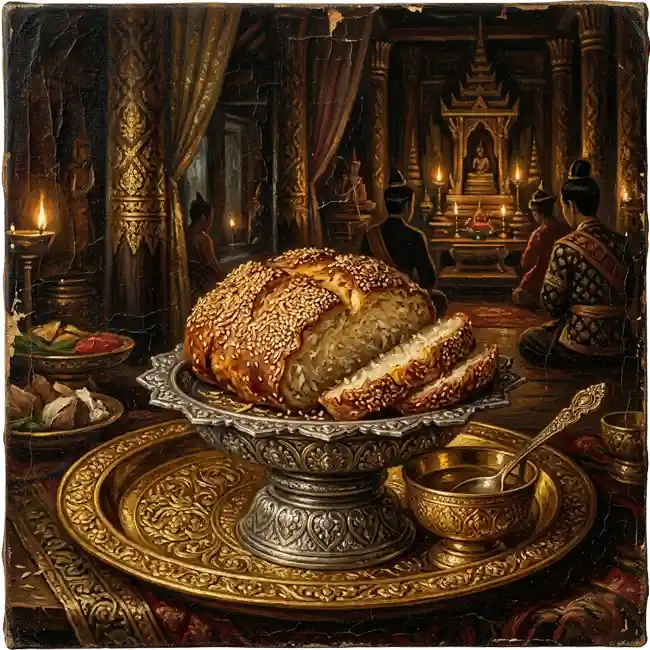
🍞 Recipe: Golden Sesame Coconut Court Bread of Lan Xang
Elegant yet comforting, this soft aromatic bread combines fragrant coconut, lightly toasted sesame, and delicate rice flour into a loaf inspired by the graceful hospitality of historical Lao aristocratic households.
👑 About this Royal Secret
According to regional culinary traditions and stories passed through generations, breads prepared with fragrant coconut and toasted sesame were often reserved for meaningful celebrations rather than everyday meals.
Inspired by those traditions, this court-style bread represents the generosity shown when welcoming respected visitors, honored elders, or distinguished guests during important seasonal festivals.
Its soft interior symbolizes warmth and hospitality, while the golden sesame topping reflects prosperity and abundance. Rather than overwhelming the palate with rich flavors, the bread emphasizes balance—a quality deeply appreciated throughout traditional Lao cooking.
Each loaf encourages slow preparation, thoughtful sharing, and gratitude around the dining table.
It is less about luxury through expensive ingredients and more about elegance achieved through patience, skill, and care.
In many ways, that philosophy remains timeless.
🌿 Ingredients & The Aristocratic Touch
In the elegant kitchens of historical Lao noble households, the finest dishes were rarely defined by rare ingredients alone. Instead, they reflected the wisdom of selecting the freshest harvest, treating every ingredient with patience, and allowing natural flavors to shine.
This bread follows that same philosophy.
Every handful of flour, every sprinkle of sesame, and every drop of coconut milk plays an important role in creating a loaf that is soft, aromatic, and wonderfully balanced. Rather than relying on heavy seasoning, the recipe celebrates harmony—a hallmark of traditional Lao cooking.
The result is a bread that feels both humble and refined, perfect for sharing around the table just as it would have been generations ago.
👑 The Royal Pantry
Imagine stepping into an aristocratic kitchen during the Lan Xang era.
Fresh rice has been carefully milled before sunrise. Coconut is grated by hand only moments after being opened. Sesame seeds are gently toasted over low heat until their warm, nutty fragrance fills the room. Banana leaves are rinsed with cool water and wiped dry before serving as natural wrappers or baking liners.
Nothing is rushed.
The flour is sifted repeatedly to create an exceptionally delicate texture. Sea salt is added sparingly to enhance rather than dominate the bread. Palm sugar contributes a gentle sweetness that never overpowers the coconut's natural richness.
These ingredients may appear simple, yet together they create remarkable depth of flavor.
The beauty of historical Lao cooking has always been its ability to transform everyday harvests into memorable dishes through patience, precision, and respect for nature.
🌾 Modern Substitutes
If some traditional ingredients are difficult to find, these substitutions preserve the spirit of the recipe while making it practical for modern kitchens.
• Rice flour can be replaced with fine glutinous rice flour for a softer texture.
• Bread flour may be substituted with all-purpose flour if necessary.
• Fresh coconut milk works beautifully, but canned unsweetened coconut milk is an excellent alternative.
• Palm sugar can be replaced with light brown sugar.
• Toasted white sesame seeds may be substituted with black sesame seeds for a deeper nutty flavor.
• Fresh banana leaves can be replaced with parchment paper when baking.
• Coconut oil may be substituted with unsalted butter for a richer finish.
• Fresh yeast can be replaced with instant dry yeast following the manufacturer's conversion guidelines.
These adjustments help preserve the traditional character while fitting comfortably into today's home kitchens.
📏 The Measurements
For one medium loaf (approximately 8 servings):
• 2 cups bread flour
• 1 cup fine rice flour
• 2 teaspoons instant dry yeast
• 3 tablespoons palm sugar
• 1 teaspoon sea salt
• ¾ cup warm unsweetened coconut milk
• 2 tablespoons coconut oil
• 1 large egg
• 3 tablespoons toasted white sesame seeds
• 1 tablespoon black sesame seeds for garnish (optional)
• 1 tablespoon coconut milk for brushing before baking
• Extra rice flour for dusting the work surface
Optional aromatic additions:
• 1 teaspoon finely grated fresh ginger
• 1 teaspoon pandan extract
• ½ teaspoon ground cardamom
• 1 tablespoon finely shredded unsweetened coconut
These optional ingredients create subtle regional variations while remaining faithful to the bread's elegant personality.
👨🍳 The Chef's Ritual
Preparing this bread is less about speed and more about enjoying the rhythm of traditional baking.
1.Combine the bread flour, rice flour, yeast, palm sugar, and sea salt in a large mixing bowl.
2.Stir gently until every dry ingredient is evenly distributed.
3.Add the warm coconut milk, coconut oil, and egg.
4.Mix slowly until a rough dough begins to form.
5.Transfer the dough onto a lightly floured surface.
6.Knead patiently for 10 to 12 minutes until the dough becomes smooth, elastic, and slightly silky.
7.Place the dough into a lightly oiled bowl and cover with a clean towel.
8.Allow it to rise in a warm place for about 60 to 90 minutes, or until doubled in size.
9.Gently press the air from the dough without overworking it.
10.Fold in the toasted sesame seeds and any optional flavorings.
11.Shape the dough into a round or oval loaf.
12.Place it on a baking tray lined with parchment paper or a clean banana leaf.
13.Cover once more and allow a second rise for approximately 35 to 45 minutes.
14.Brush the surface lightly with coconut milk.
15.Sprinkle additional sesame seeds across the top.
16.Bake in a preheated oven at 180°C (355°F) for 28 to 35 minutes.
17.The loaf should develop a beautiful golden color while producing a gentle hollow sound when tapped underneath.
18.Remove from the oven and allow it to cool on a wire rack for at least 20 minutes before slicing.
19.Serve warm or at room temperature alongside fresh fruit, savory dishes, or simply enjoyed on its own.
Every slice reveals a wonderfully soft crumb with delicate coconut aroma and gentle sesame fragrance—simple ingredients transformed through patience.
🏺 Secrets of the Palace Kitchen (Tips & Mistakes)
Generations of skilled cooks understood that excellent bread depended more upon careful technique than complicated recipes.
Helpful Tips
• Warm—not hot—coconut milk helps activate the yeast without damaging it.
• Sift both flours before mixing for a lighter loaf.
• Toast sesame seeds gently until fragrant but never dark brown.
• Allow both rising periods to complete naturally without rushing.
• Brush the loaf lightly rather than heavily to achieve an even golden finish.
• Cool completely before storing to prevent excess moisture.
• Store in a breathable cloth bag to preserve the crust while keeping the inside soft.
Common Mistakes
• Adding coconut milk that is too hot can weaken the yeast.
• Too much flour during kneading may create a dry loaf.
• Under-kneading produces a dense texture.
• Skipping the second rise limits volume and softness.
• Baking at excessively high heat browns the crust before the center finishes cooking.
• Cutting the bread immediately after baking releases steam too quickly and reduces its tender texture.
These small details, practiced consistently, elevate a simple loaf into something truly memorable—just as experienced palace cooks understood centuries ago.
👑❓ Royal FAQ
Q1.Can I make this bread without bread flour?
Absolutely. While bread flour creates a slightly chewier texture, all-purpose flour works very well for home baking. The loaf may be a little softer and lighter, but it will still capture the gentle character of this court-inspired recipe. If possible, combine all-purpose flour with rice flour to maintain the delicate texture that reflects traditional Lao baking traditions.
Q2.Is this an authentic historical Lao recipe?
This recipe is inspired by the culinary heritage of historical Lao aristocratic households rather than being a direct transcription of a surviving historical manuscript. Like many traditional recipes around the world, techniques and ingredients evolved through generations. Our goal is to respectfully celebrate Lao food culture while adapting the recipe for modern kitchens using accessible ingredients and clear instructions.
Q3.How should I store the bread?
Allow the loaf to cool completely before storing.
For the best texture:
• Keep it in a clean cloth bag or bread box for up to 2 days.
• Store it in an airtight container for up to 4 days.
• Freeze sliced portions for up to 2 months.
• Reheat gently in the oven for a few minutes to restore its soft interior and lightly crisp crust.
Avoid refrigerating the bread, as this may cause it to become dry more quickly.
Q4.What foods pair well with this bread?
This versatile loaf complements many traditional and modern meals.
Wonderful serving ideas include:
• Fresh tropical fruits
• Light vegetable soups
• Herb-infused salads
• Coconut-based curries
• Roasted vegetables
• Mild bean dishes
• Sesame spreads
• Homemade fruit preserves
Its mild coconut aroma and toasted sesame flavor also make it enjoyable on its own as an afternoon snack.
📜 The Taste of History (Summary)
Some recipes nourish more than the body—they preserve memories, traditions, and stories that might otherwise fade with time.
This Golden Sesame Coconut Court Bread draws inspiration from the graceful culinary customs associated with the historic Kingdom of Lan Xang. While no single loaf can perfectly recreate centuries of history, every careful step—from patiently kneading the dough to gently toasting the sesame—honors the spirit of cooks who valued craftsmanship over haste.
Its beauty lies in its simplicity. A handful of everyday ingredients becomes something memorable through balance, patience, and attention to detail. That philosophy remains just as meaningful in today's kitchens as it may have been generations ago.
Whether shared with family during a special gathering or baked simply for the joy of creating something by hand, this bread reminds us that cultural heritage is best preserved through practice, curiosity, and appreciation.
Every loaf carries a small piece of history forward.
🏡 Final Thoughts: Bringing History to Your Table
Historical recipes often seem distant or difficult, reserved only for museums, scholars, or professional chefs.
Fortunately, that doesn't have to be the case.
With thoughtful adaptations and clear guidance, anyone can explore the flavors that once inspired generations of skilled cooks. You don't need a palace kitchen, rare equipment, or extraordinary ingredients. What matters most is taking your time, respecting the process, and enjoying the experience of creating food with intention.
This bread reflects the timeless values found throughout traditional Lao cooking: generosity, patience, harmony, and gratitude for nature's harvest.
Perhaps the greatest reward isn't simply the finished loaf.
It's the opportunity to slow down, connect with culinary traditions, and share a meaningful meal with the people around you.
Every time you bake it, you help keep a small part of history alive.
✨ The Call to Action (The Golden Hook)
If stories hidden within ancient kitchens inspire your curiosity, you've only begun the journey.
Across the world, countless traditional recipes remain tucked away in family memories, historical records, and regional food traditions waiting to be rediscovered. Every recipe tells a story about the people who created it, the seasons they celebrated, and the communities they nourished.
We invite you to continue exploring these remarkable culinary legacies with us.
Discover forgotten breads, timeless desserts, comforting soups, elegant main dishes, and treasured family recipes inspired by historical cultures from around the globe. By learning, cooking, and sharing these dishes, we can all play a small part in preserving the world's rich culinary heritage for future generations.
History becomes most meaningful when it is brought back to life—one recipe at a time.
🏛️ Credit to the Keepers of the Culture (The Legacy)
This recipe is respectfully inspired by the culinary traditions and historical food heritage associated with the Kingdom of Lan Xang and the broader cultural legacy of Lao cuisine. Rather than claiming to reproduce a single documented historical recipe, it thoughtfully interprets traditional ingredients, preparation methods, and regional influences for contemporary home kitchens.
We extend our sincere appreciation to Lao communities, cultural historians, traditional home cooks, culinary researchers, and heritage organizations whose ongoing dedication helps preserve the knowledge, techniques, and stories behind one of Southeast Asia's most treasured food cultures.
Our adaptation is intended to celebrate this living heritage with respect, curiosity, and gratitude while encouraging more people around the world to discover and appreciate the enduring beauty of Lao culinary traditions.
| 🇱🇦 👑🍞 < Back |