
🏠 Home > 🗺️ Recipes > 🍨 Desserts > 🇱🇦 Laos Desserts
🇱🇦 🍨 Laos Desserts Recipes
Published by Supakorn | Updated: February 2026
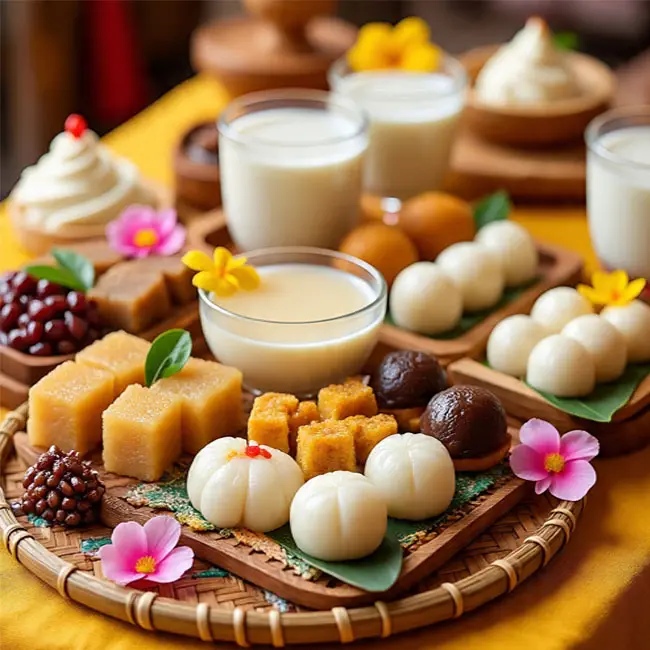
🥥 Sweet Traditions in Lao Cuisine
Laos desserts reflect a deep connection to local ingredients, especially sticky rice, coconut milk, tropical fruits, and palm sugar. These sweets are not overly heavy but instead highlight balance — lightly sweetened, creamy, and refreshing. Traditionally enjoyed at family gatherings, festivals, or temple celebrations, Lao desserts are more than after-meal treats; they carry cultural meaning and a sense of community. Popular desserts showcase the natural richness of coconut, the fragrance of pandan, and the chewy texture of sticky rice, making them both comforting and memorable.
🍚 The Central Role of Sticky Rice in Sweets
Just as sticky rice (Khao Niao) forms the foundation of savory Lao meals, it is also the star ingredient in many of the country's most beloved desserts. Lao desserts cleverly utilize sticky rice in various forms—steamed, pounded, grilled, or mixed with coconut milk. This gives Lao sweets a distinctively chewy and substantial texture that sets them apart.
Desserts like Khao Niew Mamuang (Sticky Rice with Mango) and Khao Tom Mat (Sticky Rice with Banana) celebrate the natural sweetness and satisfying chewiness of the grain. Using sticky rice also makes the desserts surprisingly filling, reflecting the practical and hearty nature of Lao cuisine.
🌴 Coconut Milk: The Creamy Backbone
If sticky rice is the body of Lao desserts, coconut milk is the soul. Laos, a tropical country, has an abundance of fresh coconuts, and their rich, creamy milk is essential for almost every traditional sweet. It provides the necessary fat and sweetness, transforming simple ingredients into comforting treats.
Lao desserts often feature a delightful contrast between the sweetened base and a rich, slightly salty coconut cream topping. This subtle saltiness enhances the overall flavor and prevents the dessert from becoming cloyingly sweet, perfectly embodying the Lao principle of flavor balance. The freshness of the coconut milk is key, lending a clean, rich, and natural aroma to all the sweets.
🧘 Sweetness for Balance, Not Overpowering
Unlike some global desserts, Lao sweets generally adhere to a philosophy of light sweetness. They are often sweetened using palm sugar or brown sugar, which imparts a deeper, more caramel-like flavor than refined white sugar.
The sweetness is carefully calibrated to balance the intensity of the other ingredients, such as the richness of the coconut or the fragrance of the pandan. The focus is on the aroma and texture—the chewiness of the rice, the smoothness of the custard, and the cooling nature of the coconut soup—rather than just the sugar rush. They are designed to provide a refreshing conclusion to a spicy meal.
⭐️ Popular Lao Desserts You Must Try
🥭 Khao Niew Mamuang (Sticky Rice with Mango)
A beloved dessert combining sweet coconut-infused sticky rice with ripe mango slices. It’s refreshing, colorful, and highlights the tropical flavors of Laos.
While popular across Southeast Asia, the Lao version of Khao Niew Mamuang is particularly cherished for the quality of the sticky rice used, which is often steamed to perfection and then steeped in sweetened coconut milk until every grain is soft and creamy. It is typically served with a generous pour of thick coconut cream on top and a garnish of crispy toasted mung beans, adding a textural contrast to the smooth rice and soft mango. The seasonality of the mango is important; it’s best enjoyed during the peak hot season when mangoes are at their sweetest and most fragrant.
🥣 Nam Van (Sweet Coconut Dessert Soup)
Served chilled or warm, Nam Van mixes colorful tapioca pearls, sweet corn, and fruits in coconut milk, creating a creamy yet light treat perfect for hot days.
Nam Van, which literally translates to "sweet water," is an umbrella term for various sweet coconut milk-based soups. The most common version includes smooth, translucent tapioca pearls (sometimes dyed in bright colors), taro, sweet corn, and sometimes jackfruit or water chestnuts. It is often served over crushed ice, making it an incredibly refreshing and popular street-side dessert. The joy of Nam Van is the variety of textures and the cool, calming relief it offers from the tropical heat.
🍮 Lao Coconut Pudding (Khanom Tuay)
Soft, creamy pudding made with coconut milk, palm sugar, and rice flour. Often steamed in small cups, it’s a simple yet classic dessert enjoyed nationwide.
The Lao Coconut Pudding is very similar to its regional cousins and showcases the art of layering flavor. It is a two-layered steamed custard. The bottom layer is sweet, often flavored with pandan leaf essence, giving it a light green hue and fragrant aroma. The top layer is made of pure coconut cream and a pinch of salt. The contrast between the warm, sweet, fragrant bottom and the savory, salty, rich top is what makes this dessert so addictive. Because it is steamed, it retains a wonderfully soft and melt-in-your-mouth texture.
🔪 Techniques and Ingredients in Lao Sweets
🍃 The Scent of Pandan (Bai Toey)
The pandan leaf (Bai Toey) is arguably the most important aromatic in Lao desserts. Often referred to as "the vanilla of Asia," pandan has a unique, sweet, grassy, and subtly nutty aroma.
Pandan leaves are used to infuse water or coconut milk, which then forms the liquid base for rice cakes, custards, or soups. This natural flavoring is highly prized and provides a clean, green fragrance that makes Lao sweets instantly recognizable. In Laos, you will often find fresh pandan leaves tied into knots and added directly to the steamer or pot to subtly perfume the rice or cooking liquid.
🌿 Banana Leaf Wrappers: Natural Packaging
Many traditional Lao desserts are cooked and served wrapped in banana leaves. This simple, natural packaging imparts a subtle, earthy, and sweet aroma to the food as it steams, grills, or cools.
• Khao Tom Mat: Sticky rice and banana are wrapped in banana leaves and steamed, making the wrapper an essential part of the cooking process.
• Khanom Tuay: While often made in ceramic cups today, historically, many sweet steamed custards were prepared in small, folded banana leaf cups, adding a delicate fragrance. This practice emphasizes the use of sustainable, natural materials from the local environment.
🍚 Pounded Rice for Texture (Khao Pone)
Beyond whole grain sticky rice, Lao desserts utilize rice in other fascinating ways to achieve unique textures. Pounded or ground rice (Khao Pone) is used to create chewy cakes and dumplings.
One example is small rice flour dumplings that are often served in sweet coconut milk. The tapioca starch and rice flour mixtures ensure that the sweets are stretchy, slightly elastic, and very satisfying to chew, adding another dimension of enjoyment besides just sweetness.
🥳 Lao Desserts in Cultural Life
🤝 Communal Sharing and Hospitality
Lao desserts are intrinsically linked to hospitality and community. It is traditional to offer guests a sweet treat after a meal or when they visit your home. Desserts are rarely eaten alone; they are a vehicle for gathering and sharing.
During festivals, such as Boun Pi Mai (Lao New Year), large quantities of traditional sweets are prepared by communities and shared among neighbors, friends, and offered to monks. This practice reinforces social harmony and generosity, making desserts a beautiful representation of Lao cultural values.
💰 Street-Side Sweet Relief
Just like savory snacks, many Lao desserts are sold by street vendors, ensuring that sweet relief is always readily available. Vendors often specialize, selling only a few types of desserts they have perfected.
• Nam Van vendors are popular in the afternoons, serving their chilled soups over ice.
• Khao Niew Mamuang vendors emerge during the mango season.
• Simple grilled banana vendors (Kluay Ping) offer a quick, warm, caramelized treat.
This accessibility means Lao desserts are an integral, affordable part of daily urban and village life, serving as the perfect cool-down or energy boost.
🌿 Desserts as Wellness
Some traditional Lao sweets also carry perceived wellness benefits. For example, the use of mung beans (often added to sweet soups or rice dishes) is considered nourishing, while the hydration provided by chilled coconut milk and tropical fruits offers natural cooling relief in the hot climate. The simplicity of the ingredients—natural rice, fruit, and coconut—means the desserts feel less artificial and more wholesome.
🌟 More Sweet Delights
🍌 Khao Tom Mat (Sticky Rice with Banana)
A deeply traditional, satisfyingly hearty dessert. Sticky rice, black beans, and a piece of banana are seasoned with coconut milk and sugar, wrapped tightly in a banana leaf packet, and then steamed until soft and chewy. This method creates a moist, dense rice cake with a creamy, caramelized banana center. Khao Tom Mat is often prepared and given as a gift during special occasions.
🍞 Khao Nom Pang: Lao Sweet Bread
While not entirely indigenous, Laos has delicious adaptations of baked goods. Khao Nom Pang (Sweet Bread) or small sweet pastries are common, often flavored with coconut, taro, or pandan, and sold by street vendors for a quick, sweet breakfast or snack. They represent the influence of neighboring cultures adapted with Lao ingredients.
🥥 Nam Mak Mueang (Mango Smoothie)
During mango season, blending ripe mango with ice and sometimes a splash of coconut milk is a popular dessert drink. Simple, intensely fruity, and refreshing, it uses the natural sweetness of the fruit, requiring little added sugar.
❓ FAQ
Q1: Are Lao desserts very sweet?
A1: No, most Lao sweets are lightly sweetened with palm sugar or coconut, focusing on a balance of creamy richness, natural fruit flavor, and refreshing coolness rather than being overly sugary.
Q2: What is the most famous Lao dessert?
A2: Sticky rice with mango (Khao Niew Mamuang) is one of the most recognized Lao desserts internationally, though Nam Van (Sweet Coconut Dessert Soup) is equally popular among locals.
Q3: Can Lao desserts be made vegan?
A3: Yes, many Lao desserts are naturally plant-based since they rely on core ingredients like coconut milk, rice flour, tropical fruits, and palm sugar, making them easy to adapt for vegan diets.
🍨 Authentic Laos Desserts Recipes You Can Make at Home
| 🌐 🍨 < Back | 🇱🇦 🍝 < Previous | Next > 🍷 🇱🇦 |