
🏠 Home > 🗺️ Recipes > 🍝 Main Dishes > 🇱🇦 Laos Main Dishes > 🍝 Larb (Laap) , Mok Pa , Khao Piak Sen
🍝 Authentic Laos Main Dish Recipes That Locals Truly Love
Published by Supakorn | Updated: February 2026
Introduction: Unveiling the Hidden Gem of Southeast Asian Cuisine
When the conversation turns to Southeast Asian food, all the familiar superstars usually take center stage: the tangy curries of Thailand, the vibrant pho of Vietnam, or the complex spices of Malaysia. But if you’re a true food adventurer, you know that the quiet country of Laos holds one of the region’s greatest, most flavorful secrets.
Laotian cuisine is a world unto itself. It is deeply rooted in the land, emphasizing freshness, earthiness, and wild-harvested herbs. It prioritizes a perfect, compelling balance of flavors—spicy from chilies, sour from lime and tamarind, salty from fermented fish sauce, and a unique, often pleasing bitterness. Most importantly, Lao food is built around sticky rice (khao niao), which is eaten by hand and acts as the perfect vehicle for scooping up every last bit of flavor.
Lao cooking is about simple, bold ingredients and techniques passed down through generations. These dishes represent the soul of the country: communal, honest, and unforgettable.
In this comprehensive, long-form guide, we’re bringing three of the most beloved, iconic Lao main dishes right into your kitchen. These aren’t just dishes loved by locals; they are culinary experiences that will change the way you think about Southeast Asian food.
We will dive deep into the heart of Lao cooking with these three essential main dishes:
1.Larb (Laap) – The iconic, zesty, minced meat salad that is the national dish.
2.Mok Pa – The uniquely steamed fish, fragrant with herbs and wrapped in banana leaves.
3.Khao Piak Sen – The ultimate, soul-warming homemade noodle soup.
Get ready to pound some garlic, squeeze some lime, and fall in love with the truly authentic taste of Laos.
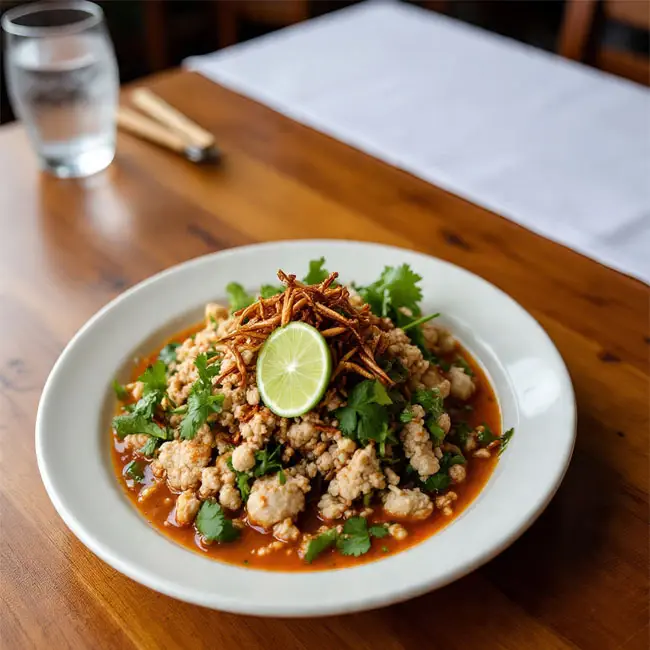
🔹 Recipe 1: Larb (Laap) – The Zesty National Dish
About This Recipe: The Essence of Lao Flavor
If you ask any Laotian what their national dish is, they will instantly say Larb (also spelled laap or lap). This isn’t just a dish; it’s a culinary icon, celebrated for its brilliant, zesty, herbaceous punch. Larb is essentially a minced meat salad, but don't let the word "salad" fool you—it's a vibrant, hearty main course.
It can be made with nearly any type of meat: chicken, pork, beef, duck, or fish. The true magic, however, lies in the intense seasoning. It brings together the perfect storm of fresh lime juice, umami-rich fish sauce, fiery chili flakes, a mountain of fresh herbs (mint, cilantro, green onion), and the absolute, non-negotiable secret ingredient: toasted, ground sticky rice powder (khao khua). This rice powder gives the Larb its distinctive, wonderful nutty aroma, a slightly chewy texture, and an earthy depth that grounds the entire dish.
Larb is traditionally eaten communally, scooped up with balls of sticky rice, and accompanied by a side platter of raw, fresh vegetables like cabbage, long beans, and lettuce leaves.
Ingredients & Measurements
- 500g ground chicken, pork, or beef (your choice—pork or duck are traditional favorites)
- 3 tbsp uncooked sticky rice (to be toasted and ground)
- 3 tbsp fish sauce (high quality is worth it!)
- 2–3 tbsp lime juice (freshly squeezed—start with two and add more to taste)
- 1–2 tbsp dried chili flakes (adjust to your preferred spice level)
- 4–5 shallots, thinly sliced
- 2 stalks green onion, chopped
- 1 large handful fresh mint leaves (crucial for flavor)
- 1 large handful cilantro leaves, chopped
- Optional additions: ½ cup thinly sliced tripe (if using beef) or a pinch of sugar to balance the lime.
Step-by-Step Instructions
1.Make the Toasted Rice Powder (Khao Khua): In a dry, clean pan, toast the 3 tbsp of uncooked sticky rice over medium heat. Stir constantly until the grains are a beautiful, light golden brown and smell intensely nutty (about 5–8 minutes). Immediately remove and let cool. Grind the toasted rice in a mortar and pestle, spice grinder, or clean coffee grinder until it is a coarse, slightly grainy powder (not fine like flour). Set aside.
2.Cook the Meat: In a skillet or wok, dry-fry the minced meat until it is just fully cooked. If you are using pork or beef, cook it until it's just lost its pink color. Avoid using oil. Drain any excess liquid or fat that pools in the pan.
3.Mix the Flavors: While the meat is still warm in the bowl, immediately add the fish sauce, lime juice, chili flakes, and sliced shallots. Stir everything well to combine. The warmth helps the meat absorb the seasonings.
4.Add Herbs and Rice Powder: Now, gently toss in the fresh herbs (mint, cilantro, green onion) and the toasted rice powder. Mix gently—you want the herbs to be wilted slightly by the meat's residual heat but still vibrant.
5.Taste and Adjust: This is the most important step in Lao cooking. Taste the Larb. Does it need more sourness? Add more lime. More saltiness/umami? Add more fish sauce. More texture and nuttiness? Add more khao khua.
6.Serve: Transfer the Larb to a serving platter. Pair it traditionally with a basket of sticky rice (khao niao) and a platter of fresh, crisp raw vegetables like long beans, cucumbers, and lettuce or cabbage for wrapping.
Pro Tips & Mistakes to Avoid
- The Khao Khua Rule: Never, ever skip the toasted rice powder. It is the signature flavor of Larb and Northeastern Thai/Lao cuisine. The smell alone transports you!
- Freshness Over Everything: Always use freshly squeezed lime juice. Bottled juice will give the dish a flat, inauthentic flavor.
- Don't Overcook: Larb is supposed to be juicy. Overcooking the meat until it's dry will make the final product tough and less appealing. Cook it just until it’s done, then immediately season.
- Herbs Last: Add the herbs right before serving so they don't wilt completely and lose their color and potent freshness.
FAQ: Your Larb Questions Answered
Q: Can I use pre-ground rice flour?
A: No. Sticky rice (khao niao) is essential, and it must be toasted whole first. Pre-ground flours do not have the same texture or the critical nutty, toasted aroma.
Q: Can I make Larb without cooking the meat?
A: Historically, some Lao recipes use raw meat, particularly beef. However, for safety and for most home cooks, it is highly recommended to use cooked meat. The authentic flavor comes from the seasoning, not the raw state.
Q: What vegetables are best for serving with Larb?
A: Simple, crisp vegetables are best: whole cabbage leaves, sliced cucumber, long beans, mint sprigs, and sometimes green lettuce. They provide a cool, crunchy contrast to the bold flavor of the Larb.
Summary of Larb
Larb is a dish of dynamic contrasts: the warm, cooked meat against the cool, fresh herbs; the zesty lime against the earthy rice powder; the chili heat against the crisp, cooling vegetables. It’s a bright, bold, and zesty masterpiece that perfectly represents the flavor-forward heart of Lao cuisine.
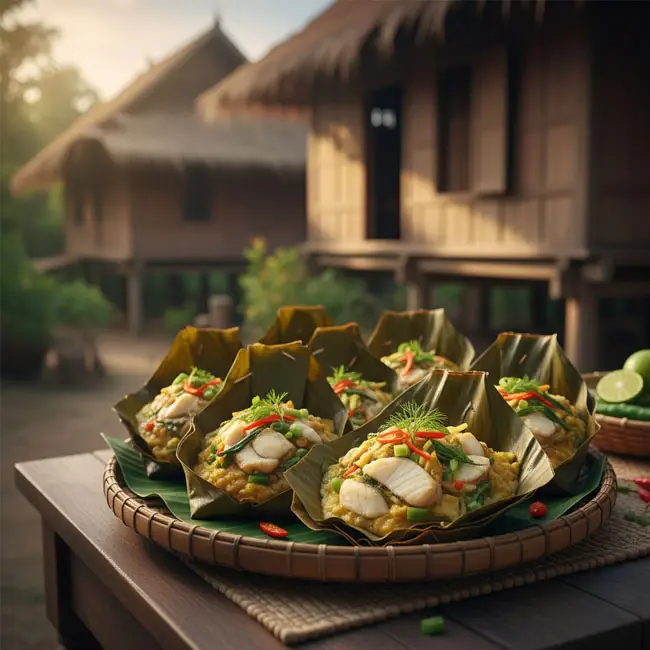
🔹 Recipe 2: Mok Pa – Steamed Fish in Banana Leaf
About This Recipe: Fragrance, Steam, and Tradition
If you want a dish that captures the authentic, jungle-fresh, herbaceous essence of Laos, you need to make Mok Pa. This dish is a beautiful culinary art form: white fish (often river fish like tilapia, or any firm white fish like cod or snapper) is marinated in a rich, potent curry paste, mixed with coconut milk and herbs, and then lovingly steamed inside a packet of banana leaves.
The method of steaming the fish in the banana leaf (mok means 'to steam' or 'to wrap') is what makes this dish truly special. The leaves act as a natural, non-stick cooking vessel that seals in all the moisture and infuses the fish with a delicate, grassy, smoky fragrance as it cooks. The resulting fish is incredibly tender, flaky, and unbelievably aromatic—a direct contrast to the deep-fried and grilled dishes that dominate street food. The texture is soft, slightly gelatinous from the coconut milk and curry, and bursts with the flavor of dill and kaffir lime.
Ingredients & Measurements
For the Fish & Marinade:
- 500g firm white fish fillets (e.g., cod, snapper, tilapia), cut into 1-inch chunks
- ½ cup full-fat coconut milk
- 1 tbsp fish sauce
- 1 tsp sugar
- 1 egg (to help bind the paste)
- Banana leaves (for wrapping, cut into 1-foot squares; foil can be substituted in a pinch, but the flavor won’t be the same)
- Toothpicks or kitchen string (to seal the packets)
For the Red Curry Paste (Krueung):
- 5–6 dried red chilies (soaked in water until soft)
- 1 stalk lemongrass, chopped finely
- 3-inch piece of galangal, chopped
- 3–4 cloves garlic
- 2 tbsp chopped shallots
- 1 tsp turmeric powder (for color)
- 1 tsp salt
For the Fresh Herbs (Crucial for Mok Pa):
- 1 cup fresh dill, roughly chopped (a generous amount is traditional!)
- 5 kaffir lime leaves, thinly sliced
- ½ cup chopped green onions
Step-by-Step Instructions
1.Prep the Paste (Krueung): Using a food processor or a mortar and pestle, blend or pound all the red curry paste ingredients (chilies, lemongrass, galangal, garlic, shallots, turmeric, salt) until you have a smooth, fragrant paste.
2.Mix the Marinade: In a large bowl, combine the homemade paste with the fish chunks, coconut milk, fish sauce, sugar, and the egg. Mix until the fish is evenly coated in the rich, yellow-orange marinade.
3.Fold in the Herbs: Gently fold in the copious amounts of fresh herbs: the dill, sliced kaffir lime leaves, and green onions. Try not to break up the fish chunks too much.
4.Prep the Banana Leaves: If your banana leaves are stiff, quickly pass them over a hot stove burner for a few seconds. This makes them pliable and prevents tearing. Lay two squares of banana leaf on top of each other (for strength).
5.Wrap the Fish: Spoon a generous amount of the fish mixture into the center of the doubled banana leaves. Bring the four corners of the leaves up to meet in the middle and secure the packet tightly with a toothpick or kitchen string. Repeat until all the fish is wrapped.
6.Steam: Place the banana leaf packets into a steamer basket (bamboo or metal). Steam vigorously over boiling water for 20–25 minutes, until the fish is flaky and cooked through.
7.Serve: Serve the Mok Pa packets hot, right in the banana leaf. The fish will be incredibly moist, and the aroma upon opening the packet is intoxicating! Pair with sticky rice.
Pro Tips & Mistakes to Avoid
- Dill is the Hero: Do not skimp on the dill. In many Southeast Asian cuisines, dill is considered a key savory herb, and it provides the signature freshness and slightly anise-like flavor that defines Mok Pa.
- Pliability of the Leaves: Always wilt the banana leaves over heat (or even microwave them briefly) before wrapping. This makes them soft and easy to fold without splitting.
- The Egg: Adding a small egg to the marinade helps to bind the coconut milk and paste, preventing it from separating during steaming and giving the final product a wonderfully custardy texture.
- High-Quality Fish Sauce: Since there are minimal seasonings, the quality of your fish sauce (look for one with a high concentration of anchovy extract) really makes a difference.
FAQ: Your Mok Pa Questions Answered
Q: Can I bake or grill Mok Pa instead of steaming?
A: Yes! Steaming is traditional and yields the tenderest result. However, you can bake it at 375°F (190°C) for about 20 minutes, or even grill it over indirect heat until cooked through. The grilling/baking method gives it a lovely char and smoky flavor.
Q: I can't find banana leaves. What should I use?
A: The best substitute is aluminum foil, but line it with a piece of parchment paper first. The banana leaves impart a key flavor and fragrance, but the foil and paper will achieve the same steamed, moist texture.
Q: Is the chili paste supposed to be very spicy?
A: Mok Pa is meant to have a warming, fragrant heat. You can adjust the number of dried red chilies in the paste to suit your preference. Remember, the dill and coconut milk will temper the heat.
Summary of Mok Pa
Mok Pa is a celebration of flavor and aroma. It shows how simple, traditional techniques (like steaming in leaves) can result in a dish that is deeply complex, incredibly fresh, and profoundly satisfying. It's the perfect centerpiece for a home-cooked Lao meal.
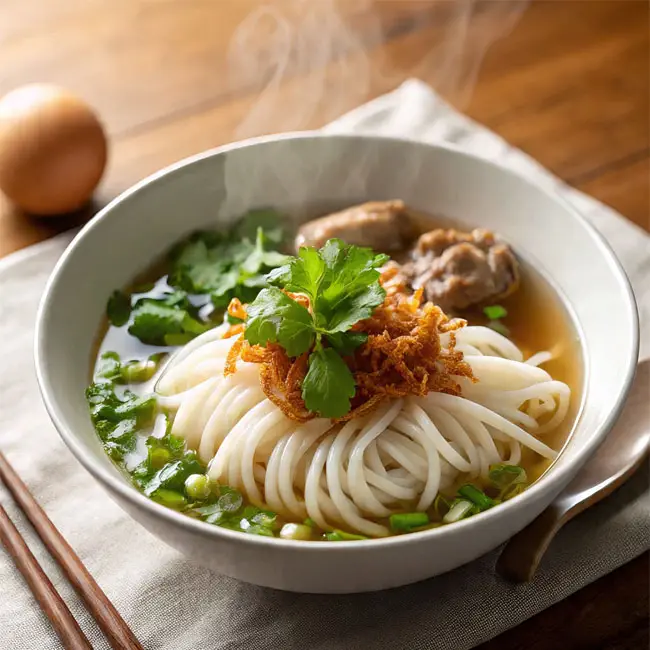
🔹 Recipe 3: Khao Piak Sen – Lao Comfort Noodle Soup
About This Recipe: A Hug in a Bowl
Khao Piak Sen is Laos' answer to the world's best comfort food. It translates simply to "wet rice strands" or "rice noodle soup," but it’s so much more. This is the ultimate, warming, soul-satisfying meal, traditionally eaten for breakfast, lunch, or whenever one needs a culinary hug.
What makes Khao Piak Sen unique is the noodles themselves and the broth's texture. The noodles are often made from scratch using a blend of rice flour and tapioca starch, which gives them a delightful, homemade chewiness. But the true magic happens when these fresh noodles are boiled in the chicken broth: the starch releases and naturally thickens the soup to a velvety, luxurious consistency—a beautiful, comforting change from clear-broth soups.
The broth itself is simple, savory, and deeply flavorful, made from simmering chicken (often on the bone) and seasoned with fish sauce and white pepper. It’s served piping hot, piled high with shredded chicken, a handful of fresh herbs, and a mandatory shower of crunchy fried garlic.
Ingredients & Measurements
For the Noodles (Sen):
- 2 cups rice flour
- 1 cup tapioca starch (essential for the chewiness!)
- 1 cup warm water (or slightly more, if needed)
For the Soup & Chicken:
- 500g chicken (a mix of bone-in pieces, like thighs, for flavor)
- 6–8 cups water
- 3 cloves garlic, minced
- 1 onion, halved
- 2 tbsp fish sauce
- 1 tbsp soy sauce
- 1 tsp white pepper
- Garnishes: Cilantro, chopped green onions, lime wedges, chili oil, and especially, fried garlic (store-bought or homemade).
Step-by-Step Instructions
1.Make the Noodles: In a large bowl, mix the rice flour and tapioca starch. Gradually add the warm water and mix until a shaggy dough forms. Knead the dough gently for 5–10 minutes until smooth and firm. Roll the dough out thinly and then slice it into thick, long strands—these are your sen. Dust generously with rice flour to prevent sticking.
2.Cook the Broth: In a large pot, combine the chicken, onion, garlic, and water. Bring to a boil, then immediately reduce heat and simmer gently for 45–60 minutes. Skim any foam that rises to the top to keep the broth clear.
3.Prep the Chicken: Remove the chicken pieces from the pot. Once cool enough to handle, remove the meat from the bones and shred it. Return the shredded meat to the pot. Discard the bones and onion halves.
4.Season the Broth: Add the fish sauce, soy sauce, and white pepper to the simmering broth. Taste and adjust until it’s perfectly savory and peppery.
5.Cook the Noodles (The Thickening Step): Bring the broth to a rolling boil. Drop the fresh noodles into the boiling broth. As they cook, the tapioca starch will release and start to naturally thicken the broth to a luscious consistency. Cook the noodles for about 3–5 minutes, or until they are tender yet chewy.
6.Serve: Ladle the thick soup and noodles into individual bowls. Top generously with the fresh cilantro, green onions, a drizzle of chili oil, a squeeze of fresh lime juice, and, most importantly, a spoonful of fried garlic (with a little of the oil). Serve immediately.
Pro Tips & Mistakes to Avoid
- Noodle Texture is Key: Don't skip the tapioca starch! It’s the ingredient that gives the noodles that wonderful chewiness (chewy is highly prized in Lao cuisine) and provides the thickening power for the soup.
- Gentle Simmer: Always keep the broth at a gentle simmer, not a rolling boil, to ensure it stays clear and the chicken remains tender.
- Fried Garlic: This is a non-negotiable garnish. The crunch and intense garlic flavor is the final, essential element that cuts through the rich broth.
- Serve Fast: Khao Piak Sen is best served right out of the pot. The noodles will continue to absorb the liquid and thicken/become gummy if left sitting out for too long.
FAQ: Your Khao Piak Sen Questions Answered
Q: Can I use dried rice noodles instead of making them fresh?
A: You can, but it won't be as authentic. If you must substitute, use fresh, thick rice noodles or Japanese Udon noodles (which have a similar chewiness). The key is the starch from the fresh noodles that thickens the soup, so the broth may need cornstarch or tapioca slurry to thicken if you use store-bought dried noodles.
Q: What is the purpose of white pepper?
A: White pepper has a earthier, less harsh, and more fragrant heat than black pepper, making it the preferred spice for many Southeast Asian broths. Don't substitute with black pepper if you want the authentic taste!
Q: Can I make this soup with beef?
A: Absolutely! Follow the same process but use beef bones and chunks of beef shank for the broth, and adjust the seasoning to your liking.
Summary of Khao Piak Sen
Khao Piak Sen is warm, nourishing, savory, and feels like a hug in a bowl. It’s a wonderful example of how simple ingredients, combined with traditional techniques (like making fresh noodles that thicken the broth), can create one of the most comforting dishes in the world.
Final Thoughts: Welcome to the Flavors of Laos
Laos may be a small, landlocked country, but its cuisine is anything but confined. It’s vibrant, fresh, and unapologetically bold, relying on the flavors of the forest and river.
From the intense, zesty kick of Larb, to the unbelievably fragrant, delicate steam of Mok Pa, and the comforting, velvety embrace of Khao Piak Sen, these three main dishes offer you a true, authentic glimpse into Lao food culture.
Cooking these recipes at home might feel like an adventure, especially with ingredients like dill in a savory stew or the crucial toasted rice powder. But I encourage you to take the plunge. Start with one dish, get comfortable with the balance of flavors, and then try the next. These dishes are surprisingly approachable, deeply rewarding, and built on simple, honest techniques.
I challenge you to gather your friends, cook up one of these masterpieces, grab a basket of sticky rice, and eat like a local.
Who knows—you might just find your new favorite comfort food, and you'll certainly fall in love with Laos through its truly unique and delicious food.
Which of these three incredible Lao main dishes—the zesty Larb, the fragrant Mok Pa, or the comforting Khao Piak Sen—will you be cooking for dinner tonight?
| 🇱🇦 🍝 < Back |