
🏠 Home > 🗺️ Recipes > 👑🥪 Royal Starters (Appetizers) > 🇱🇦 Laos Royal Starters (Appetizers) Recipes
🇱🇦 👑🥪 Laos Royal Starters (Appetizers) Recipes
Published by Supakorn | Updated: July 2026
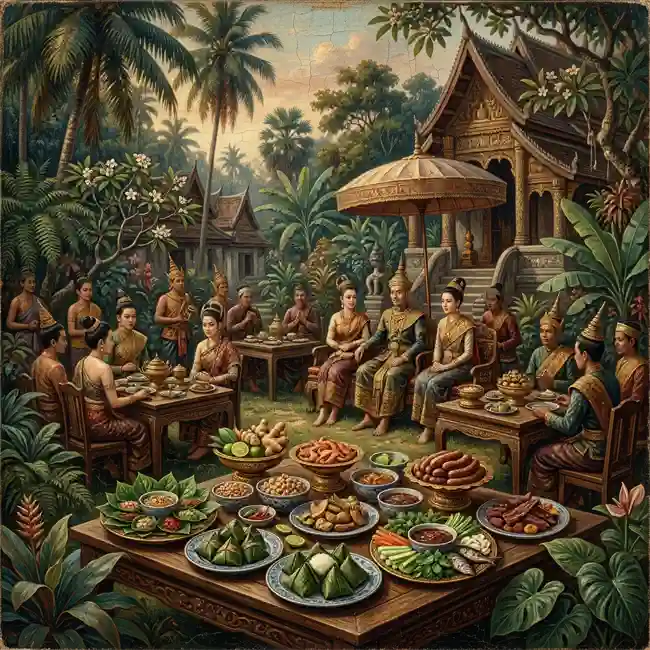
🇱🇦 📜 The Storyteller’s Intro: Whispered Secrets from Laos’ Noble Tables
When people think about Laos, they often imagine peaceful Buddhist temples, the slow rhythm of the Mekong River, and fragrant sticky rice served beside grilled dishes. Yet hidden behind these familiar images lies another fascinating story—one that belongs to noble households, palace attendants, and aristocratic kitchens whose culinary traditions quietly evolved over centuries.
This is the unofficial chronicle of culinary treasures that emerged across approximately 200 to nearly 1,000 years of Lao history. Although Laos does not possess the same continuous royal culinary documentation found in some larger Asian empires, it developed an elegant aristocratic food culture shaped by regional kingdoms, noble families, religious centers, and ceremonial traditions.
The evolution of Laos' aristocratic appetizer culture can generally be viewed through several historical periods:
👑 Early Kingdom Foundations
During the earliest regional kingdoms, food preparation was closely connected with nature. River fish, wild herbs, aromatic leaves, mushrooms, and seasonal vegetables formed the foundation of refined dining.
Simple ingredients became extraordinary through careful preparation and presentation. Noble households prized freshness, balance, and the symbolic meaning of ingredients.
👑 The Lan Xang Era
The Kingdom of Lan Xang, often known as the "Land of a Million Elephants," became one of the defining periods of Lao cultural identity.
Palace kitchens and aristocratic residences developed sophisticated starter dishes designed to awaken the appetite before ceremonial meals. These appetizers often showcased:
• Finely chopped herbs
• Delicately grilled meats
• Fragrant vegetable bundles
• Intricate rice preparations
• Handcrafted dipping accompaniments
Many dishes were known only among palace cooks and respected families.
👑 Religious and Courtly Influence
Buddhist traditions also shaped aristocratic eating habits.
Meals were approached with appreciation and mindfulness. Appetizers were usually served in modest portions designed to stimulate conversation rather than encourage excess.
Food was often arranged beautifully:
• Banana leaf presentations
• Carved vegetables
• Seasonal flowers
• Carefully selected serving trays
For Lao nobility, dining represented harmony between nature, community, and spiritual values.
👑 The Noble Household Tradition
Even after political transitions altered royal structures, many aristocratic culinary practices survived within old families.
Recipes continued to pass from one generation to another through memory rather than written cookbooks.
Some dishes became famous locally, while others remained hidden secrets served only during:
• New Year celebrations
• Family ceremonies
• Religious festivals
• Historic commemorations
• Gatherings of respected community elders
These forgotten appetizers form a remarkable culinary heritage that still sparks curiosity among food historians and travelers today.
🗺️ The Royal Culinary Tourism: Mapping Flavors to Historic Landscapes
Exploring Laos through food is like opening a collection of living historical manuscripts.
Each region carries stories preserved through ingredients, preparation techniques, and local customs. Travelers searching for aristocratic culinary experiences often discover that appetizers reveal more about Lao history than grand banquets.
Historic culinary destinations offer opportunities to imagine how noble families once gathered and dined.
🏯 Luang Prabang
Perhaps nowhere reflects Laos' aristocratic culinary heritage more beautifully than Luang Prabang.
Ancient temples, traditional wooden architecture, and quiet streets create an atmosphere that feels timeless.
This historic city preserves numerous culinary traditions associated with old noble households.
Visitors may encounter heritage-inspired appetizers featuring:
• Fragrant local herbs
• River ingredients
• Seasonal vegetables
• Carefully grilled proteins
• Sticky rice presentations
Every market and alleyway seems to tell another chapter of Lao culinary history.
🌿 Vientiane
The capital city developed its own refined food traditions.
Aristocratic households in Vientiane often incorporated influences from neighboring regions while preserving uniquely Lao ingredients and presentations.
Appetizers became opportunities to showcase:
• Hospitality
• Regional pride
• Seasonal abundance
• Family prestige
Many traditional foods served today still carry echoes of these historic dining customs.
🏛️ Ancient Temple Communities
Temple communities throughout Laos played important roles in preserving food traditions.
Ceremonial dishes prepared for festivals often inspired aristocratic appetizers.
Travelers exploring historic temple towns frequently discover foods that blur the line between sacred offerings and noble cuisine.
This connection between spirituality and food remains one of Laos' most fascinating cultural treasures.
🚣 Cradle of Royal Delicacies - The Mekong River Heritage
The Mekong River is more than a waterway.
It is one of the great culinary lifelines of Southeast Asia.
For centuries, noble households depended on the river for ingredients that shaped their appetizer traditions.
The river supplied:
• Freshwater fish
• Edible river plants
• Seasonal greens
• Aromatic herbs
• Valuable trade ingredients
Settlements along the Mekong became centers of culinary creativity.
🛶 River Markets and Aristocratic Tables
Historic river markets allowed noble kitchens access to ingredients from distant regions.
Palace cooks and household chefs could obtain rare herbs, spices, vegetables, and seasonal delicacies.
Many secret appetizers likely emerged from this exchange of ingredients and ideas.
🏞️ Culinary Travel Along the Mekong
Travelers following the Mekong today can still discover communities where traditional food preparation survives.
Historic temples, riverside villages, and local markets create opportunities to understand the origins of aristocratic dining traditions.
The river itself becomes a culinary museum stretching across landscapes that have inspired generations of cooks.
🌾 Sticky Rice and River Culture
No discussion of Lao food heritage would be complete without sticky rice.
For noble families, sticky rice represented abundance and cultural identity.
Many appetizers were designed to complement rice-based dining traditions.
The relationship between appetizers and sticky rice demonstrates how deeply food is woven into Lao social and historical life.
⛰️ Kingdom of Wild Aromatics & Heritage - Mountains, Forests, and Hidden Ingredients
Beyond the river valleys lies another side of Laos.
Mountain ranges and forested landscapes have long supplied ingredients that made aristocratic appetizers distinctive and memorable.
🌿 The World of Wild Aromatics
Mountain communities contributed ingredients celebrated for their fragrance and freshness.
These included:
• Wild herbs
• Forest leaves
• Native vegetables
• Aromatic roots
• Seasonal mushrooms
Noble kitchens appreciated these ingredients because they introduced complexity without overwhelming natural flavors.
🏔️ Heritage Mountain Communities
Many old communities located among the mountains preserved culinary techniques that changed very little over time.
Methods often emphasized:
• Gentle grilling
• Fresh herb combinations
• Slow preparation
• Seasonal ingredient selection
• Handcrafted presentation
These practices strongly influenced aristocratic dining traditions.
🌳 Forest Ingredients and Culinary Prestige
Rare ingredients from remote forests occasionally became symbols of prestige.
Possessing access to unusual herbs or seasonal ingredients reflected social connections and culinary knowledge.
Some appetizers gained reputations precisely because their ingredients could only be gathered during certain times of the year.
🚶 Historical Culinary Tourism
Traveling through northern Laos today offers opportunities to encounter landscapes that shaped these forgotten culinary traditions.
Ancient temples, mountain villages, traditional markets, and forest paths all contribute to understanding the origins of Lao aristocratic gastronomy.
The scenery itself helps explain why Lao appetizers often emphasize freshness, fragrance, and harmony with nature.
🤴 Royal FAQ: Unlocking Palace Kitchen Mysteries
Q1.Why are Lao aristocratic appetizers considered unique?
They emphasize natural ingredients, fragrant herbs, mindful presentation, and a remarkable balance between simplicity and refinement.
Q2.Were these appetizers reserved exclusively for royalty?
Not entirely. Many dishes were also enjoyed by noble families, respected community leaders, and ceremonial households connected to historical courts.
Q3.Why do so many recipes remain mysterious today?
Many recipes were transmitted orally within families and communities rather than recorded in formal cookbooks, allowing numerous culinary secrets to remain hidden.
Q4.Why are travelers increasingly interested in Lao culinary heritage?
Because Lao food culture offers authentic connections between history, landscapes, spirituality, and living traditions that remain remarkably preserved.
🧠 Final Thoughts: The Timeless Allure of Aristocratic Gastronomy
The story of Laos' aristocratic starters and appetizers is ultimately a story about memory.
These dishes are more than food.
They are fragments of history carried through generations of cooks, families, temple communities, and local traditions.
Across approximately two centuries to nearly a millennium of cultural development, Lao appetizer traditions have reflected the landscapes that created them:
• The life-giving Mekong River
• Ancient royal cities
• Sacred temple communities
• Forested mountains
• Seasonal harvests
• Enduring family traditions
Each forgotten appetizer invites us to imagine conversations held inside noble residences, celebrations shared beside riverbanks, and meals carefully prepared in kitchens where culinary knowledge was treasured.
For curious food travelers and history enthusiasts, this culinary heritage offers countless stories waiting to be rediscovered.
And perhaps the most exciting part is that many individual dishes still remain hidden, quietly preserved within communities and family memories, waiting for future explorations that will reveal their remarkable stories one recipe at a time.
👑 Credit to the Keepers of the Culture (The Legacy)
With great respect, this exploration honors the generations of Lao people who have preserved their culinary heritage through memory, family traditions, and community celebrations.
The aristocratic appetizer traditions of Laos belong not to a single palace or dynasty but to an entire cultural landscape shaped by rivers, mountains, temples, and people.
Their knowledge reminds the world that culinary heritage is a living treasure.
Every herb gathered from the forest, every carefully arranged appetizer, and every family story passed from one generation to another contributes to an extraordinary legacy that deserves appreciation and preservation.
The forgotten starters of Laos are not merely relics of the past.
They are enduring symbols of cultural identity, hospitality, craftsmanship, and the timeless beauty of Lao aristocratic gastronomy.
👑🥪 Rediscovering the Hidden Treasures of Ancient Lao Palace Appetizers
👉 Explore Rare Lao Royal Starters
| 🌐 👑🥪 < Back | Next > 🍝👑 🇱🇦 |