
🏠 Home > 🗺️ Recipes > 🥘 Sauces > 🇱🇦 Laos Sauces
🇱🇦 🥘 Laos Sauces Recipes
Published by Supakorn | Updated: February 2026
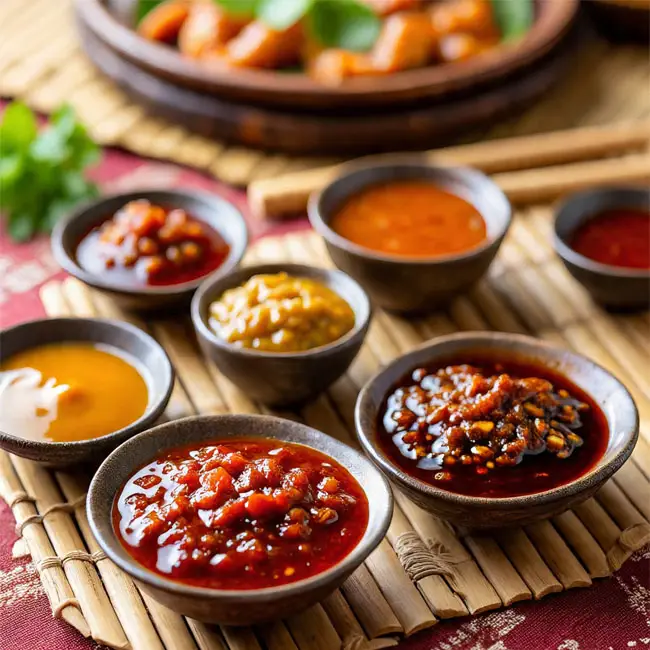
💥 Bold Flavors of Lao Sauces
In Lao cuisine, sauces are more than condiments — they are essential elements that bring balance and depth to every meal. Known locally as “Jeow”, these dips and sauces highlight the country’s love for bold, earthy, and spicy flavors. Made with chilies, garlic, fermented fish, roasted eggplants, and herbs, Lao sauces add a punch that transforms simple sticky rice or grilled meats into unforgettable dishes. Each region in Laos has its own variations, but all share the same philosophy: food should be lively, aromatic, and deeply satisfying. From mild to fiery, Lao sauces reflect both creativity and tradition in every bite.
🧂 Padaek: The Cornerstone of Lao Umami
If Lao food has a secret ingredient, it is undoubtedly Padaek (Fermented Fish Sauce). This thick, intensely flavored, and pungent condiment is fundamentally different from the clear Nam Pla (fish sauce) used elsewhere. Padaek is the source of the unique, earthy, and deeply savory umami flavor that defines Lao cuisine.
Padaek is used in two main ways: as a seasoning added directly to salads (Larb), soups, and stews; and as the flavor base for many dipping sauces (Jeow). The fermentation process yields complex amino acids, giving the food a rustic depth that cannot be replicated. Without Padaek, a Lao meal simply lacks its authentic soul and flavor complexity.
🌶️ Jeow: The Art of the Dip
The term Jeow refers to any Lao chili dip or condiment. These are not thin, pouring sauces, but usually thick, chunky, or paste-like mixtures designed specifically for scooping up with balls of sticky rice (Khao Niao) or dipping raw and steamed vegetables (Phak).
Every Lao household and region boasts its own Jeow variations, reflecting what ingredients are available seasonally or locally. What unites all Jeow is the technique: roasting/grilling the ingredients first, followed by pounding them into a paste using a mortar and pestle (Krok). This process imparts a signature smoky flavor and a rustic, textured mouthfeel that is essential to the Lao dining experience. Jeow are the flavor accelerators of the Lao table.
🌿 Freshness and Earthiness: A Flavor Contrast
Lao sauces are typically intense, but they are designed to be eaten with contrasting ingredients—namely, bland sticky rice and raw, cooling vegetables. This contrast is key to the enjoyment of Lao food.
The intense heat and saltiness of the Jeow is absorbed and mellowed by the Khao Niao. The bold, savory flavor is balanced by the fresh, clean crunch of the accompanying cucumber, cabbage, or fresh herbs. This interaction prevents the sauces from being overwhelming, making them highly addictive and central to the overall flavor harmony of the meal.
⭐️ Popular Lao Sauces to Try
🍯 Jeow Bong (Chili Paste Dip)
A signature Lao sauce made with roasted chilies, garlic, shallots, and buffalo skin (or pork/beef rind). It’s smoky, spicy, and pairs perfectly with sticky rice.
Jeow Bong is perhaps the most internationally recognized Lao dip, particularly associated with the former royal capital, Luang Prabang. Its defining characteristic is its unique balance of sweetness, smokiness, and heat. The chilies are dried and roasted until they are deeply smoky, then pounded with garlic, shallots, and a generous amount of sweetener (often palm sugar or honey) and seasonings. The addition of crisped buffalo skin or pork rind gives it a signature chewy texture. Jeow Bong is typically dry enough to be sold in small jars, making it a favorite souvenir or portable snack companion.
🐟 Padaek Sauce (Fermented Fish Sauce)
Strong and pungent, Padaek is a cornerstone of Lao cooking. Used as a dip or seasoning, it brings rich umami to countless dishes.
While Padaek is an ingredient, it is also frequently served as a simple dip itself, sometimes mixed lightly with chilies and lime to enhance its savory depth. It is not just salty; it provides a deep, earthy, and savory funk that elevates any dish. Diners often dip sticky rice directly into plain or lightly seasoned Padaek to enjoy its powerful umami kick alongside simple grilled meats. It is an indispensable part of the culture.
🍅 Jeow Mak Len (Tomato Chili Dip)
A simpler, lighter sauce made with roasted tomatoes, chilies, and garlic. Tangy and mildly spicy, it’s often served with fresh vegetables.
Jeow Mak Len (Tomato Dip) offers a refreshing acidity that contrasts with the heavier, fermented flavors of Padaek or Jeow Bong. The ingredients (tomatoes, chilies, and garlic) are grilled or roasted until they are softened and slightly charred, then pounded with fresh coriander and salt. The roasting process removes the raw flavor, allowing the smoky, sweet-tartness of the tomatoes to dominate. This Jeow is perfect for vegetarians and those who prefer a less intense, brighter dipping experience.
🔪 The Art of Making Authentic Jeow
🔥 The Roasting Process: Building Smoky Layers
The technique of roasting the core aromatics is vital to authentic Lao sauce making. This is usually done directly over charcoal, or sometimes a dry wok, until the chilies, garlic, shallots, and tomatoes are softened and slightly blackened.
• Chilies: Roasting dried chilies releases their oils, creating a smoky heat that is more complex than the sharp heat of raw chilies.
• Aromatics: Roasting garlic and shallots brings out their inherent sweetness, mellowing their sharpness and contributing a depth of flavor to the Jeow.
Skipping the roasting step results in a Jeow that tastes raw and unbalanced. The smoke and char are the foundational flavor layers.
🔨 Pounding, Not Blending: The Mortar’s Role
The mortar and pestle (Krok) is essential for making Jeow. While a food processor can blend the ingredients, it cannot replicate the texture achieved by pounding.
Pounding the ingredients coarsely bruises the cell walls of the herbs, chilies, and aromatics, releasing essential oils and moisture that allow the flavors to combine deeply. It also ensures the Jeow remains chunky and rustic, with small pieces of roasted chili and garlic intact. This texture is necessary for the dip to cling perfectly to a ball of sticky rice.
🧪 Balancing the Five Tastes
Lao sauces adhere strictly to the principle of balancing the key flavors:
• Salty/Umami: Provided by Padaek or fish sauce.
• Sour: Provided by fresh lime juice or tamarind paste.
• Spicy: Provided by fresh or roasted chilies.
• Sweet: Provided by palm sugar or honey (especially in Jeow Bong).
• Earthy/Aromatic: Provided by roasted shallots/garlic and fresh herbs.
A good Lao sauce should hit most of these notes in a single spoonful, ensuring a dynamic and lively taste.
🌶️ More Lao Dips and Sauces
🍆 Jeow MaK Kheua (Eggplant Dip)
Jeow Mak Kheua is another popular roasted vegetable dip. Small Asian eggplants are typically roasted over charcoal until their skin is completely blackened and the flesh inside is smoky and soft.
The pulp is then scooped out and pounded with chili, garlic, lime juice, and fish sauce (Padaek is often used here). The texture is creamy and smooth, and the flavor is intensely smoky and savory. It's often served warm and is a fantastic way to consume sticky rice and fresh vegetables.
🍄 Jeow Hed (Mushroom Dip)
Jeow Hed highlights the use of seasonal forest ingredients, particularly wild mushrooms. The mushrooms (often grilled or steamed) are pounded with roasted chilies, garlic, and Padaek.
This dip is deeply savory and earthy, reflecting the flavors of the Lao countryside. It is particularly popular during the rainy season when mushrooms are abundant, serving as a vegetarian-friendly option that still provides a powerful umami punch.
🥩 Nam Jeow (Thick Dipping Sauce for Grilled Meats)
While Jeow refers to chili pastes, Nam Jeow (or Nam Chim) is the term for dipping sauces, often thinner and served with grilled dishes like Ping Kai (grilled chicken) or fried spring rolls.
These sauces typically contain a base of water/stock, balanced with fish sauce, sugar, lime juice, and frequently, tamarind paste. This gives the sauce a pronounced sweet and sour profile, sometimes thickened slightly with cornstarch or ground rice. A key addition is often ground roasted chilies and the roasted rice powder (Khao Khua), which adds texture and a beautiful nutty aroma to the finished sauce.
🍚 Lao Sauces in the Dining Culture
🥄 Scooping, Not Drizzling
The way Lao sauces are consumed is unique. Since Jeow are pastes, they are not drizzled over the food. Instead, the diner rolls a small ball of sticky rice, uses their thumb to create a small indentation, and then scoops a generous portion of Jeow into the rice ball, effectively turning the rice into a flavor-packed, consumable vessel.
This ensures that every bite contains a perfect ratio of the bland rice, the intensely flavored Jeow, and often, a fresh herb or vegetable wrapper. This technique is a defining aspect of the communal, hand-to-mouth dining ritual.
🧺 The Basket of Jeow: Customization at the Table
In a typical Lao communal meal, there is rarely just one Jeow. A family or gathering will often present two or three different types of Jeow—perhaps a fiery Padaek dip, a sweet and smoky Jeow Bong, and a fresh, tangy Jeow Mak Len.
This variety is crucial as it allows each diner to customize their meal. You might pair the Jeow Bong with grilled pork and the Padaek dip with the steamed vegetables, ensuring the flavors constantly evolve throughout the dining experience. The Jeow platter is the heart of the Lao table, representing the hospitality and flavor choices offered to guests.
☀️ Preservation and Portability
Some Lao sauces, particularly the roasted chili pastes like Jeow Bong or thick, boiled Padaek sauces, were traditionally prepared in large batches. Because they contain high levels of chili and sugar/salt, they act as natural preservatives, making them ideal for storage.
This was vital for travel or for communities reliant on seasonal ingredients. The ability to carry a jar of powerful Jeow Bong meant that even when eating simple boiled sticky rice or plain vegetables, one could always add a dose of complex, authentic flavor.
❓ FAQ
Q1: What makes Lao sauces unique?
A1: Lao sauces rely heavily on roasted ingredients (chilies, garlic, vegetables), fermented fish (Padaek), and fresh herbs, creating earthy, bold, and smoky umami flavors unlike typical thinner or sweeter Asian condiments.
Q2: Are Lao sauces always spicy?
A2: Many are spicy due to the use of chilies, but heat levels can vary greatly. Some dips like Jeow Mak Len are mildly spicy and focus more on tangy notes, while the sweetness in Jeow Bong helps to balance the inherent heat.
Q3: Can Lao sauces be stored for later use?
A3: Yes, some sauces like the dry Jeow Bong (Chili Paste Dip) and thick, boiled Padaek sauces can be kept for weeks or months due to their high salt/sugar and chili content, while fresh herb-based sauces are best eaten immediately for maximum flavor.
🥘 Real Laos Sauces Recipes Loved by Locals
| 🌐 🥘 < Back | 🇱🇦 🍱 < Previous |