
🏠 Home > 🗺️ Recipes > 🍲 Soups > 🇱🇦 Laos Soups
🇱🇦 🍲 Laos Soups Recipes
Published by Supakorn | Updated: February 2026
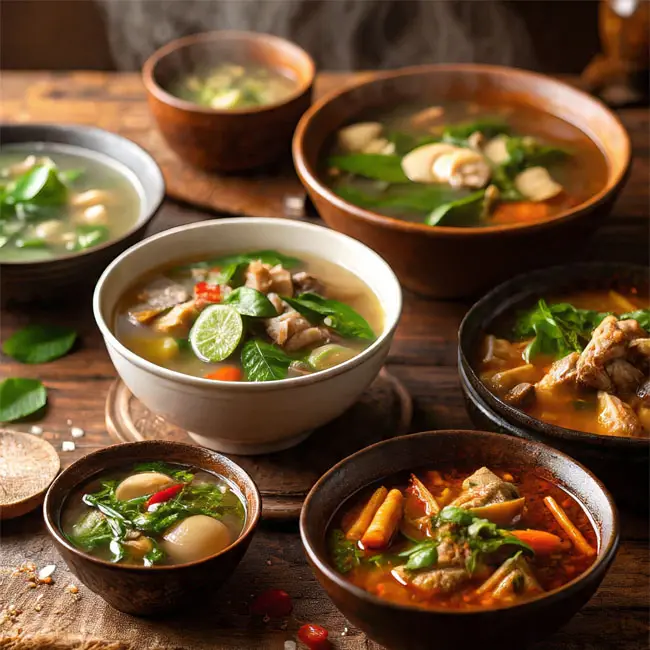
🥣 Heartwarming Soups in Lao Cuisine
Soups hold a special place in Lao cuisine, offering warmth, comfort, and balance to everyday meals. Unlike heavy or creamy varieties, Lao soups are light yet deeply flavorful, often infused with herbs, lemongrass, galangal, and fermented seasonings. These broths are not just side dishes but central to communal dining, pairing perfectly with sticky rice and other main dishes. Whether enjoyed at home or in bustling markets, Lao soups embody simplicity and harmony, reflecting the natural abundance of the land. They highlight a careful balance of sour, spicy, and savory flavors that make every bowl memorable.
🌿 The Power of Fresh Herbs in Lao Broths
The intensity of flavor in Lao soups comes less from slow-simmered bones (though stock is important) and more from a burst of fresh aromatics added during cooking. Lao cooks utilize a trinity of essential herbs: lemongrass, galangal, and kaffir lime leaves. These are often bruised to release their essential oils, lending the soup a bright, citrusy, and deeply fragrant profile.
Beyond this trinity, regional herbs like dill, which is prominent in Northern Lao cuisine, add a uniquely fresh and savory note. The careful layering of these fresh ingredients ensures the broth is never flat or one-dimensional. This herbal infusion provides both flavor and perceived wellness benefits, making Lao soups feel both delicious and restorative.
🍚 The Perfect Complement to Sticky Rice
In Laos, soup is almost always served alongside the sticky rice (Khao Niao) and other main dishes (like Larb or Or Lam). The soups serve a dual purpose: to act as a palate cleanser and a moistener.
The often dense and chewy nature of sticky rice makes the accompanying soup essential. Diners alternate between scooping the intensely flavored main dishes with sticky rice and sipping the light, hot broth. The soup not only balances the dryness of the sticky rice but also provides a comforting liquid element that helps cleanse the mouth of the intense spice and acid from the salads and dips. A Lao meal feels incomplete without a steaming bowl of soup.
🍜 The Communal Bowl: Sharing and Balance
Lao soups are integral to the communal dining culture. A large bowl of soup is placed in the center of the table and shared among all diners. This encourages conversation and offers everyone the chance to tailor their experience.
Typically, the soup arrives at the table seasoned but slightly customizable. Diners add extra components at the table, such as chili oil, fresh chili slices, fermented bamboo shoots, or fresh lime juice. This act of adding personal touches is part of the Lao dining ritual, ensuring that the communal base dish caters to individual preferences for salt, heat, and sourness.
🌶️ Popular Lao Soups to Try
🍜 Khao Poon (Spicy Noodle Soup)
A rich noodle soup featuring rice vermicelli, coconut milk, and chili paste. Fragrant with lemongrass and herbs, it’s both spicy and comforting.
Khao Poon is one of the most popular street food noodle soups in Laos. The rich, slightly thickened broth is the star, usually made with a base of pounded fish or chicken, infused with red curry paste, shallots, garlic, and coconut milk. This gives the soup a beautiful creamy texture and depth of flavor. Served over thin rice vermicelli noodles and topped generously with shredded cabbage, mint, and banana blossoms, Khao Poon is a perfect example of a complete meal in a single bowl—warm, spicy, rich, and fragrant.
🥣 Or Lam (Lao Stew-Soup)
Traditional to Luang Prabang, Or Lam combines vegetables, meat, wood ear mushrooms, and dill in a thick, hearty broth seasoned with chili and pepperwood (Sakaan).
Or Lam is a quintessential Northern Lao dish, often described as a thick stew rather than a watery soup. Its unique flavor comes from the inclusion of Sakaan (a dried spice vine or pepperwood) which imparts a subtly numbing and earthy flavor. The broth is thickened with ground sticky rice or squash and is loaded with indigenous vegetables, eggplant, wood ear mushrooms, and meat (often beef or buffalo). The addition of dill at the end is non-negotiable, giving Or Lam a fresh, savory, and highly distinctive aroma that defines Luang Prabang cuisine. It is a rustic, earthy, and immensely satisfying soup.
🍲 Tom Kha Kai (Herbal Chicken Soup)
A soothing soup made with chicken, galangal, lemongrass, and coconut milk. Lightly spicy and aromatic, it’s perfect for balancing richer dishes.
While Tom Kha is popular regionally, the Lao version emphasizes the intense flavor of the galangal (Kha). The soup features sliced chicken simmered in coconut milk and stock, heavily infused with galangal, lemongrass, and kaffir lime leaves. It is often less sweet than other regional varieties, focusing instead on the complex herbal aroma and the tangy-sour notes of lime juice, along with a mild chili kick. Tom Kha Kai is a comforting, fragrant, and slightly creamy soup that serves as the perfect restorative counterpoint to the bold flavors of the main meal.
🔪 The Art of Lao Soup Making
💥 Roasting and Pounding: Building the Base
The secret to the depth of flavor in many Lao soups and broths is the preparation of the aromatics. Before being added to the pot, core ingredients like shallots, garlic, and chilies are often roasted over charcoal or grilled until they are slightly charred.
This crucial step caramelizes the natural sugars and removes the raw harshness, giving the soup a smoky, mellow, and complex sweetness. The roasted aromatics are then often pounded into a coarse paste before being introduced to the broth, ensuring maximum flavor extraction and integration into the final product.
💧 Broth Simplicity: Light and Fresh
Lao soups generally avoid heavy thickening agents (outside of Or Lam) or rich cream bases. The goal is a clear, light, and intensely flavored broth. The liquid base is usually water or a simple chicken/pork stock, focusing on the flavor infusion from fresh herbs and seasonings rather than fat.
This lightness allows the diner to consume the soup throughout the meal without feeling heavy or full, maintaining the necessary balance required for enjoying the whole communal feast. The freshness is emphasized by adding delicate herbs (like mint or coriander) only right before serving.
🌾 The Noodle Culture: Comfort in a Bowl
Lao people love noodles, and noodle soups often serve as complete, self-contained meals for breakfast or lunch.
• Feu (Lao Pho): A lighter, more herbal take on the regional beef noodle soup, often with a clear, deeply fragrant broth and lots of fresh herbs and sprouts.
• Khao Piak Sen: A thick, chewy rice noodle soup often served in a savory, slightly gelatinous broth with shredded chicken or pork. The texture of the noodles is key, distinguishing it from the thinner Khao Poon noodles.
These noodle soups are often highly customizable, served with a selection of raw vegetables, fermented chili pastes, and seasoning bottles on the side, allowing the diner to season their bowl perfectly.
🍲 Soups in the Lao Daily Life
🏞️ Regional Variety: From Vientiane to Luang Prabang
Lao soups vary significantly based on geography, reflecting the availability of ingredients:
• Northern Laos (Luang Prabang): Soups tend to be heartier, utilizing unique forest ingredients like pepperwood (Sakaan) and relying on less chili heat but more complex herbal depth, exemplified by Or Lam.
• Central Laos (Vientiane): Soups are often lighter and share more similarities with regional noodle soups, such as the clear, fragrant Feu or the coconut-rich Khao Poon.
• Southern Laos: Soups might incorporate more dried seafood or unique jungle vegetables, reflecting the proximity to rivers and the difference in foraging opportunities.
This regional diversity means exploring Lao soups is like taking a culinary tour of the country, with each bowl telling a story about the local landscape.
🌡️ The Comfort of Warmth
In the cooler months or during the rainy season, a hot bowl of soup provides essential warmth and comfort. Furthermore, soup is often considered a tonic for illness or a general malaise. The intense heat of the broth, combined with the immune-boosting properties of ingredients like galangal, lemongrass, and ginger, makes soups like Tom Kha Kai a go-to remedy. This functional role of soup elevates it from mere food to a form of traditional care and wellness.
💰 Affordability and Accessibility
Noodle soups, in particular, are the definition of accessible street food in Laos. They are affordable, quickly prepared, and found on nearly every street corner and market throughout the day. This accessibility means noodle soups like Khao Poon or Feu serve as the daily fuel for everyone, from students to workers, making them a central part of the urban culinary landscape.
🌟 More Essential Lao Soup Varieties
🍄 Tom Yum Hed (Spicy Mushroom Soup)
While Tom Yum is famous regionally, the Lao version, often made with wild mushrooms (Hed) and sometimes fish, is distinct. It features the same bright, intense sour-spicy profile (chili, lemongrass, lime juice) but often avoids the richness of coconut milk. This results in a clear, intensely flavorful, and invigorating soup that is tart, light, and absolutely fiery—perfect for waking up the senses.
🌿 Kaeng Sai (Clear Vegetable Soup)
This is the ultimate home-style Lao soup, embodying simplicity and freshness. Kaeng Sai is a light, clear broth featuring seasonal vegetables (pumpkin, gourds, leafy greens), mushrooms, and sometimes bamboo shoots. It is seasoned simply with fish sauce, a little chili, and often fresh herbs like dill or coriander. It is the gentle, healthy, and highly flexible soup designed to be eaten daily alongside the richer main dishes.
🐟 Tom Pa (Fish Soup)
Given Laos' connection to the Mekong River, fish soups are central to the diet. Tom Pa is a simple, clear broth soup featuring river fish, seasoned heavily with fresh ginger, lemongrass, and dill. The ginger is crucial here, cutting through any strong "fishy" taste and adding a pungent warmth. It's a light, clean, and highly localized soup.
❓ FAQ
Q1: What makes Lao soups unique?
A1: Lao soups use fresh herbs (lemongrass, galangal, kaffir lime), roasted spices, and fermented seasonings (Padaek), creating light but intensely flavorful broths that prioritize herbal complexity over heavy cream or fat.
Q2: Are Lao soups spicy?
A2: Many soups, particularly Khao Poon or Tom Yum, are mildly to moderately spicy, but the heat is always balanced by sour and savory elements. Spice levels can be adjusted at the table with chili pastes.
Q3: Do Lao soups always include meat?
A3: Not always. Simple home-style soups like Kaeng Sai rely solely on vegetables and mushrooms. Traditional recipes are easily adaptable, using tofu, mushrooms, or bamboo shoots in place of meat.
🍲 Authentic Laos Soups Recipes
| 🌐 🍲 < Back | 🇱🇦 🍷 < Previous | Next > 🥗 🇱🇦 |