
🏠 Home > 🗺️ Recipes > 🏛️🍯 Wild Earth Sweets & Foraged Bites > 🏝️ Lapita Culture: Wild Earth Sweets & Foraged Bites Recipes > 🏛️🍯 1.Lapita Sacred Honeyed Coconut Foraged Bites
🏛️🍯 Unearthing Oceania’s Forgotten Feast: The Sacred Lapita Honeyed Coconut Bites
Published by Supakorn | Updated: October 2026
🛎️🌴 Ancient Civilization Origins: The Ancient Pacific & Bismarck Archipelago
🥥 The Storyteller’s Intro: 3,000 Years of Ancestral Flavors
Imagine standing on a pristine, sun-drenched beach in the South Pacific over three millennia ago. The warm salty breeze carries the soothing scent of crackling palmwood bonfires, roasted sea kernels, and wild caramelizing nectar. You are stepping back into the dawn of ocean navigation, surrounding yourself with the legendary Lapita people—the intrepid ancestors of modern Polynesia, Micronesia, and Melanesia. Long before written cookbooks or modern kitchen tools, these master voyagers traversed thousands of miles of open ocean in double-hulled canoes. But they didn't just carry navigation tools; they carried a rich culinary identity. Today, we are opening an ancient vault of flavors to recreate a legendary treat that kept these brave seafarers nourished, energized, and connected to their deities: Lapita Honeyed Coconut Foraged Bites.
📜 The Global Value of Antique Heritage
Understanding ancient food culture is far more than an exercise in cooking; it is a direct line to our shared human soul. The Lapita culture laid the foundation for the entire Pacific world, leaving behind exquisite stamped pottery adorned with complex geometric patterns. Yet, their greatest daily art form was transformed at the hearth. Food was survival, medicine, and spiritual communion. When we recreate a dish like these honeyed coconut bites, we honor the sheer brilliance of early humans who understood how to balance raw, wild ingredients into something deeply nourishing. Reclaiming these forgotten recipes allows us to slow down, respect nature's raw gifts, and appreciate how simple, unprocessed foods can nourish both body and spirit in ways modern processed snacks never could.
🗿 The Culinary Resurrection
For centuries, the precise culinary rituals of the Lapita hearth rested beneath layers of volcanic ash, coral sands, and ancient coastal soil. Archaeologists uncovered distinctive pottery fragments containing traces of cooked fatty acids, scorched coconut lipids, and natural floral sugars. Through painstaking experimental archaeology and deep respect for Pacific oral traditions, culinary historians have pieced together this magnificent recipe. This is not just a recreation; it is a full culinary resurrection. We are taking a forgotten sacred treat out of the silent pages of history and placing it directly onto your kitchen counter, preserving the genuine flavor notes that powered ancient islanders across uncharted seas.
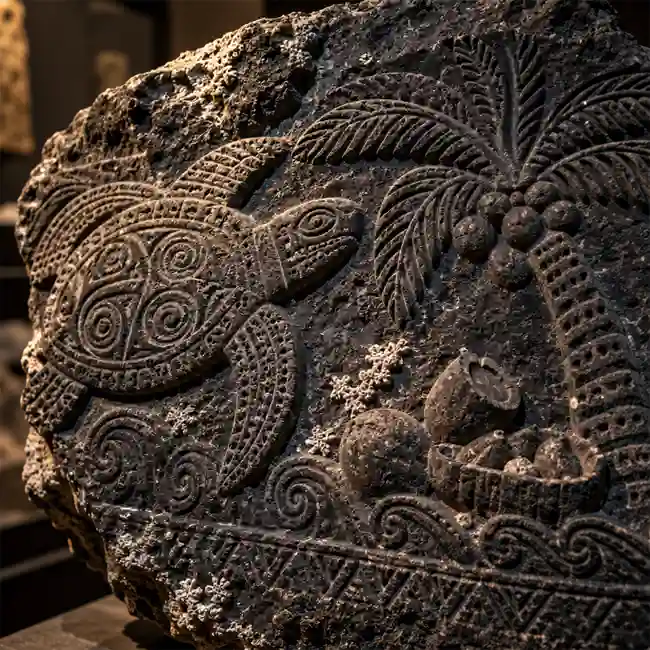
🍯 Recipe: Lapita Sacred Honeyed Coconut Foraged Bites
🏛️ Legends Behind This Excavated Secret
According to island folklore passed down through generations of coastal storytellers, these sweet, fragrant bites were not everyday street snacks. They were considered sacred offerings prepared during seasonal solstice gatherings, canoe launches, and ancestral blessings. Elder fire-keepers would slow-roast freshly shredded coconut flesh over aromatic lava stones, folding in golden wild honey collected from high forest canopies. The bites were believed to bestow physical stamina and safe passage across perilous ocean currents. Eating one was thought to seal a covenant of peace between clans, bridging the human world with the guardian spirits of the sea.
🌿 Ingredients & The Noble Pantry
✨ The Ancestral Staples
To truly appreciate this ancient masterpiece, let us talk about the soul of these ingredients. In the prehistoric Pacific, every item had to be carefully gathered, harvested, or traded. Coconut was the undisputed king of island survival—offering pure hydrating water, rich nutrient-dense meat, and fibrous husk fuel. Wild mountain honey provided pure liquid gold, rich in natural enzymes and floral sweetness. Native starch tubers were ground into delicate binding flours, while wild forest nuts provided a rich, buttery crunch. When combined, these simple gifts of the earth created an extraordinary harmony of chewy texture, nuttiness, and floral caramel notes.
✨ Modern Substitutes
You don't need to sail across the Pacific in a wooden canoe to gather these ingredients! You can easily source wonderful natural substitutes at your local grocery store or farmer's market while keeping the authentic soul of the recipe intact:
• Freshly grated raw coconut meat can easily be matched with unsweetened organic shredded coconut or thick coconut flakes.
• Raw unpasteurized forest honey or wild flower honey works as a perfect stand-in for ancient wild honey hives.
• Ancient sago or arrowroot starch can be replaced with organic arrowroot powder or tapioca flour to give that delightful historical chewiness.
• Foraged wild sea nuts can be replaced with raw crushed macadamia nuts, unsalted pili nuts, or raw almonds.
• A pinch of coarse unrefined sea salt brings out the deep sweetness, mimicking the natural mineral dust of coastal sea breeze.
✨ Ancient Proportions
Here are the precise measurements to recreate this sacred batch at home. No complicated equipment required:
• 2 full cups of unsweetened shredded coconut (freshly grated is amazing, but dry unsweetened shredded works wonderfully)
• 1/2 cup of raw crushed macadamia nuts or raw almonds
• 1/2 cup of pure raw wildflower honey
• 3 tablespoons of arrowroot powder or tapioca flour
• 2 tablespoons of extra-virgin unrefined coconut oil (melted)
• 1 teaspoon of natural vanilla extract (or finely scraped vanilla bean pod)
• 1/4 teaspoon of coarse sea salt flakes
🔥 The Chef’s Ancient Ritual
⭐ Step 1: Awakening the Earthly Aromas
Begin your culinary voyage by warming a heavy-bottomed cast-iron skillet over low to medium heat. Dump in the shredded coconut and crushed macadamia nuts. Dry-toast them slowly, stirring continuously with a wooden spoon for about 4 to 6 minutes. Watch closely as the white coconut flakes turn into a deep, radiant golden hue. As soon as the kitchen fills with a rich, buttery, nutty perfume, immediately remove the mixture from the heat and pour it into a large ceramic mixing bowl to stop the cooking process.
⭐ Step 2: Binding the Sacred Nectar
In a small saucepan set over very low flame, gently warm the raw honey along with the unrefined coconut oil, vanilla, and coarse sea salt. You are not trying to boil or cook the honey; you simply want to loosen its texture so it flows like liquid sunshine. Once warm and fully blended, sprinkle the arrowroot powder into the liquid, whisking gently until it forms a smooth, glossy syrup.
⭐ Step 3: The Union of Earth and Fire
Pour the warm nectar mixture directly over your golden toasted coconut and nuts. Using your hands or a sturdy wooden spatula, fold the ingredients together with intent and patience. Make sure every single strand of coconut is thoroughly coated in the fragrant honey binder. The mixture should feel thick, sticky, and delightfully warm to the touch.
⭐ Step 4: Hand-Crafting the Voyaging Balls
Allow the mixture to cool down just enough so you can handle it comfortably with your hands. Lightly grease your palms with a drop of coconut oil. Take roughly one generous tablespoon of the sticky mixture and press it firmly between your palms, compacting it into a dense, bite-sized sphere or a slightly flattened hearth-cake shape. Compression is key here—pressing firmly ensures the natural oils and honey lock everything tight!
⭐ Step 5: The Stone Fire Bake (or Oven Setting)
Preheat your modern hearth (your oven) to 325 degrees Fahrenheit (165 degrees Celsius). Line a baking sheet with unbleached parchment paper. Arrange your prepared honeyed bites evenly on the tray, leaving a little breathing room between each. Bake for 10 to 12 minutes until the edges take on a deep golden caramel crust.
⭐ Step 6: The Cooling Rest
Remove the tray from the oven. Resist the urge to eat them immediately! As they come out of the heat, they will be soft and delicate. Let them rest undisturbed on the tray for at least 20 minutes. As the honey cools and the arrowroot sets, the bites will transform into a glorious chewy, crispy ancient confection.
🌋 Secrets of the Ancestral Hearth
✦ Avoid Overheating the Honey: Always warm your honey gently on minimal heat. Excessive heat destroys the delicate floral nuances and can cause the sugars to taste bitter rather than richly caramelized.
✦ Master the Toasting Stage: Unsweetened coconut can go from perfectly golden to scorched black in under thirty seconds. Never leave your skillet unattended during the initial dry-toasting phase!
✦ Press with Firm Intent: If your bites tend to crumble apart after baking, it simply means you need to squeeze them tighter during shaping. The arrowroot powder and honey need firm pressure to create a strong structural bond.
✦ Humidity Control is Essential: Because these bites rely on natural honey which attracts atmospheric moisture, keep them in a tightly sealed glass container lined with parchment paper. This preserves that delightful outer crunch.
✦ Experiment with Wild Botanical Additions: Feel free to sprinkle in a touch of freshly grated lime zest or a pinch of ground cardamom. Ancient voyagers frequently folded local wild blossoms and fragrant bark into their travel rations!
⛵❓ Ancient Civilization Origins FAQ
Q1:How long can I store these Lapita Honeyed Coconut Bites?
When stored in an airtight glass jar at cool room temperature, these bites stay delightfully fresh and chewy for up to 7 days. If you keep them in the refrigerator, they will last up to 3 weeks and take on a wonderfully firm, fudgy texture that is incredibly satisfying!
Q2:Can I make this recipe completely vegan?
Yes, absolutely! While raw honey was the traditional sweetener of choice for ancient forest gatherers, you can effortlessly swap the honey for 100% pure organic maple syrup or coconut nectar at a strict 1:1 ratio. The bites will still bind beautifully and offer an amazing deep caramel flavor profile.
Q3:Are these ancient bites naturally gluten-free?
They certainly are! This recipe uses zero wheat, gluten, or processed grains. It relies entirely on whole shredded coconut, tree nuts, arrowroot starch, and raw honey, making it naturally gluten-free, dairy-free, and paleo-friendly.
Q4:Why did ancient voyagers prefer these dense honey bites over baked bread?
Honeyed coconut bites were the ultimate prehistoric superfood! They packed massive amounts of clean energy, healthy fats, and natural carbohydrates into a lightweight, non-perishable form. Unlike grain breads which go stale or moldy rapidly in humid sea air, honey-bound coconut snacks could withstand long maritime journeys without spoiling.
🗿 The Taste of Archeology
Taking your first bite of a freshly made Lapita Honeyed Coconut Bite is a sensory time machine. First, your palate meets the satisfying crispy crunch of slow-caramelized coconut strands and rich roasted nuts. Then comes the smooth, lingering warmth of floral honey, punctuated by microscopic bursts of coarse sea salt that heighten every flavor note. It is sweet, savory, nutty, and deeply aromatic all at once. You aren't just tasting a delicious healthy snack—you are experiencing the exact sweet harmony that delighted Pacific islanders thousands of years ago as they gazed out across the vast ocean horizon.
🌾 Final Thoughts: Bringing Antiquity to Your Modern Table
It is truly magical how a few humble, unrefined ingredients can bridge thousands of years of human history. Bringing ancient civilization recipes like these Lapita bites into your modern kitchen reminds us that fast food and artificial additives are merely a temporary blip in the vast human timeline. Real food, grown by nature and prepared with love around a warm hearth, has always been the ultimate comfort.
Whether you are whipping these up as an energy-packed snack for outdoor hiking, serving them as a unique talking point at your next dinner party, or cooking them with your kids as a fun hands-on history lesson, these bites bring ancient wisdom directly to your fingertips. So go ahead, light up your stove, gather your ingredients, and take a rich, delicious bite out of human history!
🌺 The Golden Hook (The Sacred Union)
Are you fascinated by the forgotten flavors of earth's greatest empires? Don't let these incredible culinary secrets fade back into the dust of time! We are on a passionate mission to excavate, test, and preserve the lost recipes of our world's ancient hearths—from Pacific island navigators and Mayan cacao rituals to ancient Mesopotamian feasts.
Join our growing global community of historic food lovers! Bookmark this page, share this recipe with your fellow history buffs and foodies, and drop a comment below telling us which ancient civilization's kitchen secrets you want us to resurrect next. Together, we can keep the sacred flame of heritage cooking burning bright for generations to come!
🗿 Credit to the Keepers of the Culture (The Legacy)
We extend our deepest gratitude, respect, and reverence to the indigenous communities of the Pacific Islands—including the descendants of the Lapita culture across Vanuatu, New Caledonia, Fiji, Samoa, and Tonga. Their ancestral wisdom, oral traditions, land stewardship, and enduring relationship with the ocean have preserved these magnificent culinary arts through millennia. We also honor the dedicated maritime archaeologists, ethnobotanists, and Pacific historians whose tireless field research allows us to reconstruct and celebrate these prehistoric culinary wonders with accuracy, authenticity, and profound respect.
| 🏝️ 🏛️🍯 < Back |