
🏠 Home > 🗺️ Recipes > 🏛️🍖 Hearth-Roasted Mains > 🏟️ Minoan Crete: Hearth-Roasted Mains Recipes
🏟️ 🏛️🍖 Minoan Crete: Hearth-Roasted Mains Recipes
Published by Supakorn | Updated: September 2026
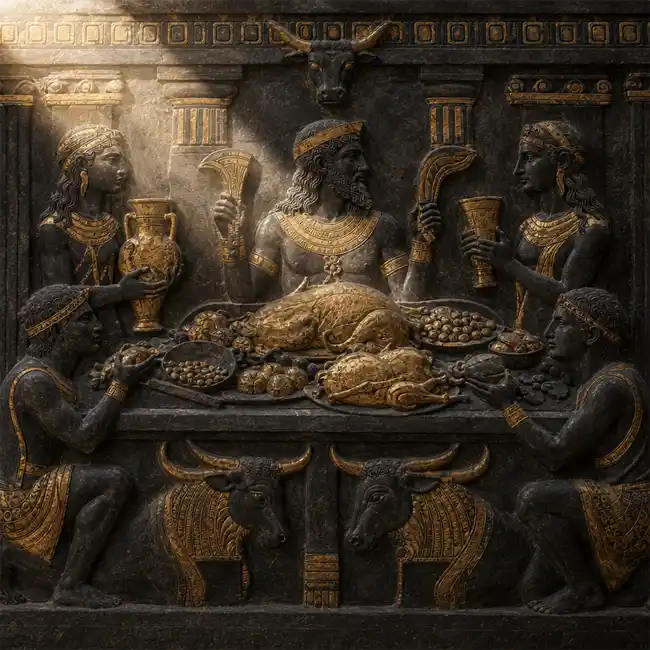
🐂📜 The Storyteller’s Intro: 5,000 Years of Ancestral Flavors
Hey friend, pull up a chair by the fire. Let's talk about food that's older than the pyramids as we know them, older than Stonehenge's final form. We're going back about 5,000 years to a sun-drenched island in the middle of a sparkling blue sea: Crete.
This is the world of the Minoans, Europe's first real civilization, and honestly? They were foodies before foodies were cool.
When we say 5,000 years, we're talking about the very beginning, around 3000 BCE. But the Minoan story isn't just one flat moment in time. It evolved like a great slow-cooked stew:
✨ Prepalatial Period (c. 3000-1900 BCE): Think small villages, early farmers, and fishermen. This is where it all starts. They were domesticating olives and grapes, learning to coax flavor from wild herbs on the hillsides. The hearth was already the heart of the home.
✨ Protopalatial / Old Palace Period (c. 1900-1700 BCE): Boom. The first massive palaces appear at Knossos, Phaistos, Malia. This is when cooking gets organized. We're not just talking home kitchens anymore, we're talking palace kitchens feeding hundreds.
✨ Neopalatial / New Palace Period (c. 1700-1450 BCE): This is the golden age. The peak of Minoan power, art, and yes, food. The palaces are rebuilt bigger and more beautiful. Frescoes show feasts, offerings, and young men leaping over bulls. The hearth-roasted mains we dream about? They were perfected here.
So why should you care about what some Bronze Age islanders ate for dinner? Because almost everything we love about Mediterranean food starts here. Olive oil? They pressed it by the ton. Barley bread baked in wood-fired ovens? A daily staple. Wild oregano, thyme, sage, and fennel gathered from the mountains? The original seasoning blend.
Unlike later civilizations that left us detailed cookbooks, the Minoans left us something even cooler: clues. We don't have a Minoan Julia Child, because their script, Linear A, is still mostly undeciphered. What we have are storerooms full of giant pithoi jars, animal bones with butcher marks, carbonized figs and barley in hearths, cooking pots blackened from use, and stunning frescoes of people carrying food.
Archaeologists have pieced it together, and what emerges is a culture that treated cooking as sacred. The hearth wasn't just for heat. It was where family, community, and the gods met. Let's dig in.
📜 Iconic Excavated Menus: Dishes Whispered by Ash and Bone
Okay, this is my favorite part. We don't have menus carved in stone, but from Knossos, Akrotiri, and Palaikastro, archaeologists have found the ingredients and tools so consistently that we can confidently reconstruct the superstar mains of the Minoan hearth. These aren't fantasy recipes, they are evidence-based legends.
Here are the iconic hearth-roasted mains that defined Minoan Crete:
🔥 The Great Palace Roasts
• Hearth-Roasted Wild Goat with Mountain Herbs: This was the king of Minoan mains. Bones of agrimi (the wild Cretan goat) are found everywhere around hearths. Imagine a whole leg slow-roasted in a clay-lined pit or over open embers, rubbed with wild thyme, oregano, and crushed coriander seed, then basted with first-press olive oil. The fat would drip, hiss, and smoke, flavoring everything.
• Spit-Roasted Lamb with Barley Crust: Sheep were everywhere. Frescoes and tablets count them by the hundreds. A young lamb, butterflied and cooked on a wooden spit over the central hearth, seasoned simply with sea salt and wild sage. Sometimes they would press soaked barley around the outside to create a smoky, crunchy crust that trapped the juices inside.
• Bull Feast Roast - The Ceremonial Cut: We have to talk about the bull. It was sacred to the Minoans. While they didn't eat bull every day, large-scale feasting deposits show cattle bones with clear roasting marks, especially around palatial centers. This was likely a communal, ritual roast for festivals, shared among hundreds after ceremonies.
🐟 From the Aegean Hearth
• Ember-Baked Red Mullet and Sea Bream: The Minoans were master seafarers. Fish bones, shells, and fishhooks are abundant. Whole fish would be wrapped in fig leaves or grape leaves, placed directly on hot ashes, and roasted. The leaves protected the delicate flesh and steamed it with an incredible aroma.
• Octopus Grilled on Hot Stones: We find depictions of octopus all over Minoan pottery (the famous Marine Style). They would tenderize it by beating it on rocks (still done in Greece today!), then grill it quickly on super-hot flat hearthstones brushed with olive oil. Smoky, chewy, perfect.
🌾 The Humble Hearth Heroes
• Pithos-Baked Pork Shoulder with Figs: Pig bones are super common in domestic contexts. A tougher cut like shoulder would be placed in a lidded clay cooking pot (a kakavi ancestor) and nestled into the embers for hours with dried figs, onions, and a splash of grape juice. The result? Fall-off-the-bone tender.
• Roasted Partridge and Wildfowl: Bird bones, especially partridge, show up in feasting trash pits. These small birds were likely spitted and roasted fast over intense heat, just seasoned with salt and wild fennel fronds. A true taste of the Cretan hills.
What makes these so special for long-tail SEO nerds like us? These are not just "ancient Greek food." These are specific, Bronze Age, pre-Mycenaean, hearth-based cooking techniques that predate classical Greece by 1,000 years. That's the hidden ancient recipe goldmine.
🗺️ Living, Eating, and Traveling: How the Minoans Turned Food into a Way of Life
Forget restaurants. For a Minoan, eating was life, religion, and social media all rolled into one.
• The Hearth as Home Base: Every house, from a farmer's hut to the Palace of Knossos, was built around a hearth. It wasn't in a separate kitchen. It was central. You cooked, you ate, you told stories, you stayed warm. Archaeologists find cooking pots, tripod stands, and ash layers right in the main living areas. Life happened around the roast.
• Palace Kitchens: The First Catering Companies: At Knossos, they've excavated massive magazines (storerooms) with over 400 giant pithoi that could hold 75,000 liters of olive oil, wine, and grain. Next to them? Kitchens with built-in hearths, ovens, and prep tables. Linear B tablets (from the later Mycenaean takeover) list rations for workers: figs, barley, olives, and meat. The Minoans invented large-scale food logistics.
• Eat Seasonally or Don't Eat: They had no fridges. Their menu was the Cretan landscape. Spring: wild greens (horta), young goat, fresh cheese. Summer: figs, grapes, fish, barley bread. Autumn: olives, harvest feasts, pork. Winter: stored lentils, chickpeas, dried herbs, and slow-cooked stews from preserved meats. It was the ultimate farm-to-hearth lifestyle.
• Food Tourism, Minoan Style: Want to walk in their footsteps today? You absolutely can, and it's magical.
◦ Start at Knossos near Heraklion: Stand in the Grand Courtyard where bull-leaping feasts likely ended with massive roasts. Visit the storerooms and imagine the smell of olive oil and herbs.
◦ Go to Phaistos in the Messara Plain: This is agricultural heartland. The views of Mount Ida are insane. This is where the barley and olives for those palace feasts came from. Local tavernas still roast lamb in wood ovens just like 3,500 years ago.
◦ Hike the Lasithi Plateau: The windmills are later, but the feeling of a self-sufficient mountain community gathering wild herbs is pure Minoan.
◦ Eat like them: Order antikristo lamb in Crete today. It's lamb slow-roasted around a fire on spits, exactly as depicted in Minoan art. It's a living fossil of flavor.
The Minoans didn't separate "dining" from "living." A tourist following their food trail isn't just sightseeing, they're time-traveling through taste.
🌊 The Aegean Pantry: Secrets of the Sea and Trade Winds
You can't talk about Minoan food without talking about the sea. Crete is an island, and the Minoans were the FedEx of the Bronze Age.
Their hearth-roasted mains were powered by a trade network that stretched from Egypt to the Cyclades. This is a crucial long-tail keyword cluster: Bronze Age Mediterranean trade food.
• Salt: The Original Preserver: With no refrigeration, sea salt from coastal pans was life. They used it to cure pork, preserve fish, and season roasts. Piles of salt would have been as valuable as the meat itself.
• Olive Oil: Liquid Gold: Forget butter. The Minoan hearth ran on olive oil. We find olive presses and massive storage. They used it for everything: basting roasts to keep them moist, frying herbs to release aroma, and preserving cooked meat. A Minoan roast without olive oil is unthinkable.
• Exotic Imports for the Elite: While the common farmer ate goat and barley, palace elites got extras via trade. We find evidence of cumin and coriander from the Near East, possibly used to perfume high-status roasts. This was ancient fusion cuisine.
• The Hearth Technology: They weren't just throwing meat on fire. They had sophisticated gear: clay braziers for controlled heat, tripod cooking pots that sat perfectly over embers, bell-shaped clay ovens (fournos) for baking and slow-roasting, and stone-lined roasting pits. This was precision hearth cooking.
This maritime pantry is why Minoan flavors feel so familiar yet so ancient. They mastered the combination of fat (olive oil), acid (figs, grape juice), salt (sea salt), and aromatics (wild herbs) that still defines great roasting today.
🛎️❓ Ancient Civilization FAQ: Unlocking Palace Kitchen Mysteries
Let's answer the deep questions everyone asks me about this:
Q1.Did the Minoans really write down recipes?
Not like we do. Their script, Linear A, is found on clay tablets, but it's mostly lists: "100 sheep," "50 jars of oil," "10 units of figs." No step-by-step instructions have been deciphered. Our "recipes" are reconstructions based on hard archaeology: which animal bones are found with which cooking pots, what plant remains are in the hearth ash, and what tools were used. It's culinary detective work, which is honestly cooler.
Q2.What was the most common meat for a regular Minoan family, not royalty?
Sheep and goat, hands down. Cattle were valuable for plowing and ritual, pigs were common but sheep/goat were the everyday hearth roast. They were hardy, perfect for Crete's hills, and provided milk, wool, and meat. A family would roast cuts on special occasions and make hearty stews with barley the rest of the time. Fish was the daily protein for coastal villages.
Q3.How is Minoan hearth cooking different from later Ancient Greek cooking?
Great question. Minoan cooking is simpler, more elemental, and more focused on the hearth itself. Later Classical Greeks (500 years later) had more complex sauces, more varied spices from wider trade, and a bigger symposium (drinking party) culture. Minoan food is Bronze Age purity: fire + meat + olive oil + wild herbs. It's less about technique layering and more about perfect ingredients and smoke.
Q4.Can I actually taste authentic Minoan flavors today in Crete?
Yes, more than anywhere else in Europe. Go to a mountain village and order tsigariasto (slow-cooked goat), antikristo (fire-roasted lamb), or kokoras krasatos (though Minoans didn't use wine in cooking as much as later Greeks, the slow-cook method is ancient). Eat dakos (barley rusk with tomato and cheese), wild horta greens with olive oil, and grilled octopus. You're tasting a 4,000-year-old flavor memory.
🧠 Final Thoughts: The Timeless Allure of Antique Gastronomy
So here we are, 5,000 years later, still obsessed with the same thing: meat, fire, salt, and herbs.
The Minoans didn't need thermometers or recipe blogs. They understood something we've almost forgotten: that great food is about place. The thyme tastes like that hillside. The olive oil tastes like that grove. The lamb roasted over that wood tastes like home.
Their hearth-roasted mains weren't just dinner. They were community, they were religion, they were survival turned into art. When you smell lamb roasting over open fire in Crete today, you're smelling Knossos. You're smelling the first European civilization figuring out that fire plus care equals magic.
And guess what? We're just getting started. In our next deep dive, we're going to take these excavated clues and reconstruct the full recipes step-by-step, adapted for your modern kitchen (or backyard fire pit). We're talking precise herb ratios, hearth temperatures, and how to get that authentic smoky crust without a Bronze Age palace.
Stay hungry for history, my friend. The ancient kitchen secrets are just warming up.
🏛️ Credit to the Keepers of the Culture (The Legacy)
We owe everything we know to the brilliant, painstaking work of archaeologists and scholars who treat a burnt barley grain like treasure.
Deep respect to Sir Arthur Evans, who excavated Knossos and first revealed the Minoans to the world; to the Greek Archaeological Service and the excavators at Palaikastro, Malia, and Akrotiri who analyze hearth ash and animal bones with incredible care; and to food archaeologists like Dr. Jerolyn Morrison and the teams studying Minoan culinary practices.
We also honor the modern Cretan people, the shepherds, farmers, and taverna cooks who have unknowingly kept these 5,000-year-old hearth traditions alive through generations. You are the living keepers of Europe's oldest culinary secrets.
🏛️🍖 Minoan Hearth Roast Beef: A Bronze Age Feast Reimagined
👉 Unlock Minoan Crete: Hearth-Roasted Mains
| 🌐 🏛️🍖 < Back | 🏟️ 🌾 < Previous | Next > 🍲 🏟️ |