
🏠 Home > 🗺️ Recipes > 🍲 Soups > 🇲🇲 Myanmar Soups
🇲🇲 🍲 Myanmar Soups Recipes
Published by Supakorn | Updated: February 2026
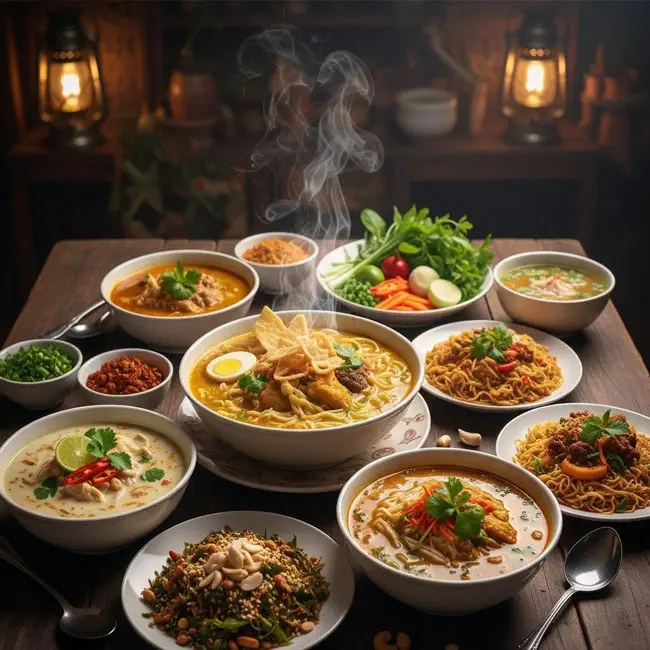
🥣 More Than Just a Meal: Soup as the Heartbeat of Burmese Cuisine
Hey food adventurer! Forget what you think you know about Southeast Asian food for a minute. When you picture the region, you probably think of fiery Thai curries or delicate Vietnamese Phở. But if you've never truly explored Burmese cuisine, you're missing out on one of the warmest, most complex, and utterly comforting culinary traditions on the planet—and the key to unlocking it is through its soups.
In Myanmar, soup isn't a side dish; it’s the main event, the foundation, and the essential accompaniment to virtually every meal. From the bustling street stalls that anchor the morning rush to the traditional home dinners, soup is an ever-present, flavor-packed hug in a bowl.
🌏 A Crossroads of Flavor: The Burmese Soup Identity
What makes Burmese soups so unique is their incredible depth of flavor. They successfully blend the earthiness of India (think turmeric, ginger, and chickpea flour) with the creaminess of Thailand and the noodle tradition of China, creating something entirely its own.
The geography of Myanmar plays a massive role here. In the north, near the Chinese border, you'll find lighter, clear broths with hand-pulled noodles. In the coastal regions, the soups are briny and rich with fish. In the central plains, it's all about pulses and lentils. Ready to grab a spoon? Let’s dive into the big three.
🐟 The National Dish: Mohinga—A Breakfast Legend
If you ask any Burmese person what the national dish is, they will instantly say Mohinga. This fish noodle soup isn’t just popular; it’s a cultural institution, traditionally served as a hearty breakfast that fuels the entire nation.
🍜 What is Mohinga?
At its core, Mohinga is a savory, aromatic fish broth served over thin rice vermicelli noodles. But calling it "fish soup" doesn't do it justice. The broth is a marvel of humble ingredients transformed:
• The Base: It's thickened not with cream, but with chickpea flour (or toasted rice powder) which gives it a satisfying body and an almost "chowder-like" thickness.
• The Flavor: A powerful, aromatic paste of lemongrass, ginger, garlic, and turmeric is simmered with white fish.
• The Garnish Game: This is where Mohinga truly shines! No bowl is complete without a generous scattering of toppings: crispy fried fritters (Akyaw), sliced banana stem (which tastes like a soft artichoke), hard-boiled eggs, fresh cilantro, chili flakes, and a vital squeeze of lime juice.
🌅 The Morning Ritual
Mohinga is the quintessential street food experience. You'll find vendors with massive cauldrons of the broth steaming away at 6:00 AM. For locals, the sound of a ladle hitting the side of a metal pot is the alarm clock that starts the day. It’s comforting, savory, and the absolute best way to start your day in Myanmar.
🥥 A Creamy Contender: Ohn No Khao Swè
If Mohinga is the king of Burmese soups, then Ohn No Khao Swè is the reigning queen. While Mohinga is all about savory, deep fish flavor, this dish is pure coconut-milk bliss.
🍗 The Original "Khao Soi"
Ohn No Khao Swè is a curried chicken noodle soup with a gorgeous, velvety-smooth texture. If the name sounds familiar, it's because this is the original Burmese dish that inspired famous regional cousins like Thai Khao Soi and the South Asian Khao Suey. But the Burmese version has its own distinct magic.
• The Broth: Unlike Thai versions, the Burmese broth is rich and slightly sweet due to the abundance of coconut milk. It's gently spiced with turmeric and thickened with chickpea flour, giving it a luxurious, round mouthfeel.
• The Main Event: Shredded chicken is simmered right in the coconut curry until it's tender enough to fall apart.
• The Texture Layering: You'll layer your bowl with soft egg noodles, crunchy fried noodles, hard-boiled eggs, finely sliced raw onions, and a dash of chili oil.
🏠 Home-Style Comfort
While Mohinga is often eaten "out" at stalls, Ohn No Khao Swè is a favorite for home gatherings. It’s the dish mothers make for birthdays or family reunions. It’s the ultimate Burmese comfort food—warm, rich, and utterly soul-soothing.
🍋 The Essential Sour: Traditional Chin Yay (Sour Soups)
While the noodle soups are center stage, no full Burmese meal is complete without a cup of Chin Yay, or traditional sour soup. These soups are served alongside a main course of curries and rice, acting as a crucial palate cleanser.
🍃 Why Sour?
Burmese curries (sibyan) are often rich and oily. The contrasting tartness of a Chin Yay perfectly balances that richness. The sourness comes primarily from natural ingredients like tamarind, roselle leaves (chin baung), or even sour local tomatoes.
• Tamarind Sour Soup (Magi Chin Yay): Simple, bright, and tangy, often featuring some local vegetables.
• Roselle Leaf Sour Soup (Chin Baung Chin Yay): This uses the intensely tart roselle leaves (a type of hibiscus), giving it a distinct, earthy sourness. It often includes bamboo shoots or small dried shrimp for extra umami.
🥗 A Balanced Diet
These soups are light, brothy, and often vegetable-focused. They aren't meant to fill you up on their own; they are meant to be sipped between bites of rice and curry, proving that even a humble soup can be an indispensable part of a complex meal.
🍲 Regional Varieties: From the Mountains to the Delta
Because Myanmar is so geographically diverse, the soup "map" changes as you travel. If you're a true soup fanatic, you have to check out these regional stars:
🌾 Shan Khao Swè (Shan Noodle Soup)
Hailing from the beautiful Shan State in the eastern highlands, this is a lighter, clearer soup compared to the thick Mohinga.
• The Vibe: It features rice noodles in a clear peppery broth with marinated chicken or pork and fermented mustard greens. It’s clean, fresh, and perfect for the cooler mountain air.
🍛 Rakhine Mote Ti
Coming from the coastal Rakhine State, this is for the spice lovers!
• The Vibe: It’s a thin, fiery fish soup. Unlike the yellowish Mohinga, this broth is often clearer but packed with green chilis and black pepper. It’s guaranteed to clear your sinuses!
🥟 Kya Zan Hingar (Glass Noodle Soup)
This is a festive soup often served at ceremonies.
• The Vibe: It uses bean thread (glass) noodles, wood-ear mushrooms, lily buds, and chicken. It’s delicate, slightly floral, and feels very sophisticated.
🥢 The Etiquette: How to Eat Soup Like a Local
If you find yourself at a Burmese table, here’s how to navigate the soup bowl like a pro:
1.The "Sip and Scoop": Unlike in the West where soup is a separate course, in Myanmar, the sour soup stays on the table. You take a sip, eat some rice and curry, and go back to the soup.
2.Customization is King: When you order a noodle soup, you'll see a tray of condiments (chili flakes, lime, fish sauce). Locals always customize. Taste first, then adjust to your liking!
3.The Fritter Factor: Don't let your fritters get too soggy! Some people like to dunk them quickly to keep the crunch, while others let them soak up the broth like a sponge. There’s no wrong way!
🌟 Why Myanmar’s Soups are the Bedrock of Life
Myanmar’s soups are a fascinating study in culinary fusion, showcasing how simple, local ingredients—like fish, coconut, and chickpea flour—can be transformed into masterpieces of texture and flavor.
Whether you start your day with the kick of Mohinga, settle in with the creamy richness of Ohn No Khao Swè, or simply cleanse your palate with a tangy Chin Yay, you’ll quickly find out why these bowls are the absolute bedrock of Burmese life. They represent the resilience, the warmth, and the incredible diversity of the people.
❓ Frequently Asked Questions (FAQ)
1. What is the difference between Mohinga and Ohn No Khao Swè?
Mohinga is a savory, earthy fish-based broth seasoned with lemongrass and turmeric. It's often thicker and served with rice vermicelli. Ohn No Khao Swè is a richer, creamier soup with a coconut milk and chicken curry base, usually served with wheat (egg) noodles.
2. Do I need to add the garnishes to Burmese soups?
Absolutely! The garnishes are not "optional decorations." The fresh herbs, crispy fritters, lime, and chili are essential. Burmese cuisine is all about the balance of "The Four Pillars": Sweet, Sour, Salty, and Spicy. The garnishes provide the crunch and acidity needed to balance the rich broths.
3. Is Mohinga only eaten for breakfast?
While it’s the ultimate national breakfast, you can find it all day! In major cities like Yangon, street vendors and high-end restaurants alike serve Mohinga from sunrise until late at night.
4. Are there vegetarian options for these soups?
Yes! While traditional Mohinga is fish-based, many tea houses offer vegetarian versions using chickpea-based broths and mushrooms. Ohn No Khao Swè can also be made vegetarian by using extra fried tofu or vegetables instead of chicken.
5. Why is chickpea flour used so much in Burmese soups?
Chickpea flour (besan) is the secret weapon of Burmese cooking. It adds a nutty depth of flavor and acts as a natural thickener, giving the soups a hearty, "creamy" texture without actually using dairy.
🍲 Real Burmese Soups: 3 Iconic Noodle Recipes Locals Swear By
| 🌐 🍲 < Back | 🇲🇲 🍷 < Previous | Next > 🥗 🇲🇲 |