
🏠 Home > 🗺️ Recipes > 🍝 Main Dishes > 🇵🇬 Papua New Guinea Main Dishes > 🍝 1.Sweet Potato & Greens Stir , 2.Coconut Fish Stew , 3.Pork & Root Vegetable Bowl
🍝 Discover Savory Everyday Meals from Papua New Guinea
Published by Supakorn | Updated: February 2026
Papua New Guinea might not be the first country people think of when talking about world cuisine, but its everyday main dishes are full of heart, flavor, and tradition. These meals are simple, comforting, and deeply connected to nature and community life.
In many PNG homes, food is not about luxury — it’s about nourishment, sharing, and cultural identity. Ingredients are fresh, cooking methods are practical, and recipes are passed down through generations.
In this article, you’ll explore three popular, savory Papua New Guinea main dishes that people enjoy in daily life. Each recipe is easy to follow, beginner-friendly, and inspired by real island food culture.
🌴🇵🇬 Introduction – Everyday Flavors of Papua New Guinea
Papua New Guinea’s everyday food is shaped by its environment. With mountains, forests, rivers, and coastlines, people rely on what nature provides. Root crops, leafy greens, coconut, and fresh fish form the foundation of most meals.
While PNG cuisine is not widely known internationally, travelers who visit often fall in love with its simple yet satisfying flavors. There’s no heavy seasoning, no complicated sauces — just honest food made with care.
In this article, we focus on three popular savory main dishes that represent daily life in Papua New Guinea:
👑 • Recipe 1: Sweet Potato & Greens Stir
🏆 • Recipe 2: Coconut Fish Stew
🎖️ • Recipe 3: Pork & Root Vegetable Bowl
These dishes are inspired by traditional ingredients and cooking styles, but they can easily be made at home anywhere in the world.
Let’s dive into the flavors of Papua New Guinea!
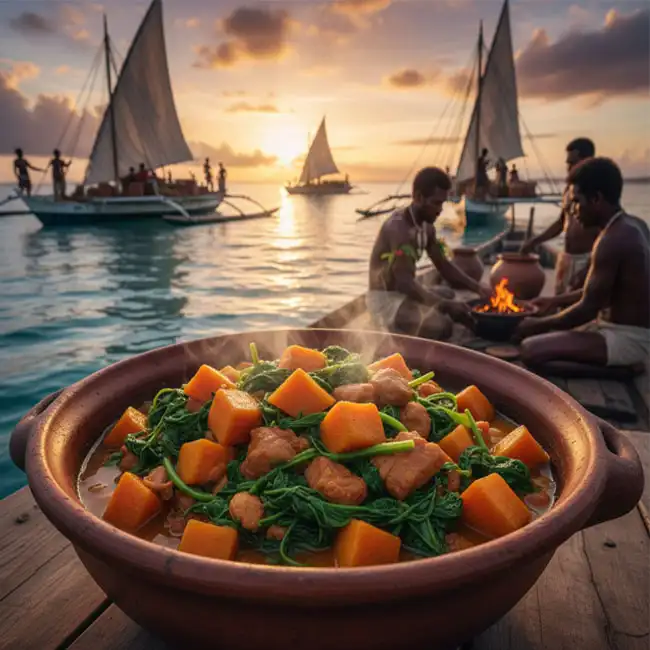
🍠 Recipe 1 – Sweet Potato & Greens Stir
🥬 About This Recipe
This dish is one of the most common everyday meals in Papua New Guinea, especially in the highland regions. Sweet potato, locally known as kaukau, is the main staple food. It’s filling, nutritious, and easy to grow.
Paired with leafy greens, this simple stir-style dish offers a comforting balance of carbohydrates and vegetables. It’s often eaten for lunch or dinner and shared with family members.
The flavor is mild, earthy, and satisfying — perfect for people who enjoy wholesome, natural meals.
🧺 Ingredients & Measurements
• 2 medium sweet potatoes (peeled and sliced)
• 2 cups leafy greens (spinach, kale, or local greens)
• 1 small onion (sliced)
• 2 cloves garlic (chopped)
• 2 tablespoons cooking oil
• ½ teaspoon salt
• ¼ teaspoon black pepper
• ½ cup water
🔥 Step-by-Step Instructions
1.Boil the Sweet Potatoes
Place the sliced sweet potatoes in a pot with water and boil until soft (about 10–12 minutes). Drain and set aside.
2.Prepare the Pan
Heat oil in a large pan over medium heat. Add onions and cook until soft.
3.Add Garlic
Stir in the garlic and cook for about 30 seconds until fragrant.
4.Add Greens
Toss in the leafy greens and stir until they begin to soften.
5.Combine Everything
Add the boiled sweet potatoes, salt, pepper, and water. Stir gently.
6.Simmer
Let everything cook together for 5 minutes.
7.Serve Warm
Enjoy it fresh with family or friends.
💡 Tips & Mistakes to Avoid
Tips:
• Use fresh greens for the best flavor
• Cut sweet potatoes evenly for even cooking
• Add a splash of water if the pan gets too dry
Avoid:
• Overcooking the greens (they lose texture)
• Adding too much salt
• Stirring too aggressively
❓ FAQ
Q1: Can I use other root vegetables?
Yes! Taro or yam works well too.
Q2: Is this dish spicy?
No, it’s mild and natural in flavor.
Q3: Can I eat this cold?
It’s best warm, but still tasty at room temperature.
📝 Summary
This sweet potato and greens dish represents everyday PNG comfort food. It’s simple, nourishing, and perfect for anyone who loves wholesome meals with natural flavors.
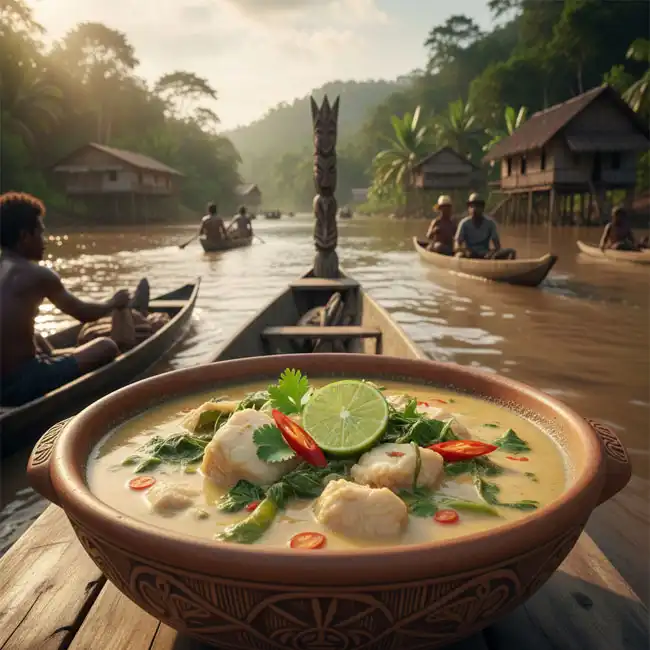
🐟 Recipe 2 – Coconut Fish Stew
🐠 About This Recipe
Coastal communities in Papua New Guinea rely heavily on fish. Fresh seafood is often cooked with coconut, creating a rich yet gentle flavor.
This coconut fish stew is a classic savory main dish. It’s warm, comforting, and full of tropical character. The coconut adds creaminess without overpowering the fish.
It’s commonly enjoyed with root vegetables or plain rice.
🧺 Ingredients & Measurements
• 400g white fish fillets (cut into chunks)
• 1 cup coconut milk
• 1 small onion (chopped)
• 2 cloves garlic (minced)
• 1 tomato (chopped)
• 1 tablespoon cooking oil
• ½ teaspoon salt
• ¼ teaspoon black pepper
• ½ cup water
🔥 Step-by-Step Instructions
1.Heat the Oil
Warm oil in a pot over medium heat.
2.Cook Aromatics
Add onion and garlic. Cook until soft.
3.Add Tomato
Stir in the tomato and cook for 2–3 minutes.
4.Add Fish
Place fish chunks into the pot gently.
5.Pour in Coconut Milk
Add coconut milk, water, salt, and pepper.
6.Simmer
Let it cook for 10 minutes until fish is tender.
7.Serve Hot
Enjoy with sweet potatoes or rice.
💡 Tips & Mistakes to Avoid
Tips:
• Use fresh fish for better flavor
• Stir gently to avoid breaking the fish
• Taste before adding more salt
Avoid:
• Boiling too hard (fish becomes tough)
• Using low-quality coconut milk
• Overcooking the fish
❓ FAQ
Q1: Can I use frozen fish?
Yes, just thaw it first.
Q2: Is this dish heavy?
No, it’s creamy but still light.
Q3: Can I add vegetables?
Yes, greens or pumpkin work well.
📝 Summary
This coconut fish stew shows how Papua New Guinea uses simple ingredients to create rich, comforting meals inspired by the sea.
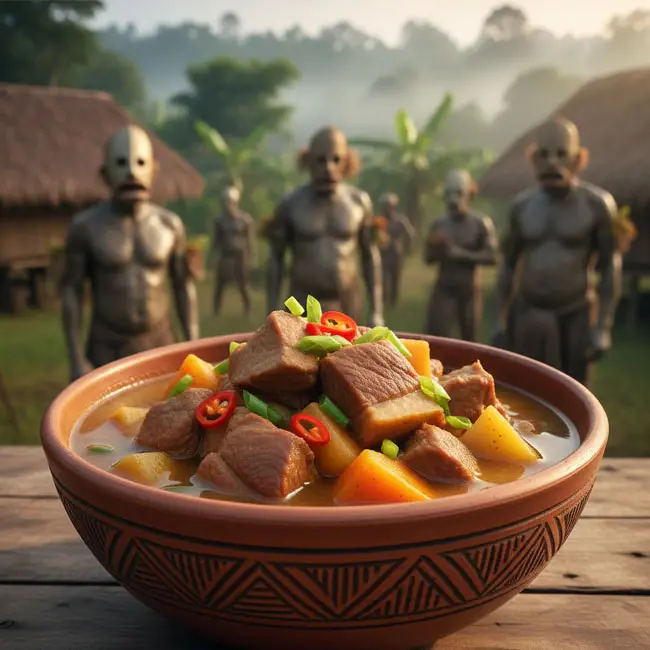
🍖 Recipe 3 – Pork & Root Vegetable Bowl
🐖 About This Recipe
Pork is often reserved for special occasions in Papua New Guinea, but simplified versions of pork dishes are enjoyed in everyday meals too.
This savory bowl combines tender pork with hearty root vegetables, making it filling and flavorful. It reflects the balance between protein and local crops that define PNG cuisine.
🧺 Ingredients & Measurements
• 300g pork (cut into small pieces)
• 2 cups sweet potato or taro (cubed)
• 1 small onion (chopped)
• 2 cloves garlic (minced)
• 2 tablespoons cooking oil
• ½ teaspoon salt
• ¼ teaspoon black pepper
• 1 cup water
🔥 Step-by-Step Instructions
1.Cook the Pork
Heat oil in a pan and cook pork until lightly browned.
2.Add Onion & Garlic
Stir in onion and garlic until fragrant.
3.Add Root Vegetables
Toss in the sweet potato or taro.
4.Add Water & Seasoning
Pour in water, salt, and pepper.
5.Simmer
Cover and cook for 15 minutes.
6.Serve Warm
Enjoy as a hearty main dish.
💡 Tips & Mistakes to Avoid
Tips:
• Cut pork into small pieces
• Simmer slowly for tenderness
• Use fresh root vegetables
Avoid:
• Cooking on high heat
• Adding too much water
• Skipping the resting time
❓ FAQ
Q1: Can I use chicken instead?
Yes, chicken works well too.
Q2: Is this dish spicy?
No, it’s savory and mild.
Q3: Can I store leftovers?
Yes, it keeps well for 1–2 days.
📝 Summary
This pork and root vegetable bowl represents the hearty side of Papua New Guinea’s everyday food culture.
🌟 Final Thoughts
Papua New Guinea’s savory main dishes prove that great food doesn’t need complicated recipes or fancy ingredients. With fresh root crops, simple seasonings, and natural flavors, anyone can enjoy these comforting meals at home.
Each of the three recipes in this article is:
• Easy to prepare
• Budget-friendly
• Full of cultural character
We encourage you to try them one by one, enjoy the process, and share your experience with friends and family. Food is always better when it’s shared — just like in Papua New Guinea.
If you’re curious about more global cuisines or traditional recipes, your food journey is just getting started 🌍🍽️
| 🇵🇬 🍝 < Back |