
🏠 Home > 🗺️ Recipes > 🥘 Sauces > 🇵🇬 Papua New Guinea Sauces
🇵🇬 🥘 Papua New Guinea Sauces Recipes
Published by Supakorn | Updated: February 2026
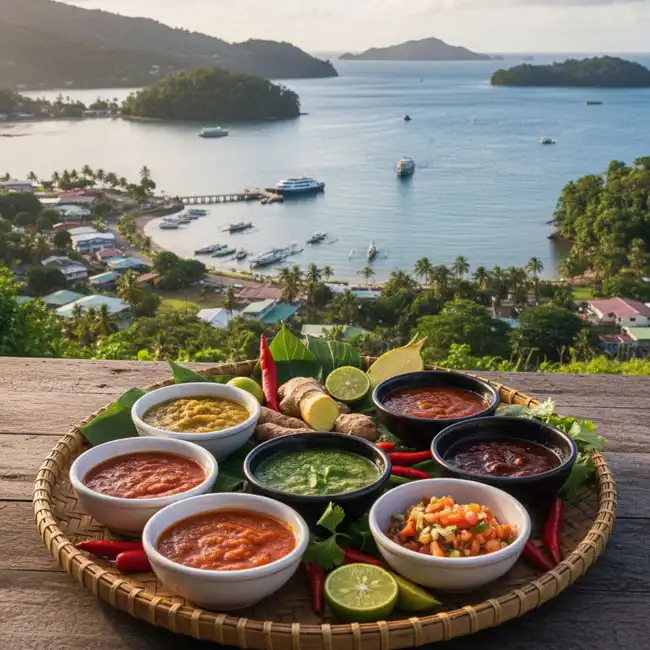
Hey there, flavor seeker! If you’ve been following our journey through the "Land of the Unexpected," you know that Papua New Guinea (PNG) is all about fresh, earthy, and natural ingredients. But let’s be real: every great meal needs that one "secret sauce" to tie it all together. Today, we are diving into the world of Papua New Guinea sauces and condiments.
In a Western kitchen, a sauce might involve a complex roux or hours of reduction. In Papua New Guinea, a sauce is often an explosion of freshness—a quick mash of mountain chilies, a squeeze of wild citrus, or a ladle of the creamiest coconut milk you’ve ever tasted. These sauces aren't meant to mask the food; they are designed to wake up the palate and make those hearty root vegetables sing.
So, let's talk about the zesty, creamy, and spicy liquids that bring PNG cuisine to life!
🥥 The Soul of the Sauce: Freshness Over Processing
In PNG, people don't really do "bottled" sauces in the way we see them in supermarkets. Sure, you can find tomato sauce in Port Moresby, but in the heart of the community, the best sauces are made right before the meal begins.
🍋 The "Muli" Magic
If there is one flavor that defines PNG condiments, it’s Muli. This is the local word for lemons and limes. Because PNG food can be quite starchy (think lots of sweet potato and taro), the acidity of muli is essential. It cuts through the heaviness and adds a bright, tropical zing to everything it touches.
🌶️ The Heat of the Highlands
Don't let the friendly smiles fool you—Papua New Guineans love their heat! Small, potent bird's eye chilies are grown in almost every backyard garden. Unlike some cuisines where spice is hidden inside the dish, in PNG, the spice is often served on the side as a raw, vibrant sauce, allowing each person to control their own "fire level."
🍯 Iconic Papua New Guinea Sauces and Condiments
While you won't find a thousand different bottles on a PNG table, you will find a few key preparations that are absolutely legendary.
🥥 1. Rich Coconut Cream (The Universal Sauce)
In PNG, fresh coconut cream is more than an ingredient—it’s the ultimate sauce. But we aren't talking about the thin stuff from a carton. This is the "first squeeze" of a mature coconut.
It is often simmered with a bit of salt and spring onions until it thickens into a velvet-like consistency. This sauce is poured over everything: roasted fish, boiled bananas, and even sago. It provides the essential healthy fats that make the meal satisfying.
🍋 2. Muli Garlic and Ginger Paste
This is the "powerhouse" condiment of the islands. Fresh ginger and garlic are pounded together with a generous amount of muli juice and a pinch of salt.
It’s raw, it’s pungent, and it’s incredibly healthy. It’s the go-to dipping sauce for roasted pork or grilled fish. The ginger provides a deep warmth, while the garlic and lime keep it sharp and refreshing. It’s like a tropical pesto, minus the basil!
🌶️ 3. Chili Salt (The Market Favorite)
If you walk through a local market, you’ll see little piles of red and green. This is Chili Salt. It’s a simple but effective blend of crushed fresh chilies and sea salt.
Locals use it as a dry "sauce" or rub. You take a piece of hot, roasted Kau Kau (sweet potato), dip the corner into the chili salt, and enjoy. The salt draws out the sweetness of the potato, while the chili provides a sharp kick. It’s the original PNG fast-food seasoning.
🍅 4. Tropical Tomato and Onion Relish
Especially in the coastal regions, a fresh relish acts as a cooling sauce. Diced tomatoes, red onions, and plenty of coriander (cilantro) are mixed with a splash of coconut oil and lime.
It’s similar to a Mexican pico de gallo but usually milder and more focused on the sweetness of the sun-ripened tomatoes. It’s the perfect companion for a plate of "Mumu" smoked meats.
🌰 5. Roasted Peanut Sauce
In some areas, especially where peanuts are a major crop, a thick, satay-like sauce is made. Peanuts are roasted over an open flame, crushed into a paste, and thinned out with coconut milk and a bit of chili. It’s incredibly rich and adds a savory, protein-packed punch to simple steamed greens.
🌿 The Culture of the "Side Plate"
Eating in Papua New Guinea is a tactile experience. Sauces aren't just drizzled; they are used for dipping, mixing, and "mushing."
🥥 The Art of the Squeeze
The most traditional "sauce-making" happens at the table. You might be served a whole grilled fish with a wedge of lime and a pile of chilies. Part of the ritual is squeezing the juice yourself and mashing the chilies into the fish juices on your plate. This ensures the flavors are as fresh as possible.
🤝 A Shared Flavor
Sauces are often served in a communal bowl in the center of the banana leaf. It’s a very social way of eating—everyone dips their tubers into the same spicy garlic paste or coconut cream. It’s a symbol of unity and "wantok" (community) spirit.
🥗 Health Benefits: Why PNG Sauces are "Functional Food"
In the West, we often view sauces as "empty calories." In PNG, the sauces are actually some of the most nutritious parts of the meal!
• Immune Boosting: The heavy use of raw ginger, garlic, and lime in PNG condiments acts as a natural defense system for the body.
• Healthy Fats: Fresh coconut cream is rich in medium-chain triglycerides, which are easily converted into energy by the liver.
• No Hidden Nasties: Because these sauces are made from scratch, there’s no high-fructose corn syrup, no artificial thickeners, and no "E-numbers." It’s just pure, plant-based power.
🍍 How to Bring PNG "Zing" to Your Own Kitchen
You don't need exotic equipment to recreate these flavors. The secret to an authentic PNG sauce is quality over quantity.
Instead of using a blender, try using a mortar and pestle to crush your garlic and chilies; this releases the essential oils rather than just chopping the fibers. Use the highest quality coconut cream you can find, and never, ever skip the fresh lime.
When you serve a simple grilled chicken or roasted potato with a side of muli-ginger-chili paste, you aren't just serving a meal—you’re sharing a piece of the Pacific spirit.
❓ FAQ: All About Papua New Guinea Sauces
Q1: Is there a "standard" sauce served at every meal?
Not exactly, but the closest thing would be fresh coconut cream. In coastal areas, it is almost unheard of to have a meal without it. It acts as the "gravy" of the Pacific, binding all the dry starches together.
Q2: How spicy are the sauces in PNG?
It varies! Some people eat chilies like they are sweets, while others prefer just a hint of warmth. The beauty of PNG food is that the spice is almost always on the side. If you aren't a fan of heat, you can just enjoy the creamy coconut and zesty lime.
Q3: Can I store these sauces in the fridge?
Traditional PNG sauces are designed to be eaten immediately. Because they contain fresh coconut cream or raw citrus juice, they don't have a long shelf life. For the best flavor, always make your PNG-style condiments right before you sit down to eat!
I hope this has inspired you to turn up the volume on your next meal with a bit of Papua New Guinean flair! These sauces are a reminder that the best flavors don't come from a factory—they come from the garden.
🥘 Spice and Silk: The Secret Condiments of Papua New Guinea Home Cooking
👉 Get 3 Specialty Papua New Guinea Sauces
| 🌐 🥘 < Back | 🇵🇬 🍱 < Previous |