
🏠 Home > 🗺️ Recipes > 🍲 Soups > 🇵🇬 Papua New Guinea Soups
🇵🇬 🍲 Papua New Guinea Soups Recipes
Published by Supakorn | Updated: February 2026
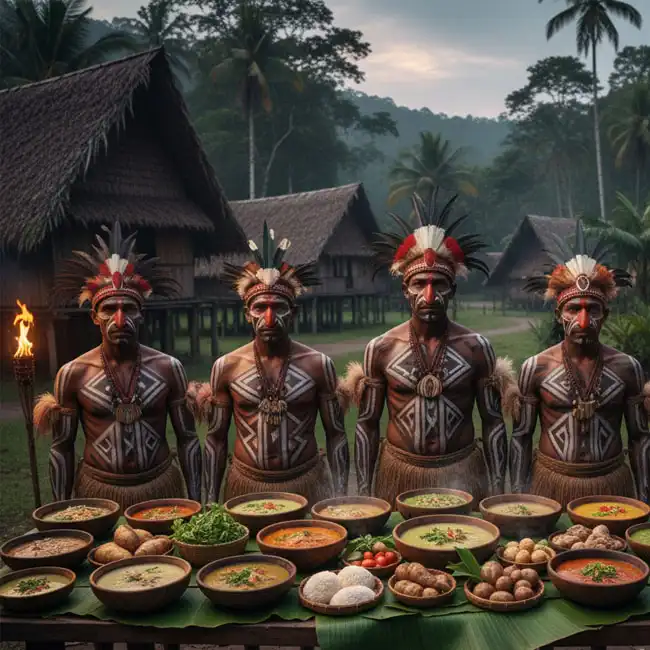
Welcome back, my food-loving friend! We’ve already nibbled on appetizers and treated ourselves to desserts, but now it’s time to get to the real soul-soothers. We are diving deep into the steaming bowls of Papua New Guinea (PNG) soups and stews.
In many parts of the world, soup is just a starter. But in Papua New Guinea, a "soup" is often the main event. It’s a complete meal in a bowl, designed to warm you up after a long day of gardening in the misty Highlands or to refresh you after a morning of fishing on the hot, humid coast. PNG soups are thick, hearty, and incredibly nutritious, reflecting a culture that values strength and communal sharing.
Let’s grab a wooden spoon and see what’s bubbling in the pot!
🥣 The Warmth of the Hearth: Soup Culture in PNG
To understand PNG soup, you have to imagine the setting. In many traditional homes, the kitchen is the heart of the house, often featuring a central fire pit. Whether it’s a rainy afternoon in Mt. Hagen or a breezy evening in Manus, the sight of a large pot simmering over an open flame is the ultimate sign of "home."
🥥 The Base of Everything
While Western soups might rely on beef or chicken stock, PNG soups almost always find their depth from two things: Root vegetable starches and Fresh Coconut Cream. The starch from taro or yams naturally thickens the broth, turning it into a silky, rib-sticking stew. Coconut cream adds that signature tropical richness that makes every spoonful feel like a hug.
🌿 "Kumu" (Green Leaves)
You can't have a PNG soup without Kumu. This is the generic Tok Pisin word for leafy green vegetables. Whether it's pumpkin tips, fern fronds, taro leaves, or aibika (slippery cabbage), these greens are tossed into the pot at the very end. they add a pop of color, a boost of vitamins, and an earthy flavor that balances the sweetness of the coconut.
🍲 Must-Try Papua New Guinea Soups and Stews
The variety of soups in PNG is as vast as the 800+ languages spoken there. Every province has its own "secret" way of flavoring their broth.
🥥 1. Aigir (The Coastal Classic)
If you ask anyone from the New Britain or New Ireland provinces about their favorite comfort food, they will likely say Aigir. It’s more than a soup; it’s a cooking technique.
Aigir consists of meat (usually chicken or fish), tubers like taro and yam, and heaps of greens submerged in thick coconut cream. What makes it special? The heat comes from hot stones. Red-hot stones from a fire are dropped directly into the pot of coconut milk, causing it to boil violently and infuse the broth with a distinct smoky aroma that you just can't get from a stove.
🐟 2. Fish and Sago Soup (Sepik River Style)
In the Sepik region, the river is the lifeblood of the community. Here, soups are often light but incredibly flavorful. Fresh river fish is simmered with ginger, garlic, and lemongrass.
The "magic" happens when Sago is added. Sometimes the sago is made into small pearls that float like dumplings, and other times it’s stirred in to create a thick, translucent, jelly-like broth. It’s incredibly soothing on the stomach and is often given to people feeling under the weather.
🍠 3. Highland Ginger and Kau Kau Broth
Up in the Highlands, where the air gets chilly at night, the soups are designed to provide warmth. A popular village-style soup involves boiling Kau Kau (Sweet Potato) until it almost falls apart, creating a thick, naturally sweet base.
Locals often add plenty of crushed ginger and spring onions. The ginger provides a "heat" that isn't spicy like a chili, but rather a glowing warmth that spreads through your chest. It’s the PNG version of "Chicken Soup for the Soul."
🐚 4. Seafood Chowder (Island Style)
On the smaller islands, the ocean is the pantry. A traditional island soup might feature whatever was caught that morning—clams, mud crabs, or reef fish.
This isn't your heavy, flour-thickened New England chowder. Instead, the broth is a thin, fragrant mixture of coconut water and coconut cream, flavored with turmeric (which grows wild in many areas) and finished with a squeeze of lime. It’s bright, yellow, and tastes like the sun.
🥣 5. Pumpkin and Peanut Stew
While peanuts aren't native to PNG, they have become a beloved staple. In some regions, roasted and crushed peanuts are added to a pureed pumpkin soup. The peanuts add a nutty richness and a boost of protein, making the soup feel very decadent and creamy without any dairy.
🥄 Living and Eating: The "Soup" Lifestyle
In PNG, the way you eat soup is just as important as what’s in it.
🥥 The Natural Bowl
While ceramic bowls are common in cities, in the villages, you might still see soup served in half-coconut shells or polished wooden bowls. There’s something about drinking a coconut-based broth out of an actual coconut that makes the flavor feel complete.
🤝 One Pot, One Family
Soup is the ultimate communal food. It’s rarely made in small portions. A massive pot is prepared, and everyone—from the neighbor who helped fix a fence to the visiting relative—is invited to dip their bowl in. It’s a "limitless" meal; as long as the pot is on the fire, you are welcome to a second (or third) helping.
🥖 No Bread? No Problem!
In the West, we usually serve soup with bread. In PNG, your "bread" is your starch. You’ll often see people holding a piece of roasted taro or a boiled banana in one hand, using it to sop up the thick coconut broth of the soup in the other. It’s functional, delicious, and perfectly paired.
🌿 Why These Soups are a Nutritionist’s Dream
If you’re looking for a "clean" way to eat, PNG soups are the gold standard.
1.Boiling vs. Frying: Most PNG soups are made by simmering ingredients. This preserves the nutrients and avoids the use of processed oils.
2.Traditional Superfoods: Ingredients like taro leaves and ginger are packed with antioxidants and anti-inflammatory properties.
3.Hydration: In a tropical climate, these soups are a brilliant way to stay hydrated while getting a full dose of electrolytes from the coconut and vegetables.
4.No Preservatives: When your soup goes from the garden to the pot in sixty minutes, you don't need additives. It’s pure, unadulterated flavor.
🥘 Bringing the PNG Spirit to Your Table
You don't need a fire pit or volcanic stones to capture the essence of a Papua New Guinea soup. The secret is in the layering.
Start with your aromatics (ginger and onions), add your hardy root veg, let them simmer in coconut milk until they start to soften and thicken the liquid, and only then add your protein and greens. It’s a slow, rhythmic way of cooking that encourages you to slow down and enjoy the process.
❓ FAQ: Common Questions About PNG Soups
Q1: Can I make these soups without coconut milk?
While coconut milk provides the traditional flavor and texture, some Highland soups are made with just water and the starches from the vegetables. However, to get the authentic "PNG experience," coconut is highly recommended as it acts as the primary fat source that carries the flavors of the greens and meat.
Q2: What can I use if I can't find traditional PNG greens like Aibika?
No problem! You can easily substitute traditional PNG greens with spinach, bok choy, kale, or Swiss chard. The goal is to have a leafy green that wilts nicely into the hot broth.
Q3: Is there a specific "Soup Season" in Papua New Guinea?
Not really! Because the climate is tropical, it’s always a good time for soup. However, soups are especially popular during the "wet season" when the rain cools the air, or during large cultural festivals where massive pots are needed to feed hundreds of people at once.
I hope this has warmed your heart as much as a bowl of Aigir warms a traveler! PNG soups are a beautiful testament to the resourcefulness and hospitality of the Melanesian people.
🍲 Warm Your Soul: Authentic Savory Broths from the Heart of Papua New Guinea
👉 Indulge 3 Specialty Papua New Guinea Soups
| 🌐 🍲 < Back | 🇵🇬 🍷 < Previous | Next > 🥗 🇵🇬 |