🏠 Home > 🗺️ Recipes > 🍞 Breads > 🇵🇾 Paraguay Breads
🇵🇾 🍞 Paraguay Breads Recipes
Published by Supakorn | Updated: February 2026
🥖 The Cultural Cornerstone: Not Your Grandma’s Loaf
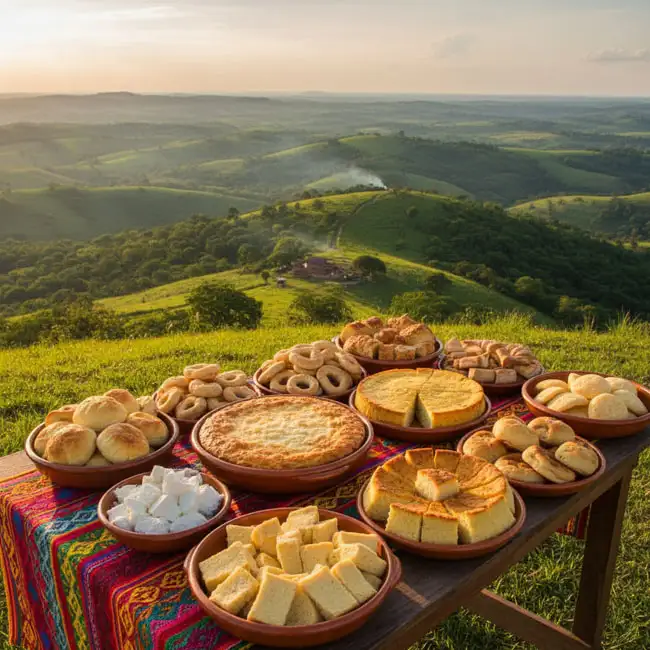
When we talk about "bread" in Paraguay, it's essential to understand that the word carries a different weight and ingredient list than what most people in the Western world are used to. If you’re expecting a fluffy, yeasted, wheat-based baguette or sandwich loaf, you’ll be pleasantly surprised by what you find instead!
Paraguayan 'breads'—often collectively known as farináceos (starchy foods)—are the true heart of the national diet. They are a profound reflection of the country's history, a beautiful marriage of the indigenous Guaraní staples and the ingredients introduced by Spanish colonizers. The star players here are mandioca (cassava or manioc) and corn (maize), which were the foundation of the Guaraní diet long before European contact. The Spanish brought cattle, dairy (hello, queso!), and eggs. The result? Dense, savory, protein-rich, and utterly delicious creations that blur the line between bread, cake, and savory pastry.
The most crucial thing to grasp is that these 'breads' are not just side dishes; they are central components of nearly every meal, sometimes even replacing cutlery! They embody a shared culinary heritage and are a symbol of hospitality and community. A table in Paraguay is simply incomplete without a basket full of these comforting starchy delights.
🌽 Everyday Eating and the Rhythm of Life in Paraguay
Paraguayan daily life, and its eating habits, revolve around simplicity, family, and shared moments, often outdoors or under the shade of a tree. The food culture is hearty, deeply traditional, and built on staple crops that are resilient and nourishing.
🍽️ Mealtime Moments: How and When They Eat
• Breakfast (El Desayuno): This is usually a simple affair, but always features a hot drink like mate cocido (a milder, cooked version of yerba mate, often with milk) or coffee, paired with one of the classic farináceos. It’s a moment to grab a quick, sustaining bite before the day begins, and Mbejú or Chipa are perfect for this.
• Lunch (El Almuerzo): The main meal of the day, usually eaten mid-day, often includes a main course of meat (Asado is a national favorite, though not a daily event) or river fish, accompanied by boiled mandioca (cassava) or sometimes a salad. A hearty portion of Sopa Paraguaya or Chipa Guasú might also be served. It's a time for family or colleagues to gather and share.
• Merenda (Afternoon Snack): This light, essential meal happens mid-afternoon. It’s another perfect time for a hot drink and a cheesy, warm treat. Street vendors, known as chiperas, are often out in full force, offering their freshly baked goods.
• Dinner (La Cena): Dinner is typically lighter than lunch, perhaps a soup, an omelet, or leftovers from almuerzo. Again, the starches are usually present, offering a comforting end to the day.
🌳 The Social Fabric: Tereré and Community
While not a food item, you simply can't talk about Paraguayan daily life without mentioning Tereré. This cold version of the traditional mate herbal tea is ubiquitous. You will see people everywhere—in parks, at bus stops, in offices—sharing a thermos of cold water and a gourd (guampa) with a metal straw (bombilla) full of yerba mate and herbs. This ritual of sharing the tereré is deeply social and an integral part of the culture, and what better to nibble on while chatting than a piece of warm, satisfying chipa? The food and drink rituals are all about connection and slowing down the pace of life.
🧀 The All-Stars: Dominant and Distinctive ‘Breads’
The bread-like staples of Paraguay are numerous, but a few stand out as national icons. These aren't just snacks; they are expressions of national identity.
☀️ Chipa: The Sacred Cheese Ring
• What it is: Chipa is often called the "sacred bread" of all Paraguayans. It is a dense, savory baked good traditionally shaped into a small ring or horseshoe.
• The Difference Maker: Unlike traditional bread, Chipa is made primarily from cassava starch (almidón de mandioca), which gives it a unique, chewy, and slightly rubbery texture. The other key ingredients are semi-hard cheese, eggs, and milk or butter. It is naturally gluten-free.
• Cultural Significance: Chipa is utterly ubiquitous. You buy it from chiperas (mostly women vendors) who carry large, woven baskets of the warm rings on their heads or at bus terminals. It is especially important during Holy Week (Semana Santa), where families bake massive batches in traditional tatakuá (clay ovens) to sustain them through the religious observances. There's even a National Chipa Day on August 9th!
• The Many Faces of Chipa: There are countless variations, showing the ingenuity of Paraguayan cooks:
•• Chipa Avatí: Made with corn flour.
•• Chipa So’o: Stuffed with seasoned minced meat.
•• Chipa Mandi’o: Made with cooked cassava pulp.
🍲 Sopa Paraguaya: The ‘Soup’ That Isn't
• What it is: Don't let the name fool you! Sopa means "soup," but Sopa Paraguaya is actually a savory, spongy, dense cornbread/savory cake. It is the national dish and a perfect example of a cultural misnomer.
• The Legend: The story goes that a cook for President Carlos Antonio López added too much corn flour to a soup intended for the President, and instead of a liquid dish, a solid, spongy mass was created. The President loved it, and the "Paraguayan Soup" was born!
• The Difference Maker: It's baked with a base of corn flour (harina de maíz), eggs, fresh cheese, milk, and onion. It's hearty, rich in protein, and exceptionally moist. It stands proudly on the table, served in large, comforting slices alongside asado (barbecue) or as a meal on its own.
🥞 Mbejú: The Quick and Simple Flatbread
• What it is: Mbejú (pronounced beh-joo) is one of the oldest staples, a traditional Guaraní starch cake or flatbread. It is incredibly simple and quick to prepare, often considered a foundational food.
• The Difference Maker: This one is typically made from just cassava starch, water or milk, oil or lard, and sometimes cheese and salt. The ingredients are mixed into a damp, coarse dough and cooked directly on a hot skillet or budare (a flat griddle), resulting in a crisp, slightly oily exterior and a moist, soft interior.
• Cultural Significance: It's an everyday hero, often eaten for breakfast or merenda (afternoon tea) with a hot drink. Its sheer simplicity makes it a symbol of the rural, resourceful spirit of Paraguay. The texture is key—it’s firm enough to hold its shape but soft enough to chew easily.
🌾 The Versatility and Adaptability of the Staples
The genius of Paraguayan cuisine lies in how few core ingredients—cassava and corn—can be transformed into a seemingly endless variety of textures and forms, from the solid and cake-like to the creamy and soupy.
✨ Other Noteworthy Farináceos and Dishes
• Chipa Guasú: The "Big Chipa." This is a large, creamy savory cake made from fresh corn kernels (not dried flour), milk, cheese, and onion. It’s similar to Sopa Paraguaya but is made with the whole, fresh kernels of corn, making it softer and sweeter. It is a common accompaniment to asados.
• Pastel Mandi’o: These are like empanadas, but instead of a wheat-based crust, the dough is made from mashed boiled cassava and cornflour. They are typically stuffed with seasoned ground meat and deep-fried until golden. They showcase cassava's role as a replacement for wheat dough.
• Lampreado (Payaguá Mascada): A fried patty made from mashed cassava and shredded beef. It’s another excellent example of taking the two foundational Guaraní ingredients (cassava and meat) and creating a satisfying, portable, and hearty food item.
• Mbaipy: A thick porridge or polenta-like dish made from corn flour, which can be prepared savory (with cheese, milk, and onion) or sweet (Mbaipy He’é, with milk, molasses, or honey). This demonstrates corn’s flexibility in both main courses and desserts.
These foods illustrate that the concept of "bread" in Paraguay is highly fluid—it can be a dense cake, a fried patty, a large ring, or a simple griddled flatbread, but its function is always the same: to nourish, to fill, and to bring people together.
🏡 From Tatakuá to Table: The Art of Preparation
While modern Paraguayan kitchens have gas or electric ovens, the traditional tatakuá (a traditional clay oven, literally "fire hole" or "fire cave" in Guaraní) remains a powerful symbol and a common sight in rural areas.
Baking in a tatakuá is an art form. The oven is heated with wood until the interior is scorching hot. The embers are then swept out, and the food—often large batches of Chipa or Sopa Paraguaya—is placed inside. The thick clay walls retain the heat beautifully, allowing the food to bake to a perfect, even golden-brown. This method of cooking is essential to achieving the authentic flavor and rustic texture of many traditional dishes.
The preparation of these breads is also a highly communal and intergenerational activity, especially during holidays. Grandmothers teach granddaughters the exact feel of the cassava starch dough, the right amount of cheese to add, and how to shape the Chipa. This hands-on process ensures that the culinary traditions are passed down, keeping the Guaraní and Spanish heritage alive in every warm bite.
🌎 A Culinary Identity That Stands Apart
Paraguayan cuisine, and its unique breads, often get overlooked on the broader South American culinary stage. Yet, it possesses one of the most distinctive identities in the region. Unlike its neighbors (Argentina, Brazil), which rely heavily on wheat, European techniques, or more recent immigrant influences, Paraguay's food culture has remained staunchly loyal to its pre-Columbian roots.
The reliance on cassava starch over wheat flour is what truly makes the 'Paraguayan breads' category stand out. It results in a naturally gluten-free cuisine that is incredibly filling and unique in flavor and texture—chewy, moist, dense, and always rich with cheese and eggs.
It is a cuisine of resilience, resourcefulness, and deep tradition. These breads are more than just food; they are a direct link to the land and the ancestors who first cultivated mandioca and corn. Every Chipa sold on the street is a tiny, perfect piece of Paraguayan history, inviting you to share in a tradition that is simple, profound, and utterly delicious.
So, the next time you hear "Paraguay," don't just think of its lush landscapes and flowing rivers. Think of the crackle of a freshly fried Mbejú, the comforting weight of a slice of Sopa Paraguaya, and the cheesy, chewy perfection of a Chipa. It’s a culinary world waiting to be explored, one starch-based delight at a time!
❓ Frequently Asked Questions (FAQ)
Q1. What is the biggest difference between Paraguayan 'breads' and typical European or American bread?
The primary difference is the main ingredient! Typical Western bread is made with wheat flour and usually uses yeast, resulting in a light, fluffy loaf. Paraguayan 'breads'—like Chipa, Mbejú, and Sopa Paraguaya—are predominantly made with cassava starch (almidón de mandioca) or cornmeal (harina de maíz), along with eggs and cheese. They are naturally gluten-free, much denser, and have a unique, chewy, and savory texture. They are more akin to savory pastries or cakes than a traditional loaf of bread.
Q2. Is Sopa Paraguaya actually a soup? If not, why is it called that?
No, Sopa Paraguaya is absolutely not a soup! It is a very dense, savory cornbread or cake, often served in squares or slices. The name, which literally translates to "Paraguayan Soup," is believed to be a humorous mistake from the past. Legend has it that a cook for an early Paraguayan president accidentally added too much corn flour to a creamy corn soup, resulting in a solid, baked dish. The president loved the accident, and the name stuck as a famous culinary misnomer!
Q3. Where is the best place to find and eat Chipa in Paraguay?
You can find Chipa everywhere in Paraguay, but the most traditional and charming way to get it is from the chiperas (women who sell chipa) at bus terminals, along major roads, or on busy street corners, especially in cities like Asunción or near transportation hubs. Buying it fresh and warm from a chipera's woven basket is a quintessential Paraguayan experience. For the most authentic and rustic flavor, look for Chipa that has been baked in a traditional tatakuá (clay oven).
🍞 Beyond the Basics: Discovering Unique Gluten-Free Breads from Paraguay
👉 Learn 3 Lifestyle Paraguay Breads
| 🌐 🍞 < Back | 🇵🇾 🥗 < Previous | Next > 🍱 🇵🇾 |