
🏠 Home > 🗺️ Recipes > 🧊🥩 Ice Age Ancestral Feast (Paleo Food) > 🏔️ Periglacial Central Europe: Ice Age Ancestral Feast (Paleo Food) Recipes > 🧊🥩 1.Dolní Věstonice Clay-Encased Hunter’s Roast
🧊🥩 Dolní Věstonice Mammoth-Style Clay-Baked Feast: Reclaiming Primeval Flavors
Published by Supakorn | Updated: August 2026
🏔️ Prehistoric Ancestral Palate: Upper Paleolithic Era (Approx. 30,000 BCE)
❄️ The Pleistocene Chronicles: 30,000 - 300,000 Years of Glacial Survival
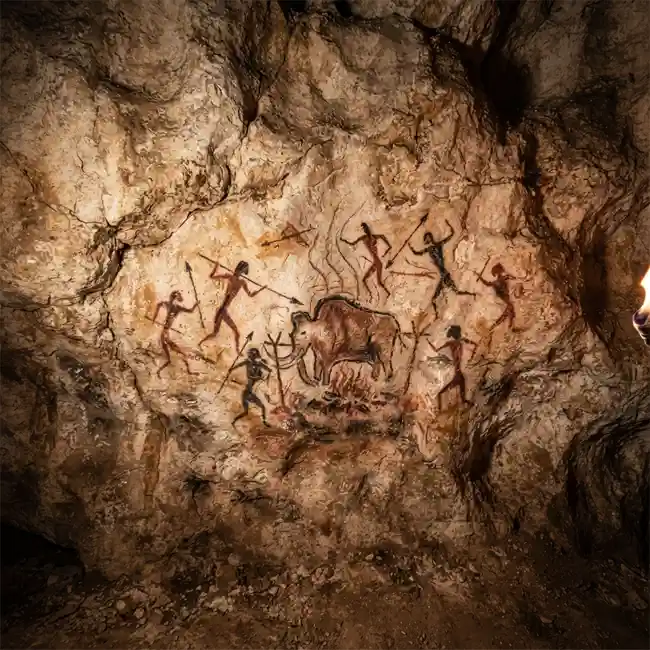
Imagine standing at the mouth of a sweeping tundra cave while a howling arctic blizzard sweeps across the endless Moravian steppes. The year is roughly 28,000 BCE. Outside, towering glaciers carve through the wilderness, and icy wind rattles the sparse spruce tree foliage. Inside the cavern, however, the air thickens with the comforting, rich aroma of wood smoke, rendered animal fat, and crackling resin. The firelight dances across the limestone walls, casting long shadows of hunters carving fresh game. Out on the snow-drifted plains, giant mammoth herds and woolly rhinoceroses roam the frozen expanse. Survival in this unforgiving climate was not merely about enduring the freeze—it was an art form powered by master hearth builders, relentless instinct, and the wild nourishment of the earth.
🦴 The Primeval Legacy of Human Survival
At the absolute core of our shared DNA lies an ancient survival code forged through fire and frost. Our Paleolithic ancestors did not subsist on processed fillers, artificial sweeteners, or chemical additives. They thrived on pure, untamed nutrient density—rich bone marrow, organ fats, wild roots scraped from tundra soil, and cold-hardened herbs gathered along glacial stream beds. This was an unyielding relationship with nature where every hunt was sacred, every organ held vital sustenance, and every spark ignited a celebration of life. Embracing these ancestral eating principles today bridges a bridge back to our baseline physiology, awakening a raw vitality that modern, hyper-processed foods have long since put to sleep.
🧊 The Paleolithic Resurrection
We are exhuming the ultimate Stone Age masterpiece directly from beneath layers of permafrost and ancient ash deposits. Archeologists at the famed Dolní Věstonice site in the Czech Republic uncovered humanity's earliest ceramic hearths, burnt mammoth bones, and underground pit ovens sealed in river clay. By combining primitive pit-baking mechanics with hot river-stone roasting, this guide resurrects an authentic, primal feast adapted seamlessly for your home hearth. Forget light salads and minimalist plates; this is a heavy, primal banquet engineered to reignite your ancestral palate.
🍗 Recipe: Dolní Věstonice Clay-Encased Hunter’s Roast
📜 Echoes from the Glacial Ice
Carved mammoth ivory figurines, including the legendary Venus of Dolní Věstonice, tell stories of deep cultural reverence for abundance, fertility, and survival. Archaeological excavations reveal that tribal hunters cooked huge roasts by wrapping thick cuts of red meat in damp river mud or clay, placing them directly into pit coals, and leaving them to steam in their own succulent juices. This clay casing acted as a natural pressure cooker, locking in every drop of nutrient-rich moisture and protecting the tender flesh from scorching in the roaring flames.
🌿 Wild Foraged Essentials & The Hunter’s Pantry
• The Primitive Staples: Our Ice Age ancestors relied strictly on what the seasonal tundra provided. Their pantry consisted of fresh prime game meat, nutrient-dense bone marrow fat, earth-scraped wild carrots, crushed juniper berries, fragrant pine needles, and sea salt scraped from ancient exposed salt pans.
• Modern Kitchen Substitutes: To replicate the robust texture and intense lipid profile of ancient megafauna without searching for a mammoth, you can easily source accessible modern whole foods. Swap mammoth meat for venison roast, grass-fed beef chuck, or wild boar shoulder. Use rendered bison tallow or duck fat in place of primitive game fats, and swap wild tundra roots with organic heirloom carrots and burdock root.
• Paleolithic Proportions:
◦ Main Meat Cut: 1500 grams grass-fed beef chuck, bone-in venison leg, or wild boar shoulder
◦ Ancestral Fat Coating: 150 grams raw bison tallow or grass-fed beef fat marrow, softened
◦ Tundra Root Mix: 400 grams wild parsnip or heirloom carrots, roughly chopped
◦ Earthy Herbs: 20 grams fresh pine needles or rosemary sprigs, finely bruised
◦ Primitive Seasoning: 15 grams coarsely crushed juniper berries
◦ Mineral Seasoning: 20 grams unrefined coarse sea salt
◦ Earth Casing: Food-safe culinary terra-cotta clay or a thick paste made from 1000 grams natural clay soil mixed with water (or a thick wrap of unbleached parchment backed by heavy natural banana leaves/cabbage leaves if clay is unavailable)
🪓 The Primitive Culinary Ritual
1.Preparing the Ancestral Cut: Take your prime roast and use a sharp knife to score deep diamond crisscross patterns across the fat cap. This mimics the stone-flake butchering techniques of Paleolithic hunters and allows the fats to penetrate deep into the muscle fiber.
2.Infusing the Tundra Rub: In a stone mortar or small bowl, mash the coarse sea salt, crushed juniper berries, and bruised pine needles into the softened bison tallow until a fragrant, thick herb paste forms.
3.Massaging the Meat: Work the tallow and herb mixture deeply into every cut, score, and crevice of the meat. Layer the chopped heirloom carrots and wild parsnips around the roast, pressing them firmly against the seasoned fat layer.
4.Constructing the Earth Shield: Wrap the seasoned meat tightly in a layer of clean, damp cabbage leaves or natural parchment paper. Next, pack a solid half-inch layer of food-grade culinary clay completely around the bundle, ensuring there are no open cracks or air gaps. This seals in all steam and fat render.
5.Fire Hearth Cooking: Pre-heat your oven or outdoor wood-fired hearth to 220°C (425°F). Place the clay-encased package directly onto hot baking stones or a heavy cast-iron skillet. Roast undisturbed for 2.5 to 3 hours, allowing the clay shell to harden into a golden-brown rock shell while gentle, high-moisture pressure cooks the meat inside.
6.The Sacramental Crack: Remove the clay shell from the fire. Using a heavy wooden mallet or the back of a large chef's knife, gently crack open the hardened outer earth casing to reveal the steaming, fall-apart roast within.
🔥 Secrets of the Ancestral Fire
• Maintain a slow, steady ambient heat inside your cooking chamber to ensure the internal collagen dissolves completely into silky gelatin without boiling off natural juices.
• Never discard the melted rendered tallow pooled at the bottom of the casing; pour this mineral-dense nectar directly over the carved meat slices prior to serving.
• Avoid using chemically treated woods or synthetic fire starters if cooking over an outdoor wood fire, as synthetic fumes easily permeate porous natural clay walls.
• Keep the protective leaf barrier damp before applying the raw clay layer to prevent the outer soil matrix from baking directly onto the edible meat surface.
• Be patient during the resting phase; let the cracked open clay parcel sit undisturbed for 15 minutes so the meat fibers can reabsorb every bit of aromatic moisture.
💬❓ Paleolithic Wisdom & Secrets FAQ
Q1.How does clay-baking compare to modern slow cookers or Dutch ovens?
Clay baking creates a unique porous micro-environment. It holds high heat like cast iron while releasing trapped steam gradually through micro-pores. This yields an exceptionally tender grain structure and intense flavor concentration that stainless steel or ceramic pots cannot replicate.
Q2.Is this ancient recipe suitable for a strict modern Paleo or Carnivore diet?
Yes, absolutely! This recipe is 100% free from grains, dairy, refined oils, processed sugars, and legumes. It relies entirely on whole animal proteins, ancestral saturated fats, and wild-style botanical flavorings.
Q3.Can I prepare this recipe over an open outdoor campfire?
Definitely! In fact, that is the most authentic way to enjoy it. Build a strong hardwood fire using oak or birch, let it burn down to a bed of glowing red embers, bury the clay package directly into the coals, and cover it with a layer of ash for three hours.
🥩 The Taste of Primeval History
Breaking open that warm earth shell yields a sensory explosion straight from the Ice Age tundra. The intense aroma of sweet juniper, pine resin, and slow-roasted primal fats fills the room instantly. The meat becomes so amazingly tender that it falls apart under the gentle press of a wooden spoon, bathed in its own rich juices. Every bite delivers a clean, deep, wild flavor completely untamed by modern processing—a true feast fit for a Pleistocene chieftain.
🏔️ Final Thoughts: Taming the Ice Age in Your Modern Kitchen
Bringing Stone Age cooking methodologies into your modern home culinary space is more than just making a dinner meal—it is an invigorating reconnection with human history. You do not need an actual cavern or a herd of wild megafauna to honor your ancestral roots. By stepping away from hyper-processed convenience foods and embracing real meat, raw fats, unrefined sea minerals, and ancient elemental cooking techniques, you turn your ordinary modern kitchen into a vibrant ancestral hearth. Try this clay-baked feast on a chilly evening, gather your loved ones around the table, and savor the unforgettable taste of pure human survival.
🐺 The Sacred Tribe (Claim Your Ancestral Heritage)
Are you ready to throw off the chains of modern artificial foods and step into the wild power of your ancestors? Join our growing global tribe of primeval cooking enthusiasts, outdoor hearth builders, and ancestral health advocates! Subscribe to our newsletter to receive weekly Ice Age recipes, wild foraging guides, primitive fire-building techniques, and exclusive access to our community forums. Claim your ancestral heritage today—your inner hunter is waiting!
🛡️ Credit to the Keepers of the Paleolithic Legacy
This culinary creation draws deep inspiration from Upper Paleolithic archaeological discoveries, cave wall engravings, and glacial relic excavations dating back to the Ice Age (30,000 - 300,000 BCE). We have lovingly adapted these untamed, ancestral cooking rituals for the modern home chef while preserving the authentic spirit, wild flavor, and primal vitality of our early human ancestors.
| 🏔️ 🧊🥩 < Back |