
🏠 Home > 🗺️ Recipes > 🥘 Sauces > 🇵🇭 Philippines Sauces
🇵🇭 🥘 Philippines Sauces Recipes
Published by Supakorn | Updated: February 2026
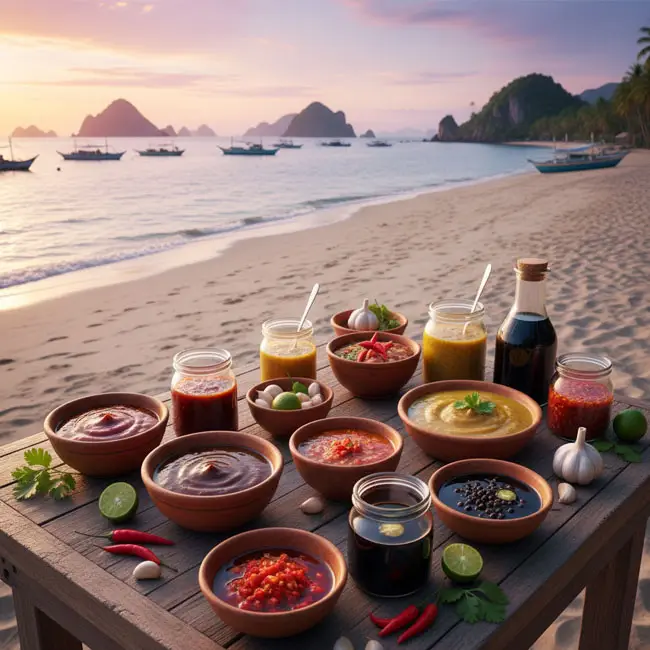
🍯🇵🇭 The Secret Language of Flavor: An Introduction to Filipino Sauces🌊⛰️
Hey there, flavor seeker! If you’ve ever sat down at a Filipino table, you might have noticed something curious. Even before the main course arrives, the table is already crowded with little small bowls, bottles of dark liquids, and jars of colorful pastes. In the Philippines, we have a saying: the cook starts the dish, but the diner finishes it.
Welcome to the world of Sawsawan (dipping sauces) and Condiments. In many cultures, changing the flavor of a chef’s dish might be seen as an insult. In the Philippines? It’s practically a requirement! Our sauces are the "soul" of our cuisine. They provide the acidity to cut through fried fats, the saltiness to wake up steamed fish, and the sweetness to balance out bitter herbs. Filipino food is a DIY experience, and the sauces are your tools to create the perfect bite.
🏛️ The "Sawsawan" Culture: Democracy on a Plate
To understand Filipino sauces, you have to understand the philosophy behind them. We call it "Democracy on a Plate."
Filipino culture is deeply communal and inclusive. Because everyone has different preferences—some like it sourer, some like it spicier—the main dishes are often cooked with a "neutral" or balanced base. The real personality comes from the sauce bowl. This tradition reflects the Filipino spirit of flexibility and respect for individual taste. Whether you are in a high-end restaurant or a roadside "carinderia," the condiment tray is the one thing you can always count on seeing.
🍶 The "Big Four" Foundations
Almost every Filipino sauce is built upon four pillars. These are the pantry staples that you will find in every single Filipino kitchen, from the northernmost tip of Batanes to the southern reaches of Tawi-Tawi.
🍎 Vinegar (Suka)
Filipino vinegar isn't just "acid." It’s a craft. We have Sukang Paombong (from nipa palm), Sukang Iloco (from sugarcane), and Sukang Tuba (from coconut sap). Each has a different personality. Some are sharp and biting; others are mellow and almost floral. Vinegar is the ultimate "counter-flavor" to the many fried and grilled dishes in our repertoire.
🐟 Fish Sauce (Patis)
This is the liquid gold of Philippine cooking. Made from fermented fish and salt, Patis provides the deep, umami funk that gives our soups and stews their "oomph." It’s salty, pungent, and incredibly savory. A few drops can transform a bland broth into a masterpiece.
🌑 Soy Sauce (Toyo)
Introduced by Chinese traders centuries ago, Filipino Toyo is generally saltier and less sweet than Japanese soy sauce. It is the base for the legendary Adobo and the go-to salty element for dipping grilled meats.
🦐 Shrimp Paste (Bagoong)
This is where things get adventurous! Bagoong is a paste made of fermented krill or fish. It can be "Bagoong Alamang" (shrimp) or "Bagoong Isda" (fish). It’s salty, earthy, and has a strong aroma that locals love and tourists... eventually learn to love! It’s the perfect partner for green mangoes or the essential base for dishes like Kare-Kare.
🍅 Iconic Philippine Sauces You Must Know
Now that we know the basics, let’s look at the "superstars"—the specific sauce blends that have become world-famous.
🍌 Banana Ketchup: The Sweet Surprise
During World War II, there was a shortage of tomatoes but an abundance of bananas. The legendary food technologist Maria Orosa stepped in and created Banana Ketchup. It’s made from mashed bananas, sugar, vinegar, and spices, dyed red to look like tomato ketchup. It’s sweeter, tangier, and is the mandatory sauce for Filipino spaghetti, fried chicken, and "Tapsilog" (beef breakfast).
🥥 Toyomansi: The Perfect Couple
This is the simplest yet most effective sauce in the Pinoy arsenal. It’s a mix of Toyo (Soy Sauce) and Calamansi (Philippine Lime). The saltiness of the soy meets the citrusy, floral brightness of the calamansi. Add a few crushed "Siling Labuyo" (bird's eye chilies), and you have the universal dipping sauce for anything grilled.
🍯 Mang Tomas: The "All-Around" Gravy
Originally created as a sauce for "Lechon" (roasted pig), Mang Tomas has become so popular that people eat it with almost anything fried. It’s a thick, sweet, and peppery liver-based sauce (though many modern versions are "liver-flavored"). It’s creamy, savory, and dangerously addictive.
🌶️ Sinamak: The Spiced Powerhouse
Hailing from the Visayas region, Sinamak is vinegar infused with a literal garden of aromatics: ginger, garlic, peppercorns, and plenty of chilies. It sits in a glass bottle, getting stronger and more flavorful over time. It is the gold standard sauce for "Inasal" (barbecue chicken).
🥗 Regional Sauce Specialties: A Taste of the Islands
The Philippines is a vast archipelago, and our sauces change with the landscape.
🍋 Batuan (Visayas)
In the Negros and Panay islands, they use a green, sour fruit called Batuan to create pastes and liquid souring agents. It has a unique, earthy tartness that you can’t get from tamarind or vinegar.
🥥 Palapa (Mindanao)
From the Maranao people of the South comes Palapa. It’s more of a condiment/side-dish made from "sakurab" (native scallions), ginger, turmeric, and lots of chili, often toasted with coconut. It’s spicy, aromatic, and adds a "kick" that is distinctive to Southern Philippine cuisine.
🦀 Agurong and Crab Paste (Pampanga)
In the culinary heartland of Luzon, they make Taba ng Talangka (Crab Fat). It’s a rich, orange, buttery paste made from the roe and fat of tiny river crabs. While it's technically a condiment, it’s used as a sauce for pasta or a topping for hot rice. It is pure, unadulterated luxury.
🥄 The Art of the "Mix": How to Make Your Own Sawsawan
If you want to eat like a local, you need to know how to "timpla" (mix) your own sauce at the table. Here’s how a typical Filipino might approach their bowl:
1.The Base: Choose your liquid (usually vinegar or soy sauce).
2.The Salt/Umami: Add a splash of Patis or a dollop of Bagoong.
3.The Aromatics: Smash a clove of raw garlic or some chopped onions into the bowl.
4.The Heat: Take a small red chili, pop it open with your fork, and let the seeds infuse the sauce.
5.The Smash: If there’s a piece of calamansi, squeeze it in, then drop the whole rind into the sauce for the essential oils.
This ritual is part of the meal’s rhythm. It’s a moment of anticipation before the first bite.
🥥 Beyond Dipping: Sauces as the Heart of the Dish
In Filipino cooking, many of our most famous "Stews" are actually defined by their sauce.
• Kare-Kare: A rich, thick peanut sauce colored with annatto. The sauce itself is quite mild, which is why it’s always served with a side of salty, sautéed Bagoong Alamang.
• Adobo: More than a dish, it’s a process of braising in vinegar and soy sauce. The "sauce" of the Adobo is highly debated—some like it "dry" (where the sauce has reduced to an oily glaze), while others like it "saucy" to pour over rice.
• Caldereta: A tomato-based goat or beef stew made rich and velvety with the addition of liver spread and cheese.
✨ Why Filipino Sauces are the "Heart" of the Home
At the end of the day, Philippines sauces represent the Filipino personality: they are bold, they are diverse, and they are meant to be shared. A bottle of spiced vinegar on a table isn't just a condiment; it’s an invitation for the guest to make themselves at home. It says, "I have provided the food, now you make it yours."
Whether it’s the sweetness of the banana ketchup or the funky depth of the bagoong, these flavors are what Filipinos carry with them when they travel abroad. It’s the taste of home that can be kept in a jar.
❓ FAQ: Frequently Asked Questions
❓ Q1. Is "Bagoong" safe to eat since it's fermented?
Absolutely! The fermentation process uses high salt content to preserve the shrimp or fish. It’s been a staple of the Filipino diet for centuries. If you're new to it, start with "Sautéed Bagoong" (Bagoong Guisado), which is cooked with garlic, onions, and sugar to mellow out the flavor.
❓ Q2. Why is Banana Ketchup red if it's made from bananas?
It’s purely for aesthetics! When it was first invented, people were used to tomato ketchup being red. To make it more "acceptable" and appetizing, red food coloring was added. Today, the red color is the iconic look of the product.
❓ Q3. What is the best sauce for someone who doesn't like spicy food?
Go for the Mang Tomas (All-purpose sauce) or a simple Toyomansi (Soy sauce and Calamansi) without the chili. Both provide plenty of flavor and "pampagana" (appetite-boosting) qualities without the heat!
🥘 Level Up Your Romantic Dinner with These Iconic Filipino Condiments
👉 Experience 3 Easy Philippines Sauces
| 🌐 🥘 < Back | 🇵🇭 🍱 < Previous |