🏠 Home > 🗺️ Recipes > 🏛️🍯 Wild Earth Sweets & Foraged Bites > 🗿 Pre-Classic Maya: Wild Earth Sweets & Foraged Bites Recipes > 🏛️🍯 1.Ek Chuah’s Golden Xunan Kab Honey Cakes
🏛️🍯 I Finally Made the 5000-Year-Old Maya Honey Sweet Everyone Forgot About
Published by Supakorn | Updated: October 2026
Hey, can we talk about honey for a second? Not the stuff in the bear-shaped plastic bottle from the supermarket. I mean REAL ancient honey.
Last month, I was digging through some research on Pre-Classic Maya civilization in what is now Belize and Guatemala, and I stumbled upon something that completely stopped me in my tracks. Long before chocolate bars and sugar cubes, the ancient Maya were making a sacred, golden sweet that was reserved for priests, warriors returning from a journey, and offerings to the gods.
And the secret ingredient? It was not regular honey. It was honey from the stingless Melipona bee, a tiny, sacred creature the Maya called Xunan Kab, which means Royal Lady Bee.
Today, I am going to show you how to resurrect it in your own kitchen. This is not just a recipe. This is edible archaeology.
🗿🔱 Ancient Civilization Origins: The Pre-Classic Maya Lowlands
📜 The Storyteller’s Intro: 5,000 Years of Ancestral Flavors Whispering from the Jungle
Close your eyes for a moment. Imagine the year 3000 BCE. Deep in the lush, steaming lowlands of the Yucatan Peninsula, there are no pyramids yet. There are small villages of thatched huts. The air is thick with the scent of copal incense and wet earth after the rain. Inside a cool, dark hut, a Maya woman is kneeling by a three-stone hearth. She is not just cooking. She is performing a ritual that her mother taught her, and her mother before her.
In a smooth, black volcanic stone bowl, she mixes ground heirloom corn with fragrant, dark amber honey that does not sting to harvest. She adds toasted cacao nibs and a pinch of smoked chili ash. The mixture she forms is small, precious, and intensely aromatic. This little cake was believed to carry the energy of the sun and the wisdom of the forest. It was food, medicine, and prayer all in one bite.
That is the flavor we are bringing back today.
🌍 The Global Value of Antique Heritage
Why should we care about a 5000-year-old sweet? Because the Pre-Classic Maya were master agricultural scientists. They domesticated corn from a wild grass called teosinte, they understood beekeeping centuries before Europeans, and they created one of the most sophisticated food systems on the planet without metal tools or pack animals.
The Melipona beecheii bee they cultivated is now endangered. Its honey, known as Melipona honey, is completely different from European honey bee honey. It is more liquid, slightly sour, floral, and packed with natural healing properties. UNESCO and food archaeologists now consider this tradition an Intangible Cultural Heritage that is on the verge of disappearing. By learning this recipe, you are not just making dessert. You are helping to keep a sacred lineage alive. This is slow food in its most profound form.
✨ The Culinary Resurrection
For a long time, this recipe was lost. Spanish colonizers banned many Maya sacred food rituals, and the knowledge was passed down only in whispers among the traditional beekeepers, the Meliponarios, in remote villages.
What I am sharing with you is a reconstruction, a culinary resurrection based on archaeological findings from Cuello and Cahal Pech, residue analysis of ancient pottery, and conversations with modern-day Maya elders in Belize who still keep the Royal Lady Bees in hollowed logs.
We are swapping the ancient three-stone hearth for your modern stove, but we are keeping the soul exactly the same. Get ready, because your kitchen is about to smell like an ancient temple.
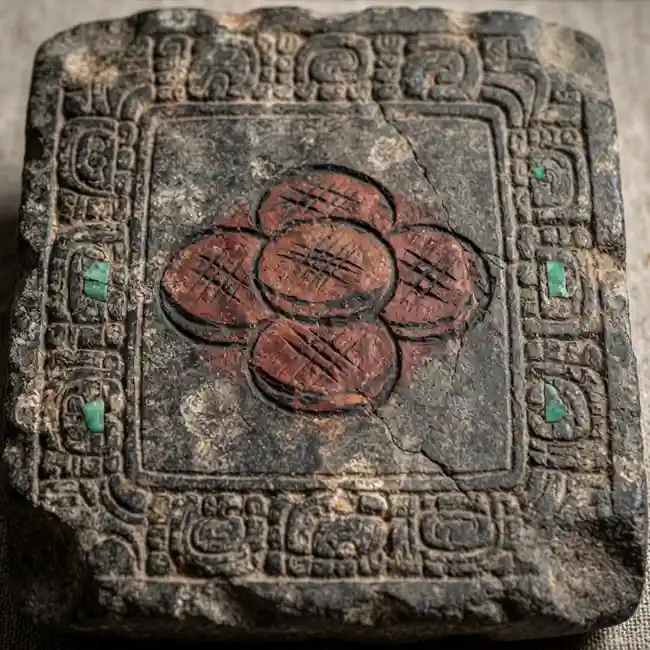
🍰 Recipe: Ek Chuah’s Golden Xunan Kab Honey Cakes
Ek Chuah was the Maya patron god of cacao and merchants, and protector of the beekeepers. These little honey cakes were said to be his favorite offering.
🏺 Legends Behind This Excavated Secret
Archaeologists found something incredible inside ceramic jars dating back to 1000 BCE in northern Belize. The residue inside was not just honey. It was a mixture of corn starch, Theobroma cacao, and Melipona honey, charred slightly at the bottom, suggesting it was gently toasted.
According to the Popol Vuh, the sacred book of the Maya, the gods first tried to make humans out of mud and wood, but they failed. Finally, they succeeded by making humans out of white and yellow corn dough. Corn was not just food. It was flesh. It was sacred.
Honey, on the other hand, was the blood of the forest. The Maya believed bees were messengers that could travel between the human world and the world of the gods. When you combined corn, the flesh of humanity, with honey, the blood of the divine, you created a sacred union. These honey sweets were eaten before important ceremonies, given to children to make them wise, and placed in tombs to nourish souls on their journey to the afterlife.
This is why we form them into small, round discs, representing the sun, Kinich Ahau.
🧺 Ingredients & The Noble Pantry
🌽 The Ancestral Staples
Before we touch a single modern measuring cup, let us honor the originals. The ancient Maya pantry was simple, but every ingredient was powerful. They had Ixim, the sacred heirloom corn, often a mix of white, yellow, and a deep purple-red variety. They had Kakaw, wild cacao, bitter and complex, not sweet like modern chocolate. And they had Xunan Kab honey, dark, tangy, and medicinal. They used ground, toasted pepita seeds for richness and a pinch of smoked chili ash for depth and preservation. There was no refined sugar. There was no wheat. Just pure, earth-given power.
🔄 Modern Substitutes
Do not worry, you do not need to find a hollow log full of stingless bees in your backyard. I have tested this so you can make it today with accessible ingredients, while staying true to the ancient spirit.
◦ For Melipona honey: Use the best raw, unfiltered wildflower honey you can find. If you can find real Melipona honey online from Yucatan beekeepers, it is a game changer, but a dark, raw buckwheat or rainforest honey is a beautiful substitute.
◦ For heirloom corn: Use fine-ground organic blue cornmeal mixed with regular fine yellow cornmeal. This gives you that nutty, ancient flavor profile and the beautiful color. Masa harina will work in a pinch.
◦ For wild cacao: Use raw cacao nibs, lightly toasted and ground, or 100 percent unsweetened cacao paste. Please do not use sweetened cocoa powder.
◦ For pepita: Raw pumpkin seeds, unsalted.
◦ For smoked chili ash: A tiny pinch of smoked chipotle powder or smoked paprika. This is optional but adds that authentic smoky hearth note.
📏 Ancient Proportions
Here is what you will need. I am keeping it simple and sacred.
For the Honey Cakes, makes about 12 small cakes:
◦ Fine blue cornmeal, 3/4 cup
◦ Fine yellow cornmeal, 1/2 cup
◦ Raw pumpkin seeds, 1/4 cup
◦ Raw cacao nibs, 2 tablespoons
◦ Raw unfiltered honey, preferably dark, 1/2 cup plus 1 extra tablespoon for glazing
◦ Water, filtered, 1/4 cup
◦ Unrefined sea salt, a small pinch, about 1/8 teaspoon
◦ Smoked chipotle powder, a tiny pinch, about 1/16 teaspoon, optional
◦ Ground true cinnamon, also called Ceylon cinnamon, 1/4 teaspoon, this was traded in ancient times
Equipment: A dry skillet, a small saucepan, a molcajete or spice grinder, a mixing bowl.
🔥 The Chef’s Ancient Ritual
This is where the magic happens. Do not rush it. Put on some calm music. This is a ritual, not a race.
✦ Step 1: Awaken the Seeds. Place your pumpkin seeds and cacao nibs in a dry skillet over medium-low heat. Toast them gently for 3 to 4 minutes, shaking the pan often, until the pumpkin seeds start to pop slightly and the cacao becomes incredibly fragrant. Your kitchen will smell amazing. Remove immediately and let them cool.
✦ Step 2: Grind to Sacred Dust. Once cool, pour the toasted pumpkin seeds and cacao nibs into your spice grinder or molcajete and grind them into a coarse, rustic meal. You do not want a super fine powder. You want some texture, some little bits to bite into, just like the ancient metate grinding stone would leave.
✦ Step 3: Toast the Corn. In the same dry skillet, add both the blue and yellow cornmeal. Toast on low heat for about 2 minutes, stirring constantly. You are not trying to brown it, just to awaken its nutty aroma and remove any raw taste. This was a crucial step for the ancient Maya to make corn more digestible.
✦ Step 4: Create the Union. In your mixing bowl, combine the toasted cornmeal, the ground seed and cacao mix, sea salt, cinnamon, and the optional smoked chipotle powder. Mix well with your fingers.
✦ Step 5: The Honey Binding. In your small saucepan, gently warm the 1/2 cup of honey and the 1/4 cup of water together over the lowest heat possible. Do NOT boil it. The ancient Maya never boiled their sacred honey, as it would kill its spirit. You just want it warm enough to become liquid and combine, about 30 seconds. Remove from heat.
✦ Step 6: Form the Sun Discs. Pour the warm honey water into the dry corn mixture. Stir with a wooden spoon until a thick, sticky dough forms. It should feel like wet sand that holds together when pressed. Let it rest for 10 minutes so the corn can absorb the honey.
Then, with damp hands, take about 1 and a half tablespoons of dough and form it into a small, thick disc, about 1 and a half inches wide. This is your little sun. Place it on a parchment-lined tray. Repeat until all dough is used.
✦ Step 7: The Gentle Hearth. You have two authentic options. The traditional way is to cook them on a dry, non-stick skillet or comal over very low heat for 4 minutes per side, until the outside is firm and slightly darkened. The other way, which I love, is to bake them in a preheated oven at 300 degrees Fahrenheit, which is 150 degrees Celsius, for 12 to 15 minutes. They should be firm on the outside but still soft and chewy inside.
✦ Step 8: The Final Blessing. While still warm, brush the tops of each cake with that extra tablespoon of raw honey. This gives them a beautiful, glossy, golden sheen, just like the ones offered to the gods. Let them cool completely. Their flavor actually deepens after a few hours.
🤫 Secrets of the Ancestral Hearth
I made every mistake possible when I first tried this, so you do not have to. Here are the real secrets.
Do not use regular bee honey from a squeeze bottle. I tried it. It becomes overly sweet and one-dimensional. The soul of this recipe is the complex, slightly sour, floral note of raw, dark honey. Spend a little more on good raw honey. It is worth it.
Do not skip the toasting step. Raw cornmeal and raw pepita will give you a pasty, bland cake. That 2 to 4 minutes of gentle toasting is what transforms it from raw flour to ancient flavor. Your nose is your best timer.
Do not make them too big. The ancient Maya made these bite-sized for a reason. They are rich, dense, and nutrient-packed. A large cookie will be too heavy and will not cook through in the middle. Keep them small and powerful.
Let them rest. I know it is tempting to eat them hot off the comal, but they need at least 30 minutes to set. The texture transforms from crumbly to chewy and fudge-like. Patience is part of the ritual.
Storage is sacred. These contain no preservatives. Store them in a sealed clay or glass container at room temperature for up to 3 days. In the ancient world, they were made fresh daily. You can also refrigerate them for up to a week, just warm them slightly before eating.
🗿 Ancient Civilization Origins FAQ
Q1. Can I make this recipe vegan?
Absolutely, and in a way that is still historically respectful. The ancient Maya did not use dairy. For a fully plant-based version that honors the spirit, you can use a thick, dark agave syrup mixed with a teaspoon of molasses to mimic the complexity of Melipona honey. The texture will be slightly different but still delicious.
Q2. What does Melipona honey taste like compared to regular honey?
It is a completely different experience. Regular honey is mostly sweet. Melipona honey is sweet, but also sour, citrusy, slightly fermented, and very floral. It is thinner in consistency. Some people describe it as having notes of tamarind and wildflowers. If you ever get a chance to try the real thing, do not miss it.
Q3. Is this recipe gluten-free?
Yes, naturally and authentically. The ancient Maya had no wheat. This recipe uses only corn, seeds, and honey, so it is naturally gluten-free. Just make sure your cornmeal is certified gluten-free if you have a severe sensitivity to avoid cross-contamination.
Q4. Why blue cornmeal? Can I just use yellow?
You can use all yellow if that is all you have, but blue corn was highly prized by ancient Mesoamerican cultures. It has a nuttier, earthier flavor, more protein, and beautiful antioxidants. The mix of blue and yellow also gives you that stunning, mottled, ancient look that is so beautiful.
🏛️ The Taste of Archeology
So, what does 5000 years taste like?
Take a bite. Close your eyes.
First, you get the warm, toasted corn, earthy and comforting, like fresh tortillas on a comal. Then, the deep, slightly bitter hit of pure cacao comes through, not sweet, but rich like dark earth. Then the pumpkin seeds give you a buttery crunch. And finally, the honey washes over everything, floral, tangy, and golden, with a whisper of smoke that lingers on your tongue.
It is not overly sweet like a modern cookie. It is complex. It is grounding. It tastes like history. It tastes like the jungle after rain. It is chewy, dense, and deeply satisfying in a way that a sugar cookie could never be. This is what food tasted like when it was still sacred.
🌿 Final Thoughts: Bringing Antiquity to Your Modern Table
We live in a world of instant, ultra-processed snacks that are forgotten five minutes after we eat them. This recipe is the opposite of that.
Making these little honey cakes is a small act of resistance against forgetting. It is a way to connect your hands, your kitchen, and your family to a lineage of ingenious people who understood the forest far better than we do.
You do not need to be a professional chef. You just need good ingredients and a little bit of respect for the story. Make them on a quiet weekend morning. Share them with people you love. Tell them the story of the Royal Lady Bee.
Food is the longest unbroken chain that connects us to our ancestors. Today, you just added a 5000-year-old link to that chain.
Let me know in the comments how yours turned out. Did you find raw honey? Did you try the blue corn?
🙏 The Golden Hook (The Sacred Union)
Loved this edible time travel? Join the Keepers.
If this little taste of the ancient Maya moved you, you are not alone. There is a whole world of lost ancient recipes, forgotten techniques, and sacred food stories that I am resurrecting here every week.
This is more than a food blog. This is a community dedicated to preserving the culinary wisdom of our ancestors before it disappears forever.
Become a Keeper of the Culture: Subscribe to my newsletter below and I will send you my private map of 3 endangered heritage ingredients you can still buy to support traditional beekeepers and farmers, plus a bonus Pre-Classic recipe for Smoked Cacao and Heirloom Corn Drink that never made it to the blog.
Let us keep the hearth fire burning together.
📜 Credit to the Keepers of the Culture (The Legacy)
My deepest respect and gratitude goes to the source.
This recipe reconstruction would not be possible without the academic work of archaeologists studying the Cuello site in Belize, the traditional knowledge of the Meliponarios, the stingless beekeepers of the Yucatan Peninsula in Mexico, Guatemala, and Belize, who have guarded the knowledge of Xunan Kab for millennia, and the Maya communities themselves, who are the living descendants and true owners of this heritage.
Special thanks to the beekeepers of the Yucatan who continue to keep Melipona beecheii in traditional Jobon hives made from hollow logs, preserving a biodiversity and a spiritual tradition that the world desperately needs.
This content is created with deep respect and is intended for educational and cultural appreciation purposes. I encourage anyone who makes this recipe to consider supporting organizations that protect native stingless bees and heirloom corn varieties.
| 🗿 🏛️🍯 < Back |