
🏠 Home > 🗺️ Recipes > 🏛️🍖 Hearth-Roasted Mains > 🗿 Pre-Classic Maya: Hearth-Roasted Mains Recipes > 🏛️🍖 1.Pre-Classic Maya-Inspired Earth-Pit Roasted Meat
🏛️🍖 5,000-Year Pre-Classic Maya Pit-Roasted Meat: Ancestral Fire & Flavor
Published by Supakorn | Updated: October 2026
🗿🌌 Ancient Civilization Origins: The Pre-Classic Maya World
Long before towering Maya cities dominated the landscape of Mesoamerica, communities across the Maya region were already developing sophisticated ways to grow, prepare, preserve, and share food.
The Pre-Classic Maya period stretches across a very long span of history, beginning thousands of years ago and continuing into the centuries when larger settlements and monumental architecture began to emerge. So when we talk about a “5,000-year-old Maya recipe,” it is important to be precise: we are exploring an ancient culinary tradition and archaeological reconstruction, rather than claiming that a written recipe from exactly 5,000 years ago has survived.
That distinction actually makes the story more fascinating.
There were no modern ovens, stainless-steel roasting pans, temperature probes, or neatly printed recipe cards. Cooking depended on things people could gather from the landscape: firewood, earth, stone, clay, leaves, roots, seeds, cultivated plants, wild foods, and whatever animals were available to the community.
The cooking fire was more than a source of heat.
It was a kitchen, preservation tool, gathering place, and center of daily life.
And somewhere around those ancient hearths, cooks learned one of humanity's most enduring techniques: slowly cooking food beneath or beside intense heat until it became tender, smoky, fragrant, and deeply flavorful.
🔥 The Storyteller’s Intro: Echoes of 5,000 Years of Ancestral Flavors
Imagine walking through the tropical landscape before sunrise.
The air is humid. The forest is beginning to wake. Smoke rises slowly from a small cooking area, curling between trees before disappearing into the morning mist.
Nearby, stones have been heated in a carefully prepared fire.
There is no clock.
There is no thermometer.
The cook knows the fire by sight.
They understand the difference between a roaring flame and glowing embers. They know when the stones are hot enough. They know how tightly food should be wrapped and how long it needs to remain near the heat.
This is cooking by observation.
Cooking by memory.
Cooking by experience.
The aroma of roasted meat slowly spreads through the settlement. Smoke mixes with the fragrance of leaves, roots, earth, and fire.
That simple scene connects us with one of the oldest human relationships on Earth: food prepared with fire and shared with other people.
Our modern reconstruction of Pre-Classic Maya pit-roasted meat takes inspiration from this ancient world while using ingredients and techniques that can realistically be adapted for a modern kitchen.
It is not a museum artifact on a plate.
It is a culinary bridge between archaeological knowledge and the modern home cook.
🌎 The Global Value of Antique Heritage
Ancient food traditions matter because food history is also human history.
Archaeology can reveal much about ancient communities through the remains left behind by cooking and eating. Charred plant remains, animal bones, grinding stones, hearth features, pottery fragments, and residues preserved in archaeological contexts can help researchers understand what people were preparing and how food was processed.
Across Mesoamerica, the development of agriculture transformed everyday life.
Maize became central to Maya civilization, while beans, squash, chili peppers, roots, fruits, seeds, and other local foods contributed to a diverse food system.
Cooking methods were equally important.
Roasting, boiling, grinding, steaming, drying, and cooking in earth or fire were practical solutions to the challenges of preparing food without modern equipment.
The global value of this heritage is not simply that the food is “old.”
It is that ancient cooking demonstrates human creativity.
People worked with their environment instead of against it.
They learned how heat behaved.
They discovered how certain plants changed flavor when roasted.
They learned how wrapping food could protect it from direct flame.
And they developed traditions that could be passed from one generation to another without written cookbooks.
🏺 The Culinary Resurrection
Today, recreating an ancient-inspired dish requires a little humility.
We cannot simply invent a recipe and call it an authentic 5,000-year-old Maya dish.
Instead, we can bring together archaeological knowledge, historically plausible ingredients, traditional Mesoamerican cooking principles, and modern food-safety practices.
That is what this recipe does.
Think of it as a culinary reconstruction inspired by the ancestral hearth.
The goal is not to pretend that we have discovered a lost recipe card.
The goal is to imagine, as responsibly as possible, how an ancient fire-based cooking method might have produced a deeply roasted and aromatic meat dish.
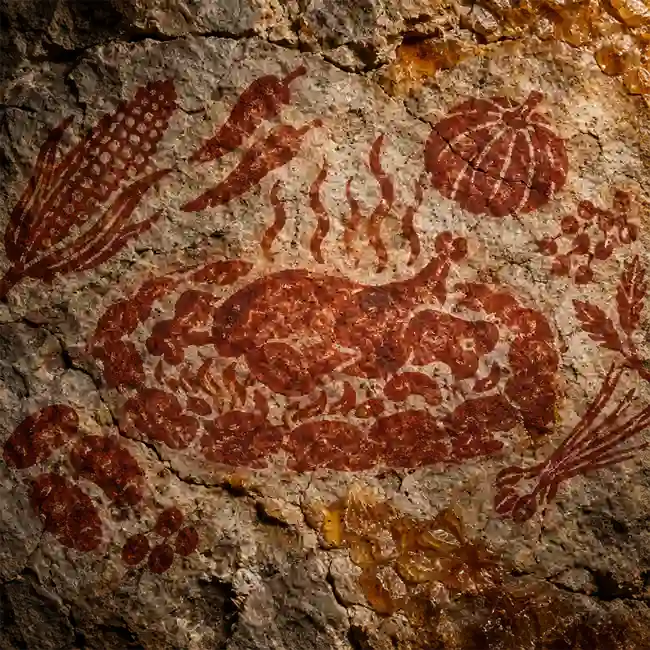
🔥 Recipe: Pre-Classic Maya-Inspired Earth-Pit Roasted Meat
This modern reconstruction captures the spirit of ancient earth-pit cooking while remaining practical for today's kitchen.
The basic idea is wonderfully simple:
Season the meat. Wrap it. Surround it with controlled heat. Cook it slowly. Let smoke and steam transform it.
For a modern home, an oven or covered outdoor cooking vessel is much safer and easier to control than attempting an archaeological-style underground fire pit.
The resulting meat should be tender, deeply savory, lightly smoky, and fragrant with herbs and spices.
🏺 Legends Behind This Excavated Secret
There is no surviving Pre-Classic Maya cookbook telling us exactly how an individual cook prepared a particular piece of roasted meat.
What survives instead is a much bigger story.
Archaeological evidence across ancient Mesoamerica demonstrates the importance of food processing, maize agriculture, grinding technology, hearths, pottery, and animal resources. Later Maya traditions also preserve a rich culinary heritage that helps modern researchers and cooks understand the broader food culture of the region.
This means that the “secret” behind this recipe is not a single hidden ingredient.
It is the method.
Ancient cooks understood that fire could completely transform food.
A tough piece of meat could become tender.
A plain ingredient could become aromatic.
A handful of herbs could change the character of an entire dish.
And cooking slowly beneath controlled heat could create flavors impossible to achieve by simply placing meat directly over a flame.
That is the real ancient culinary secret:
time, heat, smoke, and patience.
🌿 Ingredients & The Noble Pantry
🌽 The Ancestral Staples
The ingredients below are selected to create a historically inspired Mesoamerican flavor profile while remaining practical and accessible.
◦ Pork shoulder or pork butt — about 1.5 kilograms
A modern choice for this reconstruction because its fat and connective tissue respond beautifully to slow cooking.
◦ Fresh chili peppers — 2 to 4 peppers
Use a mild or medium variety according to preference. Chili peppers have deep roots in Mesoamerican food traditions.
◦ Achiote — 1 to 2 tablespoons
Traditionally associated with Mesoamerican and wider tropical American cuisines, achiote contributes earthy flavor and a warm red color.
◦ Garlic — 4 cloves
Garlic is included here as a modern culinary adaptation rather than presented as proof of a specific Pre-Classic Maya ingredient combination.
◦ Fresh cilantro or suitable local aromatic herbs — a small handful
Use this for freshness and fragrance.
◦ Sour orange juice or lime juice — about 120 milliliters
Citrus is a later addition to Mesoamerican cuisine, so it should be understood as a modern substitute rather than an ancient Pre-Classic ingredient.
◦ Salt — about 1½ teaspoons
Adjust according to the size of the meat and personal taste.
◦ Ground toasted seeds or pumpkin seeds — 2 tablespoons
These provide a nutty, earthy note inspired by the importance of seeds and cultivated plants in Mesoamerican food traditions.
◦ Water — as needed
A small amount helps maintain moisture during slow cooking.
🔄 Modern Substitutes
Ancient cooks worked with what their landscape provided. Modern cooks have a different problem: sometimes the historical ingredient simply is not available.
Here are practical substitutions:
◦ If achiote is unavailable, use a small amount of mild paprika combined with toasted ground seeds for color and earthiness.
◦ If sour orange is unavailable, lime juice mixed with a little orange juice provides a useful modern approximation.
◦ If fresh chili peppers are too hot, use a milder chili variety rather than removing chili entirely.
◦ If pork is not preferred, a substantial cut of beef can be used, although the flavor and cooking time will change.
◦ For a poultry version, choose bone-in chicken pieces and reduce the cooking time substantially.
◦ If fresh herbs are unavailable, use a small amount of dried aromatic herbs rather than overwhelming the dish with strong seasoning.
⚖️ Ancient Proportions
The following proportions are designed for approximately 1.5 kilograms of meat.
◦ Meat: 1 part
◦ Achiote: about 1–2% of the meat weight
◦ Chili: 2–4 fresh peppers
◦ Garlic: 4 cloves
◦ Acidic juice: about 8% of the meat weight
◦ Salt: roughly 1 teaspoon per kilogram of meat, adjusted to taste
◦ Ground toasted seeds: 2 tablespoons
◦ Fresh herbs: 1 small handful
◦ Water: a small amount, only when needed
These are not claimed to be literal archaeological measurements.
Ancient cooks would not have weighed ingredients with modern kitchen scales.
The proportions simply provide a repeatable modern framework for recreating an ancient-inspired flavor.
🔥 The Chef’s Ancient Ritual
✦ Step 1: Prepare the Earthy Seasoning
Crush the chili peppers, garlic, achiote, toasted seeds, salt, herbs, and acidic juice together.
In an ancient kitchen, grinding would have been physical work.
A stone grinding surface could turn whole ingredients into pastes and powders, releasing oils and aromas as the ingredients were crushed.
Today, a mortar and pestle gives you a similar hands-on experience.
The mixture should become thick, fragrant, and slightly coarse.
✦ Step 2: Let the Meat Meet the Seasoning
Make several shallow cuts across the meat.
Rub the seasoning mixture thoroughly into the surface.
Do not rush this stage.
Ancient-style cooking is all about allowing time to work.
Cover the meat and refrigerate it for several hours, ideally overnight.
This is a modern food-safety adaptation, but it also gives the seasoning time to penetrate the outer layers of the meat.
✦ Step 3: Create the Protective Wrap
For a modern kitchen, wrap the seasoned meat securely in several layers of banana leaves if available.
Banana leaves are particularly useful because they create a protective layer around the meat while contributing a gentle vegetal aroma.
If banana leaves are unavailable, use parchment paper followed by a layer of foil.
The wrapping should be secure enough to trap moisture.
✦ Step 4: Recreate the Hearth
Preheat an oven to approximately 150°C / 300°F.
Place the wrapped meat inside a covered roasting dish.
Add a small amount of water to the dish, being careful not to soak the meat package.
Cover the dish tightly.
This recreates the basic principle of an earth pit:
enclosed heat + moisture + long cooking time.
✦ Step 5: Let Time Do the Work
Slow-roast the meat for approximately 4–5 hours, depending on the cut and size.
The exact cooking time will vary.
Do not rely solely on the clock.
Use a food thermometer and cook the meat to a safe internal temperature appropriate for the cut.
For pulled-pork-style tenderness, continue cooking until the connective tissue has softened and the meat separates easily.
✦ Step 6: Finish With Fire
Once tender, carefully unwrap the meat.
Increase the oven temperature for a short finishing period, or place the meat under a broiler briefly.
The objective is to create a darker roasted exterior without drying the inside.
Watch it closely.
This final stage provides the visual contrast that makes pit-roasted meat so appealing: deeply browned edges surrounding tender meat.
✦ Step 7: Rest Before Sharing
Allow the meat to rest for approximately 15–20 minutes.
Then pull or slice it.
Serve it with simple plant-based accompaniments such as maize-based foods, beans, squash, fresh herbs, or roasted vegetables.
The meal becomes more than a recipe.
It becomes a small reconstruction of the ancient principle of eating together.
⏳ Secrets of the Ancestral Hearth
🔥 Secret 1: Do Not Chase Huge Flames
The most common mistake is thinking ancient roasting required enormous fire.
Slow cooking actually depends on controlled heat.
For a modern version, steady low heat is much more useful than an aggressive flame.
🌿 Secret 2: The Wrap Is Part of the Technique
Wrapping protects the meat from excessive direct heat.
It also helps retain moisture.
Banana leaves are especially useful for creating a fragrant protective layer.
🕰️ Secret 3: Patience Creates Texture
Tough meat does not become tender simply because it is exposed to heat.
Time allows connective tissue to break down.
That is why slow roasting works so well with cuts such as pork shoulder.
🧂 Secret 4: Do Not Overload the Seasoning
Ancient-inspired cooking does not need twenty ingredients.
A small collection of aromatic ingredients can create a powerful flavor.
Too much seasoning can actually hide the character of the meat.
🌡️ Secret 5: Modern Food Safety Comes First
Historical cooking methods should never be copied blindly when food safety is concerned.
Use a reliable thermometer.
Keep raw meat refrigerated.
Avoid cross-contamination.
Do not partially cook meat and leave it at room temperature.
Ancient authenticity is never a reason to ignore modern food-safety knowledge.
❌ Common Mistake: Drying the Meat
If the meat becomes dry, the heat was probably too aggressive or the cooking environment was not sufficiently enclosed.
Keep the roasting vessel covered during the long cooking stage.
❌ Common Mistake: Cutting Too Soon
Freshly cooked meat needs time to rest.
Cutting immediately can release valuable juices before they redistribute.
Give it those extra minutes.
The ancient hearth rewarded patience.
❓🗿 Ancient Civilization Origins FAQ
Q1.What does “5,000-year-old Maya recipe” really mean?
It should be understood as a modern reconstruction inspired by the foodways and cooking technologies of the ancient Maya world, not as a surviving written recipe from exactly 5,000 years ago.
Q2.Did Pre-Classic Maya people really pit-roast meat?
Earth-based and fire-based cooking has a long history in the Americas, and archaeological evidence provides information about ancient hearths, food processing, and cooking. However, the exact preparation represented by this modern recipe cannot be assigned with certainty to a specific Pre-Classic Maya kitchen.
Q3.What meat can be used for this recipe?
Pork shoulder is a practical modern choice because it performs extremely well during long, slow cooking. Beef or poultry can also be adapted, but cooking times and textures will differ.
Q4.Can I make it without an outdoor fire pit?
Absolutely.
A covered roasting dish in a modern oven is the safest and most controllable option for home cooks. The goal is to reproduce the principles of slow, enclosed cooking rather than literally recreate an ancient archaeological hearth.
🏺 The Taste of Archaeology
The first bite should feel earthy and deeply roasted.
The exterior carries the strongest seasoning.
The inside should be tender and juicy.
Chili provides warmth rather than simply heat. Achiote adds an earthy character and rich color. Toasted seeds bring subtle nuttiness, while herbs brighten the heavier roasted flavors.
And then there is the smoke-like character created by slow roasting and the final browning stage.
That combination is what makes the dish interesting.
It does not taste like a modern barbecue sauce.
It does not depend on a mountain of ingredients.
Instead, it celebrates something much older:
meat + plants + heat + time.
That combination has been part of human culinary history for thousands of years.
🍽️ Final Thoughts: Bringing Antiquity to Your Modern Table
You do not need to live beside an ancient Maya settlement to experience the spirit of an ancestral hearth.
You need patience.
You need good ingredients.
And you need a willingness to let the cooking process take its time.
This Pre-Classic Maya-inspired pit-roasted meat is best approached as a culinary reconstruction rather than a perfectly authenticated archaeological recipe.
That distinction does not make it less meaningful.
In fact, it makes the experience more honest.
When you prepare it at home, think about the generations of cooks who learned through observation rather than written instructions.
Think about the person who first discovered that food could be transformed by burying it near hot stones.
Think about the families who gathered around fires and shared meals after long days of work.
Then bring that idea into your own kitchen.
Wrap the meat.
Control the heat.
Wait patiently.
And when you finally open the package, let the aroma tell the story.
Ancient food does not need to remain trapped in museums.
It can inspire modern kitchens while we continue to respect the people and cultures from which these traditions emerged.
⚱️ The Golden Hook: The Sacred Union
Every ancient recipe carries two stories.
One belongs to the food.
The other belongs to the people.
When we recreate an ancestral dish, we are not simply copying ingredients. We are reconnecting with human ingenuity—the ability to turn simple resources into something nourishing, memorable, and worth sharing.
That is the sacred union at the heart of ancient cuisine:
• Earth provides the ingredients.
• Fire transforms them.
• People preserve the knowledge.
You can become part of that chain today.
Prepare this ancient-inspired Maya dish for your family or friends.
Share the story along with the food.
Explain where the inspiration comes from.
And remember that culinary heritage survives not only through archaeological sites and academic research, but also through people who approach the past with curiosity and respect.
🌿 Credit to the Keepers of the Culture: The Legacy
The ancient Maya were not simply “an ancient civilization with interesting food.”
They were diverse communities with sophisticated agricultural systems, culinary traditions, technologies, languages, artistic traditions, and social structures that developed over many centuries.
Modern Maya communities continue to carry cultural knowledge and traditions forward today.
For that reason, ancient Maya cuisine should be discussed respectfully and carefully.
Not every modern recipe labeled “Maya” is an authenticated ancient recipe.
Not every ingredient commonly associated with Mesoamerican cooking belongs to every period of Maya history.
And not every modern reconstruction should be presented as archaeological fact.
The most responsible approach is to distinguish between:
• documented archaeological evidence
• known Indigenous and Maya culinary traditions
• later historical developments
• modern culinary interpretation
This recipe belongs primarily in that final category: a modern interpretation inspired by the ancient Maya world and the enduring human art of cooking with fire.
The legacy belongs to the cultures that created, developed, preserved, and continue to carry these traditions.
Our role is to learn.
To cook thoughtfully.
To give credit.
And to keep the story alive without rewriting the past.
That is how a forgotten culinary tradition can inspire a new generation—not by pretending we know every ancient secret, but by respecting what history has revealed and remaining curious about everything still waiting to be understood.
| 🗿 🏛️🍖 < Back |