
🏠 Home > 🗺️ Recipes > 🏛️🍲 Clay-Pot Broths & Stews > 🗿 Pre-Classic Maya: Clay-Pot Broths & Stews Recipes
🗿 🏛️🍲 Pre-Classic Maya: Clay-Pot Broths & Stews Recipes
Published by Supakorn | Updated: October 2026
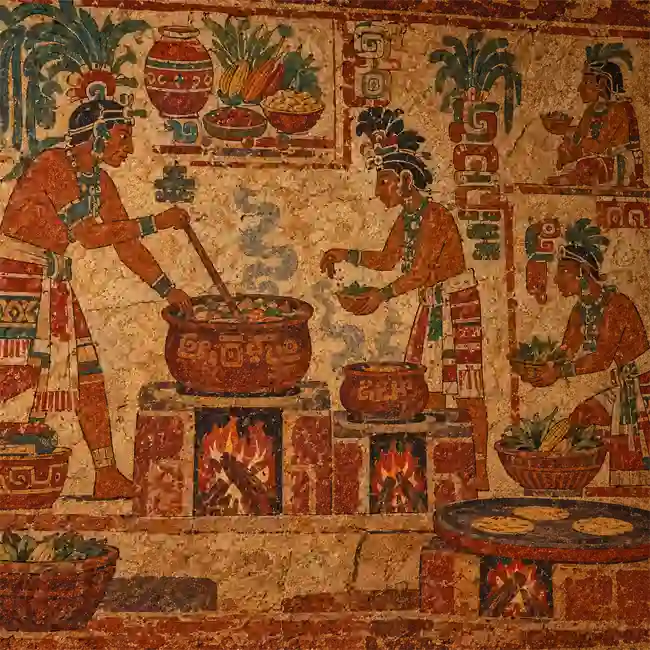
🐍📜 The Storyteller’s Intro: 5,000 Years of Ancestral Flavors
Hey there, fellow food lover and history explorer! Have you ever taken a sip of a hot, savory soup and wondered just how far back that soothing feeling goes? If we set our time machine back roughly 5,000 years, we land right at the dawn of one of the most mysterious and vibrant cultures in human history: the Pre-Classic Maya. Long before the giant stone pyramids like Tikal or Chichen Itza dominated the skyline, early Maya communities were busy turning the tropical forests of Mesoamerica into a thriving home. And at the absolute heart of every single settlement was the humble hearth, glowing softly under a handcrafted earthenware vessel.
To truly appreciate how these ancient foodways came to be, we have to look at the massive timeline of Maya civilization. Archeologists generally break this remarkable culture down into three distinct eras:
✦ 🏺 The Pre-Classic Period (c. 2000 BCE – 250 CE): This is where our journey takes place. It was a time of epic transition when nomadic bands settled down, embraced maize agriculture, mastered the art of pottery making, and laid down the foundational culinary practices that defined Mesoamerica.
✦ 🏛️ The Classic Period (c. 250 CE – 900 CE): Known as the golden age of monumental architecture, complex hieroglyphic writing, bustling city-states, and elaborate courtly feasting rituals.
✦ 🏹 The Post-Classic Period (c. 900 CE – 1521 CE): A resilient era marked by shifting trade networks, coastal city growth, and persistent culinary traditions that survived until European contact.
During the Archaic transition into the Early Pre-Classic era, ancient cooks made a monumental discovery: clay pot stewing. Before durable earthenware ceramics existed, cooking liquid over direct fire was a tricky business involving heated stones dropped into woven baskets or animal hides. But once clay vessel technology arrived, everything changed. Cooks could simmer wild herbs, forest game, soaked forest grains, and tubers for hours on end over low, steady flames.
These early clay pots weren't just kitchen tools; they were sacred gifts tied directly to Mother Earth. Every simmering broth became a harmony of flavor, sustenance, and spiritual reverence. The deep, earthy undertones infused into slow-simmered dishes by porous clay vessels created a distinct sensory world that defined the earliest flavors of the Americas.
📜 Iconic Excavated Menus: The Ancient Maya Hearth
When modern archaeologists dig through ancient refuse heaps, known as middens, and examine the chemical signatures left behind inside porous clay sherds, they uncover incredible evidence of what was cooking thousands of years ago. Through ceramic residue analysis, microbotanical starch recovery, and zooarchaeological animal bone studies, scholars have identified distinct dish styles that warmed Pre-Classic hearths. Here are some of the most prominent ancient dishes and stew traditions uncovered from archaeological research:
✦ 🍲 K'aak'al Bak' K'aj (Ancestral Hearth Game Stew): A hearty slow-simmered forest stew featuring wild venison or collared peccary, gently braised inside unglazed earthenware jars alongside native alliums, wild chilis, and local forest greens.
✦ 🌽 Mukbil Ixim Ya'ax K'ol (Porous Clay Nixtamal Broth): A deeply nourishing broth created by boiling field corn soaked in wood-ash alkaline solutions, thickened into a silken liquid and infused with ground pumpkin seed paste.
✦ 🦃 Ah K'in K'utu' K'ek'en (Sun-Dried Fowl and Tuber Simmer): A celebratory pot dish centered around ocellated turkey or wild game birds, simmered over hours with forest sweet potatoes, cassava root, and aromatic pepper leaves.
✦ 🍃 Sikil P'ak K'ab (Aromatic Earth-Jar Herb Broth): A vibrant botanical broth loaded with native chaya leaves, wild epazote, toasted squash kernels, and aromatic forest roots cooked gently to retain their herbal vitality.
✦ 🐟 Ch'al Ha' Kay (Lowland Riverine Fish and Chili Stew): A lighter coastal and river-valley stew prepared with fresh freshwater fish, smoked river mollusks, ground achiote seeds, and fruity wild chilies simmered in shallow clay basins.
🗺️ Life Around the Hearth & Following the Ancient Maya Trail
To live as an early Pre-Classic Maya family meant living in total harmony with the rhythms of nature, the sun, and the seasonal rains. Everyday life revolved around the milpa—the sacred agricultural plot where corn, beans, and squash were planted together in a symbiotic dance known as the "Three Sisters." The corn provided a physical trellis for climbing beans, the beans fixed essential nitrogen back into the soil, and the broad leaves of the squash spread across the ground, retaining soil moisture and keeping weeds at bay.
Daily dining was a warm, communal experience. Families gathered around three simple hearthstones set on the earthen floor of their oval thatched dwellings. The kitchen was the beating heart of the home, always smelling of damp clay, roasting corn, fragrant woodsmoke, and crushed peppers. Food was shared out of wide clay bowls, often eaten using folded corn cakes or calabash scoops instead of metal utensils.
If you are a passionate travel enthusiast eager to follow the footsteps of these ancient cooks today, the heartland of the Pre-Classic Maya spans across stunning, biodiverse regions across Mesoamerica:
• 🌳 The Mirador Basin (Guatemala): Deep in the dense Petén rainforest lies El Mirador, home to massive early structures like the La Danta pyramid. Trekking through this remote jungle offers an unmatched connection to the pristine forest environments where early Maya foragers gathered wild herbs and hunted game.
• 🌊 The Belize River Valley (Belize): Sites like Cuello and Blackman Eddy provide some of the earliest archaeological evidence of Pre-Classic Maya pottery and hearth remains in the region. Exploring nearby eco-lodges along the river lets you experience the lush waterways that supplied ancient cooks with fish and fertile soil.
• 🍃 The Puuc Region and Northern Lowlands (Yucatán, Mexico): Visiting rural communities in Yucatán allows travelers to see traditional cooking methods that remain unchanged for thousands of years, including underground earth ovens (pib) and clay pot simmering over wood fires.
• ⛰️ The Guatemalan Highlands (Guatemala): Around Lake Atitlán and modern-day Guatemala City (where the ancient site of Kaminaljuyu was located), high-altitude microclimates nurtured specialized herbs, tubers, and volcanic clays used for pottery.
🚣 Navigating the Historic Waterways: The Ancient River Trade Routes
Water was the lifeblood of Pre-Classic Maya civilization. Long before paved roads crossed the dense tropical forests, expansive river networks served as the superhighways of Mesoamerica. Ancient traders navigated dugout canoes along major river systems, moving essential goods, culinary ingredients, and specialized pottery from the coast straight into inland heartlands.
Key river basins played crucial roles in shaping the culinary exchanges of the era:
• 🌊 The Usumacinta River Basin: Flowing along the border of modern Mexico and Guatemala, this powerful river allowed lowland communities to trade river fish, freshwater turtles, and tropical fruits for highland clays and volcanic basalt stones used to make grinding slabs (metates).
• 🛶 The Pasión River System: A vital inland arterial route that connected forest communities. Traders paddled canoes loaded with sea salt from coastal lagoons—an absolute necessity for preserving meat and seasoning daily clay-pot broths.
• 🌿 The New River and Belize River: Winding through dense coastal plains, these waterways allowed early settlements easy access to coastal marine life, river snails (jutis), and fertile floodplain soil perfect for early agriculture.
Along these riverbanks, early communities established vibrant exchange hubs where regional ingredients were traded. A cook living inland could acquire coastal sea salt, smoked fish, or vibrant red achiote seeds brought by river traders, elevating a simple clay-pot broth into a rich feast of complex flavors.
🏜️ Surviving the Scrublands & Sacred Sinkholes: Cenotes and Arid Lowlands
While lush river valleys provided constant running water, other parts of the Maya world faced drastically different landscapes—from arid scrub forests to karstic limestone plains completely devoid of surface rivers. In these challenging environments, the Maya adapted through incredible water management techniques and specialized food gathering.
In the northern plains of the Yucatán Peninsula, life centered entirely around sacred sinkholes known as cenotes:
• 💧 Natural Limestone Sinkholes (Cenotes): Formed by collapsed limestone bedrock exposing crystal-clear groundwater beneath, cenotes were both vital fresh water sources and deeply sacred portals to the underworld (Xibalba). Early settlements grew directly around these natural wells, using cold subterranean water for processing food and soaking field corn.
• 🌵 Arid Scrubland Foraging: In drier zones, ancient Maya cooks relied on drought-resistant flora. They harvested wild agaves, native cacti, chaya (tree spinach), and hardy root crops that thrived even during long dry spells.
• 🕳️ Chultuns (Hand-Carved Underground Cisterns): To survive seasonal dry periods, early engineers carved bottle-shaped chambers into subterranean rock to store rainwater and preserve harvested crops like dried corn, squash seeds, and beans at stable, cool temperatures.
Cooking in these drier regions required ultimate resourcefulness. Water was precious, making slow clay-pot simmering the most efficient way to cook food without wasting a single drop of liquid—every drop of moisture stayed trapped inside the pot, creating rich, nutrient-dense stews.
🔱❓ Ancient Civilization FAQ: Unlocking Palace Kitchen Mysteries
Q1.What made clay pot cooking so special compared to other ancient cooking methods?
Clay vessels distribute heat slowly and remarkably evenly across their entire surface, preventing hot spots that scorch ingredients over open flames. Furthermore, unglazed ancient ceramic pores gently absorb woodsmoke, native herbs, and natural steam, locking in essential moisture and seasoning the food from the outside in with an earthy profile impossible to recreate in modern metal cookware.
Q2.What is "Nixtamalization" and why was it so important to early Maya broths?
Nixtamalization is the ancient practice of soaking and cooking field corn in an alkaline water bath (traditionally made by mixing clean water with wood ashes or slaked lime/calcium hydroxide). This magical process softens the tough outer hull of corn kernels, unleashes essential niacin (Vitamin B3), unlocks complete protein availability, and creates a distinct aroma that forms the aromatic foundation of Mesoamerican food culture.
Q3.How did early Pre-Classic Maya communities get fresh meat for their everyday stews?
Before widespread animal domestication took hold in the Americas, the early Maya relied on controlled forest hunting, trapping, and land management. They hunted wild white-tailed deer, collared peccary (wild pigs), ocellated turkeys, agoutis, and armadillos. They also harvested freshwater snails (jutis), river fish, and coastal shellfish to provide rich proteins for their clay simmer pots.
Q4.Did early Pre-Classic Maya cooks use modern ingredients like onions, garlic, or black pepper?
Not at all! Old World ingredients like garlic, yellow onions, black pepper, citrus fruits, chicken, beef, and pork were introduced thousands of years later during Spanish contact. Instead, ancient cooks relied on incredible native aromatics like wild allium leaves, forest pepper leaves (hoja santa), allspice berries, chilies, achiote seeds, wild epazote, and toasted pumpkin seed pastes to build deep, complex flavor profiles.
🧠 Final Thoughts: The Timeless Allure of Antique Gastronomy
Stepping back into the world of the Pre-Classic Maya reminds us that true culinary magic doesn't require high-tech gadgets or modern conveniences. It relies on patience, a deep respect for the earth, and an intimate knowledge of natural ingredients. The humble clay pot, gently nestled on three warm hearthstones, nourished generations of visionary builders, farmers, and thinkers who laid the foundation for one of history's greatest civilizations.
There is something profoundly comforting about knowing that thousands of years ago, a family sat around a glowing fire in the Mesoamerican rainforest, enjoying the exact same comforting warmth of a slow-simmered herbal broth that we crave on a cool evening today.
Stay tuned for our upcoming feature, where we will uncover step-by-step reconstructions of these lost ancestral clay-pot recipes so you can recreate the ancient flavors of the Pre-Classic Maya right in your own modern kitchen!
🏛️ Credit to the Keepers of the Culture (The Legacy)
We honor and acknowledge the modern Indigenous Maya communities throughout Guatemala, Mexico, Belize, Honduras, and El Salvador who continue to safeguard, preserve, and pass down these ancestral culinary traditions through generations. From the meticulous care of seed saving to the ancient art of clay pottery and traditional milpa farming, their ongoing dedication keeps the living heritage of ancient Mesoamerica alive today. We also express our gratitude to the dedicated archaeologists, ethnobotanists, and historians whose rigorous scientific research allows us to rediscover and celebrate these extraordinary ancient food secrets.
🏛️🍲 Unearthing Mesoamerica's Lost Maya Ancestral Stew
👉 Discover Pre-Classic Maya: Clay-Pot Broths & Stews
| 🌐 🏛️🍲 < Back | 🗿 🍖 < Previous | Next > 🍯 🗿 |