
🏠 Home > 🗺️ Recipes > 🏛️🍖 Hearth-Roasted Mains > 🏰 Proto-Nordic Tribes: Hearth-Roasted Mains Recipes > 🏛️🍖 1.Shoreline Hearth-Roasted Whole Fish
🏛️🍖 A Nordic Hearth-Roasted Fish Inspired by Ancient Coastal Kitchens
Published by Supakorn | Updated: October 2026
Picture a quiet shoreline in northern Europe. The air is cold, the fire is warm, and the day’s catch is waiting beside the hearth. There is no complicated sauce to make and no long list of spices to measure. The cook’s most important tools are patience, a steady heat, and an understanding of when the fish is ready.
That is the spirit behind this Nordic hearth roast fish. It is a modern reconstruction inspired by ancient coastal cooking, not a claim that someone uncovered a written recipe from 5,000 years ago. People in prehistoric Scandinavia caught fish and cooked with fire, but the exact seasonings and steps used in one particular meal are unknown.
What we can do is start with those simple ideas: fresh fish, gentle fire, and ingredients that let the catch remain the star. If you have an outdoor cooking setup, you can bring the recipe close to its hearth-roasted inspiration. If you have an oven, you can still make a satisfying version at home.
🛡️ᛘ Ancient Civilization Origins: Prehistoric Coastal Scandinavia
Around 5,000 years ago, communities across the Scandinavian region lived near waterways that offered an important source of food. Coastlines, rivers, and lakes shaped what people could gather and catch. Fish was practical, nourishing, and closely connected to daily life.
There was no single “ancient Nordic menu.” A coastal household and an inland household would not necessarily have eaten the same fish or cooked it in the same way. Seasons mattered, too. The available catch could change with the weather, the water, and the tools people had.
That variety is worth remembering when we talk about ancient recipes. This dish does not try to pin one exact method to one unknown cook. Instead, it takes inspiration from a broad, believable cooking pattern: prepare a freshly caught fish, place it near a controlled heat source, and cook it just long enough for the flesh to turn tender.
🔥 The Storyteller’s Intro: When the Shoreline Met the Hearth
Imagine coming in from the water as daylight fades. Your hands are cold, but the fire has been tended. A fish is cleaned, the coals are glowing, and dinner begins with a question that still matters in kitchens today: how do you cook something good without cooking it too much?
The answer starts with restraint. A whole fish already has a natural layer of protection. Its skin and bones help shield the flesh from the heat, while its cavity offers a place for a few aromatic ingredients. Set it close enough to roast, but not so close that the outside burns before the center cooks.
This is the atmosphere we are borrowing—not a fictional account of an identified ancient meal. The people who cooked along Nordic shores left histories far more complex than any one recipe can capture. Still, standing beside a fire and watching a fish cook is an experience that can make the distance between their world and ours feel a little smaller.
🌍 The Global Value of Antique Heritage
Food heritage is more than a collection of finished dishes. It includes skills: judging a fire, recognizing a fresh ingredient, making use of what a local landscape provides, and sharing a meal with others.
Across the world, many communities have cooked fish over or beside a fire. That does not make their traditions interchangeable. Each place has its own waters, species, practices, and knowledge. The value of looking back is not to flatten those differences into one “ancient secret,” but to pay closer attention to them.
A simple fish roast can also change how we cook today. Instead of hiding an ingredient beneath layers of flavor, we learn to choose it carefully and handle it well. That lesson travels easily from a shoreline hearth to a modern kitchen.
✨ The Culinary Resurrection: Rebuilding an Idea, Not a Lost Formula
The word resurrection sounds dramatic, but honesty makes this dish more interesting. No complete 5,000-year-old instruction sheet tells us which fish to buy, how much salt to add, or precisely where to place it beside the fire.
So this recipe is an interpretation. It combines the broad idea of prehistoric fish cookery with measurements and food-safety guidance that make sense for a cook today. Juniper provides a woodland aroma, but it is optional; its presence here should not be taken as proof that it belonged in a specific ancient fish dish. The same goes for the modern oven method.
Think of this as a bridge rather than a replica. One end rests on an old relationship between people, fish, and fire. The other rests in your kitchen, where you can make dinner with confidence and enjoy every bite.
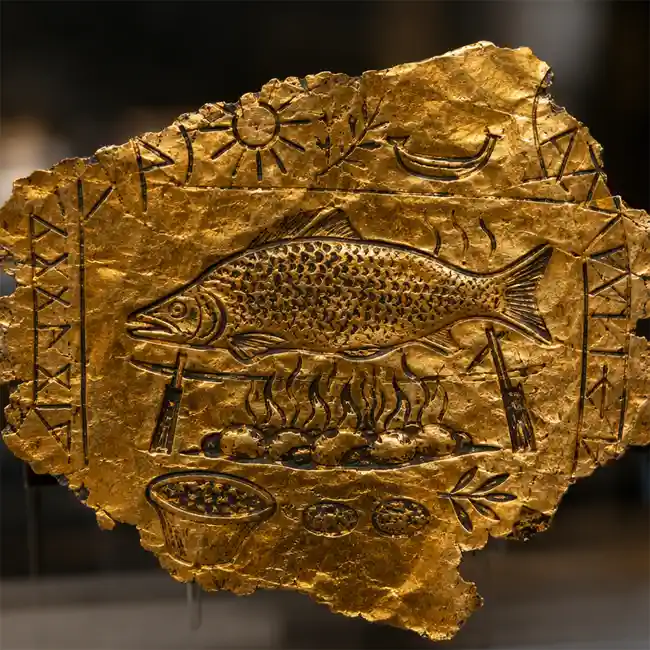
🐟 Recipe: Shoreline Hearth-Roasted Whole Fish
This recipe serves 3–4 people and takes about 15 minutes to prepare, plus approximately 20–35 minutes to cook, depending on the fish and cooking setup.
Choose a whole fish that fits comfortably on your tray or grill. Cod gives you mild, delicate flakes; trout is richer and usually cooks a little faster. Ask your fishmonger to clean and gut it if you would rather skip that step. A thermometer makes the process especially easy, whether you cook outdoors or in the oven.
📜 Legends Behind This Excavated Secret
It is tempting to tell a story about a secret recipe discovered beneath an ancient hearth. It would make a wonderful opening—but it would not be an honest history of this particular dish. There is no excavated recipe naming these ingredients or giving these steps.
The real story is quieter and, in its own way, more compelling. Archaeological evidence can reveal parts of past foodways, including the importance of fish and the use of fire. It rarely preserves the small decisions that turn an ingredient into dinner: who cleaned the catch, how close it sat to the heat, or whether a cook added something fragrant to the cavity.
Those missing details are where this recipe begins. We are not recovering a forgotten set of instructions. We are asking what a respectful, practical meal inspired by that setting might look like now. The result is deliberately simple, so the fish tastes like fish and the hearth-inspired method has room to speak.
🧺 Ingredients & The Noble Pantry
⭐ The Ancestral Staples
At the center of the pantry is the catch itself. Freshness matters more here than a long ingredient list: look for fish that smells clean rather than strongly fishy, with firm flesh and skin that has not dried out.
Fire is the second essential ingredient. For outdoor cooking, aim for a steady bed of coals or an indirect-heat zone rather than tall flames. At home, a hot oven gives you a reliable way to roast the fish while preserving the recipe’s straightforward character.
The optional juniper adds a piney, slightly peppery note associated with northern landscapes. Use culinary juniper berries from a food supplier; do not gather unidentified berries outdoors. Salt makes the finished dish easier to season consistently, but the quantities below are a modern cooking choice, not an ancient formula.
⭐ Modern Substitutes
◦ Fish: Use one whole, cleaned cod, trout, or similar locally available fish. If whole fish is unavailable, use skin-on fillets and shorten the cooking time.
◦ Juniper: Leave it out for a cleaner flavor, or add a small amount of fresh dill after cooking. Dill is a modern flavor option here, not an asserted part of the prehistoric recipe.
◦ Outdoor hearth: Use an oven at 220°C (425°F) if you cannot cook safely over coals.
◦ Roasting surface: A sturdy grill grate or fish basket works outdoors. A lined baking tray works indoors.
◦ Oil: A little rapeseed oil helps prevent sticking, especially on a tray. You may omit it if your setup does not need it.
⭐ Ancient Proportions
These are practical modern measurements, offered to make the recipe repeatable.
◦ 1 whole cleaned fish, approximately 900 g–1.2 kg
◦ 1½ teaspoons fine salt, or about 2 teaspoons coarse salt, divided between the skin and cavity
◦ 4 culinary juniper berries, lightly crushed, optional
◦ 1 teaspoon rapeseed oil for the fish or cooking surface, optional
◦ 1 small handful fresh dill for serving, optional
◦ 1 tablespoon water for the oven tray if the pan juices begin to scorch, optional
A fish at the smaller end of the range may be enough for three people; a larger one is better for four. If you use a different size, rely on its internal temperature rather than the clock alone.
👩🍳 The Chef’s Ancient Ritual
✦ 1. Prepare the fish. Check that the fish has been gutted and cleaned. Pat it dry inside and out with paper towels. Dry skin roasts better and is less likely to cling to a grill surface.
✦ 2. Season with a light hand. Rub the salt over both sides and into the cavity. If using juniper, lightly crush the berries and place them inside. Do not pack the cavity tightly; heat needs to move through the fish.
✦ 3. Set up your heat. For the oven method, preheat to 220°C (425°F). Lightly oil a lined tray if needed and place the fish on it. For outdoor cooking, prepare a stable bed of coals and set a clean grill grate or fish basket over an area of moderate, indirect heat. Keep the fish away from direct flames.
✦ 4. Roast patiently. In the oven, begin checking a smaller fish after about 20 minutes. A larger fish may need closer to 30 minutes or a little longer. Outdoors, timing can vary more widely with the coals and distance from the heat; check regularly rather than depending on a fixed number of minutes. Turn the fish carefully if your outdoor setup calls for it.
✦ 5. Check the thickest part. Insert a food thermometer into the thickest section without touching bone. Cook the fish to 63°C (145°F). The flesh should also look opaque and separate easily when gently tested. If the skin is browning too quickly while the center is not ready, move the fish farther from the heat or loosely cover it in the oven.
✦ 6. Rest and serve. Let the fish rest for about 5 minutes. Lift the flesh away from the bones, check each serving for small bones, and add dill if you like. Spoon over any clean pan juices. Serve it warm, while the roasted aroma is at its best.
🔥 Secrets of the Ancestral Hearth
◦ Choose steady heat over impressive flames. A roaring fire looks dramatic, but it can burn the skin while leaving the center undercooked. Glowing coals or an indirect-heat zone are easier to manage.
◦ Keep the seasoning simple. Too many strong flavors can bury the taste of the fish. Start with salt; decide whether juniper or dill would add something you actually want.
◦ Dry the fish before roasting. Excess surface moisture encourages steaming and can make the skin stick. A quick, thorough pat with paper towels helps.
◦ Do not trust timing alone. Fish shape, thickness, and heat intensity vary. Check the thickest part with a thermometer for a dependable result.
◦ Avoid unknown wood and plants. If cooking outdoors, use clean, untreated fuel suitable for cooking. Do not use painted or chemically treated wood, and do not add foraged plants you cannot confidently identify.
◦ Handle whole fish gently. It becomes delicate as it cooks. A fish basket, two broad spatulas, or a well-supported tray can save dinner from breaking apart at the final moment.
⚔️❓ Ancient Civilization Origins FAQ
Q1:Is this an authentic 5,000-year-old Nordic recipe?
No. It is a modern recipe inspired by prehistoric Scandinavian coastal foodways. We know fish and fire were important in ancient life, but the exact ingredients and instructions for this dish have not been recovered.
Q2:What is the best fish for Nordic hearth roasting?
A fresh whole fish that suits your location and cooking equipment is the best choice. Cod makes a mild roast, while trout offers a richer flavor. Similar fish can work if you adjust the cooking time to their thickness.
Q3:Can I make it without a fireplace or outdoor hearth?
Absolutely. The oven method is designed for that. You will not get exactly the same aroma as cooking near coals, but you can still enjoy tender fish and the recipe’s simple approach.
Q4:Do I have to use juniper?
Not at all. It is an optional flavor in this interpretation. If you prefer, leave the fish seasoned only with salt and finish it with a little dill after roasting.
🍽️ The Taste of Archaeology
The first bite is gentle: warm fish, lightly seasoned, with a roasted edge where the heat has touched the skin. If you added juniper, its aroma appears in the background rather than taking over. There is no heavy coating to explain away a dry or overcooked fish, which is why careful timing matters so much.
This dish cannot tell us exactly what a family ate on a Scandinavian shore thousands of years ago. It can, however, invite us to notice the same elements a cook would have had to consider: the catch, the fire, and the moment to bring dinner away from the heat.
🏡 Final Thoughts: Bringing Antiquity to Your Modern Table
You do not need to recreate an ancient campsite to enjoy this recipe. Start with good fish, keep the seasoning modest, and give yourself time to watch it cook. The oven version is an easy first try; an outdoor roast can come later if you have a safe setup and want to explore the effect of coals.
Most importantly, let this be dinner, not a history test. Use the fish you can obtain, check that it is cooked through, and share it while it is warm. The pleasure of a simple meal is part of what makes this old idea feel alive.
✨ The Golden Hook: The Sacred Union
If this hearth-inspired fish earns a place at your table, make it your own while keeping its history clear. Cook it with someone, tell them what is known and what is reconstructed, and ask how they would approach the same handful of ingredients. Good food traditions stay meaningful when we prepare them with curiosity and pass them on with care.
🤝 Credit to the Keepers of the Culture: The Legacy
This recipe takes inspiration from the long relationship between Nordic communities, local waters, and fire-based cooking. It does not belong to a named prehistoric cook, and it should not be presented as a recovered historical formula.
Respecting food heritage means acknowledging both the knowledge we have and the details we do not. Thanks are due to the people and communities who continue to preserve regional food practices, and to the researchers who help us understand past lives through careful evidence. Our role at the modern table is to learn from that work without turning uncertainty into a legend presented as fact.
| 🏰 🏛️🍖 < Back |