
🏠 Home > 🗺️ Recipes > 🏛️🍖 Hearth-Roasted Mains > 🏯 Sanxingdui: Hearth-Roasted Mains Recipes > 🏛️🍖 1.Sacred Bronze-Braised Sanxingdui Ancestral Pork
🏛️🍖 Unlocking the Mystical Feast of China’s Bronze Age Antiquity
Published by Supakorn | Updated: September 2026
🏯🀄 Ancient Civilization Origins: The Shu Kingdom of Ancient Sichuan
📜 The Storyteller’s Intro: 5,000 Years of Ancestral Flavors
Imagine standing before colossal bronze masks with towering eyes staring out from the deep mists of time. Five millennia ago, in the fertile Chengdu Plain of southwestern China, the mysterious Sanxingdui civilization flourished in silent grandeur. Long before modern culinary shortcuts, these ancient artisans crafted bronze vessels so intricate they defy imagination—and within those sacred urns, they prepared ritual feasts designed to bridge the gap between humans, nature, and the heavens above.
Picture a crisp evening inside a sun-baked clay compound. The scent of aromatic woods, crushed wild berries, and sizzled animal fats drifts through the mountain air. This was not merely dinner; it was a deeply spiritual event. The meat was slow-cooked over smoldering embers until tender enough to yield to a wooden spoon, infused with earthy botanicals harvested from ancient forests. Walking back into their world allows us to taste history not as a sterile museum exhibit, but as a living, breathing experience that connects our modern palates directly to the roots of human culture.
🌐 The Global Value of Antique Heritage
Every ancient culture left a footprint in stone, clay, or metal, but the true spirit of a lost civilization lives on through its culinary traditions. While architectural monuments show us how ancient people built, their recipes reveal how they actually lived, celebrated, and survived day after day.
The discovery of Sanxingdui stunned archaeologists worldwide, rewriting our understanding of early Asian history and revealing an independent, highly advanced hub of bronze innovation. Preserving and recreating these ancient culinary methods does more than satisfy curiosity; it honors the ingenuity of ancestors who mastered heat, smoke, and natural seasoning without any modern technology. When we recreate a dish from this era, we keep a human story alive across thousands of years.
🏺 The Culinary Resurrection
Reconstructing a 5,000-year-old feast requires equal parts historical passion and kitchen creativity. Archeological excavations across Sichuan revealed bronze tripod vessels known as Ding, designed specifically for braising meats over open fires, alongside traces of primitive peppercorns, wild roots, and fermented grain pastes.
By studying these excavated artifacts, environmental pollen samples, and regional historical texts, food historians can pieced together the essence of ancient Shu cuisine. We take those primitive braising methods, wild aromatics, and rich cuts of meat, translating them into simple steps you can easily master in a modern home kitchen. This is a true culinary resurrection—bringing a sacred lost recipe straight to your dining table.
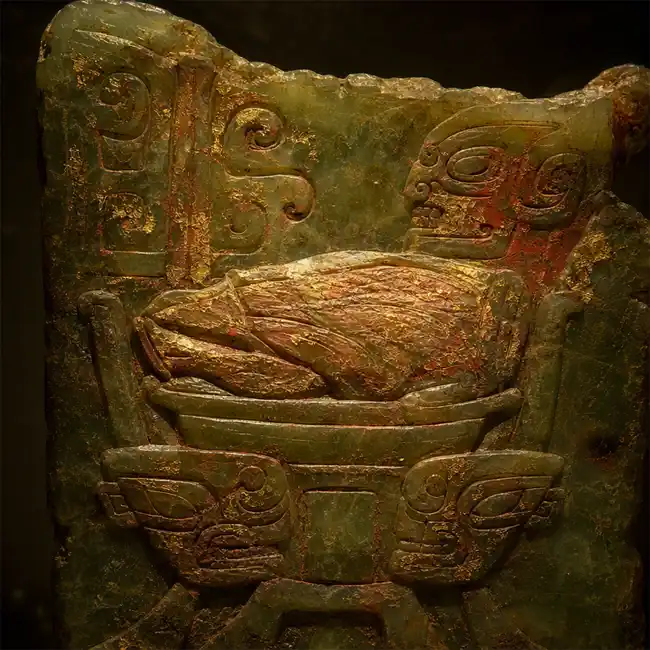
🥩 Recipe: Sacred Bronze-Braised Sanxingdui Ancestral Pork
🗡️ Legends Behind This Excavated Secret
Legend says that the high priest-kings of Sanxingdui prepared this rich, melt-in-your-mouth pork during the autumn equinox to honor the spirits of the mountains. The meat was braised in heavy bronze vessels for hours until the fat rendered into a golden glaze, coating every fiber with deep, woodsy aromatics.
The secret to its legendary status was the slow extraction of flavors. The cooks used ancient mountain pepper berries—relatives of the modern Sichuan peppercorn—to create a mild, tingling warmth that cut through the richness of the meat. It was considered a dish of royal power and divine connection, served only to key leaders, sacred blacksmiths, and honored guests of the kingdom.
📋 Ingredients & The Noble Pantry
✦ The Ancestral Staples
The original Sanxingdui pantry relied entirely on what could be hunted, harvested, or gathered in the wild Sichuan basin. Prime cuts of wild boar or fat-streaked pork belly served as the hearty base. Flavor came from cracked native pepper berries, wild ginger roots, raw forest honey, and rock salt mined from ancient underground brine springs. The dish achieved its deep, savory richness without modern soy sauce, relying instead on long braising times and natural caramelization.
✦ Modern Substitutes
• Wild Boar / Thick-Cut Pork Belly: Bone-in pork shoulder or thick-cut pork belly works brilliantly to capture that melting, rich texture.
• Ancient Mountain Pepper: Whole Sichuan peppercorns or black peppercorns blended with a touch of crushed coriander seeds.
• Primitive Sweetener: Unprocessed raw honey or dark brown sugar replaces ancient wild forest honey.
• Brine Spring Salt: Coarse sea salt or Himalayan pink salt.
• Ancient Fermentation Liquid: Low-sodium beef bone broth mixed with a splash of unfiltered apple cider vinegar mimics the acidic depth of ancient fermented grain broths.
✦ Ancient Proportions
• Pork Belly or Pork Shoulder: 2.5 pounds (cut into large 2-inch cubes)
• Coarse Sea Salt: 1.5 teaspoons
• Sichuan Peppercorns (lightly crushed): 1 tablespoon
• Fresh Ginger Root (sliced into thick coins): 2 inches
• Garlic Cloves (smashed whole): 6 cloves
• Scallions (cut into long finger-length pieces): 4 stalks
• Raw Forest Honey: 3 tablespoons
• Rich Beef Bone Broth: 3 cups
• Water: 1 cup (added as needed during slow braising)
• Rendered Lard or Vegetable Oil: 2 tablespoons
🥣 The Chef’s Ancient Ritual
1.Prepare the Sacred Meat: Wash and thoroughly dry the pork cubes using clean towels. Sprinkle the coarse sea salt over all sides of the meat, massaging it gently into the surface. Let it rest at room temperature for 15 minutes to draw out initial moisture and lock in flavor.
2.Awaken the Aromatics: Heat the rendered lard or vegetable oil in a heavy Dutch oven or heavy-bottomed cast-iron pot over medium heat. Drop in the smashed garlic, sliced ginger coins, and crushed Sichuan peppercorns. Stir constantly for 90 seconds until the spices sizzle and release a warm, earthy fragrance across your kitchen.
3.Sear for Ancient Gold: Carefully place the salted pork cubes into the pot in a single layer. Sear each side for 3 to 4 minutes until a deep, golden-brown crust forms. This searing step mimics the intense heat of open-fire bronze cooking and locks the juices inside each bite.
4.Glaze with Earthly Sweetness: Turn the heat down to low. Drizzle the raw forest honey directly over the seared pork. Toss the meat continuously for 2 minutes, letting the honey bubble and caramelize lightly around the edges of the meat without scorching.
5.The Great Braise: Pour in the rich beef bone broth, making sure the liquid reaches at least three-quarters of the way up the pork cubes. Lay the scallion stalks directly on top of the broth. Bring the mixture to a gentle boil, then immediately turn the heat to the lowest setting. Cover the pot with a tight-fitting lid.
6.The Embers’ Patience: Simmer low and slow for 2 to 2.5 hours. Check the pot occasionally; if the liquid drops too low, add a small splash of water. The meat is ready when a wooden skewer glides through the center of a pork cube with absolutely zero resistance.
7.Reduce and Serve: Remove the lid, discard the spent scallions, and turn the heat to medium-high for the final 8 to 10 minutes. Allow the sauce to bubble down into a rich, glistening, mahogany glaze that coats the back of a spoon. Transfer to a clay or ceramic serving bowl and serve hot.
🔥 Secrets of the Ancestral Hearth
◦ Patience Over High Heat: Ancient cooks couldn’t turn a dial to boost the flame. Low, steady heat is essential for rendering tough meat fibers into velvety perfection. Never rush the braise.
◦ Searing Cold Meat Causes Toughness: Always allow your pork to come up to room temperature before it hits the hot pot. Cold meat drops the cooking temperature instantly and makes the fat tough rather than tender.
◦ Crushing Spice Unlocks Essential Oils: Don't use pre-ground pepper. Whole peppercorns lightly cracked with the flat side of a knife release far more aromatic oils, creating an authentic profile.
◦ Over-Caramelizing the Honey: Watch your flame carefully when adding raw honey to the pot. If the pan is too hot, the sugars will burn quickly and introduce a harsh, bitter note to your broth.
◦ Skipping the Rest Period: Let the finished braise sit covered off the heat for 10 minutes before serving. This allows the meat fibers to relax and reabsorb all the rich gravy.
🐲 Ancient Civilization Origins FAQ
Q1.How do we know what people ate 5,000 years ago in Sanxingdui?
Archaeologists extract plant pollen, animal bone fragments, and organic lipid residues left inside excavated clay pots and bronze vessels. Chemical analysis of these residues pinpoints specific ingredients like native spices, ancient grains, and animal fats.
Q2.Can I make this dish in a modern slow cooker or Instant Pot?
Yes! For a slow cooker, sear the meat and aromatics in a pan first, transfer everything to your slow cooker, and cook on LOW for 6 to 7 hours. For an Instant Pot, use the Sauté function to brown the meat, then pressure cook on HIGH for 35 minutes with a natural release.
Q3.Why isn't soy sauce used in this ancient Chinese recipe?
Soy sauce as we know it today was developed much later in Chinese history. Ancient Shu cooks relied on natural rock salts, long-term grain fermentation, bone broths, and caramelization to build complex savory flavors.
🗿 The Taste of Archeology
Tasting this dish is like stepping back through the sands of time. The exterior of the pork holds a rich, sticky glaze bursting with deep honey sweetness and earthy spice, while the interior remains incredibly soft and succulent. The subtle tingle of mountain pepper balances the deep richness of the meat, offering a flavor profile that feels timeless yet distinctly unique compared to modern stir-fries. It’s an unforgettable sensory link to a lost world.
🍽️ Final Thoughts: Bringing Antiquity to Your Modern Table
Cooking isn't just about nutrition—it's one of our most powerful forms of storytelling. By taking the time to recreate this 5,000-year-old Sanxingdui bronze-braised pork in your home, you transform your kitchen into a gateway to the past. It turns an ordinary dinner into an extraordinary journey into ancient history, proving that great food truly transcends time.
Try gathering your friends around the table for this historic feast. Share the story of the lost Shu kingdom while you pass the clay bowls around. You’ll find that while technology changes across thousands of years, the joy of sharing a rich, comforting meal with people you care about remains exactly the same.
🤝 The Golden Hook: Join the Sacred Culinary Union
Every time you stir this pot, you help keep ancient human heritage alive. Want to discover more forgotten feasts from lost civilizations around the globe? Subscribe to our newsletter, share your cooking results in the comments below, and pass this ancient secret along to fellow food lovers who appreciate the deep history behind every bite!
📜 Credit to the Keepers of the Culture (The Legacy)
This recipe is inspired by the ancient culinary archives and clay artifact excavations of the Shu Kingdom of Sanxingdui. We have carefully adapted the measurements for modern kitchens while preserving its sacred ancestral soul.
| 🏯 🏛️🍖 < Back |