
🏠 Home > 🗺️ Recipes > 🥘 Sauces > 🇸🇬 Singapore Sauces
🇸🇬 🥘 Singapore Sauces Recipes
Published by Supakorn | Updated: February 2026
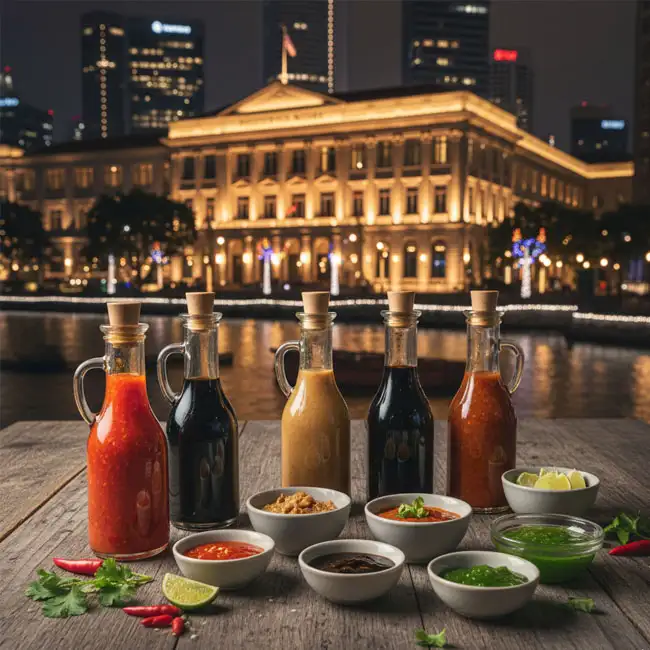
🌶️🧂The Liquid Gold Behind the Lion City’s Bold Flavors 🇸🇬 🥘
If you’ve ever sat down at a bustling hawker center in Singapore, you’ve probably noticed something. Before the plates even arrive, there’s a little plastic saucer—or five—sitting on the table. In Singapore, the sauce isn't just a side thought; it’s the main event. It’s the "secret weapon" that turns a simple bowl of noodles into a culinary masterpiece.
Singaporean cuisine is a wild, beautiful mix of Chinese, Malay, Indian, and Eurasian influences. But if the ingredients are the body of the dish, the sauces are definitely the soul. They are bold, unapologetic, and incredibly diverse. From the fiery kick of a fermented shrimp chili to the silky sweetness of dark soy, these sauces tell the story of a nation that lives to eat.
So, let’s go on a flavorful journey through the dips, pastes, and gravies that make Singapore one of the food capitals of the world!
🇸🇬 The Philosophy of the Dip: Why Sauces Matter
In Singapore, eating is a customized experience. We don’t just accept the food as it comes out of the kitchen; we "doctor" it to our liking at the condiment station. Whether it’s adding more tang with a squeeze of calamansi or cranking up the heat with extra sambal, the ability to balance flavors—salty, sweet, sour, and spicy—is a national pastime.
The "Sauce Culture" here is built on three main pillars:
1.Heat (The Chili): We have a sauce for every level of spice tolerance.
2.Umami (The Fermentation): Using shrimp paste, fermented beans, and soy to create depth.
3.Aromatics (The Roots): Ginger, galangal, lemongrass, and shallots form the base of almost every paste.
🌶️ The Fiery Heart: Sambal and Its Many Faces
If there is one sauce that rules them all in Singapore, it’s Sambal. But here’s the thing—"Sambal" isn't just one sauce; it’s a whole family of spicy condiments, each with its own personality.
🦐 Sambal Belacan: The Essential Companion
This is the "King of Condiments." Made by pounding fresh chilies with toasted belacan (fermented shrimp paste) and a splash of lime juice, it is pungent, salty, and incredibly spicy. It’s the soul of Malay cuisine and is served with everything from Nasi Lemak to grilled fish. It smells strong, but one taste and you’re hooked for life.
🧅 Sambal Tumis: The Sweet & Savory Base
Unlike the raw punch of Belacan, Sambal Tumis is fried (tumis) in oil with onions, tamarind, and sugar until it becomes dark, caramelized, and fragrant. This is the thick, jammy sauce you find piled high next to your coconut rice. It’s comforting, rich, and has a slow-burn heat.
🐟 The Seafood Hero: Sambal Stingray Sauce
Walk into any "Zi Char" (home-style cooked food) stall, and you’ll see stingray wrapped in banana leaves, smothered in a thick, spicy, and slightly sour sambal. It’s heavy on the shallots and garlic, designed to stand up to the smoky char of the grill.
🦀 The National Treasure: Chili Crab Sauce
We can’t talk about Singapore sauces without mentioning the one that put us on the global map. Singapore Chili Crab isn't actually about the crab—it’s about that glorious, thick, tomato-and-chili-based gravy.
🥚 A Masterclass in Texture
What makes this sauce iconic is the addition of beaten eggs at the very end, which creates silky ribbons of texture throughout the spicy-sweet sauce. It’s savory, slightly tangy, and has a "mop-ability" factor that is off the charts. As we mentioned in our bread guide, you haven't lived until you've used a fried mantou (bun) to clean a plate of this sauce.
🍗 The Holy Trinity: Hainanese Chicken Rice Sauces
Hainanese Chicken Rice is arguably Singapore’s most famous dish, but the poached chicken is actually quite subtle. The flavor explosion comes from the three-sauce system that accompanies every plate.
🌶️ 1. The Garlic-Chili Sauce
This isn't your standard bottled chili. It’s a bright, zesty blend of red chilies, ginger, garlic, and—most importantly—chicken fat and lime juice. It’s sharp enough to cut through the richness of the rice.
🍠 2. The Minced Ginger Paste
Fresh ginger is pounded into a fine paste with a bit of oil and salt. It provides a warm, earthy counterpoint to the spicy chili and the savory chicken.
🖤 3. The Thick Dark Soy Sauce
This isn't just soy sauce; it’s a viscous, sweet, and salty syrup. It’s drizzled over the rice or used as a dip to give the chicken a deep, caramelized finish.
🥜 The Creamy Classic: Satay Peanut Sauce
When the sun goes down and the satay grills start smoking, the Peanut Sauce (Kuah Kacang) takes center stage.
🥥 Nutty, Spicy, and Fragrant
A good Singaporean satay sauce is chunky, not smooth. It’s made from roasted ground peanuts, coconut milk, and a "rempah" (spice paste) of lemongrass and galangal. In some traditional versions, a dollop of pineapple puree is added to the center of the sauce to provide a sweet, acidic lift that cuts through the richness of the grilled meat.
🍜 The Noodle Enhancers: From Laksa to Mee Pok
Sauces in Singapore aren't just for dipping; sometimes they are the dish.
🥥 Laksa Paste
The base of a great Singapore Laksa is a complex paste made from dried shrimp (hae bee), turmeric, laksa leaves, and chilies. When simmered with coconut milk, it turns into a creamy, spicy broth that is so flavorful you'll want to drink it straight from the bowl.
🥢 The "Dry" Noodle Toss (Mee Pok)
If you order "Mee Pok Tah" (dry minced meat noodles), the magic happens in the bottom of the bowl. The noodles are tossed in a mixture of:
• Chili Oil: For heat.
• Black Vinegar: For a sharp, fermented tang.
• Lard Oil: For that unmistakable silky mouthfeel and aroma.
• Ketchup: (Occasionally) for a kid-friendly, sweet-and-sour nostalgia trip.
🍲 The "Umami" Bombs: Fermented Delights
Singaporean cooking loves a bit of "funk." Fermentation is the secret to that deep, savory flavor that lingers on the tongue.
🥔 Taucheo (Fermented Soy Bean Paste)
Used heavily in Peranakan and Chinese cooking, these salty, earthy beans are the star of dishes like Ikan Bakar or Steamed Fish. They add a salty complexity that salt alone just can't match.
🦐 Hae Bee Hiam (Spicy Dried Shrimp Sambal)
This is a dry, crunchy sauce/condiment made from finely chopped dried shrimp and chilies fried until crispy. It’s savory, spicy, and incredibly addictive. Singaporeans put this on everything—from sandwiches to crackers.
🏠 The Culture of "Makan" (Eating) and Sauces
In Singapore, the way you handle your sauces says a lot about you!
• The Sauce Station: At a hawker center, the "condiment station" is where the action is. You'll see locals carefully balancing tiny saucers filled with different combinations.
• Calamansi is King: Almost every spicy sauce is served with a small, green lime. Squeezing this over your sambal is the "final touch" that wakes up all the other flavors.
• Sauce Pairing: Locals know exactly which chili goes with which dish. You would never put Chicken Rice chili on a Prata, and you wouldn't put Sambal Belacan in your Soy Sauce. It’s an unwritten code of culinary ethics!
🌟 Modern Fusion: The New Wave of Singaporean Sauces
Singapore’s food scene is always evolving. Today, young chefs are taking these traditional flavors and turning them into modern condiments.
• Salted Egg Yolk Sauce: What started as a trend has become a staple. It’s creamy, grainy, and savory-sweet, used on everything from fried chicken to potato chips.
• Truffle Laksa: Some high-end spots are infusing traditional laksa pastes with truffle oil, creating a bridge between local heritage and global luxury.
• Bottled Artisanal Sambals: Many local startups are now bottling "Grandma’s secret recipes" with premium ingredients, making it easier for people to take the taste of Singapore home.
❓ FAQ: Your Burning Questions About Singapore Sauces
Q1. Why is Singaporean food so focused on spicy sauces?
It’s a mix of geography and culture! The tropical heat means spices help preserve food and stimulate the appetite. Additionally, our Malay and Indian roots brought a deep love for chilies, which eventually blended with Chinese cooking styles to create the unique "pedas" (spicy) palate we have today.
Q2. Are Singaporean sauces vegetarian-friendly?
Many traditional sauces, like Sambal Belacan or Laksa paste, contain shrimp paste or dried shrimp. However, due to the growing vegetarian scene, many places now offer "vegetarian sambal" made with fermented soy beans or mushrooms to mimic that umami flavor. Always ask for "No Belacan" if you're strictly plant-based!
Q3. What is the black sauce served with Carrot Cake?
That is Sweet Flour Sauce (similar to a sweet dark soy). In Singapore "Black" Carrot Cake, this sauce is stir-fried with the radish cubes to caramelize them, creating a smoky, sweet, and savory dish. The "White" version skips this sauce.
Q4. How do I survive the spice if I’m not used to it?
The secret is in the lime! The acidity of the calamansi lime can help cut through the heat of the chili. Also, look for sauces that are more "tomato-based" or have "sweet" in the name to ease your way into the world of Singaporean spice.
Sauces are the heartbeat of the Singaporean kitchen. They represent our history, our diversity, and our obsession with perfection. Next time you’re in the Lion City, don't just eat the food—pay attention to the little saucer on the side. That’s where the real soul of the dish lives.
🥘 Level Up Your Meals with DIY Singaporean Sauces That Cost Pennies
👉 Cook 3 Under $5 Singapore Sauces
| 🌐 🥘 < Back | 🇸🇬 🍱 < Previous |