
🏠 Home > 🗺️ Recipes > 🍲 Soups > 🇸🇬 Singapore Soups
🇸🇬 🍲 Singapore Soups Recipes
Published by Supakorn | Updated: February 2026
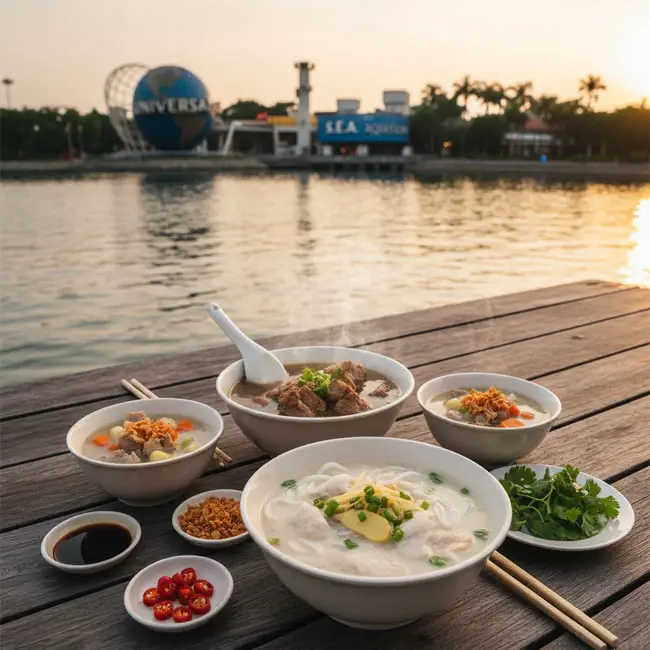
🇸🇬 🍲Liquid Gold: The Heart and Soul of Singaporean Comfort💙🌊⛰️
If you ask any local what they crave on a rainy afternoon (or even a humid morning, honestly), the answer is almost always a steaming, aromatic bowl of soup. In Singapore, soup isn't just a side dish or a "starter" to whet the appetite. It is often the main event—a labor of love that involves hours of simmering, a complex blend of medicinal herbs, and a heritage that stretches back across the seas to China, Malaysia, and beyond.
The soup culture here is a direct reflection of the "Singaporean Way of Life." We are a fast-paced society, but our soups are the ultimate "slow food." While the city rushes by outside, inside a hawker center or a traditional family kitchen, pots are bubbling away to extract every last bit of collagen, nutrients, and flavor from bones and botanicals.
Eating soup in Singapore is also deeply tied to the concept of "Heal-thy Living." Influenced heavily by Traditional Chinese Medicine (TCM), many of our soups are designed to balance the body’s "heat." If you’ve been working too hard, there’s a soup for that. If the weather is too "heaty," there’s a soup for that too. It’s nourishing, it’s soulful, and it’s the ultimate hug in a bowl.
🥣 The Hall of Fame: Iconic Singaporean Broths
Let’s talk about the heavy hitters. These aren't just soups; they are cultural icons that people will queue for hours to taste.
🦴 1. Bak Kut Teh (Meat Bone Tea)
Don't let the name fool you—there’s no actual tea in the soup! The "tea" refers to the strong Oolong tea traditionally served alongside it to cut through the richness. In Singapore, we predominantly love the Teochew Style, which is a clear, light, but incredibly peppery broth brewed with pork ribs, whole cloves of garlic, and Sarawak peppercorns. It’s spicy (from the pepper), savory, and guaranteed to clear your sinuses!
🍜 2. Laksa (The Rich and Spicy King)
While there are many versions of Laksa, the Katong Laksa is Singapore’s pride. This is a rich, creamy, and spicy coconut milk-based soup flavored with dried shrimp (hae bee), lemongrass, and galangal. It’s topped with cockles, prawns, and fishcakes. The broth is so thick and flavorful that it feels like a warm embrace. It’s the definition of "undercutting" the richness with a squeeze of lime and a dollop of sambal.
🐟 3. Sliced Fish Soup / Fish Head Bee Hoon
If you want to see what a "healthy" Singaporean office worker eats for lunch, look no further. This soup features a clear, sweet broth made from boiled fish bones and anchovies. It’s served with fresh slices of snakehead or pomfret, tofu, tomatoes, and bitter gourd. For those who want something a bit more indulgent, there’s the "milky" version, where evaporated milk is added to give the broth a velvety, luxurious texture without being heavy.
🦐 4. Prawn Mee Soup (Hae Mee)
This is all about the Umami. The broth is made by stir-frying prawn heads and shells until they are fragrant and orange, then simmering them with pork bones and rock sugar for hours. The result is a dark, briny, and intensely sweet-savory soup that tastes like the very essence of the ocean.
🌿 5. Cantonese Herbal Soups
Walking through a Singaporean residential estate, you’ll often catch the scent of Chinese herbs wafting through the air. These are the "healing" soups. From Watercress Pork Rib Soup to Lotus Root with Peanut Soup and the famous Black Chicken Herbal Soup, these broths are clear, light, and packed with ingredients like red dates, wolfberries (goji), and dried scallops.
🏢 The Living Culture: From Kitchen to Hawker
How do we "live" the soup culture? It’s all about the Communal Table.
In many Singaporean households, a meal isn't complete without a bowl of soup in the center of the table. It’s the "glue" of the dinner. Even at hawker centers, you’ll see groups of friends ordering a large pot of fish head steamboat to share. There’s something incredibly social about dipping your spoons into a shared pot of bubbling broth.
The "eating and living" philosophy also extends to late-night dining. Singapore is a city that never sleeps, and many soup stalls stay open until the early hours of the morning. There is nothing quite like hitting a Bak Kut Teh spot at 2:00 AM after a long day of work or hanging out with friends. It’s the ultimate "reset" button for the body.
🍲 More Than Just Liquid: The "Liao" (Ingredients)
In Singapore, we use the Hokkien word "Liao" to refer to the ingredients inside the soup. A good Singaporean soup is never just liquid. It’s a treasure hunt.
• The Crunch: Deep-fried shallots and fried garlic bits are essential toppings that add a nutty aroma.
• The Texture: You’ll often find "Tau Pok" (bean curd puffs) floating in soups like Laksa, acting like little sponges that soak up all the flavorful broth.
• The Carbs: While the soup is the star, it’s often paired with Mee Sua (wheat vermicelli), Kway Teow (flat rice noodles), or a simple bowl of white jasmine rice topped with a drizzle of dark soy sauce.
✨ The Modern Twist: Soup Evolution
While we respect the traditional long-simmering methods, Singapore’s modern food scene is getting creative. We now have "Collagen Soup" hotpot chains that have taken the city by storm, focusing on thick, creamy broths made from shark bone or chicken skin that are supposedly great for your complexion!
We also see fusion soups, like Laksa Risotto or Bak Kut Teh Ramen, where the soul of the traditional soup is kept alive but presented in a way that appeals to the younger, globalized generation. It shows that while Singapore is always looking forward, our taste buds are always rooted in the comforts of the past.
❓ FAQ: Diving Into the Broth
Q1. What is the difference between Singaporean and Malaysian Bak Kut Teh?
Generally, the Singaporean version (Teochew) is clear and very peppery. The Malaysian version (Klang style) is usually darker, thicker, and much more herbal, using a variety of soy sauces and a different blend of medicinal herbs.
Q2. Is Laksa soup always spicy?
Most Laksa broths have a base level of spice from the chili paste (rempah), but it’s usually mellowed out by the coconut milk. Most stalls provide extra sambal on the side, so you can make it as fiery as you like!
Q3. Why is there evaporated milk in some fish soups?
This is a local trick! Adding evaporated milk gives the broth a creamy white appearance and a silky mouthfeel that mimics a broth that has been boiled for 24 hours to extract collagen. It adds a lovely richness that pairs perfectly with the fried fish versions.
Q4. What does "Hae Bee Hiam" have to do with soup?
"Hae Bee Hiam" is a spicy dried shrimp sambal. While it’s a condiment, it is the flavor backbone of many Singaporean soup bases, especially Laksa and Prawn Mee. It provides that deep, savory "sea" flavor that we locals crave.
🍲 Cozy Comfort: Hearty Singaporean Soups That Won't Break the Bank
👉 Discover 3 Under $10 Singapore Soups
| 🌐 🍲 < Back | 🇸🇬 🍷 < Previous | Next > 🥗 🇸🇬 |