
🏠 Home > 🗺️ Recipes > 🥘 Sauces > 🇹🇭 Thailand Sauces > 🥘 Nam Jim Jaew (Thai Spicy Dipping Sauce) , Thai Peanut Sauce , Thai Seafood Dipping Sauce (Nam Jim Seafood)
🥘 Authentic Thai Sauces Recipes Everyone Should Try
Published by Supakorn | Updated: February 2026
Introduction
If you’ve ever eaten Thai food, you know it’s not just about the curries or noodles. What makes the dishes truly shine are the sauces. These little flavor boosters are the secret behind the addictive taste of Thai cuisine. Whether it’s a fiery chili dip, a tangy seafood sauce, or the creamy peanut sauce you drizzle over satay skewers, sauces hold the power to transform a simple dish into something unforgettable.
In Thailand, sauces are everywhere—from street food carts to family kitchens. They’re not just condiments, but an essential part of the meal, like having rice on the table. People dip grilled meats, fresh vegetables, seafood, or even sticky rice into them. And outside of Thailand, these sauces have become wildly popular because they’re versatile, easy to make, and incredibly tasty.
In this guide, I’m going to walk you through three iconic Thai sauces that you can easily make at home:
1.Nam Jim Jaew – a smoky, tangy, spicy dipping sauce from the northeast of Thailand.
2.Thai Peanut Sauce – creamy, nutty, and slightly sweet, perfect with grilled chicken or vegetables.
3.Seafood Dipping Sauce (Nam Jim Seafood) – the famous green sauce that’s fresh, spicy, and zesty. Let’s dive into each one, step by step.
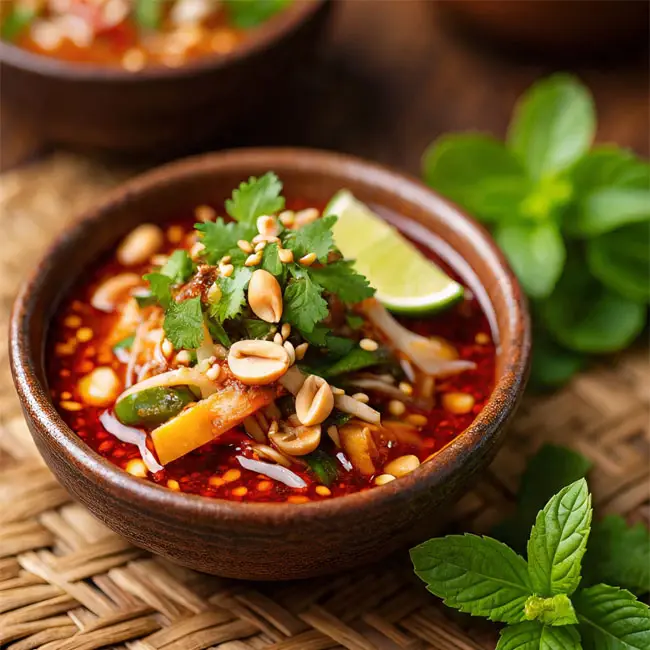
🔹 Recipe 1: Nam Jim Jaew (Thai Spicy Dipping Sauce)
About this Recipe
Nam Jim Jaew is a classic dipping sauce from Isaan (northeastern Thailand). It’s often paired with grilled meats, especially gai yang (grilled chicken) or moo yang (grilled pork). The flavor is a balance of spicy, sour, salty, and smoky, thanks to toasted rice powder.
Ingredients & Measurements
- 2 tbsp fish sauce
- 1 tbsp lime juice
- 1 tbsp tamarind paste
- 1 tsp palm sugar (or brown sugar)
- 1–2 tsp chili flakes (adjust to taste)
- 1 tbsp toasted rice powder (ground roasted rice)
- 1 clove garlic, minced
- 1 tbsp chopped cilantro
- 1 tbsp chopped green onions
Step-by-Step Instructions
1.In a small bowl, combine the fish sauce, lime juice, tamarind paste, and sugar. Stir until the sugar dissolves.
2.Add chili flakes and garlic, mixing well.
3.Stir in the toasted rice powder, cilantro, and green onions.
4.Taste and adjust. Want more heat? Add more chili flakes. Need more tang? Add extra lime juice.
Tips & Mistakes to Avoid
- Don’t skip toasted rice powder – It gives Nam Jim Jaew its signature nutty aroma.
- Balance is key – Too much fish sauce will make it overly salty, so always taste before serving.
- Make it fresh – This sauce tastes best when made just before eating.
FAQ
Q: Can I store Nam Jim Jaew in the fridge?
A: Yes, but it’s best eaten fresh. If you must store it, keep it in an airtight jar for up to 2 days. The herbs may wilt, so add fresh cilantro before serving again.
Q: What can I use instead of tamarind paste?
A: You can use extra lime juice, but tamarind adds a unique tanginess.
Summary
Nam Jim Jaew is smoky, spicy, tangy, and slightly sweet. It’s the perfect companion for grilled meats and a must-have at any Thai BBQ night.

🔹 Recipe 2: Thai Peanut Sauce
About this Recipe
Thai Peanut Sauce is one of the most loved sauces outside of Thailand. While it’s often associated with satay skewers, it’s also great with spring rolls, salads, noodles, and even as a dip for fresh veggies. Its creamy, nutty, slightly sweet, and mildly spicy flavor makes it universal.
Ingredients & Measurements
- ½ cup peanut butter (smooth or chunky)
- 2 tbsp soy sauce
- 2 tbsp fish sauce
- 1 tbsp red curry paste
- 2 tbsp lime juice
- 1 tbsp rice vinegar
- 2 tbsp palm sugar (or brown sugar)
- ½ cup coconut milk
- 1 clove garlic, minced
- Optional: chili flakes or sriracha for extra heat
Step-by-Step Instructions
1.In a saucepan over low heat, whisk together coconut milk and red curry paste until fragrant.
2.Add peanut butter, soy sauce, fish sauce, lime juice, vinegar, sugar, and garlic.
3.Stir continuously until smooth and creamy.
4.Adjust the consistency with a splash of warm water if too thick.
5.Taste and adjust seasoning—more sugar for sweetness, more lime for tang, or more chili for spice.
Tips & Mistakes to Avoid
- Don’t overcook – Peanut butter can split if heated too long. Keep it low and stir often.
- Choose the right peanut butter – Natural peanut butter works best (avoid those with too much added sugar or salt).
- Balance creamy and tangy – Peanut sauce should not taste overly sweet; lime juice helps keep it fresh.
FAQ
Q: Can I make this sauce vegan?
A: Absolutely! Replace fish sauce with soy sauce or a vegan fish sauce alternative.
Q: How long does peanut sauce last?
A: Stored in an airtight jar in the fridge, it lasts 4–5 days. Just reheat gently before serving.
Summary
Thai Peanut Sauce is creamy, nutty, and versatile. It’s not just for satay but can also double as a salad dressing, noodle sauce, or veggie dip.
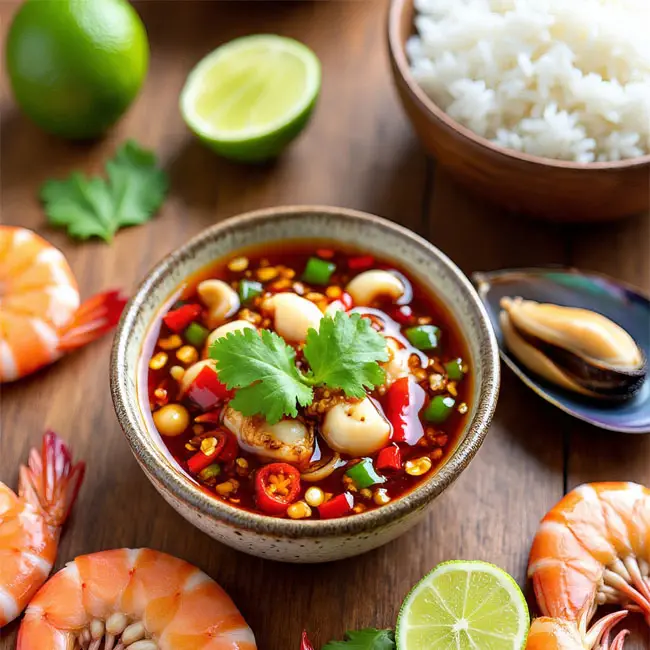
🔹 Recipe 3: Thai Seafood Dipping Sauce (Nam Jim Seafood)
About this Recipe
This is the famous green sauce you see served with steamed or grilled seafood in Thailand. It’s a flavor explosion—spicy, garlicky, tangy, and slightly sweet. It goes perfectly with shrimp, crab, fish, or even grilled vegetables.
Ingredients & Measurements
- 6 cloves garlic
- 5–6 Thai bird’s eye chilies (adjust to taste)
- 2 tbsp fish sauce
- 2 tbsp lime juice
- 1 tbsp sugar (palm sugar or white sugar)
- 2 tbsp fresh cilantro (including stems)
- 2 tbsp water (optional, to thin the sauce)
Step-by-Step Instructions
1.In a blender or mortar and pestle, add garlic, chilies, cilantro, and sugar. Pound or blend until smooth.
2.Add fish sauce and lime juice, mixing thoroughly.
3.Adjust consistency with water if needed.
4.Taste test: spicy, tangy, and salty flavors should all balance beautifully.
Tips & Mistakes to Avoid
- Use fresh lime juice only – Bottled lime juice makes it taste flat.
- Adjust chili level – Start with fewer chilies if you’re not used to Thai spice.
- Don’t skip cilantro stems – They add a punch of flavor that leaves add alone can’t match.
FAQ
Q: Can I make this sauce less spicy?
A: Yes, simply reduce the number of chilies and increase lime juice and sugar for balance.
Q: Can I use this sauce for non-seafood dishes?
A: Definitely! It’s also great with grilled chicken, pork, or even roasted veggies.
Summary
Nam Jim Seafood is bold, zesty, and fiery—the ultimate dipping sauce for seafood lovers.
Final Thoughts
Making your own Thai sauces at home is not as intimidating as it sounds. Once you try, you’ll realize that each sauce is built on a balance of flavors—salty, sweet, sour, and spicy—that you can adjust to your liking.
If you’re new to Thai cooking, I’d recommend starting with Thai Peanut Sauce since it’s the most forgiving and universally loved. Then, challenge yourself with Nam Jim Jaew for BBQ nights, and finally, spice things up with the iconic Seafood Dipping Sauce.
These sauces aren’t just recipes—they’re little windows into Thai culture and the way Thais enjoy food. Give them a try one by one, and don’t be afraid to put your own twist on them. And hey, if you do, I’d love to hear how yours turned out—share your kitchen adventures with friends and family, and maybe even inspire them to try Thai sauces too.
| 🇹🇭 🥘 < Back |